9 Sources
9 Sources
[1]
Kevin Weil and Bill Peebles exit OpenAI as company continues to shed 'side quests' | TechCrunch
OpenAI is losing two of the architects of its most ambitious moonshots. Kevin Weil, who led the company's science research initiative, and Bill Peebles, the researcher behind AI video tool Sora, both announced their departures on Friday. The exits come as OpenAI consolidates around enterprise AI and its forthcoming "superapp." The departures follow OpenAI's decision to cut back on "side quests," including customer-facing bets like Sora and OpenAI for Science. Sora, which was losing an estimated $1 million per day in compute costs, was shut down last month. OpenAI for Science was the internal research group behind Prism, an AI-powered platform that promised to accelerate scientific discovery. It's being absorbed into "other research teams," according to Weil's social media post announcing the news. "It's been a mind-expanding two years, from Chief Product Officer to joining the research team and starting OpenAI for Science," Weil wrote. "Accelerating science will be one of the most stunningly positive outcomes of our push to AGI." The team had a short and bumpy road after its formal announcement in October 2025. Weil deleted a tweet claiming GPT-5 had solved 10 previously unsolved Erdős mathematical problems, but that claim fell apart immediately when the mathematician who runs the website erdosproblems.com called it out. Weil's departure comes a day after his team released GPT-Rosalind, a new model to accelerate life sciences research and drug discovery. In a social post announcing his departure, Peebles credited Sora with igniting a "huge amount of investment in video across the industry," and argued that the kind of research that produced the video tool requires space away from the company's mainline roadmap. "Cultivating entropy is the only way for a research lab to thrive long-term," he wrote.
[2]
OpenAI Executive Kevin Weil Is Leaving the Company
Kevin Weil, OpenAI's former chief product officer who was recently tapped to build a new AI workspace for scientists, Prism, is leaving the company, WIRED has confirmed. Weil was previously an early executive leading product at Instagram. OpenAI is also sunsetting Prism, which the company launched as a web app in January this year to give scientists a way to work with AI. The company is folding the roughly 10-person team behind it into Thibault Sottiaux's Codex team. An OpenAI spokesperson confirmed the changes, and tells WIRED this is part of the company's effort to unify its business and product strategy. OpenAI has broader ambitions to turn Codex, its AI coding application, into an "everything app."
[3]
OpenAI's former Sora boss is leaving
I am immensely grateful to Sam, Mark, Aditya and Jakub for fostering a research environment that allowed us to pursue ideas off-the-beaten path from the company's mainline roadmap. It's tempting in life to mode collapse to the most important thing, but cultivating entropy is the only way for a research lab to thrive long-term, and Sam deeply understands this. Sora was a project that could not have happened anywhere but OpenAI, and I will always deeply love this place for that. Kevin Weil, who was the company's VP of AI for Science and was formerly its chief product officer, is also departing, saying that Friday is his last day. He said in a post on X that the group is "being decentralized into other research teams." OpenAI's Prism, a recently-announced research-focused "workspace for scientists" that Weil was heading up, is being sunsetted, and OpenAI's plan is to fold its capabilities into the Codex desktop app, according to Wired.
[4]
OpenAI's Former Product Chief and Sora Head Leave Company
OpenAI's head of science initiatives and the leader for its Sora AI video team are both leaving the company, adding to a recent string of departures while the company reorganizes its sprawling product portfolio. Kevin Weil, the former chief product officer who later took charge of the OpenAI for Science project, announced Friday that he's stepping down. Weil joined OpenAI nearly two years ago and previously steered product development at Instagram and Twitter as an executive at those companies. Bill Peebles, who oversaw Sora, also said Friday that he's leaving just weeks after OpenAI announced plans to discontinue support for the AI video generator. In recent weeks, OpenAI has moved to streamline its product offerings as it races to compete for business customers against rival Anthropic and pave the way for a possible initial public offering. In addition to shuttering Sora, the company is also developing a desktop application to bring together its ChatGPT chatbot, coding tool and web browser. In a post on X, Weil said his team was "being decentralized into other research teams." An OpenAI spokesperson said the moves are part of the company's efforts to refocus and unify its products. Prism, a tool for scientists that Weil had led as vice president of science, will become part of the company's Codex team. The departures follow a series of changes to OpenAI's executive bench. Earlier this month, OpenAI announced that its chief operating officer was shifting into a new role while two other top executives are going on leave due to health reasons. Wired was first to report Weil's exit.
[5]
OpenAI loses two executives in latest leadership shakeup
Kevin Weil, chief product officer of OpenAI, speaks during the Hill & Valley forum at the US Capitol in Washington, DC, US, on Wednesday, April 30, 2025. Two OpenAI executives announced their departures from the company on Friday, the latest in a series of leadership shakeups at the artificial intelligence startup. Bill Peebles, who led OpenAI's defunct short-form video app Sora, and Kevin Weil, the vice president of OpenAI for Science, shared the news about their exits in separate posts on X on Friday. An OpenAI spokesperson said the company is decentralizing OpenAI for Science in an effort to bring its work closer to the teams that are building leading model capabilities, products and infrastructure. The departures come just weeks after Fidji Simo, OpenAI's product and business chief, announced she would take a medical leave because of a worsening neuroimmune condition. Kate Rouch, OpenAI's marketing chief, also decided to step down to focus on her cancer recovery earlier this month, and Brad Lightcap, OpenAI's operating chief, transitioned to a new role focused on "special projects."
[6]
OpenAI loses product chief, Sora head, and enterprise CTO in single-day triple exit
Summary: Three senior OpenAI executives, former CPO Kevin Weil, Sora head Bill Peebles, and enterprise CTO Srinivas Narayanan -- departed on the same day as the company shuts down "side quests" including Sora (discontinuing 26 April) and dismantles OpenAI for Science. The exits continue a two-year pattern that has seen only 2 of 11 co-founders remain, with departing talent flowing to Anthropic, Meta's Superintelligence Labs, and startups, as OpenAI pivots to enterprise AI on $25 billion in annualised revenue against projected $14 billion losses. Three senior OpenAI executives departed on the same day this week, continuing a pattern of leadership attrition that has now claimed the majority of the company's original leadership team. Kevin Weil, the former chief product officer who had been leading OpenAI for Science, Bill Peebles, the head of Sora, and Srinivas Narayanan, the chief technology officer of enterprise applications, all announced their exits on Friday. The departures come as OpenAI shuts down what leadership internally calls "side quests," consumer-facing moonshot projects that no longer fit a company pivoting hard toward enterprise AI. Weil, who joined OpenAI roughly two years ago from Instagram where he had been head of product, said it had been "a mind-expanding two years." He had moved from the CPO role to lead OpenAI for Science, a research initiative that released GPT-Rosalind, a life sciences and drug discovery model, one day before his departure was announced. The team is being absorbed into other research groups. Peebles, who built Sora from scratch, described the experience as "the honour and adventure of a lifetime" and credited the project with sparking "a huge amount of investment in video across the industry." Narayanan, who spent three years at OpenAI helping ship ChatGPT and the API while growing the applied engineering team from roughly 40 people to a major operation, said he was leaving to spend time with family. The departures are inseparable from the strategic decisions that preceded them. Sora, OpenAI's AI video generation tool, is being discontinued. The web and app versions will shut down on 26 April, with the API following on 24 September. The product peaked at around one million users before collapsing to fewer than 500,000, while costing roughly $1 million per day to operate. The Motion Picture Association had reported intellectual property infringement on the platform. Despite its commercial failure, Peebles was right that Sora catalysed industry-wide investment in AI video; its shutdown is a concession that OpenAI could not make the economics work, not that the technology was unimportant. OpenAI for Science is being "decentralised," a corporate euphemism for dismantlement. The team's work will continue within other research groups, but the dedicated initiative that Weil was hired to lead no longer exists as an independent unit. The pattern is consistent: OpenAI is consolidating around its core revenue-generating products, ChatGPT and the API, and shutting down exploratory projects that do not contribute directly to the enterprise business. Friday's departures add to a roster of senior exits that has reshaped OpenAI's leadership over the past two years. Of the company's 11 co-founders, only two remain: Sam Altman and Greg Brockman. The list of departed leaders includes co-founder and chief scientist Ilya Sutskever, CTO Mira Murati, chief research officer Bob McGrew, VP of research Barret Zoph, co-founder John Schulman, chief communications officer Hannah Wong, chief people officer Julia Villagra, and board member Lawrence Summers. At least 12 senior executives left in 2025 alone. The destinations tell a story. Schulman went to Anthropic. Tim Brooks, who co-led Sora before Peebles, went to Google DeepMind and then to Meta's Superintelligence Labs. Shengjia Zhao, a key architect of ChatGPT and GPT-4, became chief scientist at Meta Superintelligence Labs. Approximately seven additional researchers followed the same path to Meta. Liam Fedus, VP of research, left to co-found Periodic Labs. The talent is not retiring; it is being redistributed to competitors who are, in several cases, building the same products with the same people. The reasons cited vary. Some executives left over ethical concerns about a Defense Department AI contract. Others described a cultural shift from ambitious research bets toward the operational grind of improving ChatGPT's speed and reliability for Microsoft and enterprise customers. Multiple sources have noted that Anthropic's Claude, and particularly Claude Code, has been gaining ground in developer adoption, creating competitive pressure that has intensified OpenAI's focus on near-term product execution at the expense of longer-term research initiatives. The timing compounds the problem. Fidji Simo, the chief of product and business who was brought in as one of the most senior hires in OpenAI's history, took medical leave in early April due to a worsening neuroimmune condition. Brockman is temporarily overseeing product in her absence. Brad Lightcap, the chief operating officer, has been shifted to leading "special projects." Kate Rouch, the chief marketing officer, is departing to focus on cancer recovery. OpenAI has added Denise Dresser, the former CEO of Slack, as chief revenue officer, signalling where the company's priorities lie. But the net effect of the past 18 months is a leadership team that has been almost entirely reconstituted around enterprise revenue and operational execution, with the research-oriented and product-visionary executives who defined the company's early identity largely gone. OpenAI's financial position is simultaneously impressive and precarious. Monthly revenue has reached approximately $2 billion, with an annualised run rate exceeding $25 billion. The company closed a $122 billion funding round in April at an $852 billion valuation and has more than 900 million weekly active ChatGPT users. Enterprise revenue now accounts for more than 40% of the total and is on track to reach parity with consumer revenue by the end of 2026. The cost side is less comfortable. OpenAI projects $14 billion in losses on $25 billion in revenue this year, with cumulative spending through 2029 estimated at $115 billion. The company expects to reach cash-flow positive by 2029 and targets $200 billion in revenue by 2030. Those projections require everything to go right: enterprise adoption must accelerate, compute costs must decline, and the competitive threat from Anthropic, Google, and Meta must be contained. Losing the executives who built the products driving that revenue makes the path harder. The competitive landscape has shifted materially. Anthropic's annualised revenue has reached $30 billion while spending roughly a quarter of what OpenAI spends on training. Google's Gemini models are embedded across its enterprise suite. Meta is building a superintelligence lab staffed significantly by former OpenAI researchers. The moat that OpenAI built through first-mover advantage in consumer AI is narrowing, and the company is responding by doing what large technology companies always do when growth becomes the imperative: consolidating around revenue, cutting exploratory projects, and losing the people who were drawn to the mission rather than the business. Three executives leaving on the same Friday is not, in isolation, a crisis. But it is the latest data point in a pattern that has persisted for two years, and the pattern says something that OpenAI's valuation does not yet reflect: the company that defined the generative AI era is becoming a different organisation, and the people who built it increasingly do not want to work there.
[7]
Brain drain at OpenAI: 3 top leaders leave in a single day - Sora ends, billions lost despite AI boom
Three senior OpenAI executives, including the head of Sora and former CPO, departed as the company discontinues "side quests" like Sora and OpenAI for Science. This continues a trend of leadership attrition as OpenAI pivots to enterprise AI, facing significant projected losses against substantial revenue. OpenAI is undergoing a noticeable shift, and the latest departures signal more than just routine turnover. Three senior leaders walked away on the same day, just as the company began shutting down experimental projects. Behind the scenes, priorities are changing fast.What once defined OpenAI's identity is now being quietly reshaped. OpenAI is facing a defining moment as three senior executives -- Kevin Weil, Bill Peebles, and Srinivas Narayanan -- announced their departures on the same day. The timing is hard to ignore, coming just as the company shuts down what insiders have described as "side quests." These exits continue a broader trend that has reshaped the leadership structure over the past two years. Of OpenAI's 11 co-founders, only Sam Altman and Greg Brockman remain. Each departure comes with its own explanation, but together they point to a larger shift. Kevin Weil, who joined from Instagram and later led OpenAI for Science, described his tenure as "a mind-expanding two years." His research unit, however, is no longer continuing as a standalone initiative. Bill Peebles, who built Sora, called his time "the honour and adventure of a lifetime," while noting its broader impact on the industry. Srinivas Narayanan, who helped scale ChatGPT and the API, said he is stepping away to spend time with family, as per a report by The NextWeb. Their exits reflect a changing environment -- one that increasingly prioritizes operational focus over exploratory work. The shutdown of Sora marks one of the most visible changes. The AI video tool, once a high-profile experiment, will see its web and app versions close on 26 April, with the API following later. Despite reaching around one million users at its peak, usage declined sharply while operating costs climbed to roughly $1 million per day. Intellectual property concerns were also raised by the Motion Picture Association. At the same time, OpenAI for Science is being "decentralised," with its work redistributed across other research teams. The move effectively ends it as a distinct initiative. The pattern is consistent: projects that don't directly support revenue growth are being scaled back or absorbed. The answer appears to be yes. OpenAI is consolidating around its most successful offerings -- ChatGPT and its API -- while shifting toward enterprise AI. The company now generates about $2 billion in monthly revenue, with an annualised run rate exceeding $25 billion. Enterprise business already makes up more than 40% of total revenue and is expected to match consumer revenue soon. However, the financial picture is more complex. Despite strong income, OpenAI is projecting $14 billion in losses this year, with long-term spending expected to reach $115 billion by 2029, as per a report by The NextWeb. This pressure has accelerated the pivot toward products that deliver immediate returns. The latest departures are part of a much larger wave. High-profile exits over the past two years include key figures like Ilya Sutskever, Mira Murati, John Schulman, and others. Many have moved to competitors such as Anthropic, Meta, or new startups. The movement of talent has become a defining trend, with researchers and executives continuing to shape rival platforms. At the same time, leadership gaps have emerged. Fidji Simo is currently on medical leave, Greg Brockman has stepped in to oversee product, and other senior roles have shifted or been vacated. OpenAI's rapid growth is undeniable. Its user base has reached hundreds of millions, and its valuation has surged alongside its influence. But the company is no longer the same organisation that first captured global attention with generative AI breakthroughs. The shift away from experimental "side quests" toward enterprise execution reflects a new phase -- one driven by scale, competition, and financial reality, as per a report by The NextWeb. Three executives leaving on the same day may not define the company's future on their own. But as part of a larger pattern, it signals a deeper transformation. OpenAI is evolving -- and not everyone who helped build it is staying for what comes next. Why did three OpenAI executives leave together? Their exits came as the company shut down experimental projects and refocused on enterprise-driven products. What is happening to OpenAI's side projects? Initiatives like Sora and OpenAI for Science are being discontinued or absorbed into other teams.
[8]
OpenAI Hit By Triple Executive Exit In One Day As 'Side Quest' Era Fades
OpenAI lost three senior leaders on Friday as Kevin Weil, head of OpenAI for Science, Bill Peebles, creator of AI video tool Sora and B2B engineering head Srinivas Narayanan announced departures following the AI startup's strategic pullback from consumer-facing moonshot projects. OpenAI Kills 'Side Quests' The exits also come as the Sam Altman-led company cuts back on "side quests" in favor of enterprise AI and its upcoming "superapp." Weil's departure comes after his team released GPT-Rosalind, a new model to expedite life sciences research and drug discovery. Peebles, in his X post announcing his departure, credited Sora with sparking a "huge amount of investment in video across the industry." Narayanan also confirmed his exit on Friday via X after three years with the company. "Leading the B2B engineering team has been an enormous privilege," he wrote, citing recent product launches as the right moment to step back. Leadership In Flux The departures mark a significant strategic shift at OpenAI during a critical year. The company is scaling back expensive consumer-focused initiatives while pursuing new opportunities, including securing a Pentagon contract. At the same time, it is preparing for a potential IPO. All of this is happening as competitors increasingly challenge its dominance in the enterprise market. Photo Courtesy: Shutterstock Disclaimer: This content was partially produced with the help of AI tools and was reviewed and published by Benzinga editors. Market News and Data brought to you by Benzinga APIs To add Benzinga News as your preferred source on Google, click here.
[9]
OpenAI's former product chief and Sora head leave company
Kevin Weil, the former chief product officer who later took charge of the OpenAI for Science project, announced Friday that he's stepping down. Weil joined OpenAI nearly two years ago and previously steered product development at Instagram and Twitter as an executive at those companies. OpenAI's head of science initiatives and the leader for its Sora AI video team are both leaving the company, adding to a recent string of departures while the company reorganizes its sprawling product portfolio. Kevin Weil, the former chief product officer who later took charge of the OpenAI for Science project, announced Friday that he's stepping down. Weil joined OpenAI nearly two years ago and previously steered product development at Instagram and Twitter as an executive at those companies. Bill Peebles, who oversaw Sora, also said Friday that he's leaving just weeks after OpenAI announced plans to discontinue support for the AI video generator. In recent weeks, OpenAI has moved to streamline its product offerings as it races to compete for business customers against rival Anthropic and pave the way for a possible initial public offering. In addition to shuttering Sora, the company is also developing a desktop application to bring together its ChatGPT chatbot, coding tool and web browser. In a post on X, Weil said his team was "being decentralized into other research teams." An OpenAI spokesperson said the moves are part of the company's efforts to refocus and unify its products. Prism, a tool for scientists that Weil had led as vice president of science, will become part of the company's Codex team. The departures follow a series of changes to OpenAI's executive bench. Earlier this month, OpenAI announced that its chief operating officer was shifting into a new role while two other top executives are going on leave due to health reasons. Wired was first to report Weil's exit.
Share
Share
Copy Link
OpenAI is losing Kevin Weil, who led its science research initiative, and Bill Peebles, the researcher behind Sora. The executive departures follow the company's decision to shut down costly projects like Sora, which burned $1 million daily, and Prism as it pivots toward enterprise AI and building a Codex-based superapp.
OpenAI announced on Friday that Kevin Weil, the company's vice president of AI for Science and former chief product officer, and Bill Peebles, the researcher who led the Sora AI video tool, are both leaving the organization
1
. The exits mark the latest chapter in an ongoing OpenAI leadership shakeup that has seen multiple senior figures depart or transition roles in recent weeks5
. These executive departures come as the company makes a decisive pivot away from experimental projects toward enterprise AI and a unified product strategy centered on its Codex desktop app.

Source: The Verge
Weil joined OpenAI nearly two years ago after serving as an executive at Instagram and Twitter, where he steered product development. In his farewell post, he reflected on his "mind-expanding two years," noting his transition from Chief Product Officer to joining research teams and launching OpenAI for Science
1
. Bill Peebles leaving represents the loss of a key figure behind one of OpenAI's most visible moonshots, as he credited Sora with igniting "a huge amount of investment in video across the industry"1
.
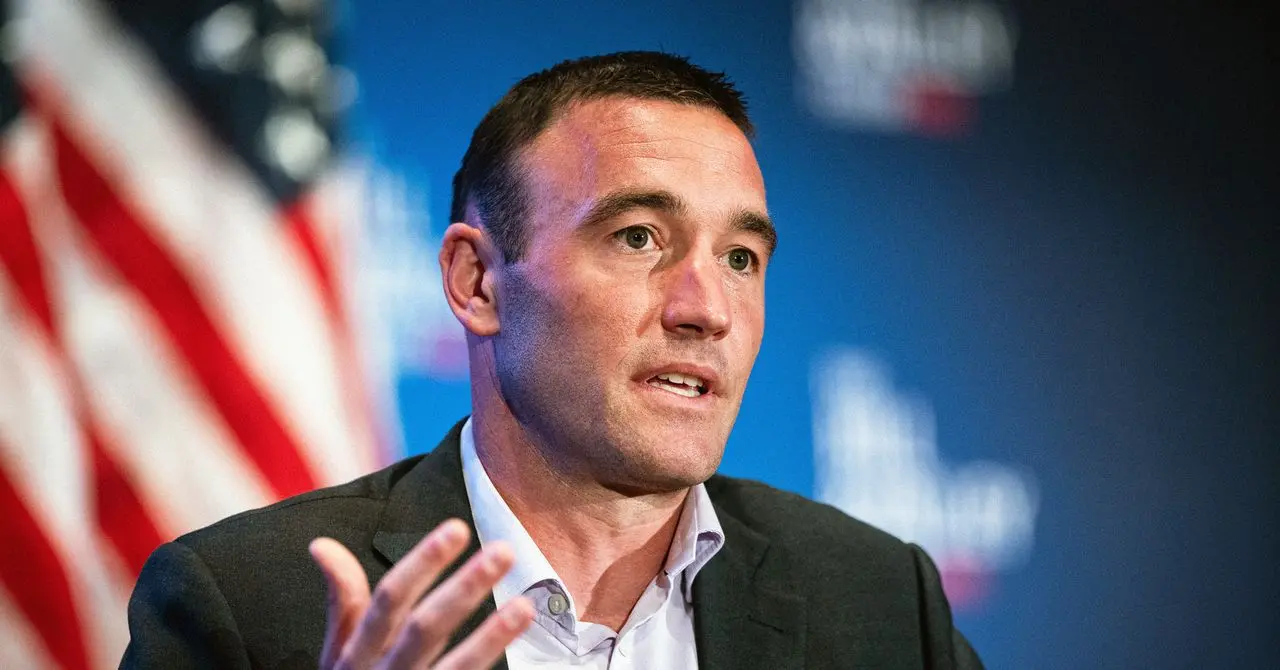
Source: Wired
The departures follow OpenAI's strategic reorientation away from what the company internally calls "side quests"—ambitious but costly customer-facing projects that don't align with its core business objectives
1
. The Sora AI video tool, which was losing an estimated $1 million per day in compute costs, was shut down last month1
. Prism, the AI workspace for scientists launched in January as a web app to help researchers work with AI, is also being sunsetted2
.OpenAI for Science, the internal research group behind Prism that promised to accelerate scientific discovery, is being decentralized into other research teams
3
. An OpenAI spokesperson confirmed that the roughly 10-person team behind Prism will be folded into Thibault Sottiaux's Codex team as part of the company's effort to unify its business and product strategy2
. Weil's departure came just one day after his team released GPT-Rosalind, a new model designed to accelerate life sciences research and drug discovery1
.OpenAI is developing the Codex desktop app to consolidate its ChatGPT chatbot, coding tool, and web browser into what the company envisions as an "everything app" or superapp
2
. This move toward streamlining product offerings reflects OpenAI's focus on competing for business customers against rival Anthropic while potentially preparing for an Initial Public Offering (IPO).Peebles argued in his departure announcement that the kind of research that produced Sora requires space away from the company's mainline roadmap, writing that "cultivating entropy is the only way for a research lab to thrive long-term"
1
. His comments highlight a tension between maintaining experimental research culture and focusing resources on commercially viable enterprise AI products. The shift suggests OpenAI is prioritizing immediate business value over speculative AGI research paths, at least in terms of resource allocation and organizational structure.Related Stories
These departures add to a series of changes affecting OpenAI's executive bench. Earlier this month, the company's chief operating officer Brad Lightcap transitioned to a new role focused on "special projects," while product and business chief Fidji Simo announced medical leave due to a worsening neuroimmune condition
5
. Marketing chief Kate Rouch also stepped down to focus on her cancer recovery5
. The rapid succession of leadership changes raises questions about organizational stability as OpenAI navigates its transformation from research lab to commercial powerhouse, particularly as it races to maintain its competitive position in the rapidly evolving AI landscape while managing investor expectations around profitability and a potential public market debut.Summarized by
Navi
[1]
[3]
1
Policy and Regulation

2
Technology

3
Policy and Regulation



