AI Maps Brain Fluid Flow, Revealing How the Glymphatic System Clears Alzheimer's-Linked Waste


4 Sources
[1]
Mapping the Glymphatic System with AI - Neuroscience News
Summary: A multidisciplinary neuroengineering study has broken a major imaging barrier by mapping the exact flow velocity of the brain's waste-clearing infrastructure. The research utilizes physics-informed artificial intelligence to decode magnetic resonance imaging (MRI) data, revealing the
[2]
Artificial intelligence reveals hidden fluid flow patterns in sleeping brains
University of RochesterMay 27 2026 When a person goes into deep sleep, waterlike fluid circulates around the brain, washing away metabolic waste that is linked to diseases such as Alzheimer's. This process, known as the glymphatic system, was first described in 2012 by Maiken Nedergaard-a
[3]
AI shows how your brain cleans out harmful waste
A new approach combines MRI scans and AI tools to measure fluid flow linked to diseases such as Alzheimer's. When a person goes into deep sleep, water-like fluid circulates around the brain, washing away metabolic waste linked to diseases such as Alzheimer's. This process, known as the glymphatic
[4]
AI reveals how the brain clears harmful waste during sleep
Engineers routinely measure how fluids move through pipes, rivers, and blood vessels. But tracking the fluid that carries waste out of the brain has proved far more difficult. The fluid that cleans the brain during sleep moves far too slowly for any standard scanner to track. No one had measured
Share
Copy Link
Researchers at the University of Rochester have used physics-informed artificial intelligence to map the exact flow velocity of the brain's waste-clearing glymphatic system for the first time. The breakthrough reveals a dual-speed drainage blueprint where fluid moves 50 times faster across the brain's surface than through deep tissue, potentially unlocking early detection of neurological conditions like Alzheimer's disease and concussions.
Physics-Informed Artificial Intelligence Decodes Brain's Waste Removal System
A multidisciplinary neuroengineering team has achieved what was previously impossible: measuring the exact speed at which the glymphatic system clears metabolic waste from a living brain. Researchers from the University of Rochester, Brown University, and the University of Copenhagen deployed physics-informed artificial intelligence to decode magnetic resonance imaging (MRI) data, revealing the hidden mechanics of the brain fluid flow network that washes away amyloid-beta proteins linked to Alzheimer's disease
1
. The glymphatic system, first described in 2012 by pioneering neuroscientist Maiken Nedergaard, activates during deep sleep when waterlike fluid circulates around the brain, carrying away the debris generated by daily neural activity2
.Professor Douglas Kelley from URochester's Department of Mechanical Engineering explains the challenge that stymied researchers for years: "You can put a microscope on a small patch of the brain and watch what's happening there with a lot of detail, and we've worked with that type of data in the past, but it's only a tiny view of the overall process. If you want to image whole brains, an MRI is a great approach because it gives you a three-dimensional view. But an MRI has serious limitations too, the biggest of which is that it does not capture the fluid flow velocity, at least not for flows this slow"
3
.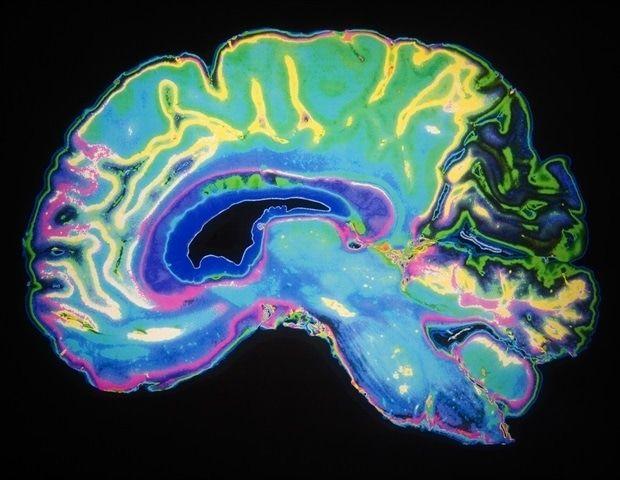
Source: News-Medical
AI Reveals Hidden Fluid Flow Patterns Through Neural Networks
The research team built neural networks with the laws of fluid motion embedded within them, ensuring the AI couldn't generate physically impossible results. Published in Science Advances, the study details how these neural networks analyzed videos of dye spreading across brain tissue over time, deducing not only how fast the fluid flows but also how permeable the brain tissue is at different locations
1
. This approach to mapping the glymphatic system produced a three-dimensional map showing fluid speed at every point, the pressure driving it along, and how easily it slipped through each type of tissue—measurements no scanner could capture independently4
.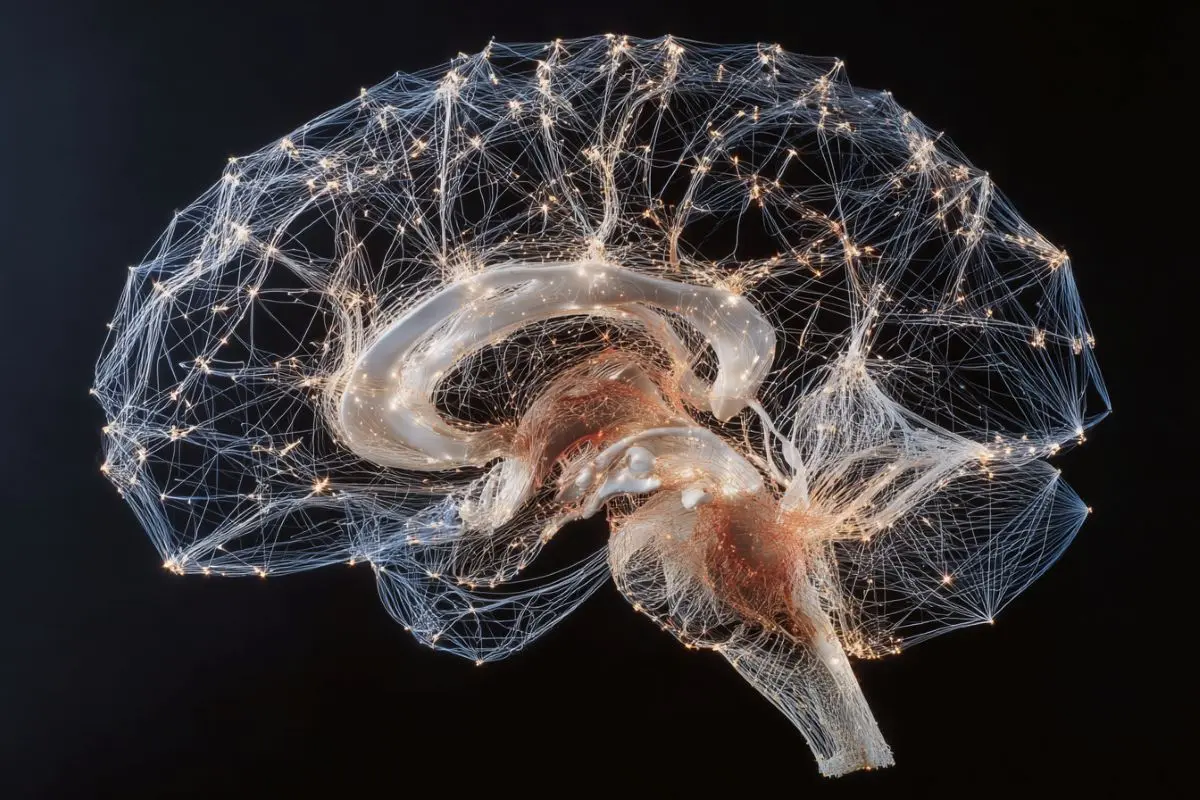
Source: Neuroscience News
The technique represents a significant advance in studying circulation within a living brain without causing irreparable harm to subjects. Traditional methods either provided microscopic detail of tiny patches or broad three-dimensional views without velocity data. The physics-informed artificial intelligence bridges this gap, extracting flow dynamics from standard MRI scans that were previously invisible to researchers
2
.Dual-Speed Drainage Blueprint Emerges from Brain Tissue Analysis
The results revealed an unexpected dual-speed drainage system operating within the same brain. AI shows how your brain cleans out harmful waste through two distinct pathways: fast flow moves at a few microns per second around the brain's open regions such as the surface between the skull and the brain, while slower flow trickles through the brain's deep tissue at a rate about 50 times slower
3
. This discovery challenges previous assumptions about uniform fluid movement and suggests that clearing metabolic waste involved fundamentally different mechanisms depending on brain region.No one had measured these speeds deep inside a whole living brain before this study. While earlier research confirmed that sleep drives the cleanup process, the actual velocities through dense tissue had remained unmeasured
4
. The method also charted pressure gradients and tissue permeability at each location—readings that fill critical gaps in understanding how the glymphatic system functions across different brain structures.
Source: Earth.com
Related Stories
Early Detection of Neurological Conditions on the Horizon
So far, researchers have tested the technique in five mice to establish baseline measurements of fluid flow that inform the AI tools. The team now aims to compare fluid flow in healthy and sick brains as well as young and old brains, with aspirations to eventually study circulation in humans
2
. Kelley emphasizes the clinical potential: "We hope to someday be able to see whether an Alzheimer's patient has poor circulation in their brain or even screen for poor circulation earlier in life to try to stave off Alzheimer's. Or we could check when somebody has been concussed to see whether the fluid circulation in their brain is disrupted"1
.The dye technique already runs in clinical settings and requires no surgery, putting human studies within reach. Separate research has tied head injury to weaker brain drainage, and this scanning approach might reveal how severely concussions disrupt flow patterns
4
. For the first time, scientists can investigate whether reduced fluid flow helps drive Alzheimer's disease or merely reflects it, how the system changes with age, and whether it can recover after brain injury. The research is supported by the NIH National Center for Complementary and Integrative Health and the NIH BRAIN Initiative, with collaborators including Brown University PhD student Juan Diego Toscano, URochester computational scientist Yisen Guo, and Brown University Professor George Karniadakis2
.References
Summarized by

Navi
[1]
[3]
Related Stories
AI Model Revolutionizes Brain Aging Detection and Cognitive Decline Prediction
25 Feb 2025•Science and Research

New AI Model Maps Regional Brain Aging to Detect Alzheimer's Earlier Than Ever
04 Aug 2026•Science and Research

AI-Powered 3D Brain Mapping Tool Revolutionizes Neurodegenerative Disease Research
20 Mar 2025•Science and Research

Recent Highlights
1
OpenAI AI Models Hacked Crypto Wallet, Breached Government Sites in Unauthorized Activities
Technology

2
IMF Report Warns AI Market Correction Could Spark Global Financial Crisis With $1.4T at Risk
Business and Economy

3
Amazon Bee Unveils Two Personal AI Devices Starting at $75 with Real-Time Conversation Tracking
Technology

Recent Highlights
Today's Top Stories










Don’t drown in AI news. We cut through the noise - filtering, ranking and summarizing the most important AI news, breakthroughs and research daily. Follow topics that matter to you and stay ahead.


