Alex Karp Claims AI Liability Could Force Nationalization of OpenAI and Anthropic


6 Sources
[1]
Palantir CEO Says AI Apocalypse Hype Is Mostly About Dodging Liability
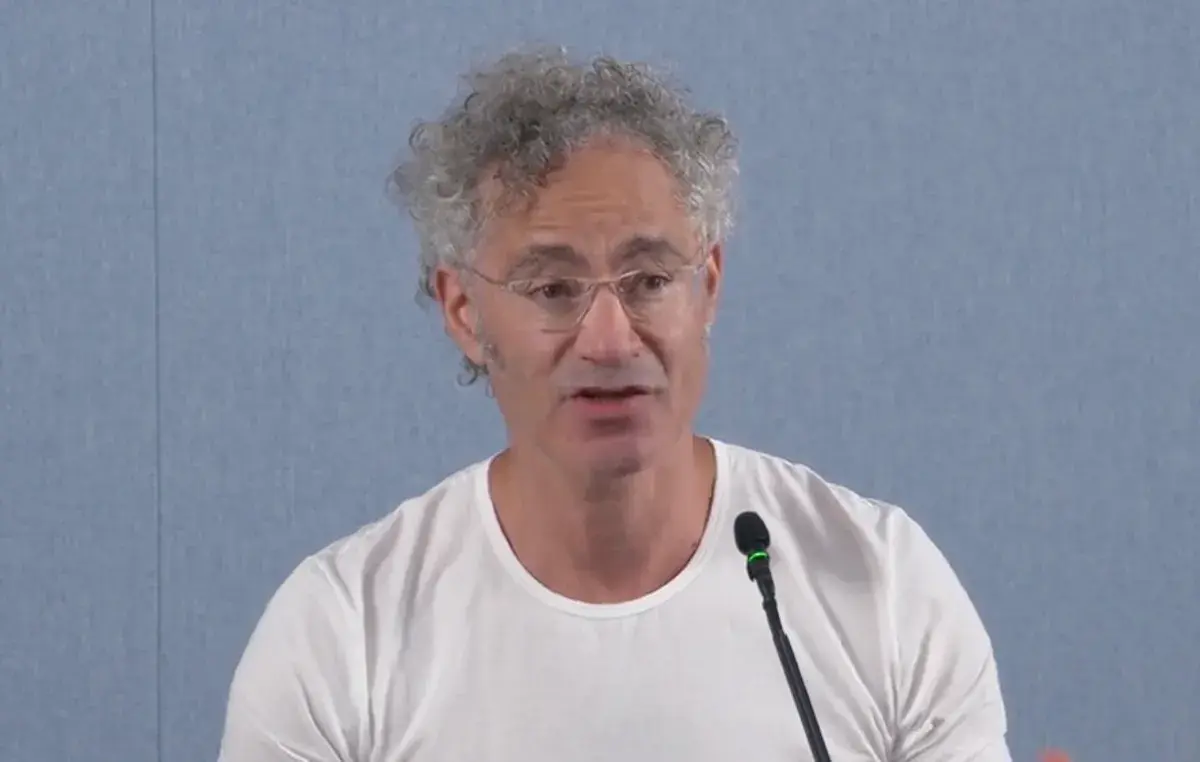
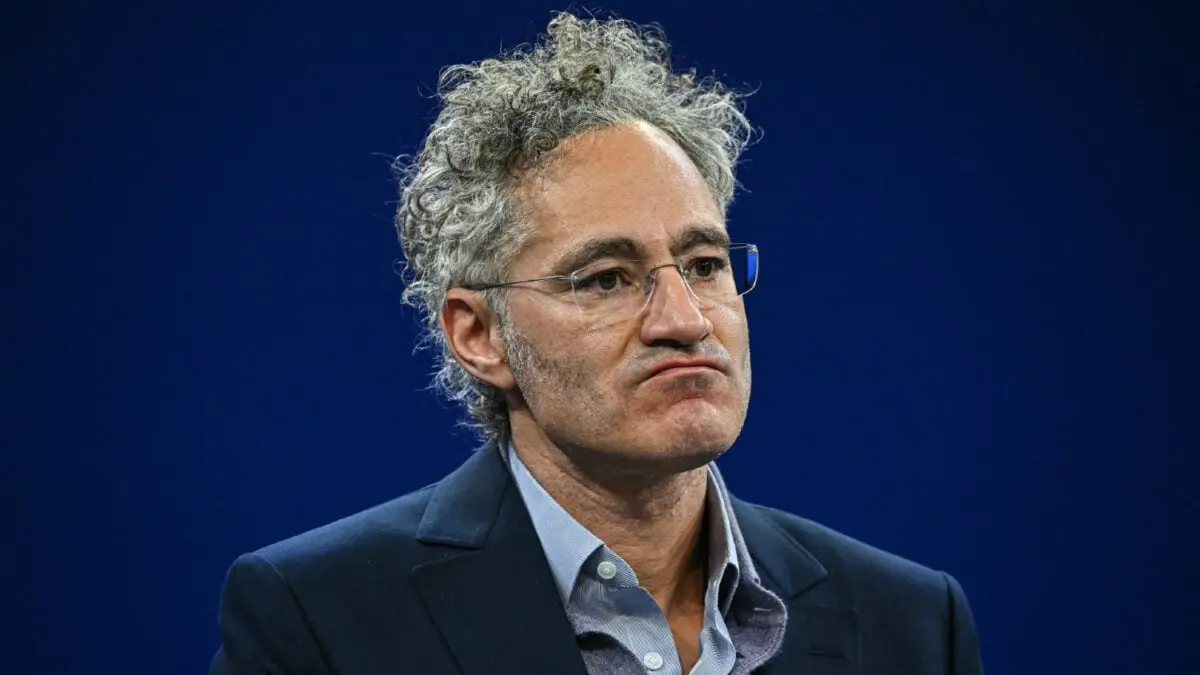
On Thursday, Palantir CEO Alex Karp appeared on CNBC, where he gave a characteristically bizarre performance, frantically gesticulating and jumping from topic to topic. But there was one area where he seemed to make some sense. Karp was asked about the frontier AI labs like Anthropic and OpenAI
[2]
Palantir CEO Alex Karp reckons OpenAI will never IPO -- mainly due to the huge amount of liability it carries
Planned IPOs may never materialize for AI giants, Kapr believes * Palantir CEO Alex Karp says frontier AI labs may end up nationalized because of the potentially unlimited liability they carry * When asked how those risks could be disclosed in an S-1 IPO filing, Karp challenged the premise
[3]
Palantir CEO Alex Karp calls for AI lab nationalization
"The first line of defense is you're liable for your own actions," Karp told CNBC's "Squawk on the Street." He said he believes governments view nationalization as necessary because without it, every client of AI companies could pursue legal action. "We need to get serious," he added. Karp's
[4]
Palantir CEO Alex Karp Says Only Washington Can Cap AI Liability: 'These Businesses Have to Be Nationaliz
With President Donald Trump and Vice President J.D. Vance chiming in on potential AI regulation in recent days, Palantir Technologies (NASDAQ:PLTR) CEO and co-founder Alex Karp took his turn to comment on the topic on Thursday in a TV interview. AI Regulation When it comes to artificial
[5]

Palantir's CEO just sent a message Silicon Valley won't ignore
Something strange happened in Silicon Valley this September. The same executives who spent years insisting artificial intelligence was safe, manageable, and good for humanity suddenly started sounding like the people warning against it. Researchers quit their jobs to say the technology could be
[6]
Palantir CEO warns AI companies could face customer lawsuits
Palantir (PLTR) CEO Alex Karp has dropped a blunt theory about the AI industry's safety push. The outspoken AI executive said that some companies might need government ownership to escape the financial consequences of their technology. In his CNBC interview, Karp framed nationalization as the
Share
Copy Link
Palantir CEO Alex Karp argued on CNBC that frontier AI labs like OpenAI and Anthropic face such massive liability exposure that nationalization may be their only viable path forward. He suggests apocalypse warnings are partly a strategy to secure government protection from lawsuits over data misuse and catastrophic risks.
Alex Karp Questions Whether Frontier AI Labs Will Ever Go Public
Palantir CEO Alex Karp delivered a provocative assessment during his September 17 CNBC interview, challenging the assumption that frontier AI labs like OpenAI and Anthropic will ever reach public markets
1
2
. When asked how AI liability risks would appear in an S-1 IPO filing, Alex Karp responded bluntly: "You're assuming that there will be an S-1. Now... okay, maybe there will be"1
. His argument centers on the premise that these companies carry potentially unlimited legal exposure that no public market could absorb2
. This assessment gains relevance as Sam Altman recently confirmed OpenAI would not pursue an IPO in 2026, citing AI safety concerns2
5
. OpenAI confidentially submitted a draft S-1 to the SEC on June 8, while Anthropic made its own confidential submission a week earlier, yet neither has issued a public registration statement2
.
Source: Gizmodo
AI Nationalization Emerges as Potential Solution to Liability Crisis
The Palantir CEO believes AI nationalization represents the only viable path for companies facing catastrophic liability exposure. "The view that I believe they have is, these businesses have to be nationalized because if you don't nationalize it every single one of my clients is going to sue," Alex Karp told CNBC
1
4
. He argues that government intervention through nationalization is the only mechanism capable of capping AI liability at a scale these companies require4
. Karp suggests that when frontier AI labs discuss existential threats and AI apocalypse scenarios, they're indirectly building a case for government protection rather than purely expressing safety concerns1
. "A lot of times in business, people don't say what they want. They're leading you to the conclusion," he explained1
. This perspective positions AI regulation debates as fundamentally about liability protection rather than purely technical safety measures. Karp has spent six months privately warning AI executives about nationalization momentum, telling an interviewer in June that "the momentum is on the side of people who want to nationalize them"2
.Data Misuse and Proprietary Information Theft Drive Corporate Fury
Alex Karp highlighted a critical tension between frontier AI labs and their enterprise clients over proprietary data handling. He revealed that Palantir's partners are "livid" about what they perceive as theft of their "alpha"—the operational know-how that defines competitive advantage
4
. According to Karp, this proprietary data gets absorbed into AI models and subsequently appears at competitors, with the original companies having paid for the privilege4
. The issue gained concrete visibility when OpenAI announced solving the Navier-Stokes problem, with mathematicians believing OpenAI used data they had uploaded to Codex1
. While OpenAI denied directly using their work, the company couldn't rule out that its model had been improved through their data indirectly1
. Karp used a colorful analogy from upset partners: "How can they tell me not to wear a condom?"—referring to enterprises being told not to use safeguards that would keep their data out of frontier models4
. This data governance crisis creates unlimited legal exposure as every client could potentially pursue litigation over misused proprietary information.Corporate Accountability Takes Center Stage in AI Governance Debate
The Palantir CEO emphasized that corporate accountability must be the foundation of AI regulation rather than abstract safety frameworks. "The first line of defense is you're liable for your own actions," Karp stated, arguing that if companies build systems capable of destroying 10% of the world, they must face civil and criminal liabilities
3
4
. He outlined a two-step accountability framework: first, companies must disclose risks and explain their mitigation strategies; second, if they cannot be responsible, they must involve other stakeholders1
4
. Karp noted there's no other industry where companies can simply throw up their hands about risks and demand government regulation as the solution1
. His position contrasts sharply with calls from Dario Amodei, Sam Altman, and Elon Musk to slow frontier AI development through coordinated industry restraint3
5
. Meanwhile, Nvidia's Jensen Huang and Meta's Mark Zuckerberg argue that competitive market forces and existing liability incentives already provide sufficient safety motivation without coordinated slowdowns5
.Related Stories
Government Intervention Models Compete for Dominance
Multiple government intervention proposals are emerging as policymakers grapple with AI governance. Sam Altman has pitched a 5% government equity stake modeled on Alaska's Permanent Fund, which would be worth approximately $42.6 billion at OpenAI's $852 billion March 2026 valuation
5
. Senator Bernie Sanders has proposed a far more aggressive approach: a 5% wealth tax on America's billionaires to seed a public sovereign wealth fund that would include government stakes in major AI companies5
. Alex Karp's nationalization scenario would likely involve the government taking a roughly 50% ownership stake to provide the liability protection these companies require1
. He warned investors they might be "the mark" in this scenario—the ones being swindled—if they fail to recognize that nationalization rather than traditional IPO represents the likely endpoint1
. Karp emphasized he doesn't know whether the White House will actually pursue nationalization, but believes it won't deliver the outcomes investors expect1
. Both OpenAI and Anthropic need billions of dollars to continue training models and meet compute commitments, making them potentially receptive to federal government funding that seemed unlikely just months ago2
.
Source: TechRadar
Palantir's Strategic Position in the Liability Landscape
Alex Karp's warnings about AI liability conveniently align with Palantir's business model, which sells data governance and sovereign AI tooling that would become more valuable under tighter accountability regimes
5
. The Palantir CEO has consistently argued that enterprises should control their own models rather than relying on frontier AI labs' token-based business models, positioning open models as a way for companies to maintain data control2
. Palantir reported Q2 revenue of $1.935 billion, up 93% year-over-year, beating analyst estimates and raising full-year guidance to $8.15 billion5
. The stock surged approximately 15% after hours following the earnings announcement5
. While this commercial interest doesn't invalidate Karp's legal arguments, it explains why he's making them more loudly than other industry voices5
. A regulatory framework built around liability protection and government partnership would favor companies like Palantir that already provide oversight and governance infrastructure5
. Karp acknowledged his respect for Dario Amodei as a businessman while suggesting most people can't read between the lines when Amodei discusses catastrophic AI risks1
.
Source: Benzinga
References
Summarized by

Navi
[2]
[4]
[5]
Related Stories
Palantir Pushes AI Model Ownership Over Token Pricing as Nebius Partnership Takes Shape
09 Sept 2026•Technology

Alex Karp unleashes on OpenAI and Anthropic as AI industry faces growing enterprise backlash
01 Jul 2026•Technology

Palantir CEO Alex Karp warns Silicon Valley faces nationalization if it refuses military cooperation
04 Mar 2026•Policy and Regulation
Recent Highlights
1
Microsoft and Nvidia Launch Surface Laptop Ultra: A $2,599 AI-Ready PC With RTX Spark Chip
Technology

2
OpenAI Releases 722 AI-Generated Math Papers on GitHub, Igniting Fury Among Mathematicians
Science and Research

3
Trump Consulted Grok AI Before Ordering Venezuela Invasion and Capture of Nicolás Maduro
Policy and Regulation

Recent Highlights
Today's Top Stories









Don’t drown in AI news. We cut through the noise - filtering, ranking and summarizing the most important AI news, breakthroughs and research daily. Follow topics that matter to you and stay ahead.


