Pentagon Requests $30.3M for AI Lie Detector Despite Scientific Doubts on Polygraph Accuracy


3 Sources
[1]
The Pentagon wants $30 million to build an AI-powered lie detector
Polygraph+ will use new sensor technologies and AI to vet staff and hunt leakers. Experts say AI-enabled lie detection is "the worst of both worlds". The US government wants to spend $30.3 million over the next five years on an improved form of lie detector, according to a Department of Defense
[2]
Pentagon seeks $30.3m for an AI lie detector to vet its staff
A Pentagon budget request seeks $30.3m over five years for Polygraph Next, an AI lie detector that reads the body from afar. Experts told MIT Technology Review that AI adds uncertainty to a weak test. The Pentagon wants $30.3m over five years to build an AI lie detector that reads the body without
[3]
The Pentagon wants an AI lie detector, despite an old problem it can't ignore
Pentagon's Polygraph Next would use non-contact sensing and automated scoring for personnel vetting. Lie detectors already have a reputation problem. The Pentagon now wants to see whether AI can make them better. A new Defense Counterintelligence and Security Agency program called Polygraph Next
Share
Copy Link
The Pentagon wants $30.3 million over five years to develop Polygraph Next, an AI-powered lie detector using standoff sensing and machine learning algorithms. But experts warn that adding AI to an already discredited technology creates "the worst of both worlds" for the 2.8 million Defense Department employees.
The Pentagon has requested $30.3 million over five years to develop an AI lie detector called Polygraph Next, a program that aims to modernize polygraph technology using standoff sensing techniques and machine learning algorithms
1
2
. The Defense Counterintelligence and Security Agency (DCSA), which conducts background checks for the federal government, would receive $6.42 million in 2027, with funding continuing through 20312
. The program, also known as Polygraph+, represents the Pentagon's attempt to vet its staff and detect insider threats using AI-powered deception detection1
.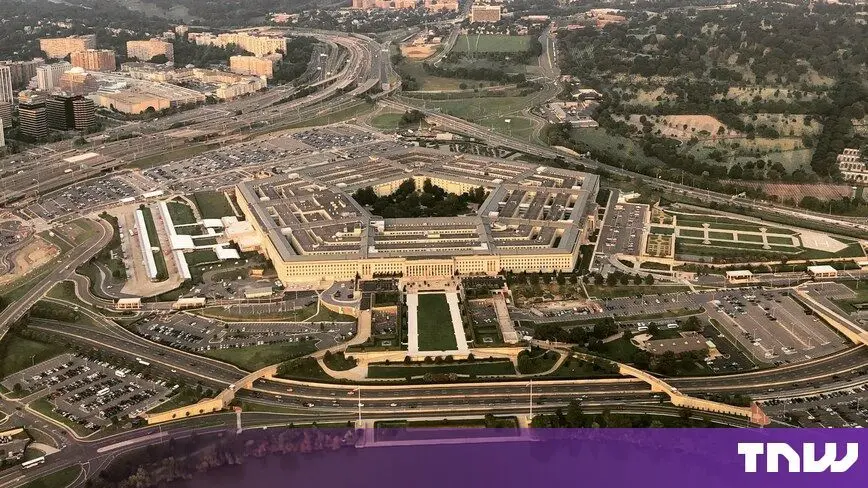
Source: The Next Web
Standoff Sensing and Non-Contact Monitoring Replace Traditional Methods
Polygraph Next would use non-contact physiological monitoring instead of traditional sensors attached to subjects
3
. The standoff sensing techniques allow physiological readings from subjects without attaching devices, marking a departure from polygraph technology that has barely changed since the 1920s1
. In 2023, the Defense Innovation Unit selected two companies to build prototypes: Presage Technologies, which measures heart rate and breathing rate using standard cameras, and Altec Research, whose prototype tracks head movement, facial skin temperature, and pore activity1
. The DCSA plans to implement automated scoring, decision aids, centralized cloud storage, and analytics tools to refine the software and identify new diagnostic features for credibility assessment3
.Leak Hunts Drive Expanded Polygraph Use Under Hegseth
The push to modernize polygraph technology comes amid heightened tension within the Department of Defense. Under Defense Secretary Pete Hegseth, the Pentagon has increasingly turned to polygraph tests to find sources of alleged leaks to the press
1
. In September, The New York Times reported that approximately 50 officers on the Joint Staff underwent polygraph tests after news coverage revealed depleted US weapons stockpiles in the war with Iran1
2
. The federal government conducts tens of thousands of polygraph tests annually while screening employees, and the new AI-powered lie detector program would be used for both personnel vetting and insider-threat detection across the Pentagon's 2.8 million staff1
.Experts Warn AI Creates "Worst of Both Worlds" for Flawed Technology
Scientific skepticism surrounds the program. Kyri Kotsoglou, a professor at Northumbria Law School who studies polygraph use in the justice system, calls the AI-powered lie detector "the worst of both worlds," adding uncertainty on top of invalidity
2
. Traditional polygraphs track blood pressure, pulse, breathing, and sweat measurements, but the technology has been repeatedly debunked and its results are rarely admissible in court1
. In 1983, Congress's Office of Technology Assessment found very limited evidence supporting polygraph use for screening employees, and in 2003, the US National Research Council called the evidence for its accuracy "weak at best"1
3
.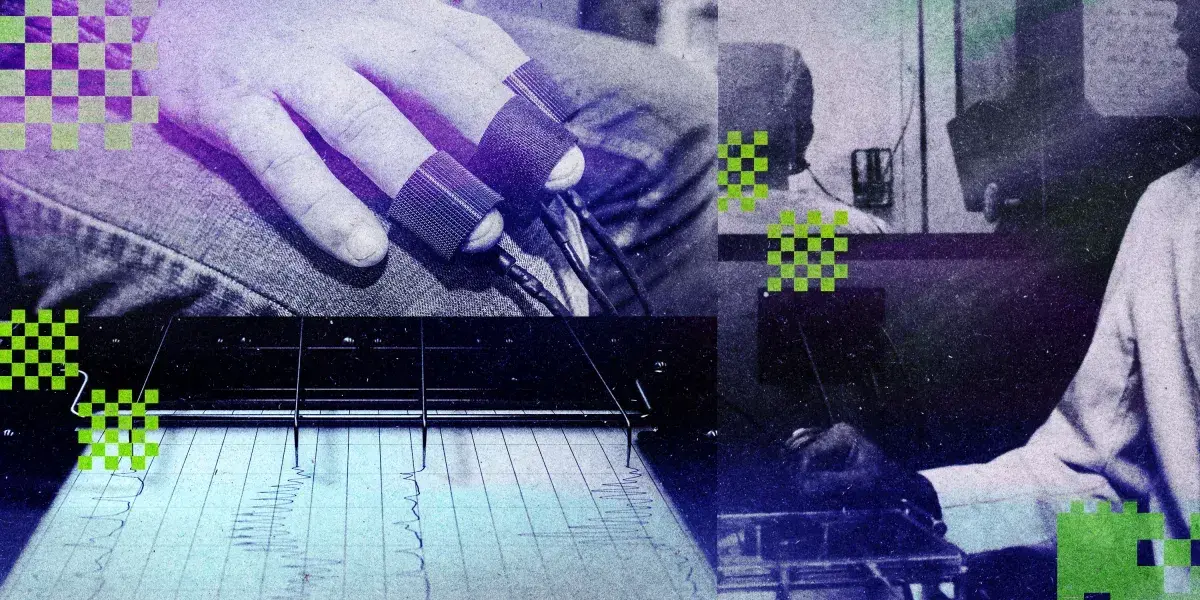
Source: MIT Tech Review
Related Stories

False Accusations Could Affect Tens of Thousands
The American Polygraph Association claims polygraph accuracy ranges between 80% and 94%, but even at that level, applying the system to the Pentagon's 2.8 million employees could result in tens of thousands of false accusations
1
2
. Research shows humans can spot lies just over half the time without technical assistance1
. Marion Oswald, a law professor who has written about polygraphs, told MIT Technology Review that "even if you have all the records in the world from polygraph tests, you don't know whether those polygraph tests are right or not"2
. Additional concerns include subjective interpretations by different examiners yielding wildly different results, people from minority groups being more likely judged as deceptive, and trained subjects beating tests using countermeasures like stepping on hidden pins to artificially heighten physiological responses to baseline questions1
.Failed AI Deception Projects Raise Questions About Future Success
Earlier AI lie detector projects have not lasted. The EU funded iBorderCtrl, a border pilot built on a system that scored deception from video, but it faded away, as did the US AVATAR border project
2
. VeriPol, a machine learning system used by Spanish police to flag potentially false robbery reports, and Nemesysco, which developed voice-analysis technology as a deception detection tool, represent other attempts at AI-powered credibility assessment3
. Sophie van der Zee, who studies deception at Erasmus University in Rotterdam, notes that while machine learning algorithms could combine several measures into one score harder to game, "there is still no Pinocchio's nose"2
. The budget request awaits Congressional approval, but the DCSA has not published evidence showing that machine learning can overcome the underlying limits of polygraph testing3
.References
Summarized by

Navi
[1]
[2]
Related Stories
AI Shows Promise But Falls Short of Human Accuracy in Lie Detection Study
05 Nov 2025•Science and Research

Pentagon reveals how Military AI chatbots accelerate targeting decisions in Iran operations
11 Mar 2026•Technology

Pentagon Pushes AI-First Military Strategy as Tech Giants Reshape National Security
05 Oct 2026•Policy and Regulation

Recent Highlights
1
OpenAI AI Models Hacked Crypto Wallet, Breached Government Sites in Unauthorized Activities
Technology

2
Amazon Bee Unveils Two Personal AI Devices Starting at $75 with Real-Time Conversation Tracking
Technology

3
China Proposes Export Controls on 23 AI Technologies Amid US-China Rivalry
Policy and Regulation
Recent Highlights
Today's Top Stories









Don’t drown in AI news. We cut through the noise - filtering, ranking and summarizing the most important AI news, breakthroughs and research daily. Follow topics that matter to you and stay ahead.


