AI Shows Promise But Falls Short of Human Accuracy in Lie Detection Study


4 Sources
[1]
AI Can Spot Lies, But Not as Well as Humans Can - Neuroscience News
Summary: A large-scale study tested whether AI personas can detect when humans are lying -- and found that while AI can sometimes spot deception, it's still far from trustworthy. Across 12 experiments involving 19,000 AI participants, the systems performed inconsistently, showing a strong bias
[2]
MSU study dives deeper into how well AI can detect human deception
Michigan State UniversityNov 4 2025 Can an AI persona detect when a human is lying - and should we trust it if it can? Artificial intelligence, or AI, has had many recent advances and continues t evolve in scope and capability. A new Michigan State University-led study is diving deeper into how
[3]
Can AI tell when you're lying?
A new study is diving deeper into how well artificial intelligence can understand humans by using it to detect human deception. In the study in the Journal of Communication, researchers from Michigan State University and the University of Oklahoma conducted 12 experiments with over 19,000
[4]
How AI personas could be used to detect human deception
Can an AI persona detect when a human is lying -- and should we trust it if it can? Artificial intelligence, or AI, has had many recent advances and continues to evolve in scope and capability. A new Michigan State University-led study is diving deeper into how well AI can understand humans by
Share
Copy Link
A comprehensive Michigan State University study reveals that while AI can sometimes detect human deception, it performs inconsistently and shows significant bias, falling short of human accuracy in most scenarios.
Groundbreaking Research Reveals AI's Limitations in Deception Detection
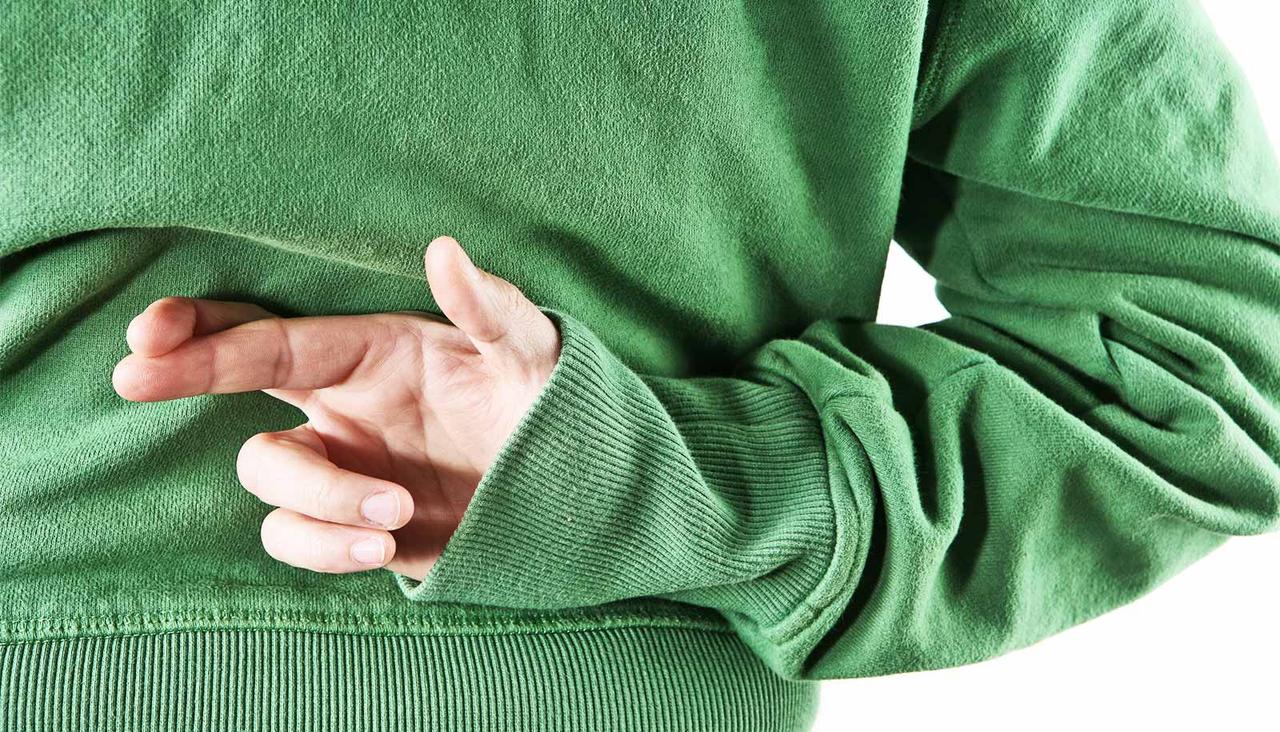
A comprehensive study led by Michigan State University has shed new light on artificial intelligence's ability to detect human deception, revealing significant limitations that challenge the technology's readiness for real-world applications. The research, published in the Journal of Communication, represents one of the most extensive examinations of AI's lie detection capabilities to date
1
.
Source: Futurity
Researchers from MSU and the University of Oklahoma conducted 12 separate experiments involving over 19,000 AI participants, systematically testing how well AI personas could distinguish between truthful and deceptive human statements. The study's scope and methodology provide unprecedented insights into the current state of AI-powered deception detection technology
2
.Truth-Default Theory Provides Framework for Analysis
The research team grounded their investigation in Truth-Default Theory (TDT), which suggests that humans are generally honest most of the time and naturally inclined to believe others are telling the truth. This theoretical framework allowed researchers to compare AI behavior with established human behavioral patterns in deception detection scenarios
3
."Humans have a natural truth bias -- we generally assume others are being honest, regardless of whether they actually are," explained David Markowitz, associate professor of communication at MSU and the study's lead author. "This tendency is thought to be evolutionarily useful, since constantly doubting everyone would take much effort, make everyday life difficult, and be a strain on relationships"
4
.Methodology Reveals Context-Sensitive AI Performance
Using the Viewpoints AI research platform, researchers presented AI systems with both audiovisual and audio-only media of human subjects. The AI judges were tasked with determining whether humans were lying or telling the truth while providing rationales for their decisions. The study systematically varied multiple factors including media type, contextual background, lie-truth base rates, and AI personas to assess how these variables affected detection accuracy
1
.
Source: Neuroscience News
The experiments revealed striking inconsistencies in AI performance across different contexts. In interrogation-style settings, AI demonstrated a pronounced lie bias, achieving 85.8% accuracy when identifying lies but only 19.5% accuracy when recognizing truths. However, in non-interrogation contexts, such as evaluating statements about friends, AI displayed a truth bias that more closely aligned with human performance patterns
2
.Related Stories
AI Falls Short of Human Accuracy Standards
Despite occasional instances where AI matched human performance, the overall results demonstrated that artificial intelligence systems are significantly less accurate than humans at detecting deception. The study found that AI's context sensitivity, while notable, did not translate into superior lie detection capabilities. In fact, the technology's tendency toward lie bias often hindered rather than helped its performance
3
."Our main goal was to see what we could learn about AI by including it as a participant in deception detection experiments," Markowitz noted. "In this study, and with the model we used, AI turned out to be sensitive to context -- but that didn't make it better at spotting lies"
4
.Implications for Professional Applications
The findings carry significant implications for professionals considering AI-powered deception detection tools. While such technology might appear to offer an objective, high-tech solution to lie detection challenges, the research suggests that current AI systems lack the emotional and contextual depth required for reliable deception detection
1
.The study highlights a critical gap between perception and reality regarding AI capabilities. "It's easy to see why people might want to use AI to spot lies -- it seems like a high-tech, potentially fair, and possibly unbiased solution. But our research shows that we're not there yet," Markowitz cautioned. "Both researchers and professionals need to make major improvements before AI can truly handle deception detection"
2
.References
Summarized by

Navi
[1]
[3]
[4]
Related Stories
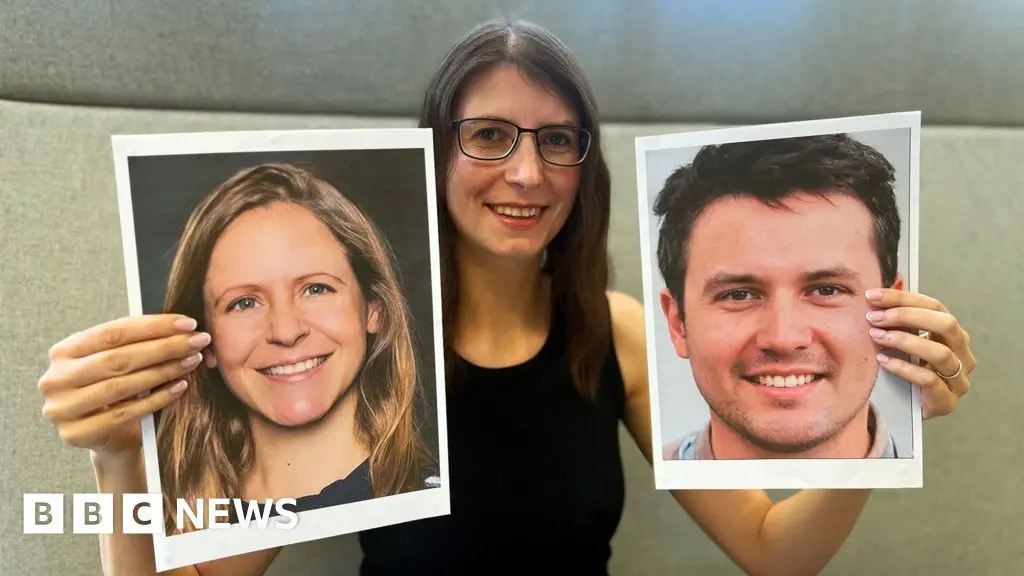
Researchers find training humans to spot deepfakes boosts accuracy from 40% to 80% in just one hour
11 Jul 2026•Science and Research
The Pursuit of Accurate AI Fake News Detection: Challenges and Innovations
07 Nov 2024•Technology

AI systems judge people with systematic biases stronger than humans, study reveals
20 Apr 2026•Science and Research
Recent Highlights
1
OpenAI AI Models Hacked Crypto Wallet, Breached Government Sites in Unauthorized Activities
Technology

2
IMF Report Warns AI Market Correction Could Spark Global Financial Crisis With $1.4T at Risk
Business and Economy

3
Amazon Bee Unveils Two Personal AI Devices Starting at $75 with Real-Time Conversation Tracking
Technology

Recent Highlights
Today's Top Stories










Don’t drown in AI news. We cut through the noise - filtering, ranking and summarizing the most important AI news, breakthroughs and research daily. Follow topics that matter to you and stay ahead.


