Pentagon's ouster of Anthropic accelerates contracts for small AI rivals across defense industry


3 Sources
3 Sources
[1]
Pentagon's ouster of Anthropic opens doors for small AI rivals
WASHINGTON, April 9 (Reuters) - Small defense industry artificial intelligence startups are suddenly fielding calls from generals, combatant commanders and deep-pocketed investors, after the souring relationship between the Pentagon and its once-favored AI vendor, Anthropic, reinforced the need to diversify and increase the number of AI providers for the military. In the weeks since the Department of Defense's troubled relationship with Anthropic burst into public view and led to the company being kicked out of the U.S. military, new defense-focused AI companies like Smack Technologies and EdgeRunner AI say they have experienced a shift in interest that would have been unimaginable just months ago. They have received a surge of overtures about possible contracts and meeting requests and been approached by investors who previously showed no interest. The Pentagon's growing animosity toward its top AI provider, Anthropic, has opened up opportunities for smaller rivals, who have long sought a foot in the door to the most lucrative government contractor in the world. A defense contract can lead to more business with other branches of the U.S. government, and is a useful signal of trust and safety for potential commercial clients. "We've seen a massive increase in demand from customers and the government to get AI solutions fielded since Anthropic was declared a supply-chain risk," said Tyler Sweatt, CEO of Second Front, a company that helps technology firms meet the requirements needed to operate on secure Pentagon networks. "Our customers are turning to us as the Pentagon turns to them to deploy quickly in the wake of the Anthropic blowup." Since the Pentagon deemed Anthropic's products a "supply-chain risk" in March and the two sides became embroiled in a lawsuit, the military has expressed increasing interest in AI startups like Smack Technologies, saying, "We want more, we want demos, let's talk about how we can move faster," said Andrew Markoff, co-founder and chief executive of the 19-person startup based in El Segundo, California. In late March, a judge temporarily blocked the Pentagon's blacklisting of Anthropic. Tyler Saltsman, co-founder and chief executive of EdgeRunner AI, described a similar experience. His company had been waiting more than a year for a Space Force contract to clear the Pentagon's procurement machinery. It was signed within weeks of the Anthropic situation breaking into the open. "I can't prove that the Anthropic drama sped this up," Saltsman said, "but I have a sneaky suspicion it did." "The Pentagon will continue to rapidly deploy frontier AI capabilities to the warfighter through strong industry partnerships across all classification levels," a Pentagon official said. One Pentagon technologist has previously told Reuters that the falling-out with Anthropic, and the realization that the Defense Department was heavily dependent on one AI provider, forced the department to diversify AI providers. SMACK'S MARINE CORPS CONTRACT SPEEDS UP For Smack, the clearest example of the post-Anthropic acceleration involves the Marine Corps. The company won a contract with the Marine Corps in March 2025 and delivered a successful prototype by October -- software that compresses what is normally a months-long operational planning process into roughly 15 minutes. Despite the successful prototype, momentum stalled. Full production had been budgeted for fiscal year 2027 -- meaning October 2027 at the earliest. Through the 2025 holiday period and into early 2026, there was no clear direction. Then the Anthropic uproar occurred. Within weeks, Smack was invited to multiple meetings with the Marine Corps focused on a single question: how fast can this move into production this year? Markoff said there was "very specific guidance and movement and energy" toward getting the prototype ready for combat operations in 2026 -- an acceleration of more than a year. The shift extended beyond the Marines. Smack holds contracts with the Navy and Air Force, and Markoff said interest came in nearly immediately from U.S. Special Operations Command, and others. EdgeRunner, which is deploying with the Army Special Forces groups and has received a contract with the Space Force, said the Navy has also dramatically sped up engagement. Meetings that had been biweekly or monthly are now happening multiple times a week. Both EdgeRunner and Smack are now racing to get their systems operating at higher security classification levels -- the gateway to the most operationally significant use cases and the largest military contracts. EdgeRunner said the military has told the company it can get to IL-6, a security designation enabling access to secret and top-secret data, within three months -- a timeline Saltsman described as remarkable, given that the process normally takes 18 months or longer. The acceleration, he said, is being driven partly by pressure from Pentagon leadership to cut through procurement bureaucracy, and partly by the urgency the Anthropic situation has injected into the department's AI strategy. Reporting by Mike Stone in Washington Editing by Chris Sanders and Matthew Lewis Our Standards: The Thomson Reuters Trust Principles., opens new tab * Suggested Topics: * Artificial Intelligence * Public Policy Mike Stone Thomson Reuters Mike Stone is a Reuters reporter covering the U.S. arms trade and defense industry. Most recently Mike has been focused on the Golden Dome missile defense shield. Mike also spends a lot of his time writing on Ukraine and how industry has adapted, or faltered as it supports that conflict. Mike, a New Yorker, has extensively covered how the U.S. has supplied Ukraine with weapons, the cadence, decisions and milestones that have had battlefield impacts. Before his time in Washington Mike's coverage focused on mergers and acquisitions for oil and gas companies, financial institutions, defense companies, consumer product makers, retailers, real estate giants, and telecommunications companies.
[2]
Pentagon's Ouster of Anthropic Opens Doors for Small AI Rivals
WASHINGTON, April 9 (Reuters) - Small defense industry artificial intelligence startups are suddenly fielding calls from generals, combatant commanders and deep-pocketed investors, after the souring relationship between the Pentagon and its once-favored AI vendor, Anthropic, reinforced the need to diversify and increase the number of AI providers for the military. In the weeks since the Department of Defense's troubled relationship with Anthropic burst into public view and led to the company being kicked out of the U.S. military, new defense-focused AI companies like Smack Technologies and EdgeRunner AI say they have experienced a shift in interest that would have been unimaginable just months ago. They have received a surge of overtures about possible contracts and meeting requests and been approached by investors who previously showed no interest. The Pentagon's growing animosity toward its top AI provider, Anthropic, has opened up opportunities for smaller rivals, who have long sought a foot in the door to the most lucrative government contractor in the world. A defense contract can lead to more business with other branches of the U.S. government, and is a useful signal of trust and safety for potential commercial clients. "We've seen a massive increase in demand from customers and the government to get AI solutions fielded since Anthropic was declared a supply-chain risk," said Tyler Sweatt, CEO of Second Front, a company that helps technology firms meet the requirements needed to operate on secure Pentagon networks. "Our customers are turning to us as the Pentagon turns to them to deploy quickly in the wake of the Anthropic blowup." Since the Pentagon deemed Anthropic's products a "supply-chain risk" in March and the two sides became embroiled in a lawsuit, the military has expressed increasing interest in AI startups like Smack Technologies, saying, "We want more, we want demos, let's talk about how we can move faster," said Andrew Markoff, co-founder and chief executive of the 19-person startup based in El Segundo, California. In late March, a judge temporarily blocked the Pentagon's blacklisting of Anthropic. Tyler Saltsman, co-founder and chief executive of EdgeRunner AI, described a similar experience. His company had been waiting more than a year for a Space Force contract to clear the Pentagon's procurement machinery. It was signed within weeks of the Anthropic situation breaking into the open. "I can't prove that the Anthropic drama sped this up," Saltsman said, "but I have a sneaky suspicion it did." "The Pentagon will continue to rapidly deploy frontier AI capabilities to the warfighter through strong industry partnerships across all classification levels," a Pentagon official said. One Pentagon technologist has previously told Reuters that the falling-out with Anthropic, and the realization that the Defense Department was heavily dependent on one AI provider, forced the department to diversify AI providers. SMACK'S MARINE CORPS CONTRACT SPEEDS UP For Smack, the clearest example of the post-Anthropic acceleration involves the Marine Corps. The company won a contract with the Marine Corps in March 2025 and delivered a successful prototype by October -- software that compresses what is normally a months-long operational planning process into roughly 15 minutes. Despite the successful prototype, momentum stalled. Full production had been budgeted for fiscal year 2027 -- meaning October 2027 at the earliest. Through the 2025 holiday period and into early 2026, there was no clear direction. Then the Anthropic uproar occurred. Within weeks, Smack was invited to multiple meetings with the Marine Corps focused on a single question: how fast can this move into production this year? Markoff said there was "very specific guidance and movement and energy" toward getting the prototype ready for combat operations in 2026 -- an acceleration of more than a year. The shift extended beyond the Marines. Smack holds contracts with the Navy and Air Force, and Markoff said interest came in nearly immediately from U.S. Special Operations Command, and others. EdgeRunner, which is deploying with the Army Special Forces groups and has received a contract with the Space Force, said the Navy has also dramatically sped up engagement. Meetings that had been biweekly or monthly are now happening multiple times a week. Both EdgeRunner and Smack are now racing to get their systems operating at higher security classification levels -- the gateway to the most operationally significant use cases and the largest military contracts. EdgeRunner said the military has told the company it can get to IL-6, a security designation enabling access to secret and top-secret data, within three months -- a timeline Saltsman described as remarkable, given that the process normally takes 18 months or longer. The acceleration, he said, is being driven partly by pressure from Pentagon leadership to cut through procurement bureaucracy, and partly by the urgency the Anthropic situation has injected into the department's AI strategy. (Reporting by Mike Stone in WashingtonEditing by Chris Sanders and Matthew Lewis)
[3]
Pentagon's ouster of Anthropic opens doors for small AI rivals
Since the Pentagon deemed Anthropic's products a "supply-chain risk" in March and the two sides became embroiled in a lawsuit, the military has expressed increasing interest in AI startups like Smack Technologies, saying, "We want more, we want demos, let's talk about how we can move faster," said Andrew Markoff, co-founder and chief executive of the 19-person startup based in El Segundo, California. Small defense industry artificial intelligence startups are suddenly fielding calls from generals, combatant commanders and deep-pocketed investors, after the souring relationship between the Pentagon and its once-favored AI vendor, Anthropic, reinforced the need to diversify and increase the number of AI providers for the military. In the weeks since the Department of Defense's troubled relationship with Anthropic burst into public view and led to the company being kicked out of the U.S. military, new defense-focused AI companies like Smack Technologies and EdgeRunner AI say they have experienced a shift in interest that would have been unimaginable just months ago. They have received a surge of overtures about possible contracts and meeting requests and been approached by investors who previously showed no interest. The Pentagon's growing animosity toward its top AI provider, Anthropic, has opened up opportunities for smaller rivals, who have long sought a foot in the door to the most lucrative government contractor in the world. A defense contract can lead to more business with other branches of the U.S. government, and is a useful signal of trust and safety for potential commercial clients. "We've seen a massive increase in demand from customers and the government to get AI solutions fielded since Anthropic was declared a supply-chain risk," said Tyler Sweatt, CEO of Second Front, a company that helps technology firms meet the requirements needed to operate on secure Pentagon networks. "Our customers are turning to us as the Pentagon turns to them to deploy quickly in the wake of the Anthropic blowup." Since the Pentagon deemed Anthropic's products a "supply-chain risk" in March and the two sides became embroiled in a lawsuit, the military has expressed increasing interest in AI startups like Smack Technologies, saying, "We want more, we want demos, let's talk about how we can move faster," said Andrew Markoff, co-founder and chief executive of the 19-person startup based in El Segundo, California. In late March, a judge temporarily blocked the Pentagon's blacklisting of Anthropic. Tyler Saltsman, co-founder and chief executive of EdgeRunner AI, described a similar experience. His company had been waiting more than a year for a Space Force contract to clear the Pentagon's procurement machinery. It was signed within weeks of the Anthropic situation breaking into the open. "I can't prove that the Anthropic drama sped this up," Saltsman said, "but I have a sneaky suspicion it did." "The Pentagon will continue to rapidly deploy frontier AI capabilities to the warfighter through strong industry partnerships across all classification levels," a Pentagon official said. One Pentagon technologist has previously told Reuters that the falling-out with Anthropic, and the realization that the Defense Department was heavily dependent on one AI provider, forced the department to diversify AI providers. Smack's marine corps contract speeds up For Smack, the clearest example of the post-Anthropic acceleration involves the Marine Corps. The company won a contract with the Marine Corps in March 2025 and delivered a successful prototype by October - software that compresses what is normally a months-long operational planning process into roughly 15 minutes. Despite the successful prototype, momentum stalled. Full production had been budgeted for fiscal year 2027 - meaning October 2027 at the earliest. Through the 2025 holiday period and into early 2026, there was no clear direction. Then the Anthropic uproar occurred. Within weeks, Smack was invited to multiple meetings with the Marine Corps focused on a single question: how fast can this move into production this year? Markoff said there was "very specific guidance and movement and energy" toward getting the prototype ready for combat operations in 2026 - an acceleration of more than a year. The shift extended beyond the Marines. Smack holds contracts with the Navy and Air Force, and Markoff said interest came in nearly immediately from U.S. Special Operations Command, and others. EdgeRunner, which is deploying with the Army Special Forces groups and has received a contract with the Space Force, said the Navy has also dramatically sped up engagement. Meetings that had been biweekly or monthly are now happening multiple times a week. Both EdgeRunner and Smack are now racing to get their systems operating at higher security classification levels - the gateway to the most operationally significant use cases and the largest military contracts. EdgeRunner said the military has told the company it can get to IL-6, a security designation enabling access to secret and top-secret data, within three months - a timeline Saltsman described as remarkable, given that the process normally takes 18 months or longer. The acceleration, he said, is being driven partly by pressure from Pentagon leadership to cut through procurement bureaucracy, and partly by the urgency the Anthropic situation has injected into the department's AI strategy.
Share
Share
Copy Link
The Pentagon's decision to kick out Anthropic as a supply-chain risk has triggered a surge in opportunities for small artificial intelligence startups. Companies like Smack Technologies and EdgeRunner AI report accelerated contracts, investor interest, and meetings with generals as the Department of Defense rushes to diversify its AI providers and reduce dependency on a single vendor.
Pentagon's Growing Rift with Anthropic Creates Openings for Small AI Rivals
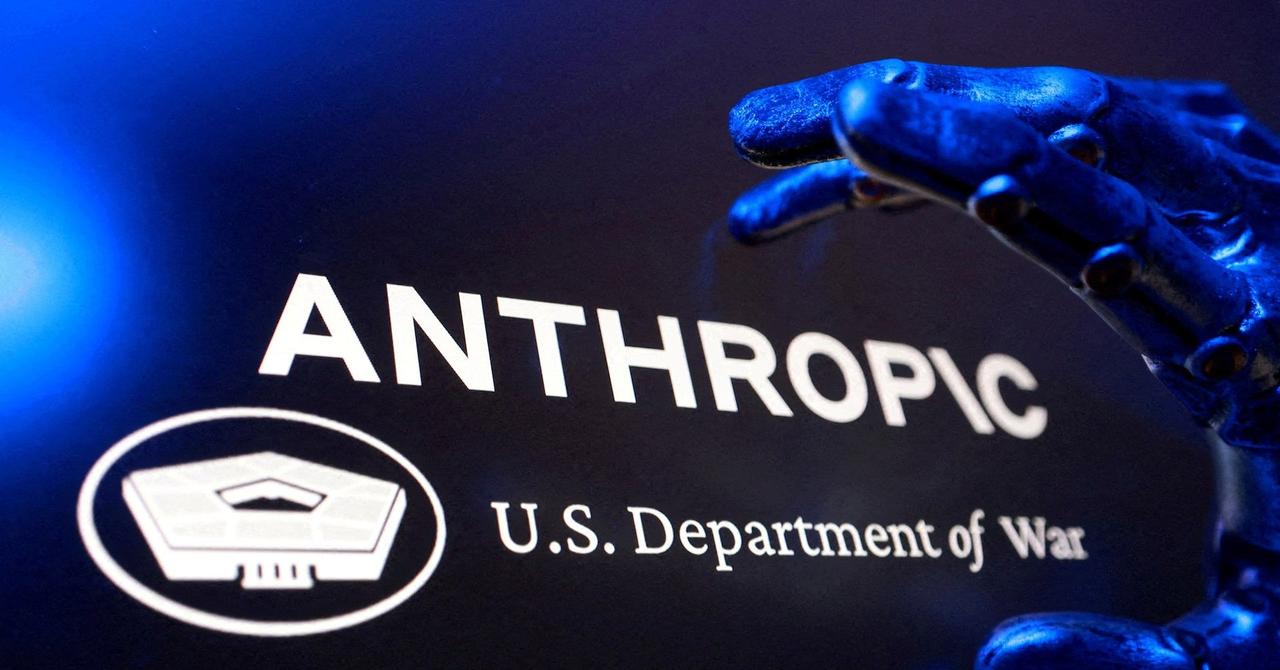
Small artificial intelligence startups focused on the defense industry are experiencing an unprecedented surge in attention from generals, combatant commanders, and investors following the Pentagon's ouster of Anthropic, its once-favored AI vendor. After the Department of Defense deemed Anthropic's products a "supply-chain risk" in March and the two sides became embroiled in a lawsuit, companies like Smack Technologies and EdgeRunner AI report a dramatic shift in opportunities that seemed unimaginable just months earlier
1
. The falling-out has forced the Pentagon to confront its heavy dependence on one AI provider and accelerate efforts to diversify its AI providers across military branches2
.
Source: Reuters
Tyler Sweatt, CEO of Second Front, a company that helps technology firms meet requirements for secure Pentagon networks, described the impact bluntly: "We've seen a massive increase in demand from customers and the government to get AI solutions fielded since Anthropic was declared a supply-chain risk"
3
. In late March, a judge temporarily blocked the Pentagon's blacklisting of Anthropic, but the momentum shift for smaller competitors continues.Accelerated Contracts Transform Startup Timelines
The clearest evidence of this post-Anthropic acceleration comes from Smack Technologies, a 19-person startup based in El Segundo, California. The company won a contract with the Marine Corps in March 2025 and delivered a successful prototype by October—software that compresses a months-long operational planning process into roughly 15 minutes. Despite this achievement, full production had been budgeted for fiscal year 2027, meaning October 2027 at the earliest. Momentum stalled through the 2025 holiday period and into early 2026.
Then the Anthropic uproar occurred. Within weeks, Smack was invited to multiple meetings with the Marine Corps focused on one question: how fast can this move into production this year? Andrew Markoff, co-founder and chief executive of Smack Technologies, said there was "very specific guidance and movement and energy" toward getting the prototype ready for combat operations in 2026—an acceleration of more than a year
2
. The military has told Markoff: "We want more, we want demos, let's talk about how we can move faster"3
.Defense Contracts Unlock Broader Opportunities
The shift extends far beyond individual military contracts. Smack holds contracts with the Navy and Air Force, and Markoff said interest came in nearly immediately from U.S. Special Operations Command and other branches. EdgeRunner AI, which is deploying with Army Special Forces groups and received a contract with the Space Force, described a similar experience. Tyler Saltsman, co-founder and chief executive of EdgeRunner AI, had been waiting more than a year for a Space Force contract to clear the Pentagon's procurement machinery. It was signed within weeks of the Anthropic situation breaking into the open. "I can't prove that the Anthropic drama sped this up," Saltsman said, "but I have a sneaky suspicion it did"
2
.For these small AI rivals, military contracts represent more than immediate revenue. A defense contract can lead to more business with other branches of the U.S. government and serves as a useful signal of trust and safety for potential commercial clients
3
. Investors who previously showed no interest are now approaching these startups, recognizing the validation that comes with Pentagon partnerships.Related Stories

Race to Higher Security Clearances Intensifies
Both EdgeRunner and Smack are racing to get their systems operating at higher security classification levels—the gateway to the most operationally significant use cases and the largest military contracts. EdgeRunner said the military has told the company it can reach IL-6, a security designation enabling access to secret and top-secret data, within three months—a timeline Saltsman described as remarkable, given that the process normally takes 18 months or longer. The acceleration is being driven partly by pressure from Pentagon leadership to cut through procurement bureaucracy. The Navy has dramatically sped up engagement with EdgeRunner, with meetings that had been biweekly or monthly now happening multiple times a week
2
.A Pentagon official stated that "the Pentagon will continue to rapidly deploy frontier AI capabilities to the warfighter through strong industry partnerships across all classification levels"
3
. One Pentagon technologist previously told Reuters that the realization that the Defense Department was heavily dependent on one AI provider forced the department to act decisively on diversification. For the defense industry, the Anthropic fallout signals a fundamental shift in how the Pentagon approaches AI procurement—prioritizing resilience and competition over convenience and consolidation.
Source: ET
References
Summarized by

Navi
Related Stories
Anthropic challenges Pentagon's supply chain risk label in court over AI safety red lines
04 Mar 2026•Policy and Regulation

Pentagon threatens to cut Anthropic's $200M contract over AI safety restrictions in military ops
14 Feb 2026•Policy and Regulation

Pentagon clashes with Anthropic over AI safeguards as $200 million contract stalls
30 Jan 2026•Policy and Regulation

Recent Highlights



Recent Highlights
Today's Top Stories






Your Daily Dose of Curated AI News
Don’t drown in AI news. We cut through the noise - filtering, ranking and summarizing the most important AI news, breakthroughs and research daily. Spend less time searching for the latest in AI and get straight to action.

