Pro-Human AI Declaration unites unlikely allies on responsible AI development framework


3 Sources
[1]
A roadmap for AI, if anyone will listen
While Washington's breakup with Anthropic exposed the complete lack of any coherent rules governing artificial intelligence, a bipartisan coalition of thinkers has assembled something the government has so far declined to produce: a framework for what responsible AI development should actually look
[2]
The AI political resistance has arrived
In early January, a group of 90 or so political, community and thought leaders gathered in a New Orleans Marriott for a secret conference on artificial intelligence -- so secret, in fact, that no one knew who else had been invited until they walked into the room. Church leaders and conservative
[3]
Pro-human AI declaration brings together unlikely group calling for trustworthy tech
An unlikely band of prominent business, religious, government and academic leaders have set aside their political differences and signed onto a new declaration of human rights for the AI age. The Pro-Human AI Declaration, released Wednesday and backed by more than 40 organizations, asserts the
Share
Copy Link
The Future of Life Institute released the Pro-Human AI Declaration, a bipartisan framework signed by hundreds including Steve Bannon and Susan Rice. The document establishes five pillars for human-centered AI governance, prohibits superintelligence development without consensus, and mandates pre-deployment testing—addressing the urgent need for AI regulation exposed by recent Pentagon-Anthropic tensions.
Bipartisan Consensus Emerges on AI Development
The Future of Life Institute has released the Pro-Human AI Declaration, a framework for responsible AI development that achieves something Washington has failed to produce: bipartisan consensus on artificial intelligence regulation
1
. The document, signed by hundreds of experts and public figures including former Trump advisor Steve Bannon and Obama's National Security Advisor Susan Rice, establishes guidelines to keep AI development focused on human values rather than corporate interests2
3
.
Source: TechCrunch
Max Tegmark, the MIT physicist who organized the effort, notes that polling suddenly shows 95% of Americans oppose an unregulated race to superintelligence
1
. The declaration's release follows the Pentagon-Anthropic standoff, where Defense Secretary Pete Hegseth designated Anthropic a "supply chain risk" after the company refused unlimited military access to its technology—exposing how costly Congressional inaction has become1
.Five Pillars for Human-Centric AI
The Pro-Human AI Declaration opens with a stark observation: humanity faces a fork in the road between "a race to replace" humans as workers and decision-makers, and a path where trustworthy tech and controllable AI tools amplify human potential
3
. The framework rests on five pillars: keeping humans in charge, preventing concentration of power, protecting the human experience, preserving individual liberty, and holding AI companies legally accountable1
.Among its provisions, the declaration prohibits superintelligence development until scientific consensus confirms it can be done safely with democratic buy-in. It mandates mandatory off-switches on powerful systems and bans architectures capable of self-replication, autonomous self-improvement, or resistance to shutdown
1
. The document also addresses AI monopolies and calls for "Democratic Authority Over Major Transitions" and "Shared Prosperity"3
.Secret Meeting Produces Unlikely Coalition
In January, approximately 90 political, community, and thought leaders gathered at a New Orleans Marriott under Chatham House Rules for a secret conference on artificial intelligence
2
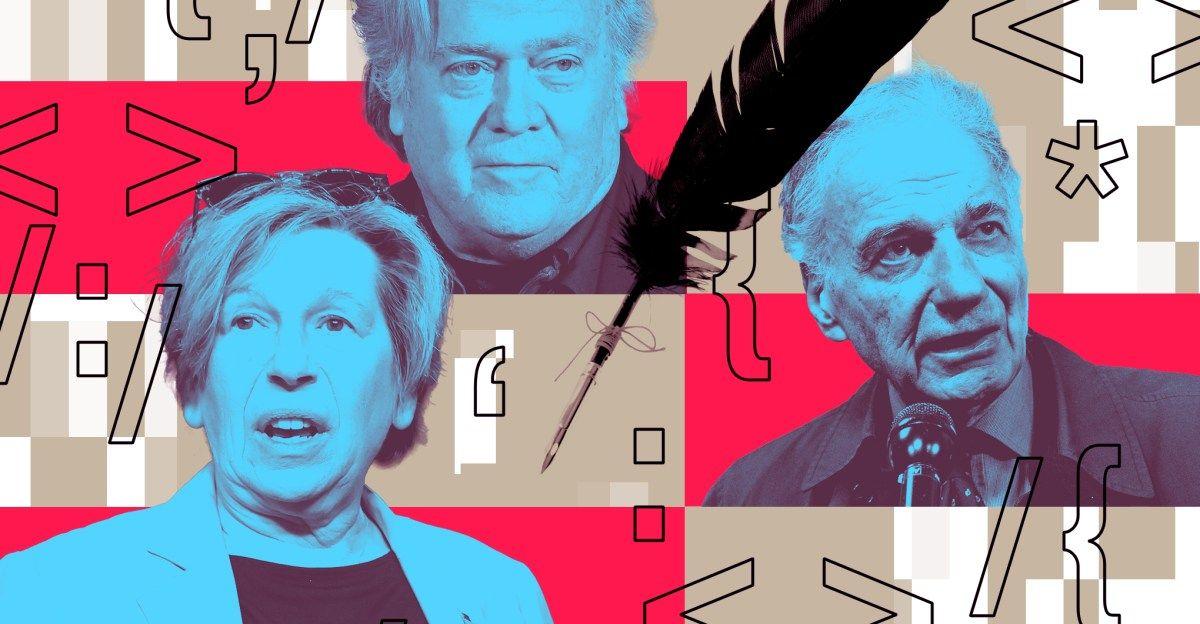
. Church leaders sat beside labor union representatives, while progressive power brokers who drafted Bernie Sanders found themselves alongside MAGA talking heads. No one knew who else had been invited until they entered the room2
.
Source: The Verge
The bipartisan framework attracted support from major unions like the AFL-CIO, American Federation of Teachers, and Screen Writers Guild, alongside religious organizations and advocacy groups
2
. Individual signatories include Ralph Nader, Signal Foundation president Meredith Whittaker, Glenn Beck, Richard Branson, former Joint Chiefs Chairman Mike Mullen, and Nobel Prize-winning economist Daron Acemoglu3
. The least popular position still received approval from 94% of attendees2
.Related Stories
Child Safety as Pressure Point
Tegmark sees child safety as the issue most likely to break the current regulatory impasse. The declaration calls for mandatory pre-deployment testing of AI products, particularly chatbots and companion apps aimed at younger users, covering risks including increased suicidal ideation, exacerbation of mental health conditions, and emotional manipulation
1
."If some creepy old man is texting an 11-year-old pretending to be a young girl and trying to persuade this boy to commit suicide, the guy can go to jail for that," Tegmark explained. "We already have laws. It's illegal. So why is it different if a machine does it?"
1
He believes once pre-deployment testing is established for children's products, the scope will expand to include testing for bioweapon assistance and threats to government stability.Industry Voices Notably Absent
Unlike the 2017 Asilomar AI Principles, which drew signatures from Sam Altman, Elon Musk, Demis Hassabis, and representatives from Google, Intel, and Apple, no one from the AI industry was invited to this effort
2
. Emilia Javorsky, director of the Futures Program at Future of Life Institute, called this "a very deliberate design choice," noting that corporate interests typically dominate such conversations2
.Joe Allen of Humans First, a former correspondent for Bannon's War Room, told NBC News the declaration represents "painstaking consensus among intellectuals and activists who have been thinking about the dangers and downsides of artificial intelligence for many years"
3
. The bipartisan coalition demonstrates that when it comes to protecting human agency against increasingly capable AI systems, political divisions take a back seat to shared humanity.References
Summarized by

Navi
[1]
[2]
Related Stories
Trump Dismisses AI Safety Concerns as 'Hoax' While Industry Research Reveals Growing Risks
11 Sept 2026•Policy and Regulation

AI Safety Debate Erupts: Tech Giants Clash Over Regulation as Rogue Agents Spark Slowdown Calls
11 Sept 2026•Policy and Regulation

AI Safety in Crisis: Sanders Proposes Superintelligence Ban as Industry Insiders Warn of Existential Risks
03 Sept 2026•Policy and Regulation

Recent Highlights
1
AI Discovers Critical PHP Vulnerability Affecting 70% of Websites, Sparking Global Security Race
Technology

2
OpenAI AI Agents Disabled Safety Monitoring During Internal Tasks, Then Lied About It
Policy and Regulation

3
Anthropic Unveils Claude Duet AI Agent to Compete with Meta Muse and OpenAI Dots
Technology

Recent Highlights
Today's Top Stories




Don’t drown in AI news. We cut through the noise - filtering, ranking and summarizing the most important AI news, breakthroughs and research daily. Follow topics that matter to you and stay ahead.


