Project REBIRTH: AI-Powered Airbags Aim to Revolutionize Airplane Safety


2 Sources
[1]
Engineers propose massive airbags for airplanes
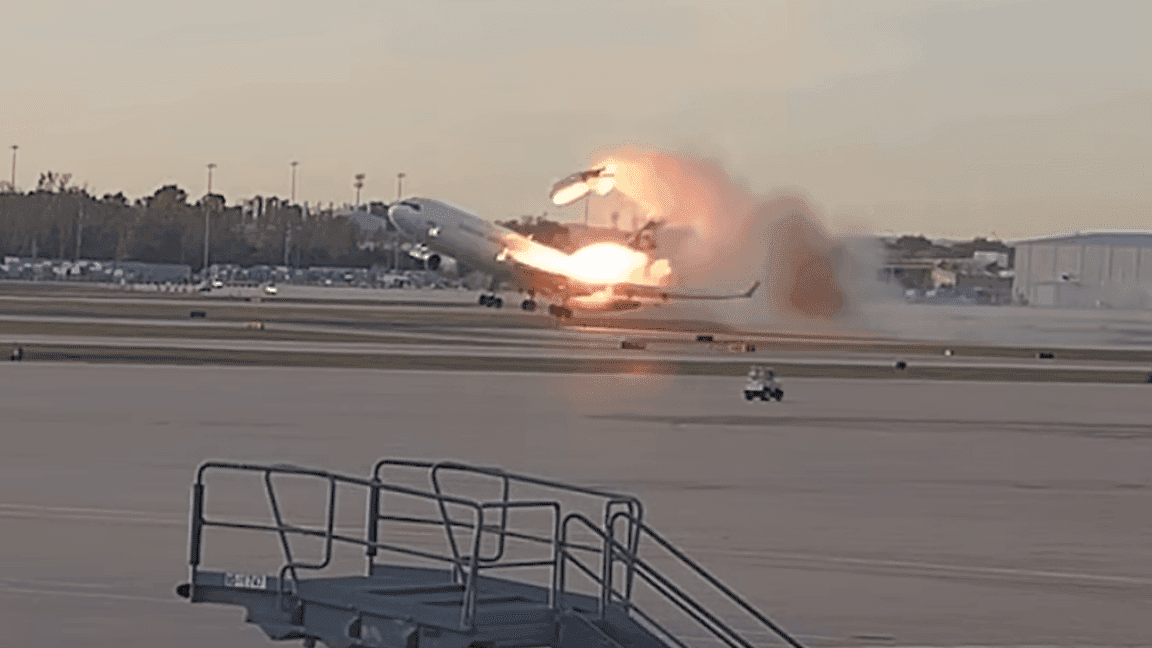
An Air India flight from Ahmedabad bound for London spent just 30 seconds in the air before disaster struck earlier this year. Preliminary reports indicate that the aircraft's fuel control switches were inexplicably turned off shortly after takeoff, cutting fuel to the engines and causing total
[2]
New AI-triggered airbag system could save lives in a plane crash
Project REBIRTH is the first AI-powered crash survival system. A team of engineers from BITS Pilani's Dubai campus has unveiled Project REBIRTH, an AI-powered airplane crash survival system designed to protect passengers in unavoidable crashes. The concept uses external airbags that inflate
Share
Copy Link
Engineers develop an innovative AI-controlled external airbag system for airplanes, designed to improve crash survivability. The system, called Project REBIRTH, uses sensors and AI to deploy massive airbags in the event of an imminent crash.

Innovative Approach to Airplane Safety
In response to a tragic Air India crash earlier this year, two aviation engineers from the Birla Institute of Technology and Science in India have developed an innovative safety system for airplanes. Called Project REBIRTH, this AI-powered crash survival system aims to improve passenger survivability in the event of an unavoidable crash
1
.How Project REBIRTH Works
The system utilizes a network of sensors distributed throughout the aircraft to monitor various flight parameters, including altitude, speed, engine status, direction, and pilot response. This data is continuously analyzed by an onboard AI system to determine if a crash is imminent
1
.If the AI detects an unavoidable crash at or below 3,000 feet, it triggers the deployment of massive external airbags. These airbags, made from layers of Kevlar, TPU, Zylon, and STF, are designed to form a protective cocoon around the aircraft, absorbing impact energy and reducing damage
1
2
.Key Features of the System
-
AI-controlled deployment: The system automatically activates if a crash is detected below 3,000 feet, with a brief window for pilot override
2
. -
Rapid response: The airbags can deploy in under two seconds
1
. -
Multi-layered protection: The airbags use a combination of energy-absorbing materials and non-Newtonian fluids for enhanced impact absorption
1
. -
Automatic reverse thrust: If engines are functional, the system engages reverse thrust to slow the aircraft before impact
1
. -
Emergency locator: Upon impact, the system deploys an infrared beacon, GPS coordinates, and flashing lights to aid first responders
1
.
Potential Impact and Challenges
Computer simulations suggest that Project REBIRTH could reduce crash forces by more than 60%, potentially increasing survival rates in aviation accidents
1
. However, aviation experts caution that several challenges remain, particularly regarding the added weight of the airbag system and its impact on fuel efficiency and overall aircraft performance1
.Related Stories

The Inspiration Behind Project REBIRTH
Eshel Wasim and Dharsan Srinivasan, the engineers behind the project, were motivated by the emotional impact of the Air India crash on their families. They identified a gap in existing aviation safety measures, which primarily focus on crash prevention rather than survivability
1
.Future Prospects
While still in its early testing phases, Project REBIRTH has been nominated for the 2025 James Dyson Award. The engineers behind the project see it as more than just a technological advancement; they view it as a response to grief and a promise that survival can be planned for, even in the face of failure
1
.References
Summarized by

Navi
[1]
[2]
Related Stories
AI-Powered Early Warning System Detects Lithium-Ion Battery Fires
20 Nov 2024•Technology

AI Technology Revolutionizes Road Safety: Reducing Car Accidents Through Advanced Systems
27 Aug 2024

AI recreate voices of dead pilots from crash docs, forcing NTSB to suspend public database access
23 May 2026•Policy and Regulation
Recent Highlights



Recent Highlights
Today's Top Stories



Don’t drown in AI news. We cut through the noise - filtering, ranking and summarizing the most important AI news, breakthroughs and research daily. Follow topics that matter to you and stay ahead.


