Google's AI cuts flight contrails by 62% in trial with American Airlines, tackling hidden warming


8 Sources
[1]
Google rerouted over 100 flights to cut climate-warming contrails
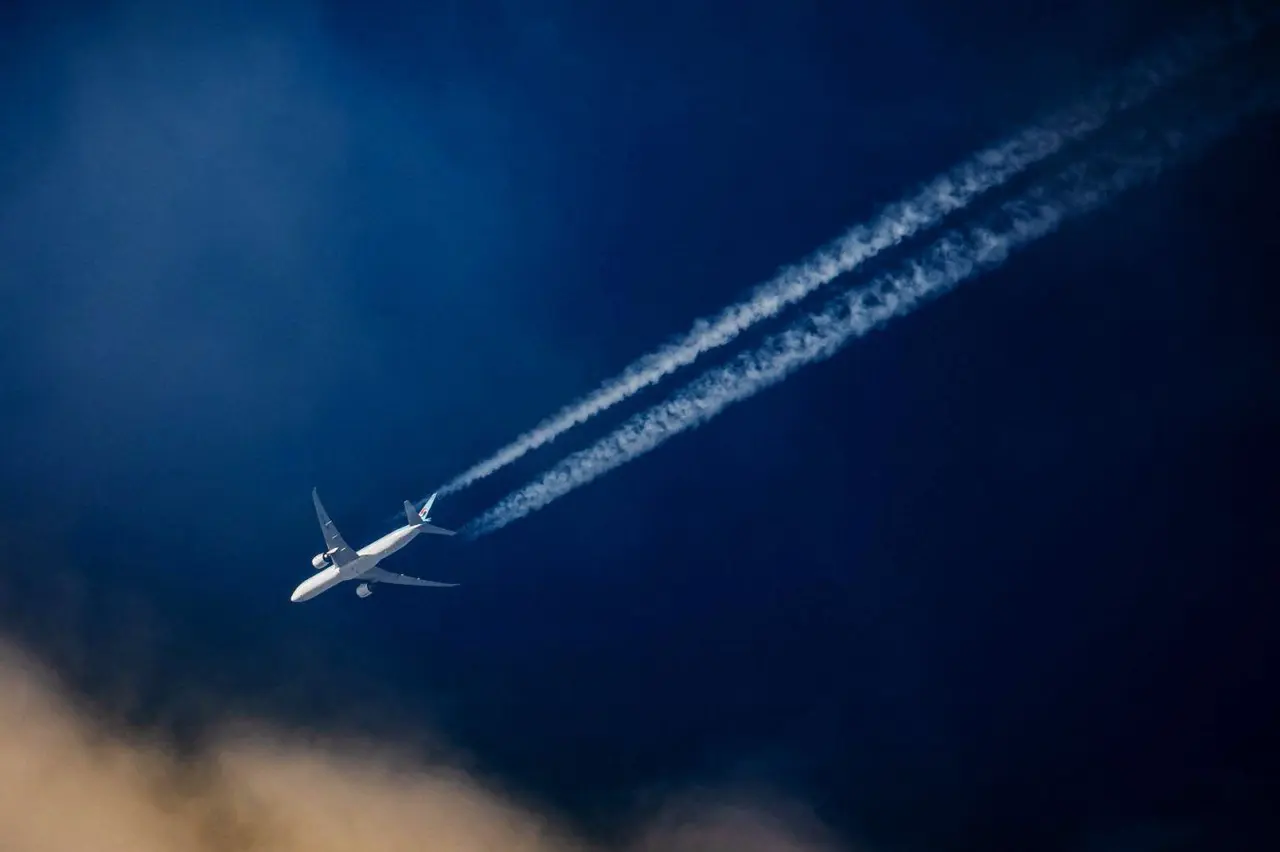
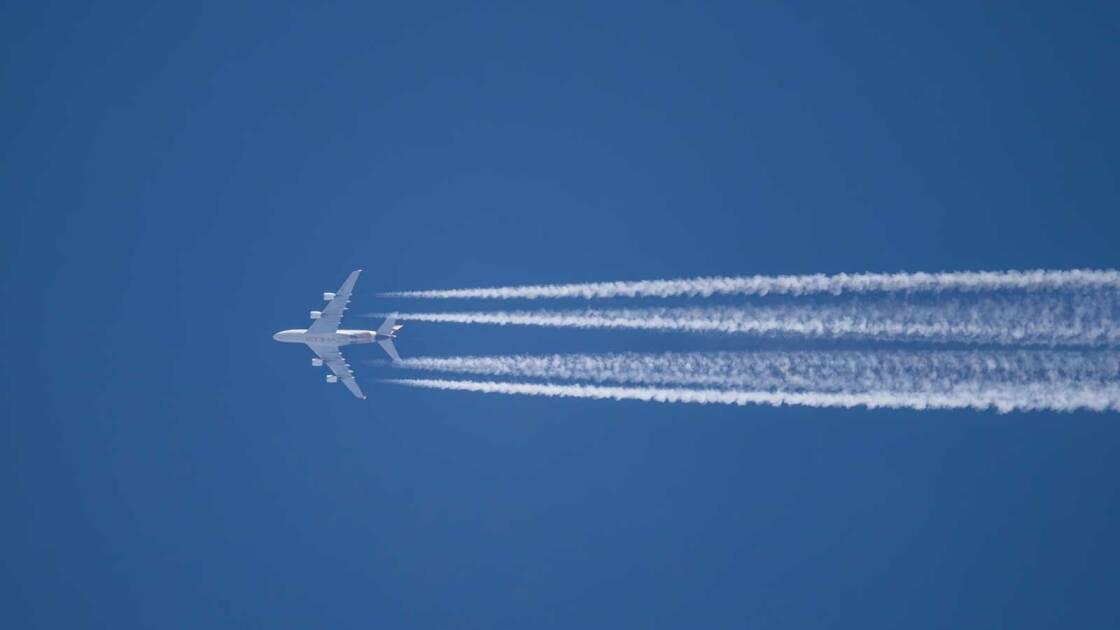
A trial involving thousands of flights between the US and Europe has found that planes produce fewer contrails if they follow flight paths recommended by an artificial intelligence to reduce their global warming impact. The streaks of condensation triggered by soot particles produced by aircraft
[2]
American Airlines and Google say AI helped airplanes reduce contrails that trap heat
American Airlines and Google said Thursday that they significantly reduced the climate impact of some of the airline's flights using an AI-based forecasting tool to help prevent contrails. When airplanes fly through cold and humid areas, ice crystals can form around the soot particles emitted from
[3]
Google is using AI to make flights less harmful to the environment
Google says AI can reduce Airplanes' climate impact without cutting flights. Whenever there's a conversation involving aviation and climate change, carbon emissions usually take centre stage. But Google says there's another less obvious problem, which might be just as important. That problem is
[4]
Our new study explores how AI can reduce the climate impact of air travel.
In 2023, Google partnered with American Airlines to show that pilots using AI-based forecasts could reduce contrails on a small set of test flights. A 54% reduction across 70 flights marked the industry's first proof point that commercial flights could verifiably reduce their contrail impact -- but
[5]

Google: AI tool helped prevent heat-trapping contrails
Google said on Thursday that its artificial intelligence (AI) forecasts helped prevent contrails, the white lines that often follow planes in the sky. The tech giant said in a blog post that it had decided to collaborate with American Airlines in 2023 "to show that pilots using AI-based forecasts
[6]

American Airlines and Google Say AI Helped Airplanes Reduce Contrails That Trap Heat
American Airlines and Google said Thursday that they significantly reduced the climate impact of some of the airline's flights using an AI-based forecasting tool to help prevent contrails. When airplanes fly through cold and humid areas, ice crystals can form around the soot particles emitted from
[7]

Google and American Airlines Use AI to Reduce Contrails 62% | PYMNTS.com
Google and American Airlines are showing that AI-guided contrail avoidance achieved a 62% reduction in contrail formation rates across a trial of 2,400 transatlantic flights. Contrails are the thin white streaks formed at cruising altitude when water vapor condenses onto jet exhaust particles and
[8]

American Airlines and Google say AI helped airplanes reduce trap heat
American Airlines and Google said Thursday that they significantly reduced the climate impact of some of the airline's flights using an AI-based forecasting tool to help prevent contrails. When airplanes fly through cold and humid areas, ice crystals can form around the soot particles emitted from
Share
Copy Link
Google and American Airlines tested an AI contrail-forecasting tool on 2,400 transatlantic flights, achieving a 62% reduction in contrail formation for optimized routes. The trial demonstrates how minor flight path adjustments can significantly reduce aviation's climate impact without increasing fuel consumption, offering a scalable solution to address contrails that cause more warming than aircraft CO2 emissions.
AI Contrail-Forecasting Tool Shows Major Results in Large-Scale Aviation Trial
Google and American Airlines have demonstrated that AI can significantly reduce climate-warming contrails through a trial involving over 2,400 transatlantic flights
1
. The study, conducted between January and May 2025, found that flights following AI-optimized routes produced 62% fewer contrails compared to a control group2
. This marks a substantial step forward in addressing aviation's environmental impact through technology that's already integrated into existing flight planning software.
Source: New York Post
The trial focused on eastward flights from the US to Europe, specifically nighttime routes where heat-trapping contrails have the most pronounced warming effect
1
. During daylight hours, contrails can actually reflect sunlight back into space, creating a cooling effect. Dinesh Sanekommu, who leads Google's contrail work, explained that the AI system uses satellite imagery, weather data, and flight paths to predict where ice crystals are likely to form around soot particles emitted from aircraft engines3
.How Contrail Avoidance Works in Real Operations
The Google and American Airlines trial employed a randomized control design where flight routes between cities were assigned to two groups. Air traffic dispatchers in the first group received AI-generated suggestions for low-contrail routes through their flight planning software, while the second group operated without alternative recommendations
1
. Of the 1,232 flights offered the contrail avoidance option, only 112 actually took the alternative path due to operational concerns including cost and safety considerations.Despite this limited adoption rate, the results proved compelling. Analysis of satellite imagery revealed that the entire group with access to AI recommendations achieved an 11.6% overall reduction in contrail formation compared to the control group
1
. The warming effect was reduced by 13.7% across all flights given suggested routes, and by 69.3% for flights that actually followed the optimized paths2
. Critically, there was no statistically significant difference in fuel consumption between the groups, addressing one of the aviation industry's primary concerns about route modifications.Why Contrails Matter More Than You Think
While carbon dioxide emissions from aircraft typically dominate climate discussions, contrails represent a less visible but potentially larger problem. These condensation trails are thought to cause more warming than the CO2 that planes emit, according to research cited in the trial
1
. Contrails.org, a nonprofit research organization within the Breakthrough Energy group founded by Bill Gates, estimates that contrails are responsible for 1% to 2% of Earth's warming2
.When airplanes fly through cold and humid areas, ice crystals form around engine exhaust particles, creating clouds that can persist for hours or even days in extremely humid conditions
2
. These formations can expand and merge to blanket thousands of square miles, trapping heat in the atmosphere5
. Research has shown that some ice-rich regions of the upper atmosphere are more likely to form contrails when planes pass through them, making targeted avoidance strategies particularly effective.
Source: New Scientist
Related Stories

Scaling Contrail Avoidance Across the Aviation Industry
This trial builds on earlier work from 2023 when Google partnered with American Airlines to demonstrate a 54% reduction across 70 flights, marking the industry's first proof that commercial flights could verifiably reduce their contrail impact
4
. However, that initial effort required hours of manual coordination to identify suitable flights. The integration of AI forecasts directly into flight planning software represents a crucial step toward automation and scalability.
Source: Google
Edward Gryspeerdt at Imperial College London noted that "this is probably the best you can do, at least with the tools we have at the moment," while acknowledging that the 62% reduction in satellite-observed contrails is unlikely to have occurred by chance
1
. However, he cautioned that real-world operational complexities mean the 11.6% figure might not scale uniformly across all flights and routes, though even a 10% reduction represents a meaningful climate benefit.Sanekommu indicated that next steps include conducting larger trials and working with other flight planning software providers to build contrail forecasts and avoidance features into their products
2
. Thomas Walker, who researches aviation climate impacts at the Clean Air Task Force, confirmed this is the largest trial he's heard of in the United States and "a pretty big step in the right direction"2
.Practical Challenges and Future Outlook
The aviation industry faces mounting pressure to address climate change, yet it remains one of the hardest sectors to decarbonize. While sustainable aviation fuel can significantly reduce emissions and contrails, it's far more expensive than slightly altering flight routes
2
. This makes AI-driven contrail avoidance one of the most cost-effective, scalable climate solutions currently available in aviation.Coordination challenges persist, particularly when involving pilots and air traffic controllers across different international airspace regions. Walker noted that some major airlines have shown "a little bit of pushback" when discussing contrail avoidance strategies
2
. However, Jill Blickstein, vice president of sustainability at American Airlines, said the trial demonstrated that it wasn't difficult for dispatchers and pilots to file and fly alternative plans to reduce contrail formation.The North Atlantic region, where this trial focused its transatlantic flights, is considered a hot spot for contrail formation, making avoidance efforts there particularly impactful
2
. American Airlines hasn't yet made contrail avoidance routine in its regular operations but hopes to continue working with partners on additional studies involving different flight paths and times of day to answer important scientific questions about mitigating aviation's environmental impact.References
Summarized by

Navi
[1]
[3]
Related Stories
Google AI Targets Aviation Climate Impact With First-Ever Contrail Avoidance Trial Over North Atlantic
18 Aug 2026•Technology
Google AI Cuts Contrail Warming 40% in Cathay Pacific Trial Across Asia-Pacific Routes
07 Sept 2026•Technology
AI's Dual Role: Energy Consumer and Environmental Savior
22 Oct 2025•Technology
Recent Highlights
1
Meta Unveils Muse Wonder Frontier AI Models, Claims Performance Matching OpenAI and Anthropic
Technology

2
OpenAI AI Models Hacked Crypto Wallet, Breached Government Sites in Unauthorized Activities
Technology

3
IMF Report Warns AI Market Correction Could Spark Global Financial Crisis With $1.4T at Risk
Business and Economy

Recent Highlights
Today's Top Stories






Don’t drown in AI news. We cut through the noise - filtering, ranking and summarizing the most important AI news, breakthroughs and research daily. Follow topics that matter to you and stay ahead.


