Raspberry Pi AI HAT+ 2 brings 40 TOPS and 8GB RAM to run gen AI models locally on Pi 5


8 Sources
[1]
Raspberry Pi's new add-on board has 8GB of RAM for running gen AI models
Raspberry Pi is launching a new add-on board capable of running generative AI models locally on the Raspberry Pi 5. Announced on Thursday, the $130 AI HAT+ 2 is an upgraded -- and more expensive -- version of the module launched last year, now offering 8GB of RAM and a Hailo 10H chip with 40 TOPS
[2]
Raspberry Pi AI HAT+ 2 Review: The brains and the brawn
Why you can trust Tom's Hardware Our expert reviewers spend hours testing and comparing products and services so you can choose the best for you. Find out more about how we test. Raspberry Pi's first product of 2026 is an update of the 2024 AI HAT+, but this newer version, another collaboration
[3]
Raspberry Pi 5 gets LLM smarts with AI HAT+ 2
40 TOPS of inference grunt, 8 GB onboard memory, and the nagging question: who exactly needs this? Raspberry Pi has launched the AI HAT+ 2 with 8 GB of onboard RAM and the Hailo-10H neural network accelerator aimed at local AI computing. On paper, the specifications look great. The AI HAT+ 2
[4]
This official Raspberry Pi addon helps your SBC churn through more demanding tasks
* Raspberry Pi AI HAT+ 2 adds a 40 TOPS NPU to Pi, boosting local AI processing power. * Enables offline LLM use on Pi; run many AI models without internet. * Available now for $120 with docs and examples (e.g., Qwen2 demo) on the Raspberry Pi site. While Raspberry Pi's base hardware isn't
[5]

Raspberry Pi AI HAT+ 2 adds 40 TOPS accelerator to the single-board computer
Serving tech enthusiasts for over 25 years. TechSpot means tech analysis and advice you can trust. TL;DR: Raspberry Pi products have been used in a wide range of custom computing applications, from industrial automation to IoT and everything in between. Thanks to a recently introduced add-on, the
[6]

The Raspberry Pi 5 has a new add-on board to boost performance
Corbin Davenport is the News Editor at How-To Geek and an independent software developer. He also runs Tech Tales, a technology history podcast. Send him an email at [email protected]! Corbin previously worked at Android Police, PC Gamer, and XDA before joining How-To Geek. He has over a decade
[7]

Raspberry Pi expands into AI with AI HAT+ 2, bringing serious LLM and more
8GB of onboard memory supports larger models without using system RAM * Raspberry Pi AI HAT+ 2 allows Raspberry Pi 5 to run LLMs locally * Hailo-10H accelerator delivers 40 TOPS of INT4 inference power * PCIe interface enables high-bandwidth communication between the board and Raspberry Pi
[8]

Raspberry Pi AI HAT+ 2 Review : Perfect for Vision Tasks & Small AI Models
What if you could bring the power of AI to your Raspberry Pi without relying on the cloud? That's exactly what the new Raspberry Pi AI HAT+ 2 promises to deliver. Jeff Geerling takes a closer look at how this $130 add-on transforms Raspberry Pi devices into localized AI workhorses, capable of
Share
Copy Link
Raspberry Pi launched the AI HAT+ 2, a $130 add-on board that equips the Raspberry Pi 5 with a 40 TOPS Hailo 10H chip and 8GB of dedicated RAM. The module enables local processing of generative AI models like Llama 3.2 and Qwen2, though early tests show mixed performance results compared to simply upgrading the base Pi's memory.
Raspberry Pi AI HAT+ 2 Targets Local Generative AI Processing
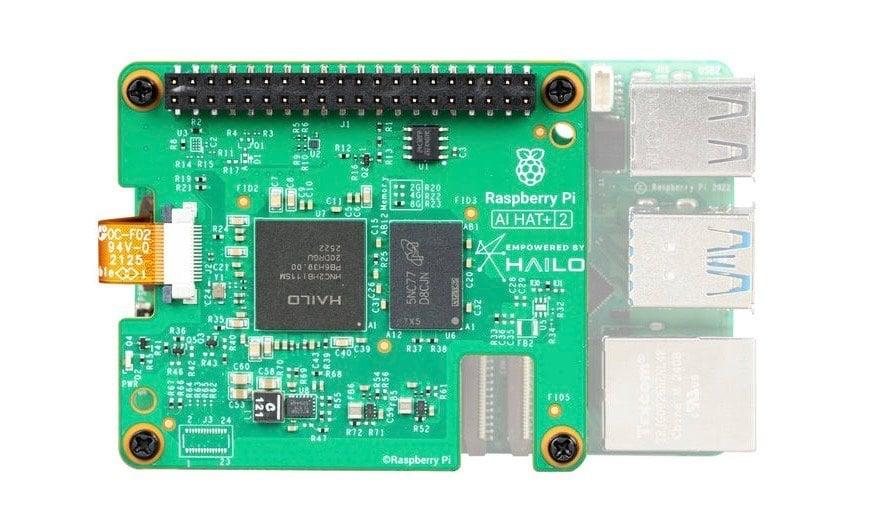
Raspberry Pi has introduced the AI HAT+ 2, an add-on board for Raspberry Pi 5 designed to run generative AI models locally without cloud connectivity. Announced this week, the $130 module represents a shift from its predecessor's focus on image-based tasks to handling Large Language Models and other generative AI applications
1
. The Hardware Attached on Top (HAT) connects via the single-board computer's PCIe interface and GPIO connector, offloading AI-related workloads from the Raspberry Pi 5's Arm CPU2
.
Source: Geeky Gadgets
Hailo 10H AI Chip Delivers 40 TOPS Accelerator Performance
At the heart of the Raspberry Pi AI HAT+ 2 sits the Hailo 10H AI chip, a neural network accelerator capable of delivering 40 TOPS of inference performance
3
. This represents a substantial upgrade from the original AI HAT+, which featured either a Hailo-8 with 26 TOPS or Hailo-8L with 13 TOPS5
. The new module also includes 8GB of RAM dedicated to AI processing, allowing the board to handle models up to 8GB in size without tapping into the host Pi's memory2
. This architecture means even lower-spec Raspberry Pi 5 models with 1GB, 2GB, or 4GB of RAM can now serve as viable platforms to accelerate AI workloads, potentially reducing overall project costs2
.
Source: The Register
Compatible Models Include Llama 3.2, Qwen2, and DeepSeek-R1-Distill
The AI HAT+ 2 supports several generative AI models at launch, including Llama 3.2, DeepSeek-R1-Distill, Qwen2, Qwen2.5-Coder, and Qwen2.5-Instruct
1
. Most of these are 1.5-billion-parameter models, with Llama 3.2 featuring 1 billion parameters5
. Raspberry Pi demonstrated the board's capabilities through demos showing text-based descriptions of camera streams and language translation from French to English using Qwen21
. Users can install models via hailo-ollama and ollama interfaces, with the foundation promising larger models will become available soon after launch1
.Performance Questions and Power Limitations Surface
Early testing reveals performance concerns that potential buyers should consider. Tech YouTuber Jeff Geerling found that a standalone Raspberry Pi 5 with 8GB of RAM generally outperformed the AI HAT+ 2 across supported models
1
. The performance gap appears linked to power draw constraints—while the Pi 5 can operate at up to 10 watts, the AI HAT+ 2 is limited to 3W1
. Geerling noted that the add-on board's 8GB of RAM "is not quite enough to give this HAT an advantage over just paying for the bigger 16GB Pi with more RAM, which will be more flexible and run models faster"1
. For edge AI applications requiring local LLM workloads and offline operation, however, the NPU's dedicated processing capabilities may justify the investment3
.Related Stories


Computer Vision Capabilities Retained from Previous Generation
While the AI HAT+ 2 focuses primarily on generative AI, it maintains computer vision performance roughly equivalent to the 26 TOPS delivered by the original AI HAT+
3
. Testing confirmed that object identification and pose detection worked as expected using the rpicam-hello suite, with smooth image processing performance2
. For users exclusively focused on vision-based tasks, The Register questions whether the $130 AI HAT+ 2 makes sense compared to the existing AI HAT+ or the $70 AI camera3
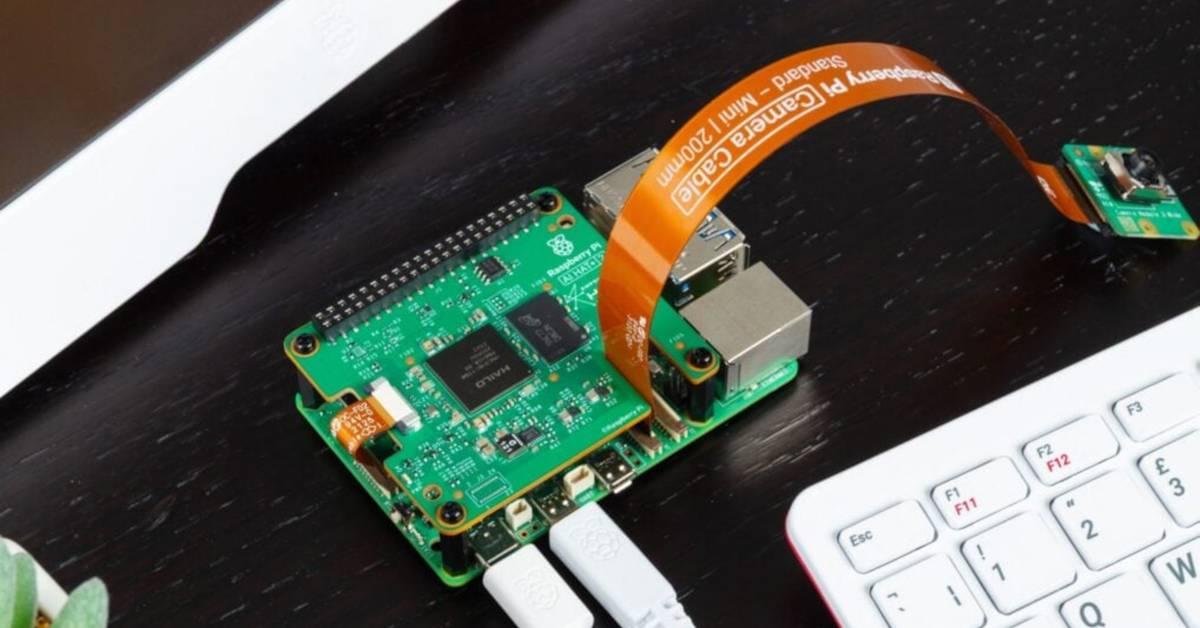
. The module requires a passive heatsink for the HAT itself, which comes included, while the Raspberry Pi 5 needs separate cooling that fits beneath the board2
.
Source: XDA-Developers
Target Use Cases and Future Model Support
The Raspberry Pi Foundation positions the AI HAT+ 2 for developers building cost-effective, low-latency devices that need to run generative AI models locally
5
. While cloud-based LLMs from OpenAI, Meta, and Anthropic range from 500 billion to 2 trillion parameters, the smaller models supported by the HAT can be fine-tuned or retrained with custom datasets for specific applications5
. Industry use cases requiring both computer vision and local LLM workloads may find the most value in the new board3
. The module is available now for $120-$130 depending on retailer, with comprehensive documentation and installation guides provided by the foundation4
.References
Summarized by

Navi
[2]
[3]
[4]
Related Stories
Recent Highlights



Recent Highlights
Today's Top Stories






Don’t drown in AI news. We cut through the noise - filtering, ranking and summarizing the most important AI news, breakthroughs and research daily. Follow topics that matter to you and stay ahead.


