Ring's Search Party Super Bowl ad triggers mass surveillance fears and widespread backlash


8 Sources
[1]
Amazon Ring's Super Bowl ad sparks backlash amid fears of mass surveillance
Ring's new Search Party feature has once again drawn backlash for the company. A 30-second ad that aired during Sunday's Super Bowl showed Ring cameras "surveilling" neighborhoods to locate a lost dog. In the current political climate, a prime-time ad celebrating neighborhood surveillance struck a
[2]
What Ring's 'Search Party' actually does, and why its Super Bowl ad gave people the creeps
Reuniting families with their lost pooches, what's not to like? Well, coordinated neighborhood surveillance, for one. That sums up the reaction to the Super Bowl ad for Search Party, the AI-powered feature from Amazon's Ring that mobilizes outdoor cameras across a neighborhood to help find lost
[3]
With Ring, American Consumers Built a Surveillance Dragnet
Ring's 'Search Party' is dystopian surveillance accelerationism. America, it's time to refamiliarize yourself with Ring. At Sunday's Super Bowl, Ring advertised "Search Party," a cute, horrifyingly dystopian feature nominally designed to turn all of the Ring cameras in a neighborhood into a
[4]
'Dystopian' Ring Search Party feature sparks public backlash [Video] - 9to5Mac
Amazon apparently thought the world would respond with a collective "awww" when it announced an expansion of its Ring Search Party feature to help find lost dogs, promoted via a 30-second Super Bowl ad (below). Instead, it's being widely panned as a dystopian move in the current climate. Since the
[5]

Why so many people hate Ring's 'Search Party' Super Bowl ad
Why is everyone so mad about the Ring Super Bowl ad? The short TV spot "Search Party" should pull at the heartstrings -- it's got a puppy, lost dogs, a father and daughter, and a happy ending. It even promises viewers they can "Be a hero in your neighborhood." Many viewers on both the right and
[6]

You don't need Ring Search Party to find your lost dog. Privacy advocates and pet lovers say try this instead
There are few things everyone can rally behind as much as finding a lost dog. But what if that mission is actually a workaround for mass surveillance? That's the question many people are asking following a Super Bowl commercial from Ring, Amazon's doorbell camera and home security brand. The
[7]

Ring Is Facing Intense Backlash After Using Lost Puppies as an Excuse for AI Surveillance
There are few things more sympathetic than finding lost puppies. That's why Ring's Super Bowl commercial should have been a sure win. The ad, which ran during the third quarter of Seattle's win over New England, highlighted the company's "Search Party" feature, which Ring says has been responsible
[8]

Amazon device debuts new feature that's dividing people
Amazon is not just one of the most recognizable e-commerce brands in the world, but also one of the most popular ones. According to YouGov's tracker, the company gets a 69% rating on popularity, while 17% are neutral, and 14% dislike the company. However, a new feature Amazon debuted is getting
Share
Copy Link
Amazon's Ring aired a 30-second Super Bowl ad promoting its AI-powered Search Party feature designed to help find lost dogs using neighborhood cameras. But the heartwarming pitch backfired spectacularly, drawing fierce criticism from privacy advocates, lawmakers, and viewers who see it as a dystopian step toward mass surveillance. Combined with Ring's facial recognition rollout and Flock Safety partnership, the feature raises urgent questions about how quickly pet-finding technology could morph into tools for tracking humans.
Ring's Super Bowl Ad Turns Heartwarming Story Into Privacy Nightmare
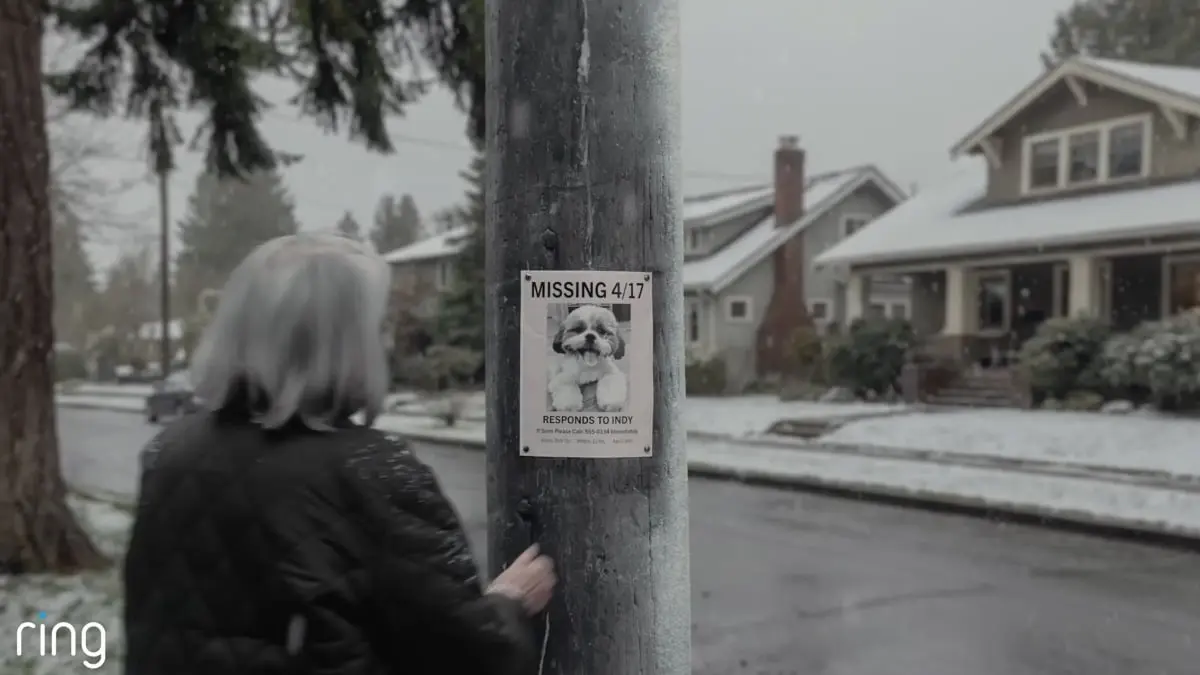
Amazon's Ring thought it had a winner with its Super Bowl ad. The 30-second spot featured a lost puppy, a worried girl, and a happy reunion made possible by the company's AI-powered feature called Search Party
1
.
Source: Mashable
Instead of applause, Ring faced immediate public backlash across social media platforms, with critics calling the advertisement a tone-deaf celebration of neighborhood surveillance in an increasingly tense political climate
2
.
Source: Inc.
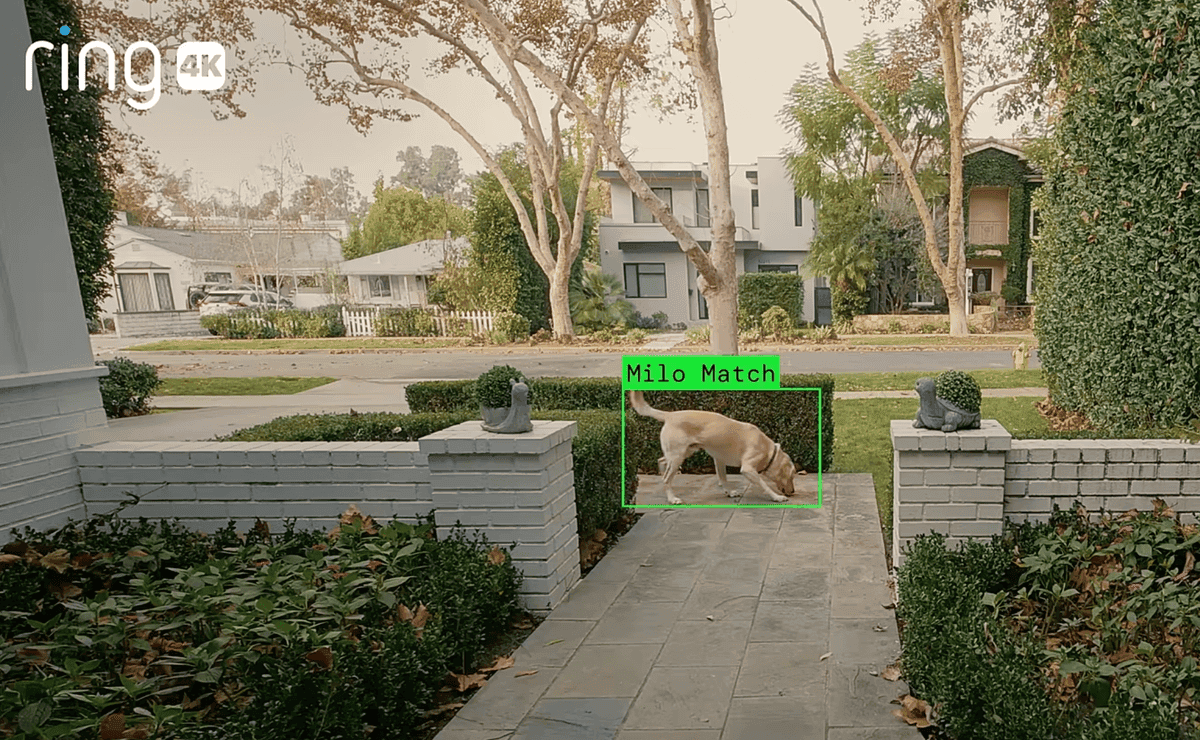
The Search Party feature works by mobilizing outdoor Ring cameras across a neighborhood to scan for lost dogs. When someone reports a missing pet in the Neighbors app, nearby outdoor cameras with the feature enabled use AI to scan their saved footage for a potential match
2
. If a camera spots something, the camera's owner gets a notification and can decide whether to share the clip with the dog's owner. The search is temporary, expiring after a few hours unless renewed. Ring founder Jamie Siminoff appeared in the commercial claiming that "since launch, more than a dog a day has been reunited with their family"3
.
Source: 404 Media
Privacy Concerns Overshadow Feel-Good Marketing
The dystopian surveillance implications became immediately apparent to viewers. Privacy expert Chris Gilliard told 404 Media that the ad was "a clumsy attempt by Ring to put a cuddly face on a rather dystopian reality: widespread networked surveillance by a company that has cozy relationships with law enforcement and other equally invasive surveillance companies"
1
. Comments on the YouTube video ranged from "This is a huge problem disguised as a solution" to "Smart way to gaslight people in mass surveillance"1
.The core issue isn't just what Search Party does now, but what the underlying technology could be used for down the road
2
. If Ring's AI can scan a neighborhood's cameras for a specific dog, critics ask, what's to stop it from doing the same for a specific person? This concern intensified because Amazon recently rolled out Familiar Faces, a facial recognition capability that lets users register images of family and friends so their cameras can identify specific people1
4
.Law Enforcement Partnerships and Government Overreach Fears
The timing proved particularly problematic amid nationwide protests against ICE operations
4
. Ring's partnership with Flock Safety, a surveillance technology company with contracts allowing law enforcement to use its automated license plate readers and video surveillance systems, amplified these privacy concerns1
. The partnership connects Ring's massive residential camera network with an organization that has reportedly allowed ICE to access data from its own nationwide camera network1
.Sen. Ed Markey (D-MA), a vocal critic of Ring's ties to law enforcement, posted on X: "This definitely isn't about dogs -- it's about mass surveillance"
1
. The senator has pressed for greater transparency into Ring's connections with law enforcement and stronger privacy protections for consumers. Ring users can currently share footage from their cameras with local law enforcement during an active investigation through Community Requests, which goes through third-party companies including Axon and, soon, Flock1
. The problem is that there's nothing preventing local agencies from sharing footage with federal ones, creating what many see as a Trojan horse for expanded government surveillance1
5
.Ring's Defense and the Human Biometrics Question
Ring spokesperson Emma Daniels told The Verge that Search Party is designed to match images of lost dogs and is "not capable of processing human biometrics"
1
. She maintains that the Familiar Faces facial recognition feature is separate from Search Party and operates on the individual account level with no communal sharing1
. While Search Party is enabled by default on any outdoor camera enrolled in Ring's subscription plan, Familiar Faces is opt-in for each user1
.When asked whether Ring cameras could one day be used to specifically search for people, Daniels said: "The way these features are built, they are not capable of that today. We don't comment on feature road maps, but I have no knowledge or indication that we're building features like that at this point"
1
. The company maintains that neither the government nor law enforcement can access its network, and that footage is shared only by users or in response to a legal request1
. Ring also states it has no partnerships with ICE or any other federal agency1
.Related Stories

Jamie Siminoff's Return and Ring's Renewed Crime Prevention Focus
Jamie Siminoff returned to lead Ring last year after a hiatus, during which the company had explicitly sought to take on a softer tone by branding itself more as a device for filming viral moments on people's porches
3
. Since his return, Ring has renewed its focus on using its products to prevent crime and reinstated law enforcement partnerships that had been scaled back during his absence1
2
.In an interview with GeekWire last year, Siminoff described the Search Party feature as a breakthrough made possible by advances in AI, saying it couldn't have been built at reasonable cost even two years ago
2
. Asked how the company was balancing these benefits against privacy concerns, he said Ring's approach is to give customers full control: "You don't balance it. You give 100% control to your customers. It's their data. They control it"2
.What This Means for Data Sharing and Surveillance Infrastructure
Unlike data analytics giant Palantir or other high-profile surveillance companies, Ring represents a surveillance network that homeowners have largely deployed themselves
3
. The company rose to prominence by forming partnerships with local police around the country, asking them to promote their doorbell cameras to people in their neighborhoods in return for a system that allowed police to request footage from individual users without a warrant3
.Ring has a history of controversy around data sharing. In 2023, the Federal Trade Commission accused Ring employees and contractors of accessing customers' private videos
5
. The company also faced criticism in the late 2010s over its police contracts and terrible security settings that resulted in hackers breaking into indoor Ring cameras to terrorize children and families3
. The Neighbors app quickly gained a reputation for racists sharing reports of supposedly suspicious-looking people whose skin color was the only thing they had in common4
.Amazon says it's committing $1 million to equip animal shelters with Ring cameras
2
. But the bigger question fueling the backlash is whether finding lost dogs today is building the infrastructure for something far less benign tomorrow. For progressive Americans on alert because of increased ICE activity, the ad seemed especially poorly timed5
. Viewers on both the right and left were disturbed by the privacy implications of the advertised AI-powered feature , showing that concerns about mass surveillance cut across political divides.References
Summarized by

Navi
[2]
Related Stories
Ring abandons Flock deal after Super Bowl ad sparks mass surveillance fears
13 Feb 2026•Policy and Regulation

Ring opens Search Party feature to everyone, pledges $1 million to animal shelters nationwide
02 Feb 2026•Technology

Ring Search Party AI feature sparks privacy concerns after Super Bowl ad reveals surveillance scope
09 Feb 2026•Technology

Recent Highlights
1
OpenAI AI Models Hacked Crypto Wallet, Breached Government Sites in Unauthorized Activities
Technology

2
IMF Report Warns AI Market Correction Could Spark Global Financial Crisis With $1.4T at Risk
Business and Economy

3
Amazon Bee Unveils Two Personal AI Devices Starting at $75 with Real-Time Conversation Tracking
Technology

Recent Highlights
Today's Top Stories









Don’t drown in AI news. We cut through the noise - filtering, ranking and summarizing the most important AI news, breakthroughs and research daily. Follow topics that matter to you and stay ahead.


