4 Sources
[1]
Rivian adds a new onboard AI assistant to its latest software update
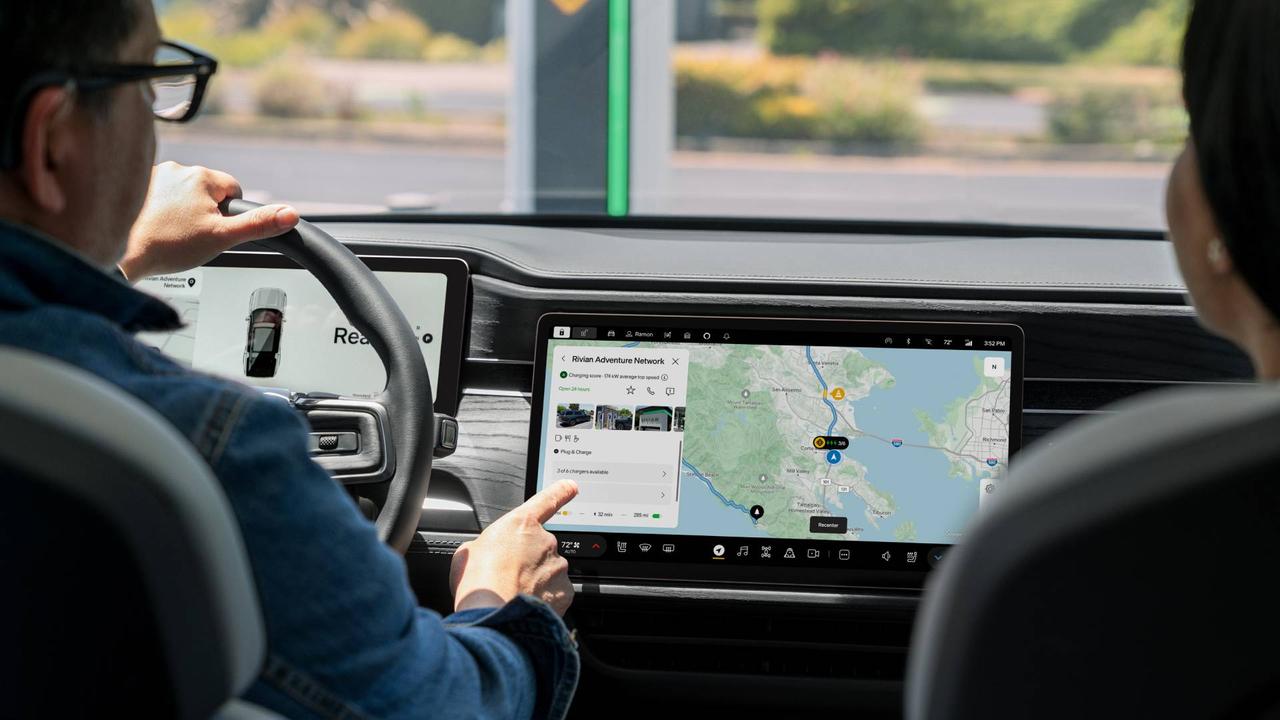
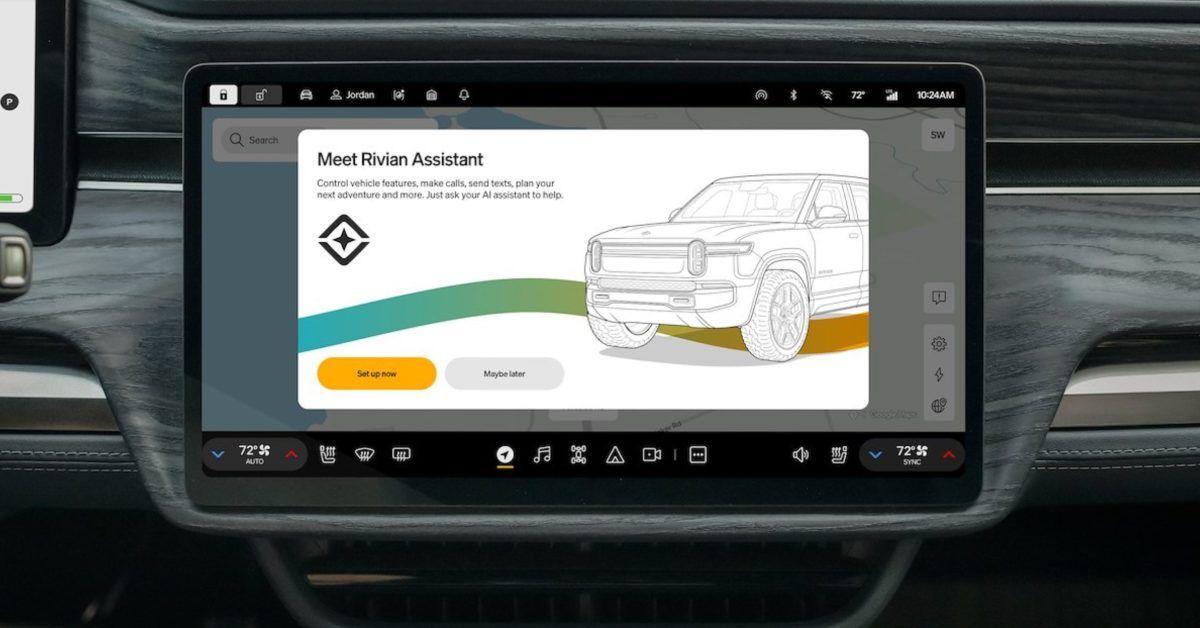
Rivian has quickly built a reputation as one of the auto industry's leaders when it comes to vehicle software. Its clean-sheet approach to an electric vehicle's electronic architecture earned it a $5 billion investment from Volkswagen Group, and its in-house infotainment system is beloved by owners despite no plans inside the company to support phone mirroring through Apple CarPlay or Android Auto. In the absence of phone mirroring -- and the way it lets you easily use Siri or Google Assistant hands-free while driving -- Rivian has now added a new AI digital helper in its latest software update, compatible with both older Gen1 Rivians (model-year 2024 and older) as well as the more recent Gen2 models. The Rivian Assistant rolled out in its latest software update, 2026.15, to all owners with a subscription or trial for Connect+, Rivian's connectivity services. You activate it like most digital assistants, either with a button on the steering wheel, an icon on the infotainment display, or with a trigger phrase -- in this case "Hey Rivian" or "OK, Rivian." Because the assistant runs within Rivian's private cloud, it has a deep integration into the EV's subsystems similar to BMW's and Mercedes-Benz's offerings, rather than the more pared-back abilities of the in-car AI assistant provided by Google to OEMs that use Android Automotive and Google Automotive Services. Rivian says that the AI can "control vehicle settings, climate control, navigation, media, messaging, and calling," it can reference the owner's manual, will reply to questions, search for information, and even explain in-car alerts and help you troubleshoot problems. Rivian says you can also personalize the assistant via the Rivian mobile app, allowing it to connect to your calendar so it can access your schedule and to remember your preferences over time, including places you drive to regularly, like work or a school drop off, as well as things like music genres and favorite restaurants. I foresee that the reaction to Rivian's assistant won't be entirely positive, given the amount of antipathy some have toward LLM-based technologies. A few might even go as far as to declare they'll never purchase a Rivian as a result, no doubt. But asking your car by voice to reschedule a meeting or find a spot to eat lunch seems a heck of a lot safer than someone using their smartphone when they should have their hands and eyes on the road.
[2]
Rivian's New AI Assistant Knows What You Mean, Not Just What You Say
Electric truck and SUV manufacturer Rivian on Tuesday announced the rollout of its new Rivian Assistant AI via software update to all compatible R1T and R1S owners subscribed to its Connect Plus cellular data plan. The new functionality will also be unlocked for the upcoming R2 at launch later this year. Powered directly by the EV's onboard hardware and software rather than layered atop a phone-mirroring system or living in the cloud, Rivian's Assistant will gain native access to almost all vehicle systems -- which enables advanced features beyond just answering questions. Rivian first announced at its Autonomy & AI Day event last year that an AI-powered in-vehicle assistant was coming. At the time, the automaker's engineers and software developers detailed how it planned to use the powerful compute hardware in its R1 and R2 series EVs for everything from a new generation of driver-assist and autonomous features to Rivian Assistant, which ships today. For current and future Rivian owners, the feature set is substantive enough to be worth the wait. Rivian Assistant sits on top of what the automaker calls Unified Intelligence, described as "a multimodal AI foundation" that runs across the company's products and operations. Basically, it's Rivian's version of the shared-AI-backbone pitch that automakers and tech giants have been making in various forms for a few years now. The idea is that the same "unified" AI model can learn from customer data, vehicle telemetry and operational context together rather than treating each data set as a separate silo to provide more comprehensive and useful functionality to you, the end user. The promise is that the assistant will become more capable and more personalized over time. It learns driver preferences, retains context across sessions (stored in each driver's profile), and uses real-time vehicle logs to inform its responses. Whether that learning loop delivers measurable year-over-year improvements (and whether automakers like Rivian can be good stewards of drivers' privacy) will take time to evaluate. At the very least, the architecture enables such improvements in ways that basic voice command systems don't. Holding the left steering wheel button or saying, "Hey, Rivian," tells the assistant to start listening. The basic vehicle control functions range from the familiar -- call Mom, navigate home, adjust the temperature, etc. -- to more advanced tasks like changing drive modes, adjusting ride height, opening the front trunk or checking range-on-arrival estimates. The utility of such voice commands is proven and well-covered. More interesting are the context-aware commands. Instead of requiring precise phrasing, the assistant parses natural language and interprets intent. Rivian's own example -- "Make everyone's seat toasty except mine" -- is a good illustration of what this looks like in practice. The system understands the implicit (all seats except the driver's) and executes accordingly. That's a different category of interaction than "set passenger seat heat to level 2," and the kind of thing that makes voice control actually useful for normal people rather than just people who speak like robots. Navigation works in natural language as well. You can ask for a coffee shop near your destination rather than searching by category in the map UI, or ask for directions without specifying the exact address. Media queries follow a similar pattern; you can ask when a song came out or ask for something similar to what's playing. None of this is revolutionary relative to what smartphone assistants do, but the integration with the vehicle's native software and hardware is tighter than what you get through Android Auto or Apple CarPlay. (Though the latest generation of vehicles running native Google Built-in software seems similar.) Messaging is handled through AI-assisted dictation that goes beyond simple voice-to-text. The assistant reads incoming texts, summarizes them, and helps draft replies. For anyone who's tried to compose a text by voice while driving and ended up with something barely coherent, the summarization and drafting layer looks like a genuine improvement. Additionally, Rivian says the assistant is grounded in real-time vehicle data and has a custom-built system for the owner's manual, meaning you can ask operational questions -- "How do I change a tire?" or, "What does this warning light mean?" -- and get answers specific to your vehicle and its current state rather than a generic response pulled from the web. Even for car enthusiasts and automotive experts like me, this vehicle knowledge base is sure to be one of the more practical and useful features. The most forward-looking piece of the rollout is the agentic integration with Google Calendar, which Rivian is positioning as the first in a series of external connections. The pitch is straightforward: Managing calendar events through your phone while driving is a bad idea, and doing it through a native vehicle assistant promises to be safer and faster. The integration allows you to check your schedule, reschedule appointments or execute multistep tasks in a single voice command. Rivian's example walkthrough -- checking your schedule, finding a coffee stop on your route, and texting your ETA to a contact, all as one continuous flow -- illustrates the agentic part of this. Rather than issuing three separate commands and waiting for each to complete, here Rivian Assistant acts more like a human flunky you've delegated a task to and chains the steps together -- at least, that's the vision. What comes after Google Calendar hasn't been specified yet. The word "first" is doing some load-bearing in Rivian's announcement, suggesting a pipeline of integrations yet to be announced. According to the automaker, owners will retain control over the data Rivian Assistant collects. The "Hey, Rivian" wake word can be toggled off, location sharing can be restricted and the memory feature -- which stores personal context across sessions and trips -- can be disabled entirely. Data is tied to individual driver profiles, not the vehicle, which feels like the right approach for multi-driver households. Full Rivian Assistant functionality requires an active Rivian Connect Plus data subscription or an active trial and is currently available in English only. Rivian hasn't announced any pricing changes (still $15 per month or $150 per year) or bundling adjustments alongside this rollout, so the math on Connect Plus' value is somewhat better than it was before this feature existed, particularly for owners who were on the fence about renewing.
[3]
Rivian's AI-powered voice assistant is ready to roll
Rivian's AI-powered voice assistant is rolling out today to the company's vehicle fleet. The assistant will be available through a software update to all compatible Rivian Gen 1 and Gen 2 vehicle owners who subscribe to the company's Connect Plus cellular service, which costs $15 a month or $150 a year, or are in an active trial. First announced at last year's AI and Autonomy Day, the Rivian Assistant is powered by the company's Rivian Unified Intelligence, "a shared, multi-modal AI foundation" that is "interwoven" throughout the entire company. The assistant is deeply embedded in the vehicle's operations, but will also pair with third-party apps like Google Calendar. Rivian has said that the assistant is designed in-house, but "augmented" by third-party models "for grounded data, natural conversation and powerful reasoning." I got to test an early version of the Rivian Assistant last year. While sometimes a little slow to respond to queries, I thought range and breadth of what the assistant could handle was pretty impressive. It can be activated via the scroll wheel on the steering wheel or by simply saying "Hey Rivian." In a demo, the assistant was shown to be able to read upcoming events in Google Calendar and modify them, such as rescheduling a meeting. Rivian provided a number of examples of ways owners can interact with the assistant, such as asking whether a river is shallow enough to cross, to show the camera view of their truck's bed, or to combine travel distance with queries about the timing of the sunset. The assistant can also respond to casual, naturalistic statements. For example, saying you "need to get cleaned up on the way home" prompts the assistant to find a nearby car wash. Rivian doesn't allow popular phone projection systems like Android Auto or Apple CarPlay, preferring instead to design and build many of these features itself. Rivian argues that because of this, it can design an AI assistant that connects directly to the vehicle's hardware, allowing owners to use their voice to control core functions like HVAC, drive mode selection, battery preconditioning, and more. To be sure, Rivian does run on Android Automotive's operating system for its R1 vehicles, as well as its upcoming R2 and R3 vehicles. Rivian owners still need to separately connect to their various apps and services, such as Spotify, Apple Music, Google Calendar, and more, in order for the assistant to access them. Having done this, they can ask the assistant to send text messages to friends, or to search their text messages for certain details. They can also ask general knowledge questions about the weather or news headlines.
[4]
Rivian rolls out 'Hey Rivian' AI assistant with full vehicle control
Rivian is rolling out its new AI-powered voice assistant to all Gen 1 and Gen 2 R1 owners as part of its latest over-the-air software update. The feature, activated by saying "Hey Rivian" or holding the left steering wheel button, requires an active Connect+ subscription. The assistant is notable because it can actually control your vehicle's core functions -- something that Tesla's competing Grok assistant still cannot do months after its own launch. Rivian Assistant is built on what the company calls "Rivian Unified Intelligence," a multi-modal AI framework that integrates custom large language models with an orchestration layer designed to understand both the vehicle's systems and the driver's personal context. The company first previewed the technology at its AI and Autonomy Day in December 2025, where it also revealed an in-house silicon chip and Level 4 self-driving ambitions. The assistant is now the first consumer-facing product of that AI push. Unlike phone-mirroring voice systems like Apple CarPlay's Siri or Android Auto's Google Assistant, Rivian Assistant is embedded directly into the vehicle's hardware and software, giving it access to systems that phone-based assistants cannot reach. Vehicle control is where the system differentiates itself most clearly. Owners can change drive modes, adjust ride height, open the front trunk, modify climate settings, and check EV-specific data like range-on-arrival estimates -- all hands-free. Context-aware commands go beyond simple keyword matching. Rivian says the assistant understands natural language and complex context, allowing multi-parameter commands like adjusting individual seat heating for specific passengers in a single request. Navigation and media let you search for points of interest, get directions, and query information about currently playing media. AI-powered messaging goes beyond basic dictation. The system can read incoming texts, summarize them, and help draft responses that Rivian claims will sound natural rather than robotic. Vehicle knowledge means the assistant is trained on the owner's manual, so it can answer troubleshooting questions about tires, features, and vehicle systems. The assistant also handles general knowledge queries, including real-time weather and local news. Rivian describes its assistant as having an "agentic framework" -- meaning it can chain multiple actions together across different services. The first third-party integration is Google Calendar. Owners can ask the assistant to check their schedule, move meetings, and combine calendar actions with navigation and messaging in a single flow. For example, asking it to find a coffee shop on the way to your next appointment and text your contact an ETA. The company says more third-party integrations are coming, though it hasn't specified which services are next. Tesla launched its own "Hey Grok" voice assistant in its Spring 2026 update, powered by xAI's Grok model. On paper, the two features sound similar. In practice, they are not. Tesla's Grok can handle navigation commands, answer general knowledge questions, and look up information from the vehicle's manual. But critically, Grok still cannot control climate, media, or other core vehicle functions -- a limitation that has been well-documented since its beta launch. Mercedes-Benz's MBUX voice assistant has offered full vehicle control for years. Rivian's assistant launches with native control over drive modes, climate, ride height, the front trunk, cameras, and range data. That is a meaningful gap. The assistant requires Connect+, which costs $14.99 per month or $149.99 per year. Tesla's Grok requires Premium Connectivity. Both are subscription-gated, but Rivian delivers more vehicle-integrated functionality for a lower monthly price. The assistant will also be available on the R2 when it begins customer deliveries in the coming weeks, as the new platform delivers 200 sparse TOPS of edge AI compute -- hardware purpose-built for these capabilities. Rivian includes controls that let owners toggle off the "Hey Rivian" wake word, limit location sharing, and disable the memory feature. Personal context the assistant learns is saved to individual driver profiles, not shared across users. The feature is available in English only and requires a cloud connection. Rivian is executing an impressive software strategy, and the assistant launch is the latest proof point. As the company reported in its Q4 2025 earnings, software-driven revenue growth is becoming a real part of the Rivian story, and features like this give Connect+ subscribers a tangible reason to keep paying. The competitive contrast with Tesla is striking. Rivian launched a voice assistant that controls the vehicle from day one. Tesla launched Grok months ago and it still cannot adjust your climate or change a song. That's not a minor gap -- vehicle control is the entire reason you'd want a car-native assistant instead of just talking to your phone. We should note that the "agentic" framing -- chaining calendar, navigation, and messaging together -- is genuinely useful if it works reliably. The question is execution. Voice assistants across the auto industry have a long history of promising natural language understanding and delivering frustration. Rivian will be judged on how well these multi-step flows actually work in the real world, not on a blog post. Still, on paper, this is already one of the most capable voice assistants shipping in any EV right now. If Rivian can match the promise with consistent real-world performance, it becomes another strong differentiator as the R2 heads to market.
Share
Copy Link
Rivian launches its AI-powered voice assistant through a software update to all Gen1 and Gen2 vehicle owners with Connect Plus subscriptions. The assistant delivers full vehicle control including climate, drive modes, and ride height adjustments—capabilities Tesla's Grok still lacks months after launch. Built on Rivian Unified Intelligence, the system integrates with Google Calendar and uses context-aware natural language processing.
Rivian has begun rolling out its highly anticipated voice assistant to all compatible R1T and R1S owners through software update 2026.15, marking a significant milestone in the electric vehicle maker's AI ambitions
1
. The Rivian AI assistant is available to both Gen1 models (model-year 2024 and older) and Gen2 models, but requires an active Connect Plus subscription, which costs $14.99 per month or $149.99 per year4
. Owners can activate the assistant by saying "Hey Rivian" or "OK, Rivian," or by holding the left steering wheel button3
.
Source: Electrek
First announced at the company's AI and Autonomy Day event in December 2025, the assistant represents the first consumer-facing product from Rivian's broader AI push, which also includes in-house silicon development and Level 4 self-driving ambitions
4
. The software update delivers an AI-powered digital assistant that runs within Rivian's private cloud, enabling deep integration into the EV's subsystems1
.The most significant differentiator for Rivian's voice assistant is its ability to control core vehicle functions—something Tesla's competing Grok assistant still cannot do months after its own launch
4
. Owners can use hands-free commands to change drive modes, adjust ride height, open the front trunk, modify climate settings, and check EV-specific data like range-on-arrival estimates4
. This full vehicle control capability extends to controlling vehicle settings, navigation, media, messaging, and calling1
.Unlike phone-mirroring voice systems like Apple CarPlay's Siri or Android Auto's Google Assistant, the Rivian Assistant is embedded directly into the vehicle's hardware and software, giving it access to systems that phone-based assistants cannot reach
4
. The assistant can also reference the owner's manual, search for information, and explain in-car alerts while helping troubleshoot problems .Rivian's assistant goes beyond simple keyword matching by understanding context-aware natural language processing and interpreting intent rather than requiring precise phrasing
2
. The company's own example—"Make everyone's seat toasty except mine"—demonstrates how the system understands implicit instructions (all seats except the driver's) and executes accordingly2
. This represents a different category of interaction than traditional voice commands that require robot-like precision.Navigation works through natural language as well, allowing drivers to ask for a coffee shop near their destination rather than searching by category in the map interface
2
. The assistant can even respond to casual statements—saying "I need to get cleaned up on the way home" prompts it to find a nearby car wash3
. Owners can also ask whether a river is shallow enough to cross, show the camera view of their truck's bed, or combine travel distance with queries about sunset timing3
.The assistant sits on top of what Rivian calls Rivian Unified Intelligence, described as "a multimodal AI foundation" that runs across the company's products and operations
2
. Built on custom large language models with an orchestration layer, this framework is designed to understand both the vehicle's systems and the driver's personal context4
.The system learns driver preferences, retains context across sessions stored in each driver's profile, and uses real-time vehicle logs to inform its responses
2
. Owners can personalize the assistant via the Rivian mobile app, allowing it to connect to their calendar and remember preferences over time, including places they drive to regularly like work or school drop-offs, as well as music genres and favorite restaurants1
.
Source: Ars Technica
Related Stories
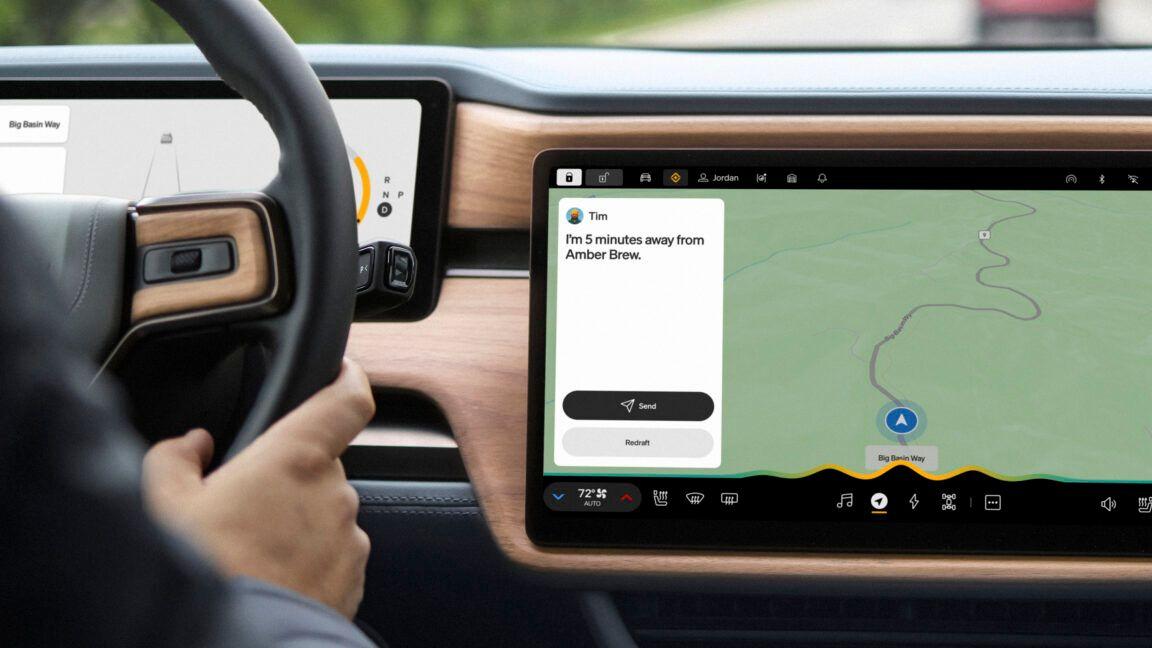
Messaging capabilities extend beyond basic voice-to-text dictation. The assistant reads incoming texts, summarizes them, and helps draft replies that sound natural rather than robotic
4
. Owners can ask the assistant to send text messages to friends or search their text messages for certain details, though they need to separately connect to various apps and services like Spotify, Apple Music, and Google Calendar3
.The first third-party integrations feature Google Calendar, with Rivian describing its assistant as having an "agentic framework" that can chain multiple actions together across different services
4
. In demonstrations, the assistant was shown to read upcoming events in Google Calendar and modify them, such as rescheduling meetings3
. Owners can ask it to find a coffee shop on the way to their next appointment and text a contact with an estimated arrival time—all in a single flow4
.The competitive contrast with Tesla Grok is striking. While Tesla launched its "Hey Grok" voice assistant in its Spring 2026 update powered by xAI's Grok model, the feature still cannot control climate, media, or other core vehicle functions—a limitation well-documented since its beta launch
4
. Tesla's Grok can handle navigation commands, answer general knowledge questions, and look up information from the vehicle's manual, but lacks the native control over drive modes, climate, ride height, front trunk, cameras, and range data that Rivian's assistant delivers from day one4
.
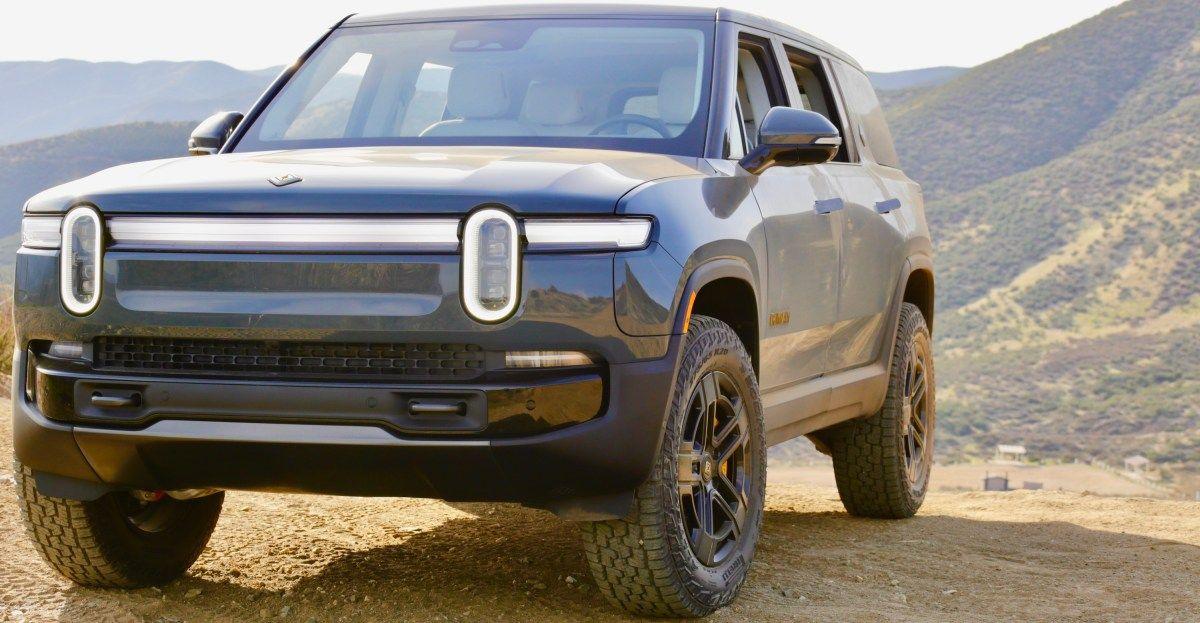
Source: The Verge
Both assistants are subscription-gated—Tesla Grok requires Premium Connectivity while Rivian's requires Connect Plus—but Rivian delivers more vehicle-integrated functionality for a lower monthly price
4
. The assistant will also be available on the R2 when it begins customer deliveries in the coming weeks, as the new platform delivers 200 sparse TOPS of edge AI compute—hardware purpose-built for these capabilities4
.Summarized by
Navi
[3]
18 Dec 2025•Technology

10 Dec 2025•Technology

23 Apr 2025•Technology

1
Technology

2
Technology

3
Technology