RobCo Doubles Valuation to $1B as AI Robotics Disrupt Industrial Automation


3 Sources
[1]
Robotics startup RobCo valued at $1B+ in $40M funding round
Industrial automation startup RobCo Inc. today announced that it has closed a $40 million funding round. Most of the shares that changed hands were sold by current and former employees. The investor consortium that bought the equity included Sequoia, Lightspeed and several other startup funds.
[2]
Physical AI Builder RobCo Doubles Valuation to $1 Billion | PYMNTS.com
RobCo's new valuation is double the one it achieved nine months ago, according to the release. At that time, the company raised $100 million in a January Series C round and said it aimed to advance its physical artificial intelligence roadmap. "There was strong demand to invest in RobCo, so we
[3]
AI robot builder RobCo reaches unicorn status
"The billion-dollar valuation is a great milestone," he added. "For us, however, what matters most is what comes next: bringing the next generation of autonomous industrial robotics to factory floors." Next March, the company plans to officially unveil "Alfie", a two-armed, autonomous robot for
Share
Copy Link
Germany-based RobCo secured $40 million in a secondary share sale that doubled its valuation to over $1 billion just nine months after raising $100 million. The AI robot builder is expanding its autonomous industrial robotics across U.S. manufacturing facilities as CEO Roman Hölzl relocates to drive growth in America's fastest-growing market.
RobCo Achieves Unicorn Valuation in Secondary Share Sale
Germany-based industrial automation startup RobCo has reached a unicorn valuation of over $1 billion following a $40 million secondary share transaction
1
. The funding round saw current and former employees selling shares to an investor consortium including Sequoia Capital and Lightspeed1
. This marks a dramatic doubling of RobCo's valuation from January 2026, when the AI robot builder raised $100 million in a Series C round2
. Strong investor demand enabled the company to strengthen its position as it prepares to launch next-generation autonomous industrial robotics systems.
Source: PYMNTS
Physical AI Expansion Drives U.S. Market Focus
RobCo CEO and co-founder Roman Hölzl has relocated to San Francisco to personally drive the company's U.S. market expansion, signaling the region's strategic importance
1
. The United States represents RobCo's fastest-growing market, fueled by ongoing reindustrialization efforts3
. "Given the reindustrialization taking place in the US, the market there is larger in absolute terms and growing faster," Hölzl explained3
. Despite this growth trajectory, Europe still accounts for 70% of RobCo's current business3
. The company maintains manufacturing operations in Germany while assembling products for American customers at a facility in Austin, Texas1
3
. RobCo now serves customers across a dozen U.S. states1
.Alfie Robot Launch Targets Complex Manufacturing Applications
RobCo plans to commercially launch Alfie, its flagship two-armed mobile robot, on March 4, 2027
2
. Designed for unstructured, safety-critical work on factory floors, Alfie addresses manufacturing applications that traditional robotic arms cannot handle2
. An automaker could configure Alfie to stabilize a car part with one arm while applying paint with the other1
. Prototypes are already undergoing testing with several customers3
. Alfie's adaptability stems from RobVision, an AI engine that eliminates manual code updates when production conditions change1
. Users upload a photo of items to be processed, and RobVision generates synthetic variations to train custom AI models that automatically adjust to production line changes1
.Related Stories
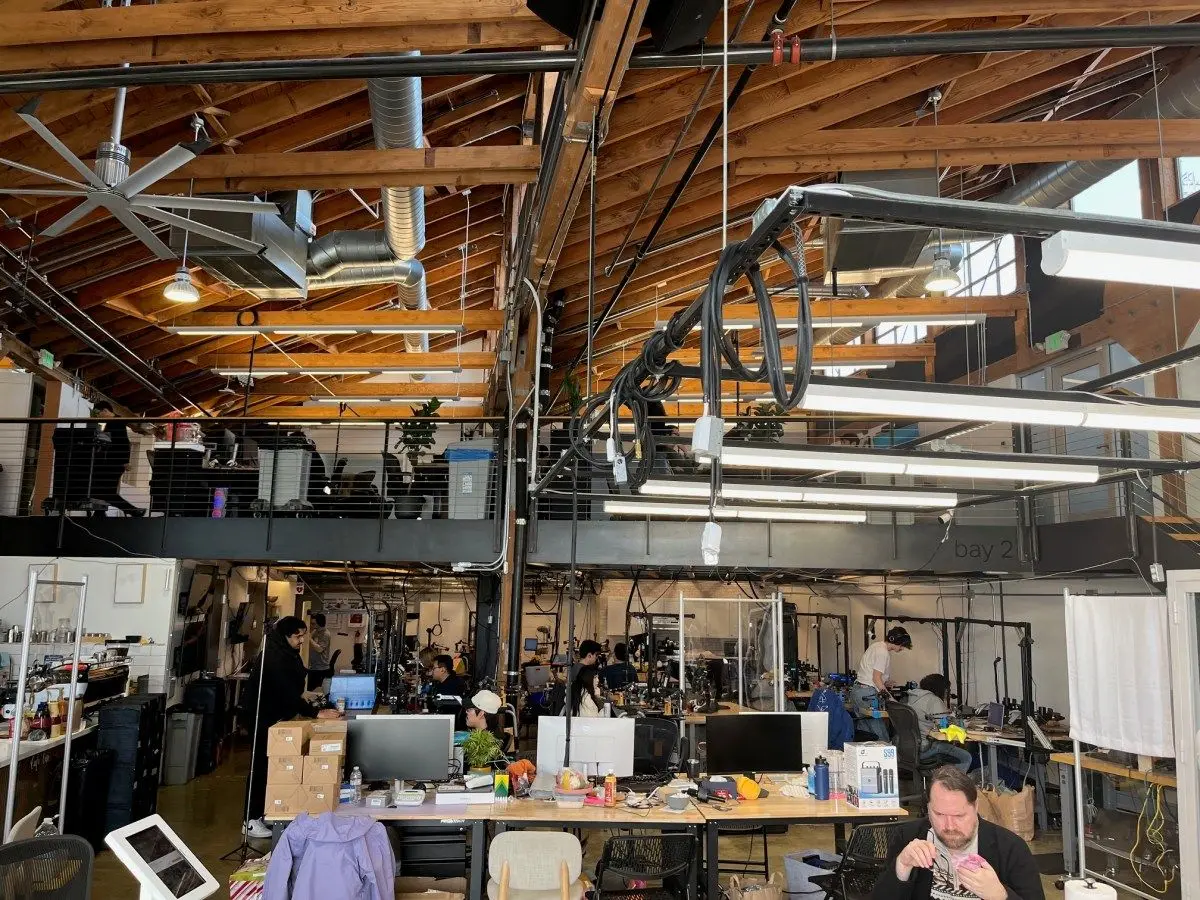
AI-Powered Robotic Systems Portfolio Spans Manufacturing Needs
RobCo offers more than a dozen robots through a robotics-as-a-service model requiring no upfront investment
2
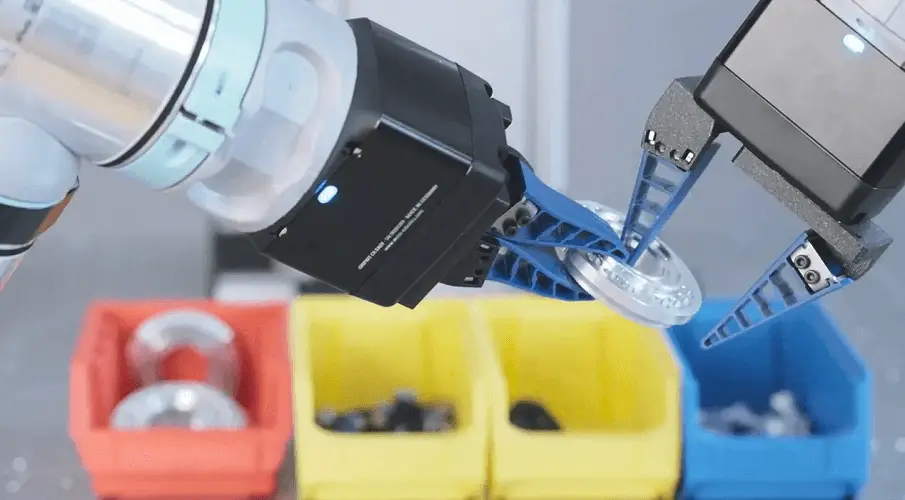
. The product line includes industrial robotic arms optimized for different tasks, from the XL model that handles 88-pound payloads and reaches over eight feet for metalworking, to simpler single-joint arms designed for quality inspection via camera monitoring of conveyor belts1
. Applications span machine tending, palletizing, material handling, finishing, welding, dispensing, assembly and quality control2
. RobFlow, a no-code development tool, enables customers to create multistep workflows by mixing pre-programmed commands1
. RobCo Studio optimizes hardware configurations and schedules maintenance1
.
Source: SiliconANGLE
Industrial Automation Market Shows Strong Growth Signals
North American companies ordered 8,940 robots worth $622 million in Q2, representing 4.3% unit growth and 21.3% revenue increase year-over-year, according to the Association for Advancing Automation
2
. The physical AI category reached a credible inflection point in 2026, with Nvidia CEO Jensen Huang declaring in January that the ChatGPT moment for robotics had arrived2
. "RobCo is building for a future in which AI doesn't just reason and generate, but acts in the physical world," said Luciana Lixandru, partner at Sequoia Capital2
. RobCo competes with German startups Agile Robots and Neura Robotics, which have also achieved billion-dollar valuations3
. Hölzl emphasized that while the unicorn valuation represents an incredible milestone, the company is more excited about bringing next-generation autonomous industrial robotics to factory floors2
.References
Summarized by

Navi
[1]
[3]
Related Stories
Robco raises $100M Series C funding to dominate AI robotics manufacturing in US and Europe
29 Jan 2026•Startups

Standard Bots hits $1bn valuation with $200M raise to build AI robots on American soil
09 Jun 2026•Startups

AI Robotics Startup Figure Secures $1 Billion+ Funding, Reaches $39 Billion Valuation
17 Sept 2025•Technology
Recent Highlights



Recent Highlights
Today's Top Stories



Don’t drown in AI news. We cut through the noise - filtering, ranking and summarizing the most important AI news, breakthroughs and research daily. Follow topics that matter to you and stay ahead.


