Salesforce CEO Marc Benioff declares AI agents will redefine enterprise software, not end it


2 Sources
[1]
'It's gonna be awesome': Salesforce CEO Marc Benioff has high hopes for using AI in its products, says 'it's impossible to describe what we're gonna be able to do for customers'
The AI era in software is only just beginning, Marc Benioff says * Salesforce CEO Marc Benioff extols effects of AI at work once again * Benioff hails efficiency gains, but also cost savings of using AI * Having AI agents and humans working together can take your company to the next level,
[2]
Salesforce CEO Marc Benioff Declares War On Traditional SaaS - Salesforce (NYSE:CRM)
"It's not the end of software," Benioff said. "It's the end of software that makes humans do all the work." That line may end up becoming one of the defining quotes of this earnings season, as AI agents increasingly replace human-driven workflows across enterprise software. Salesforce Is Betting
Share
Copy Link
Salesforce CEO Marc Benioff envisions a future where AI agents work alongside humans, handling customer service, lead qualification, and workflows autonomously. The company's Agentforce platform has already grown into an $800 million business, processing 28.6 trillion AI tokens last quarter. Benioff predicts that within two years, more AI agents will use Slack than people, signaling a shift from traditional SaaS to what he calls the Agentic Enterprise era.
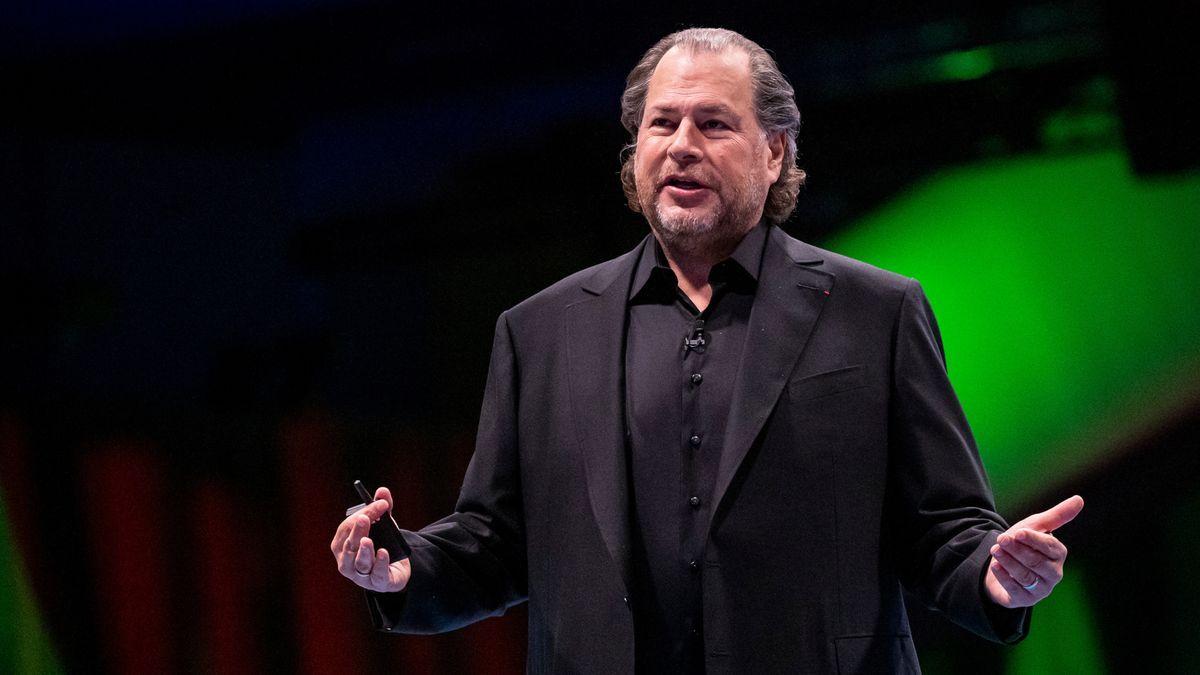
Salesforce CEO Marc Benioff Champions AI Agents as the Future
Salesforce CEO Marc Benioff has articulated a bold vision for AI in enterprise software, declaring that the technology represents not the end of software itself, but rather the end of software that forces humans to do all the work. Speaking on the All-In podcast and during recent earnings discussions, Benioff emphasized the transformative power of AI in reshaping how businesses operate
1
2
. His remarks signal a fundamental shift in how Salesforce positions itself within the evolving landscape of AI in the workplace.Marc Benioff painted an optimistic picture of productivity gains and efficiency improvements that AI agents bring to organizations. "Everything's gonna be cheaper to make, it's more efficient," he noted, highlighting how combining AI agents with human workers creates new possibilities
1
. The Salesforce CEO emphasized that he can now accomplish tasks previously impossible, implement software faster, and break through obstacles by having coding agents and humans working together. This collaboration model represents the core of what Benioff describes as the Agentic Enterprise, a concept first unveiled at Dreamforce 2025 in October.Agentforce Platform Drives Autonomous Software Revolution
The Agentforce platform has emerged as the centerpiece of Salesforce's AI strategy, demonstrating substantial commercial traction. The platform has already grown into an $800 million business, while Salesforce processed 28.6 trillion AI tokens during the most recent quarter—a 152% sequential increase
2
. These figures underscore the rapid adoption of autonomous software capabilities across enterprise customers.Agentforce Sales autonomously worked 220,000 leads during the quarter, generating $42 million in pipeline, while Agentforce Service has handled millions of customer support inquiries without human intervention
2
. This operational data suggests that AI agents are moving beyond experimental deployments into production environments where they deliver measurable business outcomes. Benioff described this new software as capable of listening, understanding, and actually executing tasks—a stark departure from traditional SaaS that requires constant human operation.AI Agents Become the Primary Interface
Benioff's vision extends beyond simply adding AI features to existing products. He believes AI agents themselves will become the primary interface through which work gets done, fundamentally changing how enterprise software operates. For decades, enterprise software revolved around humans manually operating applications through dashboards, menus, and workflows. Salesforce now positions AI agents as the next evolution of this model
2
.This shift has implications for customer service, lead qualification, workflow automation, and internal collaboration across organizations. Benioff made a striking prediction: "In two years, there'll be more agents using Slack than people"
2
. Whether this timeline proves accurate or not, the statement signals Salesforce's intent to position itself at the center of autonomous software adoption. The company has rebuilt its platform to serve as the operating system for what it calls the Agentic Enterprise, bringing humans and agents together on one trusted platform1
.Related Stories

Cost Savings and Efficiency Drive Adoption
Beyond the technological capabilities, Benioff emphasized the economic benefits that AI brings to organizations. The combination of cost savings and efficiency gains makes AI adoption compelling for enterprises looking to optimize operations. "What I can do for our customers is unprecedented; it's impossible to describe what we're gonna be able to do for customers. It's gonna be awesome," Benioff stated
1
.This bullish stance positions Salesforce at the forefront of addressing the so-called "SaaSpocalypse"—the concern that AI might render traditional SaaS business models obsolete. Instead of viewing AI as a threat, Benioff frames it as making Salesforce's platform more valuable by serving as an operating system for AI agents
1
. As Dreamforce 2026 approaches in the coming months, industry observers will watch closely to see how Salesforce continues to evolve its AI strategy and whether the Agentic Enterprise vision gains broader market acceptance. The company's ability to demonstrate sustained growth in AI token processing and autonomous agent deployments will likely determine whether Benioff's optimistic predictions materialize into lasting competitive advantages.References
Summarized by

Navi
Related Stories
Salesforce CEO Marc Benioff Shifts Focus to AI Agents, Reshaping Company Strategy
06 Sept 2024

Salesforce raises AI prices as Agentforce gains traction but investor doubts persist
04 Dec 2025•Business and Economy

Salesforce CEO Marc Benioff Dismisses AI Fears as Stock Plunges 28% Amid SaaSpocalypse Panic
22 Apr 2026•Business and Economy
Recent Highlights



Recent Highlights
Today's Top Stories






Don’t drown in AI news. We cut through the noise - filtering, ranking and summarizing the most important AI news, breakthroughs and research daily. Follow topics that matter to you and stay ahead.


