Salesforce CEO Marc Benioff Dismisses AI Fears as Stock Plunges 28% Amid SaaSpocalypse Panic


2 Sources
[1]
Salesforce CEO Marc Benioff Says Rumors of the 'SaaSpocalypse' Are Greatly Exaggerated
Wall Street believes AI will destroy his business, but Marc Benioff, CEO of Salesforce, begs to differ. Sure, Salesforce stock is down 28% this year on fears that AI agents will replace the software-as-a-service model that made the company a giant. The worst-hit SaaS companies have plummeted twice
[2]
Software makers' best may not be good enough as AI fears mount
Salesforce anticipates its fastest revenue growth in three years, yet investor confidence in software makers remains low due to AI disruption fears. Despite efforts by CEOs to highlight proprietary data and in-house AI, a sector-wide selloff persists. Analysts expect companies to demonstrate AI's
Share
Copy Link
Salesforce CEO Marc Benioff pushes back against Wall Street's AI disruption fears as the company's stock drops 28% this year. While investors worry that AI will destroy the software-as-a-service model, Benioff argues AI is making Salesforce more valuable, pointing to its $300 million Anthropic investment and upcoming Agent Albert platform.
Marc Benioff Challenges Wall Street's SaaSpocalypse Narrative
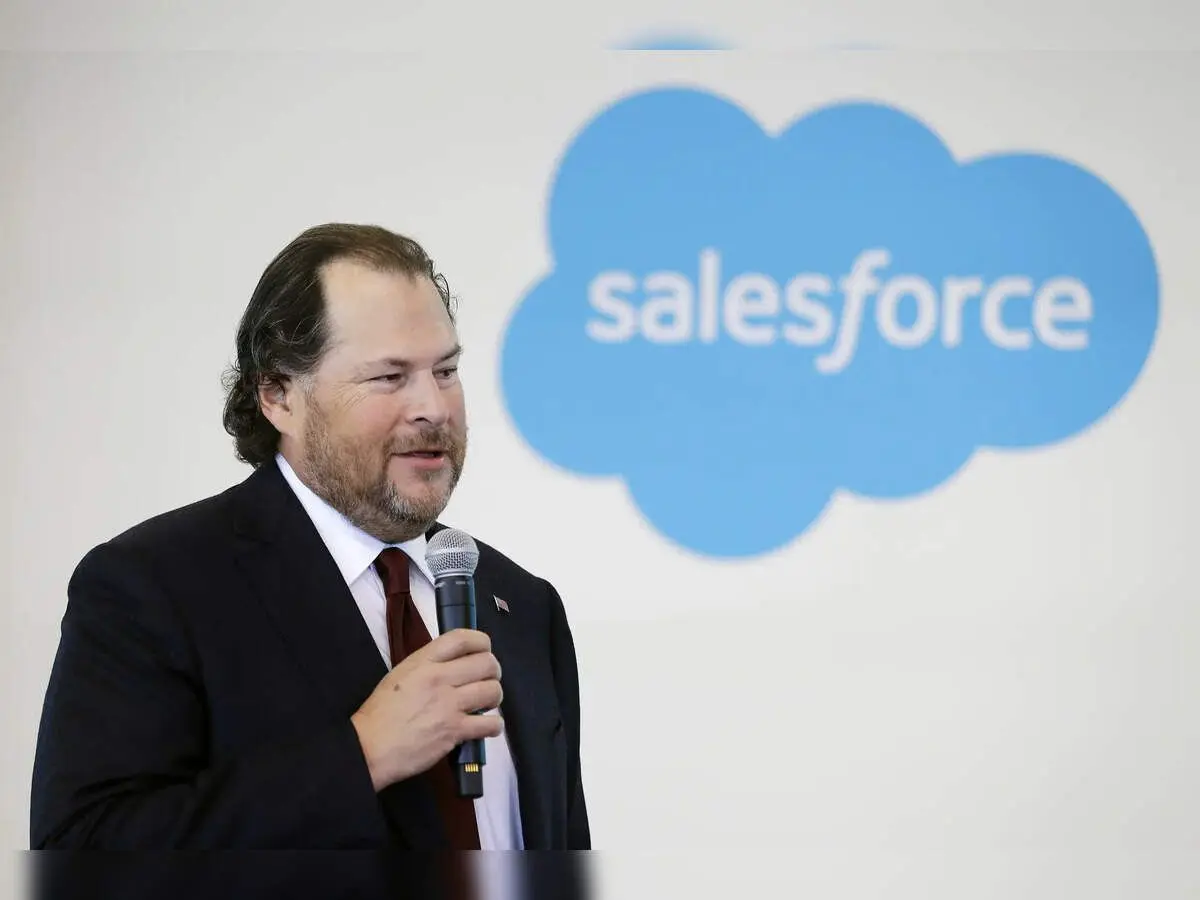
Salesforce CEO Marc Benioff is confronting mounting fears of AI disruption head-on as Wall Street questions whether artificial intelligence will dismantle the software-as-a-service model that built his empire. The company's stock has plummeted 28% this year, reflecting widespread investor anxiety about what some are calling the "SaaSpocalypse" — the theory that AI agents will eliminate the need for traditional per-employee software licensing
1
. Some SaaS companies have experienced declines twice as severe, with the broader software and services index down approximately 16% since January, dramatically underperforming the S&P 500's 3.2% rise2
.
Source: ET
Benioff told the Wall Street Journal that these AI fears are misplaced, arguing that AI isn't destroying Salesforce but rather enhancing its value proposition. "People think we have our back against the wall when in fact the opportunity has never been greater," he stated
1
. His confidence stems from Salesforce's aggressive AI strategy, including investing over $300 million in Anthropic starting in early 20231
.New AI Platform Agent Albert and Agentforce Adoption
Salesforce plans to unveil Agent Albert by year-end, a new AI platform designed to automatically study users and take actions on their behalf
1
. The company's existing Agentforce autonomous agent platform already serves 23,000 customers who use it to build autonomous agents and automate workflows1
. These in-house AI offerings represent Salesforce's bet that customers will prefer integrated solutions over building their own systems or switching to AI-native competitors.Benioff's core argument centers on competitive advantages that AI labs cannot easily replicate: proprietary data, security infrastructure, compliance frameworks, and industry-specific features developed over decades of enterprise experience
1
2
. He maintains that leading AI labs like Anthropic would rather partner with Salesforce than attempt to replace it entirely.Related Stories
Investor Confidence in Software Companies Remains Fragile
Despite Salesforce anticipating its fastest revenue growth in three years — Wall Street expects first-quarter revenue to have increased 12.5% to $9.83 billion, the fastest growth in 13 quarters — investor confidence in software companies remains shaken
2
. However, profit growth will likely slow to a near three-year low as AI-related costs rise2
.Joe Maginot, portfolio manager at Madison Investments, captured the market's skepticism: "From a short-term stock market perspective, nothing companies report this quarter or next quarter can really refute that long-term bear case. It's this more existential question on how things will evolve over the coming three, four, five years and even longer"
2
.Analysts expect upcoming earnings reports from ServiceNow, Workday, and Salesforce to demonstrate how AI is boosting revenue and improving customer retention capabilities
2
. Bernstein analysts noted that "the opportunity is there for many incumbents to be successful, especially as the rollout of AI in enterprise is going to take many years"2
. The selloff reflects deeper questions about whether traditional software companies can transform quickly enough to survive the AI transition or whether they'll be displaced by AI-native competitors that fundamentally reimagine how business software operates.References
Summarized by

Navi
[1]
Related Stories
Salesforce CEO Marc Benioff dismisses SaaSpocalypse fears as company bets big on AI agents
26 Feb 2026•Business and Economy

Salesforce CEO Marc Benioff declares AI agents will redefine enterprise software, not end it
28 May 2026•Technology
Salesforce raises AI prices as Agentforce gains traction but investor doubts persist
04 Dec 2025•Business and Economy

Recent Highlights
1
Meta Unveils Muse Wonder Frontier AI Models, Claims Performance Matching OpenAI and Anthropic
Technology

2
IMF Report Warns AI Market Correction Could Spark Global Financial Crisis With $1.4T at Risk
Business and Economy

3
OpenAI Releases 722 AI-Generated Math Solutions, Triggering Existential Crisis in Mathematics
Technology

Recent Highlights
Today's Top Stories







Don’t drown in AI news. We cut through the noise - filtering, ranking and summarizing the most important AI news, breakthroughs and research daily. Follow topics that matter to you and stay ahead.


