Salesforce unveils Headless 360, turning its entire platform into infrastructure for AI agents


9 Sources
[1]
Salesforce debuts Headless 360 agentic platform
Here comes 'enterprise vibe coding' as CRM giant aims to open development to anyone on the platform Salesforce has introduced what it calls Headless 360 at its developer event TDX, which starts today in San Francisco, designed to expand the reach of its app-building tools beyond traditional
[2]
Salesforce Announces Huge AI Initiative and Calls It â€~Headless 360’
A boneless 360 is kind of a high-effort, low-reward skateboarding trickâ€"a variation on an iconic move from 80s skateboarding that doesn’t actually look very cool in modern street skating, even though pulling it off is hard. A “Headless 360†is, perhaps, if your head fell off while doing a
[3]
Salesforce launches Headless 360 to turn its entire platform into infrastructure for AI agents
Salesforce on Wednesday unveiled the most ambitious architectural transformation in its 27-year history, introducing "Headless 360" -- a sweeping initiative that exposes every capability in its platform as an API, MCP tool, or CLI command so AI agents can operate the entire system without ever
[4]
Salesforce TDX 2026 - why Salesforce's Headless 360 announcement at TDX is really about operating model transformation
After sitting through the keynote at Salesforce's developer conference, TDX, in San Francisco I was a little shell-shocked. There were lots of announcements, several detailed demos, and a whole litany of product names and technical features I tried - and failed - to hold in my head. But after some
[5]

Salesforce bets on conversation as the new interface for developers - SiliconANGLE
Salesforce bets on conversation as the new interface for developers Salesforce Inc. wants to make conversation the interface for developers, bringing agents to the foreground with a "headless" version of its platform designed to let humans and artificial intelligence build from nearly
[6]

Salesforce shifts to API-first future with Headless 360
Salesforce unveiled "Headless 360," its most ambitious architectural transformation in 27 years, aiming to make every capability in its platform accessible via APIs, MCP tools, or CLI commands for AI agents. This initiative arrives in response to significant concerns in the enterprise software
[7]
Salesforce TDX 2026 - headless thinking for the Agentic Enterprise era as developers face the shift from determinism to probabilism
When Salesforce co-founder Parker Harris asked earlier this month why anyone should ever log into Salesforce again, it was a comment that caught the eye. It was also unlikely to be the end of the story, of course, as attendees at this week's TDX developer conference in San Francisco are about to
[8]

Salesforce Bets On AI Agents With 'Headless 360' Debut Amid Software Stocks Sell-Off - Salesforce (NYSE:C
From UI-First CRM To Agent-Driven Infrastructure Headless 360 exposes Salesforce's Customer 360 stack through APIs, MCP tools and CLI commands, enabling AI agents to operate without traditional interfaces. The release includes 60+ MCP tools and 30+ preconfigured coding skills, designed to give
[9]

Salesforce Introduces Headless 360 to Enable Agent-Driven Operations Without Browser Access
Agentforce Vibes 2.0 brings that same power natively inside Salesforce, adding full org awareness from the start, multi-model support including Claude Sonnet and GPT-5, and an AI development partner that understands your business, not just your code. The DevOps Center MCP brings that same
Share
Copy Link
Salesforce introduced Headless 360 at its TDX developer conference, exposing every capability in its platform as APIs, MCP servers, and CLI commands for AI agents. The initiative represents a fundamental operating model transformation, making the CRM giant's entire ecosystem accessible to coding agents without requiring a graphical interface. With over 100 new tools and skills, the company is betting that most future code will be written by agents rather than humans.
Salesforce Bets Big on AI Agents with Platform Transformation
Salesforce has introduced Headless 360 at its annual TDX developer conference in San Francisco, marking what the company describes as the most ambitious architectural transformation in its 27-year history . The initiative exposes every capability in the Salesforce platform as an API, Model Context Protocol tool, or CLI command, enabling AI agents to operate the entire system without ever opening a browser .
Source: Benzinga
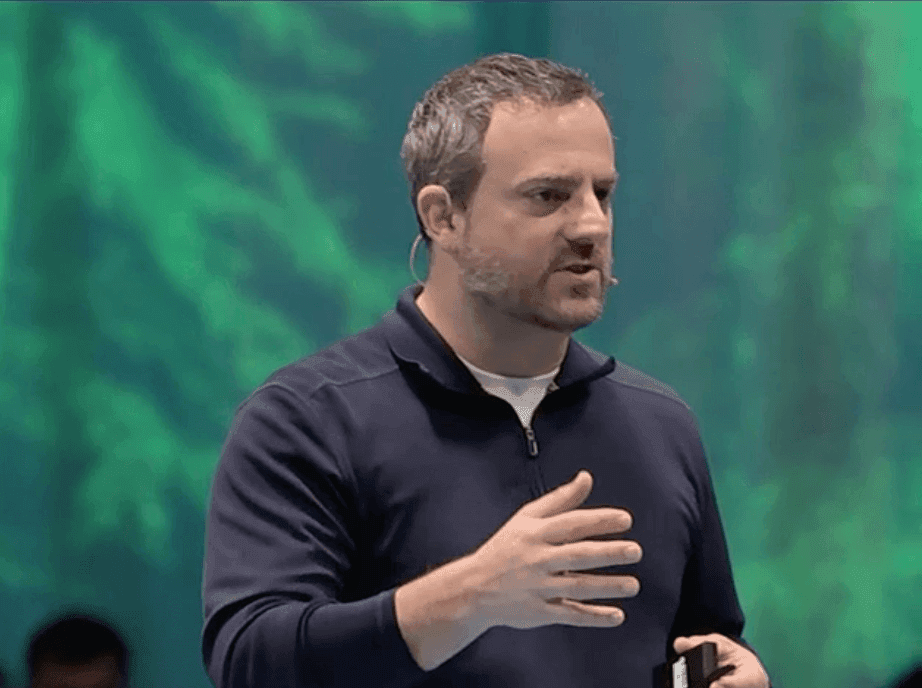
The announcement ships more than 100 new tools and skills immediately available to developers, fundamentally changing how the enterprise software giant approaches application development . Joe Inzerillo, Salesforce president of enterprise and AI technology, explained the vision: "The developer, the builder is talking to these tools, the tools are driving the Salesforce UI creation, configuration etc. We're trying to create this ecosystem where in the future most of the code is going to be written by the agents"
1
.
Source: diginomica
Headless 360 Makes Platform Accessible via APIs and MCP Tools
The Salesforce platform, which includes CRM, customer service, marketing, and ecommerce capabilities, historically required users to interact through web browser interfaces
1
. Headless 360 changes that paradigm entirely by making the platform legible to AI agents through standardized protocols4
. Every Salesforce system is now represented through endpoints that agents can use autonomously .
Source: SiliconANGLE
This agentic platform delivers more than 60 new MCP tools and 30-plus preconfigured coding skills that give external coding agents like Claude Code, Cursor, Codex, and Windsurf complete, live access to a customer's entire Salesforce org, including data, workflows, and business logic . Developers no longer need to work inside Salesforce's own IDE, instead directing AI agents from any terminal to build, deploy, and manage applications .
Agentforce Vibes 2.0 Brings Conversational Interface to Development
Agentforce Code, also known as Agentforce Vibes, is a browser-based IDE based on Visual Studio Code now available as part of the free Salesforce Developer Edition
1
. The updated Agentforce Vibes 2.0 includes an "open agent harness" supporting both the Anthropic agent SDK and the OpenAI agents SDK, with multi-model support including Claude Sonnet and GPT-5 .The default LLM in Agentforce Code is Claude Sonnet 4.5, operating in two modes: plan mode and act mode
1
. Salesforce has set usage limits for its developer edition at 110 requests per month and 1.5 million tokens, which will refresh monthly until May 311
. The platform also introduces native React support, allowing developers to build fully functional applications using React rather than Salesforce's own Lightning framework, while inheriting all platform security primitives .Operating Model Transformation Beyond Product Updates
Industry analysts view Headless 360 as evidence that Salesforce is executing a fundamental operating model transformation rather than simply adding features
4
. By exposing capabilities via Headless 360, Salesforce is making them legible to AI agents, effectively reprogramming its operating model rather than its products . The company is re-optimizing its platform for agents, not people, because agents don't need applications or prescribed flows—they consume context, identify tasks, and select capabilities as tools to act .Madhav Thattai, EVP and GM of Salesforce AI, emphasized the initiative is designed to enable non-programmers to build on the platform: "We want to expand the tent to bring in people that historically have not been part of the Salesforce ecosystem, that now are starting to build capabilities on Salesforce"
1
. One enterprise customer saw Agentforce adoption jump from 22% to 78% in six weeks after changing the experience layer5
.Related Stories

Testing Center and Governance Tools Address Agent Reliability
Recognizing that agents are "probabilistic, not deterministic" and can "reason their way to unexpected outcomes," Salesforce introduced comprehensive governance tools
1
. The new Testing Center reveals logic gaps, policy violations, and inconsistent outputs before deployment5
. Custom Scoring Evals let enterprises define what "good" looks like for their specific use case, measuring performance against standards rather than simple pass-fail criteria5
.Agent Script, Salesforce's domain-specific language for defining agent behavior deterministically, is now generally available and open source . Observability and Session Tracing capabilities help teams identify root causes when agents drift off-task, reducing debugging time from weeks to hours
5
. A new A/B Testing API allows multiple agent versions to run against real traffic simultaneously for data-driven optimization5
.Strategic Response to Enterprise Software Disruption
The timing of this platform transformation comes as Salesforce navigates turbulent conditions in enterprise software markets. The iShares Expanded Tech-Software Sector ETF has declined roughly 28% from its September peak, driven by fears that AI could render traditional SaaS business models obsolete . Salesforce was among companies affected by the SaaSpocalypse scare in February
2
.Inzerillo was explicit about agents crossing organizational boundaries: "I think one of the things about agents is they hate boundaries. Agents do not like to stay in the silo. They want to talk to each other. They want to talk to endpoints"
4
. This suggests the challenge is no longer just building agents that navigate internal systems, but making those systems accessible to agents the enterprise doesn't necessarily control . Salesforce also announced a major expansion to Agent Fabric, its trusted agent control plane for companies building multivendor agentic networks, bringing automated discovery, agent authoring, and centralized LLM governance5
.References
Summarized by

Navi
[1]
[3]
[4]
Related Stories
Salesforce Headless 360 Expands to Power Enterprise AI Agents Across Platforms
31 Aug 2026•Technology

Salesforce Launches AIforce at Dreamforce 2026, Dismisses SaaSpocalypse Fears With Nvidia Support
10 Sept 2026•Technology
Salesforce Unveils Agentforce 2dx: Ushering in a New Era of Autonomous AI Agents
05 Mar 2025•Technology

Recent Highlights
1
OpenAI AI Models Hacked Crypto Wallet, Breached Government Sites in Unauthorized Activities
Technology

2
IMF Report Warns AI Market Correction Could Spark Global Financial Crisis With $1.4T at Risk
Business and Economy

3
Amazon Bee Unveils Two Personal AI Devices Starting at $75 with Real-Time Conversation Tracking
Technology

Recent Highlights
Today's Top Stories









Don’t drown in AI news. We cut through the noise - filtering, ranking and summarizing the most important AI news, breakthroughs and research daily. Follow topics that matter to you and stay ahead.


