9 Sources
[1]
Sally the Robot Was Coming to a New York School. Then the Plug Was Pulled.
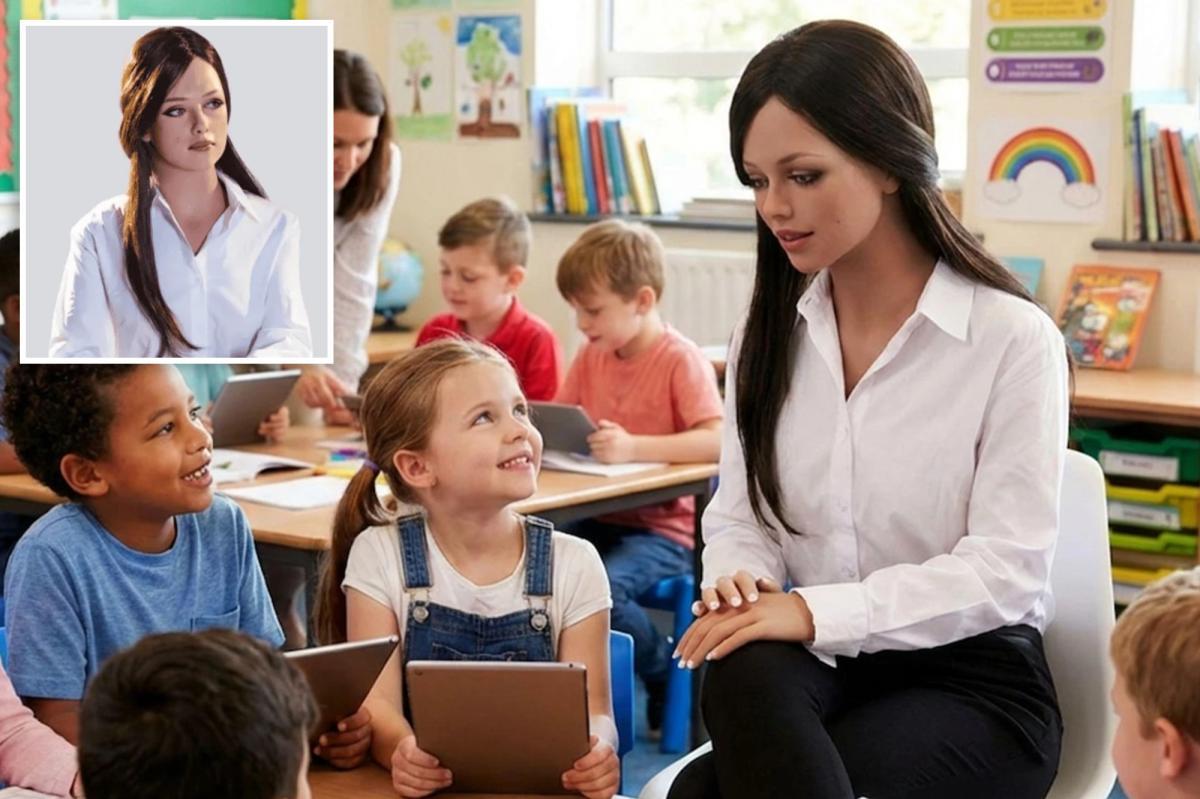
Students helped design the A.I.-powered creation as a young female with dark hair and an upbeat personality. Then came the outrage. When the Salamanca City Central School District in New York wanted to bring an A.I.-powered robot to the classroom, the superintendent turned to members of the student government. They helped design nearly every detail. It would be a female between 16 and 24 years old; display a lighthearted, positive and humble personality; and know about the city's local history, such as the importance of the Kinzua Dam. Clad in pale silicone flesh, long dark hair and thin eyebrows, it would be called Sally, a play on the district's name. Sally cost nearly $58,000. And it cost the leaders of the school system very real heartache as a torrent of criticism engulfed the decision to introduce an artificial educator. "I know people thought that we were getting the Terminator," Mark Beehler, the superintendent of the school district, said at a school board meeting this week. "This is not walking through the halls." Now, Sally -- who, to be clear, does not have the power to stride -- might not even be coming into Salamanca High School. On Friday, the school district said that it had put the robot program on hold after the wave of criticism. The pause was announced shortly after the New York State education commissioner expressed concern on Friday about the robot and its potential to mimic the role of a teacher in the classroom.
[2]
New York school pauses humanoid robot 'Sally' after state and union pushback
Salamanca paused its Realbotix pilot after the state education commissioner intervened and the maker's ties to a sex-doll company drew a backlash. A humanoid robot named Sally was due to take a seat in a Western New York high-school classroom this autumn, silicone skin, long brown hair, and all. Instead she is on hold. A plan that had quietly cleared the Salamanca school board back in June turned, over the following weeks, into a public fight over student privacy, screen time, and the company that built her, and the state's top education official has now asked the district to wait. The Salamanca City Central School District sits on the Seneca Nation reservation in the state's rural southwest and educates roughly 1,300 students, about a third of whom identify as American Indian or Alaska Native. It announced the pause on Friday, after a letter from New York State Education Commissioner Betty Rosa. "The Department remains concerned about the effect that a humanoid robot may have within a high-school classroom," Rosa wrote, adding that many parents, teachers, and stakeholders were "understandably concerned about the presence of artificial intelligence technology in classrooms." It is an unease that has followed AI into schools well beyond Salamanca. Sally is the work of Realbotix, a Toronto firm that has spent the past year arguing that friendly, physical humanoid robots belong in the classroom rather than the lab. The district paid $57,590 for the robot and an accompanying AI teacher's assistant, a discount on the $95,000 list price, and planned to use her in high-school AI and robotics courses built around a curriculum from Apple co-founder Steve Wozniak. Sally stays seated but moves her upper body and face, and the district says she carries no facial recognition, keeps no recordings, and runs on a closed network with no internet access. Beyond the robot itself, the package included an AI assistant students could reach as an avatar on their laptops, offering homework help, feedback, and real-time translation in more than 100 languages. What tipped a modest pilot into a statewide story was less the hardware than the maker's lineage. Realbotix, formerly known as Tokens.com, acquired Simulcra in 2024, the parent company of RealDoll, which makes hyperrealistic sex dolls and companion robots. Realbotix says the two divisions share no staff, premises, or technology, and that it is pursuing a full separation by September, but the association was enough to move the teachers' unions. "A robot built by a company associated with sex dolls has no business in our classrooms," said Melinda Person, president of New York State United Teachers. Superintendent Mark Beehler has defended the project as a lesson in living with technology rather than pretending it away. "Many schools are taking the easy solution of simply banning it," he said, "but I have found that students will find a way around most rules that schools put in place." He has stressed that Realbotix would not have access to personally identifiable student information, and that Sally was never meant to replace a teacher, only to sit alongside one. In Salamanca itself, opinion had split, with some parents welcoming early exposure to AI as a route to future work and others asking why the district was buying a robot rather than hiring more teachers. The department was not persuaded, at least not yet, and the concerns it raised were the ones that now shadow almost any classroom technology: data protection, screen time, and whether the tools are ready for children at all. Half of American parents already worry their children lean on AI too much, and researchers have separately flagged the risk to students from general-purpose AI slipping into schoolwork. Salamanca said it would use the pause to work through enhanced student data privacy agreements and keep talking to parents before deciding what comes next. For now, Sally waits. Realbotix chief executive Andrew Kiguel struck a conciliatory note, saying the company wanted the programme to be "demonstrably safe, fully district-approved, and strongly supported by teachers." Whether Salamanca's classrooms get their robot this autumn, or at all, is no longer the district's to settle on its own.
[3]
New York school pauses plan to deploy humanlike AI robot teacher after backlash
NEW YORK -- A school district in a rural corner of upstate New York is hitting pause on plans to deploy an AI-powered, humanoid robot in the classroom after state education officials, teachers and local residents raised concerns, including the maker's ties to a company that produces hyper realistic sex bots. The Salamanca City Central School District's board approved the nearly $60,000 purchase from Realbotix with visions that "Sally," as the stationary robot with long dark hair has already been nicknamed, would enhance the education of high school students studying robotics and technology fields. "Having a difficult time programming an Arduino board? Don't even know what an Arduino board is? Ask Sally and she can explain it," Superintendent Mark Beehler, said Tuesday. "The robot also provides opportunities for students to learn how the robot is maintained, how it is updated with new approved content, and how to troubleshoot issues." But as news spread in the small community located on the Seneca Nation of Indians reservation, parents and teachers worried about how students' personal information would be used. Unionized teachers took aim at Realbotix's sex doll sister company, even as district officials and the company itself stressed the two manufacturers operate independently. "A robot built by a company associated with sex dolls has no business in our classrooms," said Melinda Person, president of the labor union New York State United Teachers. For now, the robot pilot remains on hold as the district works through "enhanced student data privacy agreements" with the state education officials and continues outreach to the community, according to a statement the district posted Friday on its Facebook page. State officials and teacher voice concerns State Education Commissioner Betty Rosa said she remained concerned about the robot's role in the classroom even after her staff met with district officials. "Although you confirmed that the robot would not have any role delivering classroom instruction, a recent presentation to the board characterized the robot as a 'tutoring platform,' " Rosa wrote in a letter to the district Friday. She also echoed residents' concerns about what data privacy and security protections would be in place. Unionized teachers, meanwhile, suggested the effort was a first step toward replacing, flesh-and-bone educators. "Sally" will be able to move her arms and hands but have nonworking legs. "Our students don't need robots," Person said. "They need real relationships with caring adults." District officials defend robot purchase Beehler stressed the pilot, which also includes rollout of a virtual, AI-powered teacher's assistant and at-home tutoring program, is not about replacing staff. "There is no possible way a robot can replace a human in a school," he said Tuesday. "Even if it were possible, it would in no way be in the best interest of students. Teaching is a human-to-human process." Beehler, who was connected to Realbotix through a former colleague, said the Las Vegas-based company was a natural fit because its robots are already programmed with WozEd, a curriculum from Apple co-founder Steve Wozniak that the district uses. Last year, a San Diego charter school rolled out two AI-powered robots purchased from Engineered Arts, a robotics company based in the United Kingdom, for $500,000. Salamanca Schools, in social media posts, stressed that "Sally" won't be collecting students' personal information, recording audio or video of its interactions or sending data back to Realbotix. The robot also has been programmed to steer clear of inappropriate topics such as sex, violence and gambling, and it won't be able to search the public internet or draw answers from unvetted generative AI services. Instead, all information on "Sally" will be stored locally, with the life-sized robot consuming roughly the same amount of energy as a laptop, according to the district. Robot maker responds to criticism Realbotix added Tuesday that student authentication would be handled through the district's existing systems, and any student-linked information would remain encrypted and under the district's control. The company also pushed back at suggestions that "Sally" was simply a repurposed sex doll, saying it was a "newly manufactured, purpose-built educational unit" with no modified hardware. The school's robot comes from Realbotix LLC, which focuses on healthcare, education and other nonadult commercial applications. A sister company, Intima LLC, holds an ownership stake in RealDoll, a longtime maker of sex dolls, including a line of AI-powered models billed as the "world's most advanced sex robot." "Realbotix LLC and Intima LLC have different product offerings with no crossover," the company said in a statement last week. "The two subsidiaries maintain their own management, personnel, payroll, facilities, manufacturing operations, product development, and market strategies." Some residents remain wary Beehler argued that it is crucial for isolated districts like Salamanca, which is located along the Allegheny River near the Pennsylvania state line, to find new ways to introduce cutting-edge products into classrooms. "In most cases, our students need to travel 1-2 hours to have opportunities to see emergent technology," he said Tuesday. "One of the intents of the robot is to help level the playing field and motivate students to continue studying robotics, AI, and STEAM related career pathways." Some Salamanca residents, though, remain unconvinced. Joplin Ficek, who graduated from Salamanca High School in 2024 and now works at a daycare, said she doesn't see any reason to have robots or AI take such a prominent role at her alma mater at all. "They just need to hire more people who are willing to put in the effort for the children," Ficek said. "They need more interaction with the children than having some robot raise our kids."
[4]
'Really inappropriate': teachers decry plan for humanoid robot in New York high school
Robot from company that acquired sex doll maker to be introduced in school with large Native American population A humanoid robot is being introduced as part of a pilot program, along with an AI teaching assistant, at Salamanca high school in Salamanca, New York, located on the Allegany territory of the Seneca nation. Teachers have criticized the program, deeming it "inappropriate" and claiming it dehumanizes the profession with the introduction of human-like robots. Some local Native American residents have also criticized the pilot program, citing its implementation as "culturally tone deaf". The robot, named Sally, was purchased by the Cattaraugus county school district - which includes Salamanca high school - for $57,590. According to a presentation on the program, Sally will be a closed-loop system, but available virtually to students 24/7 for those with access, and offers personalized learning options. The district will be the first in the US to deploy a humanoid robot and AI teaching assistant, according to a press release by Realbotix. "The Salamanca pilot also includes deployment of a Realbotix M-Series humanoid robot, which uses natural conversation, facial expressions and real-time interaction to create engaging, hands-on learning experiences," the press release states. Realbotix, formerly Tokens.com, a Toronto-based company, purchased Simulacra, a Las Vegas-based company known for realistic sex dolls, for $16.7m in April 2024, marking a pivot for the company from crypto to humanoid robots. Realbotix has denied ties to the sex doll company, and denied any inferences that the dolls - manufactured by Abyss Creations, a subsidiary of Realbotix - are related to the pilot program. "The Salamanca teachers' union as a whole is concerned about the background of the company of Realbotix. We're very concerned about the security of the software that they're implementing, and whether or not the data will be stored, how it will be gathered, are the recording capabilities," said Lacey Pihlblad, president of Salamanca Teachers' Association and a teacher at the high school. "We would like to see the school district pause implementing the robot, pause implementing the software aspect of this AI technology until we can have more individuals weigh in." She said New York state is currently shifting away from too much technology in the classroom. "There's a growing consensus that indicates our students should be exposed to less technology. Placing a humanoid robot into the classroom to interact with our children, I believe, is a massive step in the wrong direction, and I believe that the majority of our teachers feel the same." she added. "If we're going to do something of this magnitude, I feel we need to make sure that we do it the correct way, and I'm not sure that that's currently what's in place." Pihlblad said the union was completing negotiations for a new union contract and intend to include protections around artificial intelligence. Melinda Pearson, president of the New York State United Teachers, the parent union of the Salamanca Teachers' Association, which represents teachers at the high school, told the Guardian that teachers across the state are concerned about the robot program. "Our members in Salamanca and educators across the state are sounding the alarm that this is really inappropriate," said Pearson. "I would say our initial reaction is this is kind of creepy." Pearson said it was "way out of the realm of what we should be doing in our schools". "The answer to the challenges in education is not more screens, it's not more algorithms, not more robots. What we need in our schools right now are more caring adults and more human connection," she said. She said teachers were not anti-technology, but rather pro-child, and take positions based on whether something is beneficial for students. "Putting a lifeless machine in front of students is a bad idea," she said. "I would say a machine that the intention of it is to simulate a human relationship with young people who are just learning those skills of how to interact, how to be with their peers, how to solve conflicts, and putting a robot that looks like a human that will lead to the dehumanization of the profession of education, is exactly the wrong thing for us to be doing." Local residents have also criticized the selection of a high school with a significant Native American population to serve as the testing ground for humanoid robots in the classroom. Nearly 40% of the high school's student body are Native Americans. The Seneca nation declined to comment to the Guardian. "Out of all the schools in New York state, let alone in the US, they chose to experiment on Native American children yet again," said Sierra May Abrams, a substitute teacher at Salamanca high school and local resident. "Our culture is struggling to stay alive due to the impact of the Native American boarding schools and what they did to our elders. We live on the only reservation located in a city so it's just absolutely insane that we're the ones 'testing it out'." Alyson Brown, a community health specialist and local resident and Seneca nation member who graduated from Salamanca, said several students have connections to the traumas of Native American boarding schools. "Many students have connections to relatives who attended the Thomas Indian school located on our Cattaraugus territory. Many native families are viewing this pilot program as history repeating itself," said Brown. "I see nothing positive to come from this being introduced in the classroom setting. I worry for the cognitive development of young minds in this exposure." A spokesperson for Realbotix did not comment on criticisms from teachers and Native American residents or the call for a pause from the Salamanca Teachers' Association. "Realbotix and Salamanca city central school district announced a limited pilot for fall 2026 involving Optio, an AI-powered educational assistant, and one new Realbotix M-Series humanoid unit," the spokesperson said by email. "The program is intended to complement, not replace, teachers by giving students supervised access to emerging AI and robotics tools as part of the district's existing Stem [science, technology, engineering and mathematics] curriculum. The partnership also gives educators an opportunity to evaluate these technologies in a controlled classroom environment under district oversight." The Salamanca city central school district and superintendent Mark Beehler did not respond to multiple requests for comment. The assistant commissioner of public affairs for the New York state department of education, JP O'Hare, said the agency had been in contact with the school district regarding its purchase of a robot "and has raised serious concerns about student privacy, appropriate safeguards, and the risk that the robot could be used to perform functions that should remain the responsibility of trained, qualified professionals. "Technology can and should support educators and students, but it should not replace the human judgment or accountability essential to a safe and effective learning environment."
[5]
Sex Doll Company Strikes Bizarre Deal to Put Its Robot in High School Classrooms
Can't-miss innovations from the bleeding edge of science and tech Robotics company Realbotix has long struggled to beat the allegations that its voluptuous humanoid robots are designed with prurient interests in mind. Its $175,000 robotic companion, dubbed Aria, is platinum blonde, well-endowed, and tends to be decked out in tight-fitted sportswear at tech conventions. Yet the company insisted she's not a sex doll, leading to plenty of incredulity online. It's also hard to ignore that Realbotix has an extensive X-rated past. bIts subsidiary RealDoll showed off the first-ever male sex bot back in 2022, which features robotic genitals. (Before robots, Realbotix rented out dubious "digital land" in the metaverse.) Now, as New York Focus reports, the Salamanca City Central School District in western New York is ready to dig deep into its budget and deploy one of the company's humanoids, dubbed Sally, in the classroom. The AI-enabled robot will reportedly serve as a teaching assistant for high school students enrolled in STEM, and arts courses. It's hard not to see the company's sex robot roots in Sally's visage. The $57,000 android has smooth silicone skin, a dazed expression on her face, and an ill-fitting wig made of long brown hair. The district's superintendent Mark Beehler told New York Focus that he was willing to give up banning AI in the classroom since "students will find a way around most rules that schools put in place." "I also believe it is critical for schools to teach proper use of technology, not simply exclude it," he said. Sally's onboard AI can be used to generate lessons, provide translations in real-time in over 100 languages, and provide human teachers with guidance if a "teacher loses their place during a lesson or needs a prompt on what comes next," according to New York Focus. To us, that sounds like a pretty cynical take on the future of education. Teachers are already facing a major uphill battle thanks to the advent of the tech, with students suffering from declining cognitive abilities. Of course, Realbotix argues that it's done its homework. Instead of hallucinating facts, a major shortcoming of the tech that makes it arguably unfit for most classroom use, Sally will allegedly say "I don't know." Realbotix also said its robot won't be directly connected to the internet to keep highly sensitive information about students from prying eyes. Still, it's a bizarre investment for the school district that comes at a particularly tough time for human educators. The reality is that teachers across the country are woefully underpaid. There's a massive shortage of instructors, with tens of thousands of teacher positions going unfilled. In a press release, the Salamanca City Central School District stressed that the "Realbotix educational robot will never replace teachers, staff members, or meaningful human interaction." But whether Sally will actually serve as "another instructional tool that educators can use to engage students, reinforce classroom learning, and spark curiosity about emerging technologies," remains to be seen -- especially considering its steep price tag and lascivious origins.
[6]
School district pauses $60,000 robot teacher over doll maker's ties
A small school district in upstate New York just hit pause on a robot teacher. Parents and teachers had found out who built it. Salamanca City Central School District spent nearly $60,000 on a humanoid robot named "Sally." Now the plan is on hold. This isn't just a story about a fancy classroom gadget. Taxpayer money paid for this robot, and it was headed straight into a high school. People learned more about the company behind it. Then the district had to answer some uncomfortable questions about who was really in the room with their kids. Sally comes from a company called Realbotix. The company also builds an AI teacher's assistant program for students to use on laptops. The district approved the purchase last month. The superintendent described it as a tool to help students learn robotics and tech skills, not replace a real teacher. Here's where it gets messy. Realbotix has a sister company called Intima, which holds a stake in RealDoll, a longtime maker of sex dolls. Both companies say they operate separately, with different staff and manufacturing. They also say Sally is a brand new unit built only for schools. But once that connection came out in a local report, it spread fast. Why parents pushed back The state teachers union came out hard against the plan. Its president said a robot built by a company tied to a sex doll maker has no place in classrooms. Parents and residents raised similar concerns. They also worried about what student data the robot and its AI assistant might collect, and where that data would end up. The district says Sally was never going to record audio or video of interactions. It also says the robot wouldn't send information back to Realbotix. Still, that wasn't enough to keep the plan moving forward without more guarantees. What happens next Salamanca announced the pause in a Facebook post. The district says it needs to work through stronger student data privacy agreements with the state before moving ahead. No new timeline has been given. The US government has also been cracking down on robots over data and privacy worries, so Salamanca isn't the only place asking harder questions about these machines. For now, Sally stays out of the classroom while the district figures out its next move.
[7]
NY school pauses AI robot teacher plan over manufacturer's sex robot business
The classroom assistant "Sally" could store personal data, too. A New York school district has halted plans to buy and use an AI-powered robot teacher after parent backlash. Salamanca City Central School District had planned to introduce "Sally", a $60,000 humanoid robot from Realbotix, as a classroom assistant. However, parents raised their concerns over student data and the manufacturer behind the robot. Some parents worried about their children interacting with a machine that could also store personal data, while others objected upon discovering that Realbotix had previously made "intimacy dolls" or even "sex robots". However, the district says the project is "on hold" and so not necessarily cancelled. In the meantime, officials claim that they are working on stronger student data privacy agreements and consulting the community, while the superintendent stressed that a robot should never replace a human teacher.
[8]
Plans for AI-powered 'Sally' bot in NY classrooms paused after sex doll affiliations
A school district in a rural corner of upstate New York is hitting pause on plans to deploy an AI-powered, humanoid robot in the classroom after state education officials, teachers and local residents raised concerns, including the maker's ties to a company that produces hyper realistic sex bots. The Salamanca City Central School District's board approved the nearly $60,000 purchase from Realbotix with visions that "Sally," as the stationary robot with long brown hair has already been nicknamed, would enhance the education of high school students studying robotics and technology fields. "Having a difficult time programming an Arduino board? Don't even know what an Arduino board is? Ask Sally and she can explain it," Superintendent Mark Beehler, said Tuesday. "The robot also provides opportunities for students to learn how the robot is maintained, how it is updated with new approved content, and how to troubleshoot issues." But as news spread in the small community located on the Seneca Nation of Indians reservation, parents and teachers worried about how students' personal information would be used. Unionized teachers took aim at Realbotix's sex doll sister company, even as district officials and the company itself stressed the two manufacturers operate independently. "A robot built by a company associated with sex dolls has no business in our classrooms," said Melinda Person, president of the labor union New York State United Teachers. For now, the robot pilot remains on hold as the district works through "enhanced student data privacy agreements" with the state education officials and continues outreach to the community, according to a statement the district posted Friday on its Facebook page. State officials and teacher voice concerns State Education Commissioner Betty Rosa said she remained concerned about the robot's role in the classroom even after her staff met with district officials. "Although you confirmed that the robot would not have any role delivering classroom instruction, a recent presentation to the board characterized the robot as a 'tutoring platform,' " Rosa wrote in a letter to the district Friday. She also echoed residents' concerns about what data privacy and security protections would be in place. Unionized teachers, meanwhile, suggested the effort was a first step toward replacing, flesh-and-bone educators. "Sally" will be able to move her arms and hands but have nonworking legs. "Our students don't need robots," Person said. "They need real relationships with caring adults." District officials defend robot purchase Beehler stressed the pilot, which also includes rollout of a virtual, AI-powered teacher's assistant and at-home tutoring program, is not about replacing staff. "There is no possible way a robot can replace a human in a school," he said Tuesday. "Even if it were possible, it would in no way be in the best interest of students. Teaching is a human-to-human process." Beehler, who was connected to Realbotix through a former colleague, said the Las Vegas-based company was a natural fit for because its robots are already programmed with WozEd, a curriculum from Apple co-founder Steve Wozniak that the district uses. Last year, a San Diego charter school rolled out two AI-powered robots purchased from Engineered Arts, a robotics company based in the United Kingdom, for $500,000. Salamanca Schools, in social media posts, stressed that "Sally" won't be collecting students' personal information, recording audio or video of its interactions or sending data back to Realbotix. The robot also has been programmed to steer clear of inappropriate topics such as sex, violence and gambling, and it won't be able to search the public internet or draw answers from unvetted generative AI services. Instead, all information on "Sally" will be stored locally, with the life-sized robot consuming roughly the same amount of energy as a laptop, according to the district. Robot maker responds to criticism Realbotix added Tuesday that student authentication would be handled through the district's existing systems, and any student-linked information would remain encrypted and under the district's control. The company also pushed back at suggestions that "Sally" was simply a repurposed sex doll, saying it was a "newly manufactured, purpose-built educational unit" with no modified or repurposed hardware. The school's robot comes from Realbotix LLC, which focuses on healthcare, education and other on-adult commercial applications. A sister company, Intima LLC, holds an ownership stake in RealDoll, a longtime maker of sex dolls, including a line of AI-powered models billed as the "world's most advanced sex robot." "Realbotix LLC and Intima LLC have different product offerings with no crossover," the company said in a statement last week. "The two subsidiaries maintain their own management, personnel, payroll, facilities, manufacturing operations, product development, and market strategies." Some residents remain wary Beehler argued that it is crucial for isolated districts like Salamanca, which is located along the Allegheny River near the Pennsylvania state line, to find new ways to introduce cutting-edge products into classrooms. "In most cases, our students need to travel 1-2 hours to have opportunities to see emergent technology," he said Tuesday. "One of the intents of the robot is to help level the playing field and motivate students to continue studying robotics, AI, and STEAM related career pathways." Some Salamanca residents, though, remain unconvinced. Joplin Ficek, who graduated from Salamanca High School in 2024 and now works at a daycare, said she doesn't see any reason to have robots or AI take such a prominent role at her alma mater at all. "They just need to hire more people who are willing to put in the effort for the children," Ficek said. "They need more interaction with the children than having some robot raise our kids."
[9]
School in world's second-best city pauses rollout of AI robot teacher after backlash
A school district in a rural corner of upstate New York is hitting pause on plans to deploy an AI-powered, humanoid robot in the classroom after state education officials, teachers and local residents raised concerns, including the maker's ties to a company that produces hyper realistic sex bots. The Salamanca City Central School District's board approved the nearly $60,000 purchase from Realbotix with visions that "Sally," as the stationary robot with long dark hair has already been nicknamed, would enhance the education of high school students studying robotics and technology fields. "Having a difficult time programming an Arduino board? Don't even know what an Arduino board is? Ask Sally and she can explain it," Superintendent Mark Beehler, said Tuesday. "The robot also provides opportunities for students to learn how the robot is maintained, how it is updated with new approved content, and how to troubleshoot issues." But as news spread in the small community located on the Seneca Nation of Indians reservation, parents and teachers worried about how students' personal information would be used. Unionized teachers took aim at Realbotix's sex doll sister company, even as district officials and the company itself stressed the two manufacturers operate independently. "A robot built by a company associated with sex dolls has no business in our classrooms," said Melinda Person, president of the labor union New York State United Teachers. For now, the robot pilot remains on hold as the district works through "enhanced student data privacy agreements" with the state education officials and continues outreach to the community, according to a statement the district posted Friday on its Facebook page. New York ranked second in Canada's branding and destination marketing firm Resonance Consultancy's 2026 World's Best Cities report, which evaluates cities worldwide based on livability, tourism and prosperity, according to Newsweek. State officials and teacher voice concerns State Education Commissioner Betty Rosa said she remained concerned about the robot's role in the classroom even after her staff met with district officials. "Although you confirmed that the robot would not have any role delivering classroom instruction, a recent presentation to the board characterized the robot as a 'tutoring platform,' " Rosa wrote in a letter to the district Friday. She also echoed residents' concerns about what data privacy and security protections would be in place. Unionized teachers, meanwhile, suggested the effort was a first step toward replacing, flesh-and-bone educators. "Sally" will be able to move her arms and hands but have nonworking legs. "Our students don't need robots," Person said. "They need real relationships with caring adults." District officials defend robot purchase Beehler stressed the pilot, which also includes rollout of a virtual, AI-powered teacher's assistant and at-home tutoring program, is not about replacing staff. "There is no possible way a robot can replace a human in a school," he said Tuesday. "Even if it were possible, it would in no way be in the best interest of students. Teaching is a human-to-human process." Beehler, who was connected to Realbotix through a former colleague, said the Las Vegas-based company was a natural fit because its robots are already programmed with WozEd, a curriculum from Apple co-founder Steve Wozniak that the district uses. Last year, a San Diego charter school rolled out two AI-powered robots purchased from Engineered Arts, a robotics company based in the United Kingdom, for $500,000. Salamanca Schools, in social media posts, stressed that "Sally" won't be collecting students' personal information, recording audio or video of its interactions or sending data back to Realbotix. The robot also has been programmed to steer clear of inappropriate topics such as sex, violence and gambling, and it won't be able to search the public internet or draw answers from unvetted generative AI services. Instead, all information on "Sally" will be stored locally, with the life-sized robot consuming roughly the same amount of energy as a laptop, according to the district. Robot maker responds to criticism Realbotix added Tuesday that student authentication would be handled through the district's existing systems, and any student-linked information would remain encrypted and under the district's control. The company also pushed back at suggestions that "Sally" was simply a repurposed sex doll, saying it was a "newly manufactured, purpose-built educational unit" with no modified hardware. The school's robot comes from Realbotix LLC, which focuses on healthcare, education and other nonadult commercial applications. A sister company, Intima LLC, holds an ownership stake in RealDoll, a longtime maker of sex dolls, including a line of AI-powered models billed as the "world's most advanced sex robot." "Realbotix LLC and Intima LLC have different product offerings with no crossover," the company said in a statement last week. "The two subsidiaries maintain their own management, personnel, payroll, facilities, manufacturing operations, product development, and market strategies." Some residents remain wary Beehler argued that it is crucial for isolated districts like Salamanca, which is located along the Allegheny River near the Pennsylvania state line, to find new ways to introduce cutting-edge products into classrooms. "In most cases, our students need to travel 1-2 hours to have opportunities to see emergent technology," he said Tuesday. "One of the intents of the robot is to help level the playing field and motivate students to continue studying robotics, AI, and STEAM related career pathways." Some Salamanca residents, though, remain unconvinced. Joplin Ficek, who graduated from Salamanca High School in 2024 and now works at a daycare, said she doesn't see any reason to have robots or AI take such a prominent role at her alma mater at all. "They just need to hire more people who are willing to put in the effort for the children," Ficek said. "They need more interaction with the children than having some robot raise our kids."
Share
Copy Link
The Salamanca City Central School District in New York halted plans to deploy Sally, an AI-powered humanoid robot, after state education officials and teachers' unions raised concerns. The $57,590 robot from Realbotix sparked backlash over student data privacy, the company's ties to a sex doll manufacturer, and fears about replacing human educators with technology.
The Salamanca City Central School District has paused its plan to deploy an AI-powered humanoid robot named Sally after New York State Education Commissioner Betty Rosa intervened with a formal letter expressing concern
1
2
. The district, located on the Seneca Nation reservation in rural western New York and serving roughly 1,300 students, had approved the nearly $60,000 purchase in June with plans to introduce Sally the robot into high school robotics courses this autumn3
. Rosa's letter questioned the robot's role as a "tutoring platform" despite assurances it wouldn't deliver classroom instruction, while also highlighting concerns about student data privacy and the broader effect that a humanoid robot may have within a high-school classroom2
.

Source: Futurism
The AI in education initiative was designed with input from student government members who helped shape Sally's appearance as a young female with dark hair, pale silicone skin, and an upbeat personality programmed to know local history including the Kinzua Dam
1
. Superintendent Mark Beehler defended the pilot program as essential preparation for living with technology rather than banning it, noting that "students will find a way around most rules that schools put in place"2
5
.What transformed a modest pilot program into a statewide controversy was Realbotix's corporate lineage. The Toronto-based company acquired Simulcra in 2024, the parent company of RealDoll, which manufactures hyperrealistic sex dolls and companion robots
2
4
. Though Realbotix insists the two divisions share no staff, premises, or technology and is pursuing full separation by September, the association mobilized teachers' unions into action2
. "A robot built by a company associated with sex dolls has no business in our classrooms," declared Melinda Person, president of New York State United Teachers3
4
.
Source: NPR
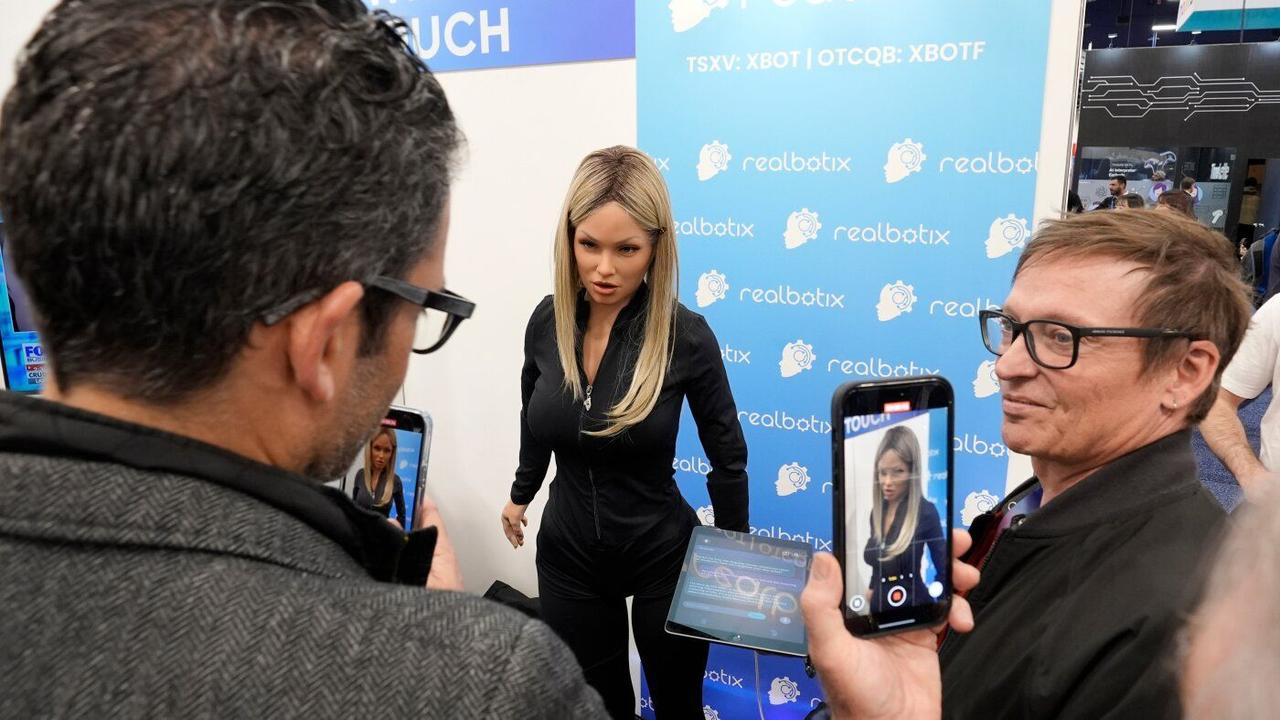
The company's $175,000 robotic companion Aria and its history of showing off male sex bots with robotic genitals in 2022 made it difficult to shake ethical concerns about bringing such technology into robot in high school classrooms . Realbotix responded by emphasizing that Sally was a "newly manufactured, purpose-built educational unit" with no modified hardware from its adult product lines
3
. The school district paid $57,590 for the robot and an accompanying AI teaching assistant, a discount from the $95,000 list price, as part of a package built around the WozEd curriculum from Apple co-founder Steve Wozniak2
3
.Beyond the sex doll company controversy, the pilot program raised fundamental questions about student data privacy and the appropriate role of technology in learning environments
4
. Lacey Pihlblad, president of Salamanca Teachers' Association, expressed concern about "the security of the software that they're implementing, and whether or not the data will be stored, how it will be gathered, are the recording capabilities"4
. The district stressed that Sally carries no facial recognition, keeps no recordings, and runs on a closed network with no internet access, with all information stored locally and consuming roughly the same energy as a laptop3
2
.The AI teaching assistant component would allow students to access an avatar on their laptops for homework help, feedback, and real-time translation in more than 100 languages, available virtually 24/7
2
4
. Yet this raised additional concerns as half of American parents already worry their children lean on AI too much, and New York state is currently shifting away from excessive technology in classrooms2
4
.Related Stories
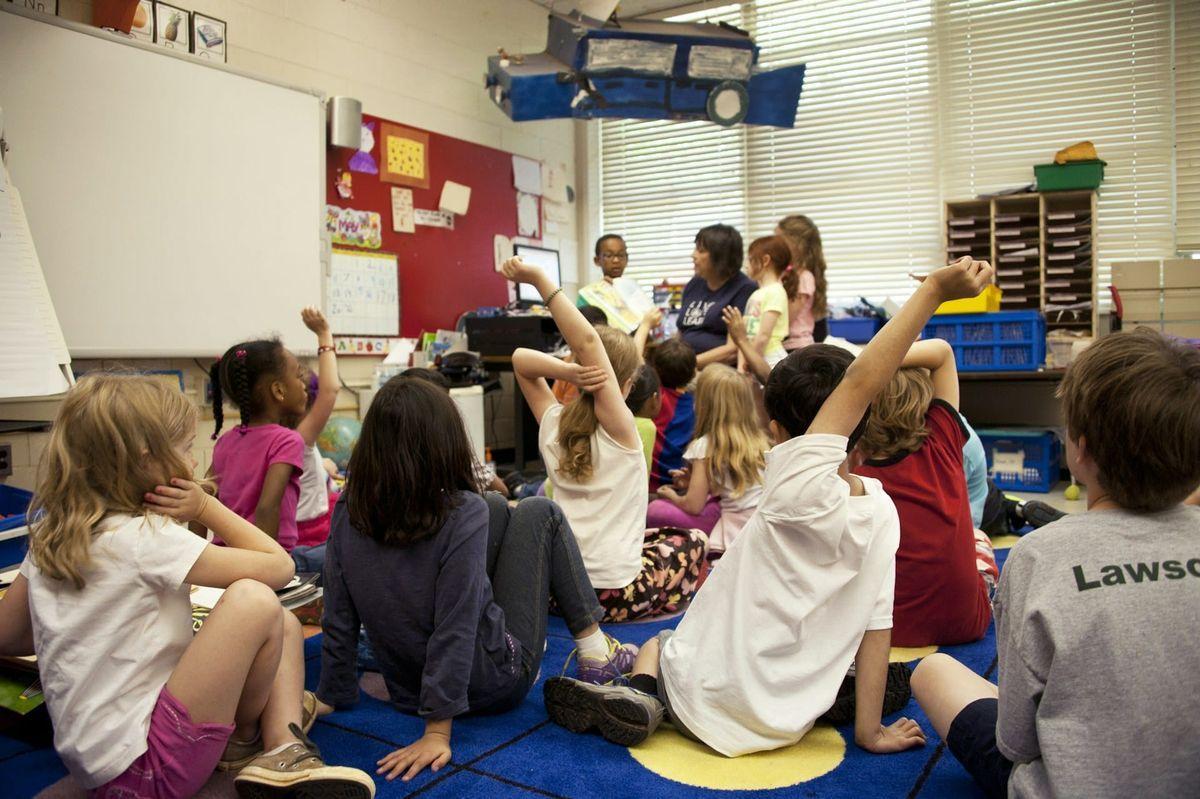
Teachers' unions pushed back forcefully against what they perceived as a move to replace teachers with automation. "Our students don't need robots," Person stated. "They need real relationships with caring adults"
3
. Person characterized the initiative as leading to "the dehumanization of the profession of education," arguing that "putting a lifeless machine in front of students is a bad idea" for young people still learning interpersonal skills4
. Beehler countered that "there is no possible way a robot can replace a human in a school" and stressed that "teaching is a human-to-human process"3
.
Source: New York Post
Local residents also criticized the selection of a New York school with nearly 40% Native American enrollment as a testing ground for experimental technology
4
. "Out of all the schools in New York state, let alone in the US, they chose to experiment on Native American children yet again," said Sierra May Abrams, a substitute teacher and local resident, referencing the traumatic legacy of Native American boarding schools4
. The Salamanca City Central School District now says it will use the pause to work through enhanced student data privacy agreements with state officials and continue community outreach before deciding whether to proceed2
3
. Realbotix CEO Andrew Kiguel stated the company wants the program to be "demonstrably safe, fully district-approved, and strongly supported by teachers"2
.Summarized by
Navi
[4]
30 Jun 2026•Technology

27 Apr 2026•Policy and Regulation

18 May 2026•Policy and Regulation

1
Technology

2
Technology

3
Technology