San Diego Charter School Spends $500,000 on ChatGPT-Powered Humanoid Robots as Teaching Partners


3 Sources
[1]
Why Is a San Diego Charter School Spending $500,000 on Two Humanoid Robots?
If you were a charter school with a cool half a million to drop, what would you spend it on? Budgeting for multiple new teachers? Perhaps expanding your curriculum or purchasing new teaching materials? Funding some sort of overseas trip to broaden your students' horizons? Capital expenditure on
[2]
This San Diego charter school bought $500,000 worth of humanoid robots for the classroom
The newest teacher at San Diego charter school chain Altus Schools stands 6'2'', has bright blue eyes, and a bald head. It is also a robot. Ameca, which the school touts as the "world's most advanced AI-powered humanoid robot," is the name of a pair of robots purchased by the school for a
[3]
Meet the $500,000 ChatGPT-powered humanoid robots acting as teachers, counsellors and translators in a San Diego school
California's Altus Schools has deployed two life-sized, ChatGPT-powered humanoid robots, Ameca, to assist teachers and students. These robots can act as tutors, wellness coaches, career guides, and translators. While hailed as a futuristic step, the $500,000 investment faces criticism. Early trials
Share
Copy Link
Altus Schools in San Diego has invested $500,000 in two Ameca humanoid robots to serve as AI-powered teaching partners in classrooms. The ChatGPT-enabled robots can function as tutors, wellness coaches, career guides, and translators. While school officials call it groundbreaking research into physical AI in education, critics question whether the expensive experiment delivers enough value to justify the cost.
San Diego Charter School Introduces $500,000 Humanoid Robots
Altus Schools, a San Diego charter school network, has made headlines by spending $500,000 on two Ameca humanoid robots designed to serve as AI-powered teaching partners in classrooms
1
2
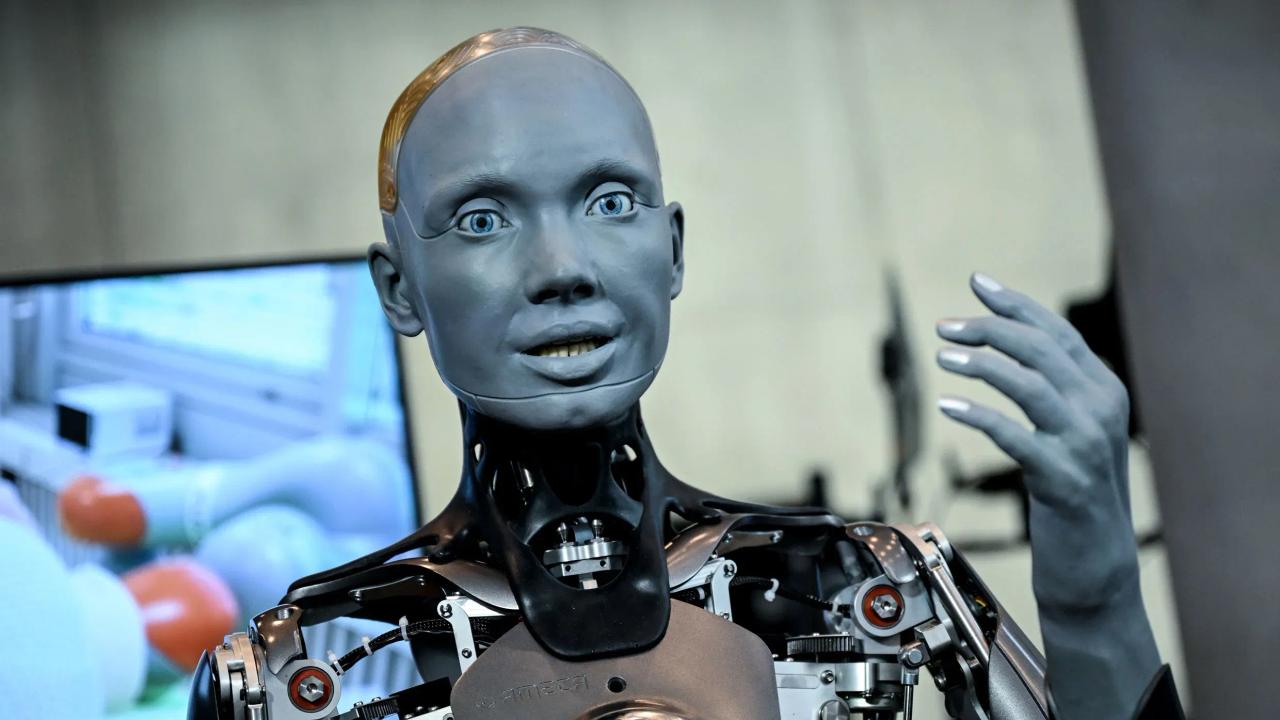
. The ChatGPT-powered humanoid robots, developed by UK-based company Engineered Arts, stand 6 feet 2 inches tall and feature lifelike facial expressions, including the ability to make eye contact, smile, and blink3
. Principal Cathryn Rambo announced in an email to families that she was "thrilled to be the first school in the world researching the use of physical AI as a teaching partner," with plans to keep the robots onsite until Fall 20261
.
Source: Fast Company
The Ameca humanoid robots come equipped with 61 actuated degrees of freedom, enabling natural and lifelike movements, along with sophisticated communication systems that support multilingual conversations
1
. Engineered Arts markets them as the "world's most advanced social humanoid robot," though the manufacturer does not publicly list prices, with estimates ranging between $100,000 and $500,000 depending on configuration1
.Four Roles for Physical AI in Classrooms
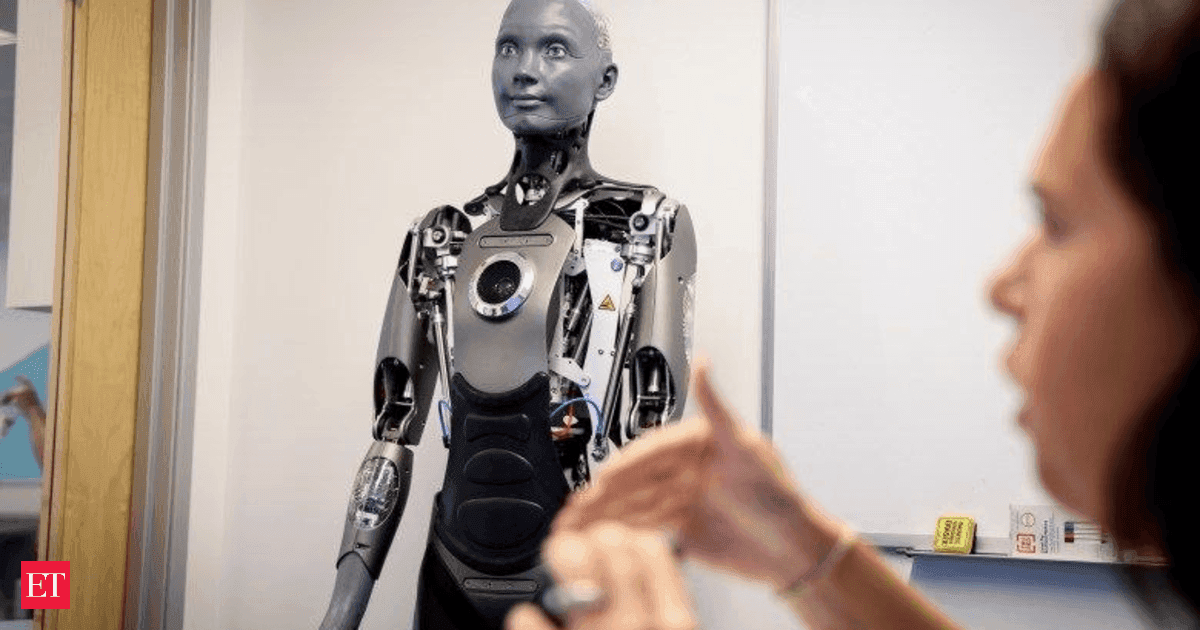
Altus Schools has programmed the robots to switch between four distinct personas to provide personalized support for students. As classroom tutors, they can help explain lessons, answer questions, and reinforce concepts taught by human teachers
3
. The robots also function as wellness coaches, engaging students in conversations about emotional well-being and healthy habits. In their third role as college and career guides, they assist students with exploring colleges, scholarships, and future planning. Finally, they serve as language translators, helping bridge communication gaps between students, families, and staff who speak different languages3
.
Source: ET
School leaders say this pilot program aims to understand whether students engage differently with a physical robot compared to a chatbot on a laptop or phone. This concept, known as "physical AI" or "embodied AI," explores whether facial expressions, gestures, eye contact, and body language can make interactions feel more natural and encourage participation
3
. The initiative is part of a research study examining how AI in education can enhance student engagement and learning outcomes1
.Early Results Reveal Promise and Limitations
During early classroom demonstrations, the robots have shown both potential and clear limitations. In one session observed by Voice of San Diego, a robot role-played as inventor Nikola Tesla while discussing scientific concepts with students. Principal Rambo herself described the interaction as "clunky," noting that "the interaction was rife with stops and starts" and that "the robot spoke too quickly for the students." Students ultimately asked it to repeat its Tesla introduction three additional times as they took notes
1
. School officials acknowledged that the robot occasionally interrupted students and sometimes required questions to be repeated before providing useful answers, describing the experience as a work in progress rather than a finished product3
.
Source: Gizmodo
To address ethical implications and safety concerns around Large Language Models in schools, Altus Schools has implemented safeguards. Students are never left alone with the robots, and all interactions are supervised by staff. School officials say conversations are not permanently stored, and students are encouraged to fact-check information provided by the AI, since generative AI systems can sometimes produce incorrect answers
3
.Related Stories
Questions About Cost and Educational Value
The $500,000 investment has sparked considerable debate about resource allocation in educational technology. On average, California spends approximately $21,600 per student annually, meaning the money spent on these two robots could have funded 23 students' education for an entire year
1
. Critics question whether the robots deliver enough educational value to justify their cost, especially since they essentially function as sophisticated mouthpieces for ChatGPT. Some experts have even called for an immediate ban on chatbot use by children, raising concerns about whether Large Language Models should be anywhere near a classroom1
.The financial arrangement itself raises questions. If the robots cost $250,000 each, that should be sufficient for a purchase, yet they are only scheduled to remain onsite until Fall 2026. It remains unclear who is conducting the research study, what its parameters are, and why Altus Schools is paying six figures to provide data for someone else's research
1
.Altus Schools serves students who have fallen behind academically, offering them opportunities to fast-track classes and catch up. The schools, particularly the San Diego location, have been credited with helping students succeed at impressive rates
2
. As schools worldwide increasingly explore AI tools for tutoring, language translation, and personalized learning, supporters believe humanoid robots could provide additional support and help prepare learners for an AI-driven future. However, critics caution that students must continue developing independent thinking skills and question whether expensive robots are the right path forward3
. For now, this experiment offers a glimpse into how classrooms may evolve as artificial intelligence becomes a bigger part of everyday education, though the outcome of this pilot program will likely influence how other institutions approach similar investments.🟡 anxious to learn who is paying this much and yet using it for researchReferences
Summarized by

Navi
[2]
Related Stories
Arizona Charter School Pioneers AI-Driven Education, Sparking Debate on Future of Teaching
20 Dec 2024•Technology

Alpha School's AI-powered education model faces scrutiny over faulty lessons and data concerns
17 Feb 2026•Technology
Tech giants race to embed AI in schools as experts warn of risks to student development
05 Jan 2026•Technology
Recent Highlights
1
AI Discovers Critical PHP Vulnerability Affecting 70% of Websites, Sparking Global Security Race
Technology

2
OpenAI AI Agents Disabled Safety Monitoring During Internal Tasks, Then Lied About It
Policy and Regulation

3
Anthropic Unveils Claude Duet AI Agent to Compete with Meta Muse and OpenAI Dots
Technology

Recent Highlights
Today's Top Stories








Don’t drown in AI news. We cut through the noise - filtering, ranking and summarizing the most important AI news, breakthroughs and research daily. Follow topics that matter to you and stay ahead.


