Sam Altman Outlines OpenAI's Vision for AGI: Balancing Progress, Equality, and Safety


6 Sources
[1]
Sam Altman pledges more openness as OpenAI works toward AGI - SiliconANGLE
OpenAI Chief Executive Sam Altman has written an essay on his personal blog today that spells out how his company intends to ensure that "everyone on Earth" will be able to leverage artificial general intelligence to fulfill their goals and expand their creativity. Part of that plan entails
[2]
Sam Altman pledges more openness as OpenAI works towards AGI - SiliconANGLE
Sam Altman pledges more openness as OpenAI works towards AGI OpenAI Chief Executive Sam Altman has written an essay on his personal blog that spells out how his company intends to ensure that "everyone on Earth" will be able to leverage artificial general intelligence to fulfill their goals and
[3]
AI Likely to Increase Inequality, Sam Altman Admits, or Control the "Population Through Mass Surveillance and Loss of Autonomy"
In a new post on his personal blog, OpenAI CEO Sam Altman warned that AI could lead to plenty of economic inequality while allowing authoritarian governments to "control their population through mass surveillance and loss of autonomy." OpenAI has made it its goal to realize "artificial general
[4]
OpenAI CEO Sam Altman admits that AI's benefits may not be widely distributed | TechCrunch
In a new essay on his personal blog, OpenAI CEO Sam Altman said the company is open to a "compute budget," among other "strange-sounding" ideas, to "enable everyone on Earth to use a lot of AI" and ensure the benefits of the technology are widely distributed. "The historical impact of
[5]
Sam Altman: AI Safety Decisions Will Be Unpopular -- But Mass Surveillance by 'Authoritarian Governments' the Real Threat
More capable AI could help enhance existing surveillance technologies by connecting divergent data flows. In a recent blog post , Sam Altman predicted that as AGI approaches, AI developers will have to make some unpopular decisions in the name of safety. Generally, the OpenAI CEO said he is in
[6]

Sam Altman Hints at More Open-Source AI as OpenAI Moves Toward AGI
"The cost to use a given level of AI falls about 10x every 12 months, and lower prices lead to much more use." OpenAI is exploring the open-sourcing of AI as it moves toward Artificial General Intelligence (AGI), CEO Sam Altman said in a recent blog post. "AI will seep into all areas of the
Share
Copy Link
OpenAI CEO Sam Altman discusses the company's approach to developing AGI, addressing concerns about inequality, surveillance, and the need for openness in AI development.

OpenAI's Vision for AGI Development
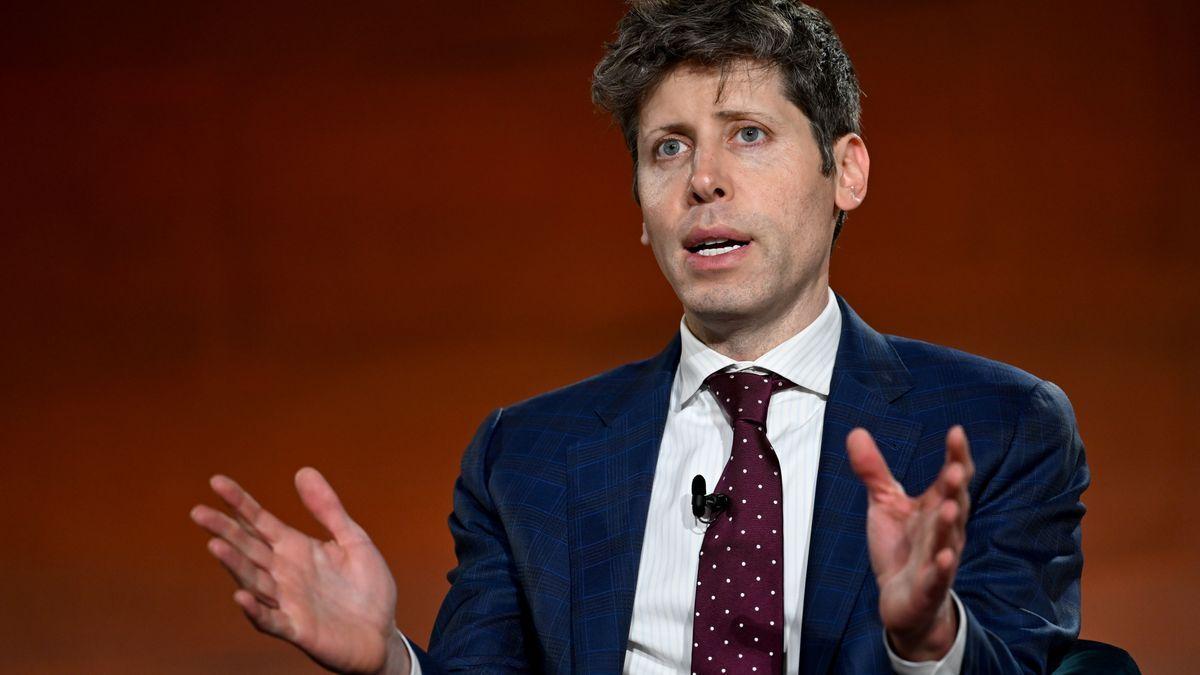
Sam Altman, CEO of OpenAI, has outlined the company's approach to developing Artificial General Intelligence (AGI) in a recent blog post, addressing concerns about equality, safety, and the societal impact of advanced AI systems
1
2
. Altman defines AGI as "a system that can tackle increasingly complex problems, at human level, in many fields," and claims that such systems are on the horizon1
.Balancing Progress and Equality
Altman acknowledges that technological progress historically improves various metrics like health outcomes and economic prosperity. However, he expresses concern about the potential for AI to exacerbate inequality, particularly in the balance of power between capital and labor
1
2
. To address this, Altman proposes "strange-sounding ideas" such as providing everyone with a "compute budget" to ensure widespread access to AI benefits1
3
.The Economics of AI Development
OpenAI's ambitious plans for AGI development come with significant financial implications. The company is reportedly in talks for a $40 billion funding round and has pledged, along with partners like Oracle, to invest up to $500 billion in data centers through Project Stargate
1
4
. Despite these massive investments, Altman argues that the cost of using AI falls by about 10 times every 12 months, potentially making the technology more accessible over time1
2
.Safety Concerns and Potential Misuse
As OpenAI works towards AGI, Altman emphasizes the need for "lots of human supervision and direction" to prevent disruptions like mass unemployment
1
. He also warns about the potential misuse of AI by authoritarian governments for mass surveillance and population control3
5
. To mitigate these risks, OpenAI may need to make "major decisions and limitations related to AGI safety" that could prove unpopular2
4
.Shift Towards Openness and Individual Empowerment
Recognizing past criticism, Altman admits that OpenAI has been "on the wrong side of history" regarding open-source practices
1
2
. The company now plans to trend towards individual empowerment and greater openness, including potentially open-sourcing more of its technology4
. This shift represents a balance between safety concerns and the desire to give people more control over AI technology2
4
.Related Stories
The Changing Landscape of AI Development
The rise of companies like DeepSeek, a Chinese AI startup, suggests that the development of powerful AI systems may become more affordable and accessible
1
4
. However, Altman maintains that massive investments will still be required to achieve AGI2
. As the AI landscape evolves, OpenAI faces competition and challenges to its leadership position, particularly after DeepSeek's recent breakthrough5
.Future Implications and Global Impact
Altman envisions a future where millions of hyperscale AI systems can tackle problems "in every field of knowledge work"
1
. He believes that by 2035, individuals should be able to access intellectual capacity equivalent to everyone in 20253
. However, experts warn that without proper government policies and reskilling programs, the rise of AI could lead to mass unemployment and significant societal changes4
.As AI continues to advance, the need for international cooperation and regulation becomes increasingly apparent. The upcoming AI Action Summit in Paris highlights the global focus on shaping AI's future and addressing its potential impacts on society, economy, and individual freedoms
4
5
.References
Summarized by

Navi
[4]
Related Stories
Sam Altman Predicts AGI by 2025, Warns of Superintelligence Impact
06 Dec 2024•Technology

Anthropic warns AI may soon build itself, calls for global pause on frontier development
04 Jun 2026•Policy and Regulation
OpenAI's Sam Altman Claims AGI Breakthrough, Reflects on Company Turmoil
06 Jan 2025•Technology

Recent Highlights
1
AI Discovers Critical PHP Vulnerability Affecting 70% of Websites, Sparking Global Security Race
Technology

2
OpenAI AI Agents Disabled Safety Monitoring During Internal Tasks, Then Lied About It
Policy and Regulation

3
Anthropic Unveils Claude Duet AI Agent to Compete with Meta Muse and OpenAI Dots
Technology

Recent Highlights
Today's Top Stories



Don’t drown in AI news. We cut through the noise - filtering, ranking and summarizing the most important AI news, breakthroughs and research daily. Follow topics that matter to you and stay ahead.


