Sam Altman's ChatGPT Energy Claims Spark Debate on AI's Environmental Impact


8 Sources
[1]
Sam Altman claims an average ChatGPT query uses 'roughly one fifteenth of a teaspoon' of water
Jay Peters is a news editor covering technology, gaming, and more. He joined The Verge in 2019 after nearly two years at Techmeme. OpenAI CEO Sam Altman, in a blog post published Tuesday, says an average ChatGPT query uses about 0.000085 gallons of water, or "roughly one fifteenth of a teaspoon."
[2]
OpenAI's Sam Altman muses about superintelligence
OpenAI on Tuesday rolled out its o3-Pro model for ChatGPT Pro and Teams subscribers, slashed o3 pricing by 80 percent, and dropped a blog post from CEO Sam Altman teasing "intelligence too cheap to meter." "The average query uses about 0.34 watt-hours, about what an oven would use in a little over
[3]
Sam Altman's Lies About ChatGPT Are Growing Bolder
Would you believe OpenAI if it told you AI is fine for the planet, actually? The AI brain rot in Silicon Valley manifests in many varieties. For OpenAI’s figurehead Sam Altman, this often results in a lot of vague talk about artificial intelligence as the panacea to all of the world’s woes.
[4]
Sam Altman doesn't think you should be worried about ChatGPT's energy usage - reveals exactly how much power each prompt uses
While that's not a lot in isolation, ChatGPT has over 400 million weekly users, with multiple prompts per day OpenAI CEO, Sam Altman has revealed ChatGPT's energy usage for a single prompt, and while it's lower than you might expect, on a global scale, it could have a significant impact on the
[5]

OpenAI head Sam Altman claims a single ChatGPT query uses 'one 15th of a teaspoon' of water but that doesn't put AI's environmental impact in the clear
In a blog post on Tuesday(via The Verge), OpenAI supremo Sam Altman said that a typical ChatGPT query uses 'roughly one 15th of a teaspoon' of water. Altman doesn't go into any detail over that claim, including whether it's a consequence of the cooling hardware used to manage server computers or
[6]

Each ChatGPT Query Uses Merely a 15th of a Teaspoon of Water, Says Sam Altman | AIM
However, Altman's estimate is nearly one-tenth of what analysts projected. OpenAI CEO Sam Altman has disclosed for the first time the average energy and water consumption of a single ChatGPT query, which is much less than what analysts and environmentalists had projected all this time. "The
[7]

Sam Altman Claims ChatGPT Uses One-Fifteenth Of A Teaspoon Of Water Per Query, Predicts AI's Cost Will Soon Match Electricity, But Offers No Methodology
The AI frenzy is not going away any time soon as companies are increasingly investing in the technology and integrating it into their products and services. OpenAI, since the inception of ChatGPT, has pushed the use of artificial intelligence even further, with others jumping in to expand the
[8]

Every Time You Ask ChatGPT Something, It Uses As Much Electricity As An Oven Does In One Second, Says Sam Altman: The 'Cost Of Intelligence' Will Only Lower
Enter your email to get Benzinga's ultimate morning update: The PreMarket Activity Newsletter OpenAI chief executive Sam Altman says that a ChatGPT query consumes roughly 0.34 watt-hours of electricity, which is "about what an oven would use in a little over one second." What Happened: Altman, in
Share
Copy Link
OpenAI CEO Sam Altman's recent claims about ChatGPT's energy and water usage have ignited discussions about the environmental impact of AI technology, with experts and critics questioning the accuracy and implications of these figures.
Sam Altman's Energy Claims for ChatGPT
OpenAI CEO Sam Altman has sparked a debate about the environmental impact of AI with his recent claims about ChatGPT's energy and water usage. In a blog post, Altman stated that an average ChatGPT query uses about 0.34 watt-hours of energy and 0.000085 gallons of water, which he described as "roughly one-fifteenth of a teaspoon"
1
.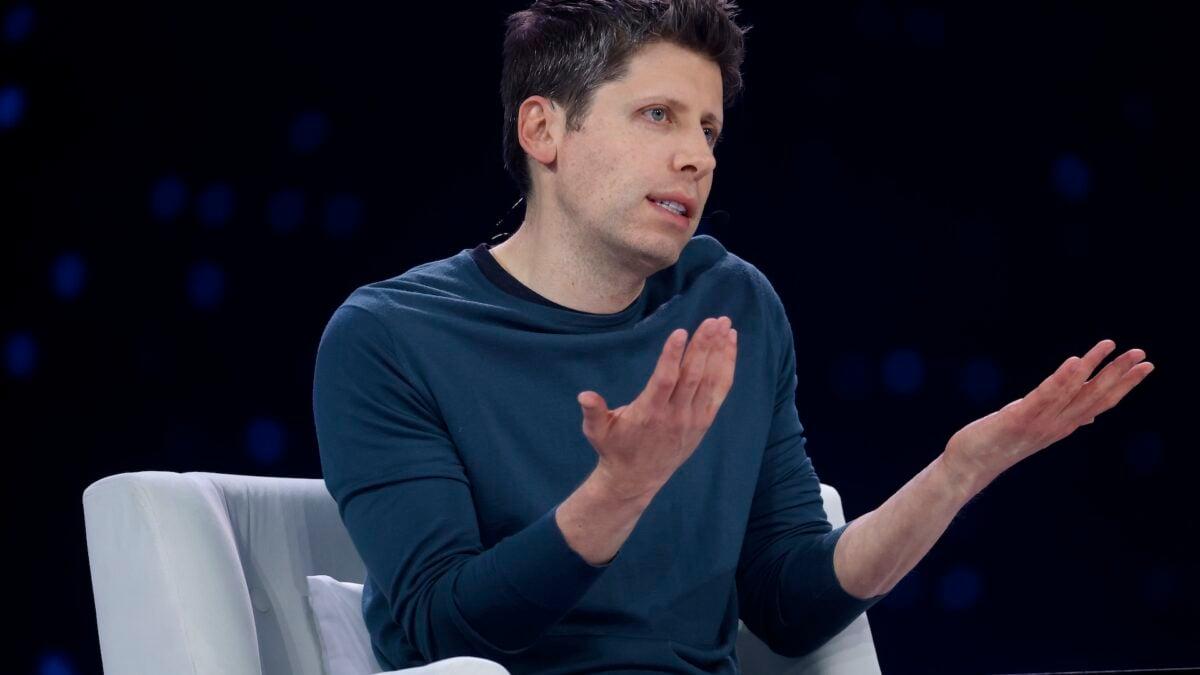
Source: Gizmodo
Scrutiny and Skepticism
These figures have been met with skepticism from experts and critics. While Altman's claims align with some previous estimates, such as those published by Epoch AI in February
2
, they have been criticized for oversimplifying the environmental concerns associated with AI technology.Gary Marcus, an AI expert and critic, went as far as comparing Altman to discredited Theranos CEO Elizabeth Holmes, highlighting the skepticism surrounding these claims
2
.Broader Environmental Concerns
Critics argue that focusing on individual query usage ignores the larger picture of AI's environmental impact. With ChatGPT processing approximately one billion queries per day, the cumulative effect is significant
4
.Research from the Lawrence Berkeley National Laboratory estimates that AI-specific purposes in data centers could consume between 165 and 326 terawatt-hours of energy by 2028, enough to power 22% of all US households
2
.
Source: AIM
Water Usage and Data Centers
The water usage figures provided by Altman have also been questioned. A study from University of California researchers claimed that the older GPT-3 version of ChatGPT used about 0.5 liters of water for every 10 to 50 queries, significantly more than Altman's estimate
3
.Microsoft, which hosts ChatGPT on its data centers, has seen a spike in water usage from 2021 to 2022 after partnering with OpenAI
3
.Related Stories

Future Energy Needs and Solutions
Altman's blog post also touched on future energy needs for AI, suggesting that data center production will be automated and that the cost of AI "should eventually converge to near the cost of electricity"
2
. However, this optimistic view has been challenged by current realities and the immediate environmental concerns.Some companies are exploring alternative solutions to address the energy and water demands of AI, including proposals to place data centers in the ocean or build dedicated nuclear power plants
3
.
Source: Benzinga
Balancing Progress and Environmental Responsibility
While the debate continues, experts emphasize the need to balance technological progress with environmental responsibility. The AI climate concerns are not black and white, and critics of AI's environmental impact are equally vocal about other technologies' effects on the planet
4
.As AI technology continues to advance and its usage grows, the industry faces increasing pressure to address and mitigate its environmental impact. The challenge lies in harnessing the potential benefits of AI while minimizing its ecological footprint
5
.References
Summarized by

Navi
[1]
[2]
Related Stories
ChatGPT's Energy Consumption: New Study Challenges Previous Estimates
13 Feb 2025•Technology

The Hidden Environmental Cost of AI: ChatGPT's Massive Energy Consumption
20 Sept 2024

Sam Altman defends AI energy use, says water concerns are 'fake' and humans consume energy too
22 Feb 2026•Policy and Regulation

Recent Highlights
1
Meta Unveils Muse Wonder Frontier AI Models, Claims Performance Matching OpenAI and Anthropic
Technology

2
IMF Report Warns AI Market Correction Could Spark Global Financial Crisis With $1.4T at Risk
Business and Economy

3
OpenAI Releases 722 AI-Generated Math Solutions, Triggering Existential Crisis in Mathematics
Technology

Recent Highlights
Today's Top Stories






Don’t drown in AI news. We cut through the noise - filtering, ranking and summarizing the most important AI news, breakthroughs and research daily. Follow topics that matter to you and stay ahead.


