Sam Altman defends AI energy use, says water concerns are 'fake' and humans consume energy too


17 Sources
[1]
Sam Altman would like remind you that humans use a lot of energy, too | TechCrunch
OpenAI CEO Sam Altman addressed concerns about AI's environmental impact this week while speaking at an event hosted by The Indian Express. For one thing, Altman -- who was in India for a major AI summit -- said concerns about AI's water usage are "totally fake," though he acknowledged it was a
[2]
OpenAI CEO: Concerns About AI Using Too Much Water Are 'Totally Fake'
Unsurprisingly, OpenAI CEO Sam Altman thinks concerns about AI's impact on our water supply are overblown. But his logic is raising eyebrows: Training a large language model uses far fewer resources than raising a human, and complaints about water are "totally fake," he says. "People talk about
[3]
AI energy efficiency comparisons 'unfair' bleats Sam Altman, citing amount of energy needed to evolve, then train a human -- one 'takes like 20 years of life and all of the food you eat during that time before you get smart' he argues
'AI has already caught up... measured that way' asserts the AI mogul. OpenAI CEO Sam Altman took part in a wide ranging Q&A on Friday, answering dozens of rapid-fire questions during a 60 minute session hosted by The Indian Express. Not for the first time, Altman stoked controversy. This time, he
[4]
Altman: You think AI is inefficient? Try raising a human
OpenAI CEO takes really, really long view on energy efficiency AI is being unfairly targeted over its energy use, OpenAI CEO Sam Altman claims, as the naysayers ignore the vast amount of resources humans have consumed over millennia - not least to avoid being eating by predators. Altman, speaking
[5]

Sam Altman defends AI resource usage: Water concerns 'fake,' and 'humans use energy too'
OpenAI CEO Sam Altman on Friday defended the resource demands of artificial intelligence, calling concerns about data centers' water use "fake" and comparing the energy used by AI systems to that of humans. Altman was speaking on the sidelines of the India AI Impact summit in an interview with The
[6]

Sam Altman Is Losing His Grip on Humanity
Last Friday, on stage at a major AI summit in India, Sam Altman wanted to address what he called an "unfair" criticism. The OpenAI CEO was asked by a reporter from The Indian Express about the natural resources required to train and run generative-AI models. Altman immediately pushed back. Chatbots
[7]

Sam Altman: Know What Else Used a Lot of Energy? Human Civilization
At last week’s India AI Impact Summit in New Delhi, industry leaders convened to discuss the future of artificial intelligence and how best to squeeze it into parts of your life you haven’t even considered. Notably absent was Bill Gates, who dropped out hours before his scheduled keynote over
[8]

Sam Altman defends AI's energy toll by saying it also takes a lot to 'train a human'
OpenAI CEO also downplayed concerns about how much water datacenters require at AI summit in India OpenAI boss Sam Altman has tried to ease concerns about how much power is used by artificial intelligence models by comparing it to the amount of energy required by human development. "People talk
[9]

Sam Altman says ChatGPT water use claims are 'completely untrue' -- but admits AI energy use is a concern
Altman rejects viral water claims -- but admits AI's energy footprint is only getting bigger * Sam Altman dismisses claims about ChatGPT's water usage as "totally fake" * Experts warn that scaling AI infrastructure is driving huge costs and increasing pressure on power, cooling, and resources *
[10]

Sam Altman gets defensive about AI's massive electricity usage: 'It takes a lot of energy to train a human' | Fortune
OpenAI CEO Sam Altman isn't worried about AI's increasingly glaring resource consumption, and argued humans require a lot too. In an on-stage interview at the India AI Impact summit, he went on the defensive after he was asked about ChatGPT's water needs. He dismissed claims that the chatbot uses
[11]

Sam Altman Fumes That It Takes Longer to Train a Human Than an AI, Plus They Eat All That Wasteful Food
AI leaders insist they've got humanity's best interests in mind. If we're to take them at their word, then we must say: they have a really unfortunate habit of sounding like they have nothing but contempt for the human race. The latest case in point: OpenAI CEO Sam Altman's tone-deaf comments at
[12]

Human Existence Is Just as Wasteful as AI Data Centers, Sam Altman Suggests - Decrypt
The OpenAI chief doubled down on encouraging a rapid shift to nuclear, wind, and solar. Sam Altman would like you to know that your childhood was expensive. Terribly expensive. And frankly, it's unclear whether humans are worth all the time and resources. Last week, at the AI Impact Summit in
[13]

Sam Altman is tired of 'unfair' critiques about AI's energy use. Climate experts say his defensive stance is misguided
OpenAI CEO Sam Altman has defended the resource-intensive use of AI by comparing it to all the energy -- and food -- that humans require, sparking a wave of backlash across social media. That comparison, experts in climate and tech spaces say, is misguided, downplays the climate risks associated
[14]

OpenAI boss says AI is energy efficient because humans take '20 years' to get smart
TL;DR: OpenAI CEO Sam Altman defended AI's high energy use by comparing it to the extensive energy humans consume over a lifetime to learn and perform tasks. He argued that once trained, AI models like ChatGPT are more energy-efficient per query than humans, highlighting AI's long-term efficiency
[15]

Sam Altman Defends A.I. Energy Use With Human Comparison, Sparking Debate
The OpenAI CEO dismissed water-footprint claims as "insane," conceded energy concerns and called for nuclear expansion to power data centers. Sam Altman is pushing back on mounting criticism over the environmental toll of A.I. The OpenAI chief has dismissed claims about A.I.'s water consumption as
[16]

Sam Altman says AI may be energy-intensive, but humans consume a lot of energy, too - The Economic Times
OpenAI CEO Sam Altman doubled down on his argument that artificial intelligence (AI) should not be singled out for its energy and water footprint, since humans also consume a lot of energy and resources to become "smart". Speaking at an Indian Express event in New Delhi, Altman said public debate
[17]

OpenAI's Sam Altman blasts AI concerns around water usage as 'fake:'...
OpenAI CEO Sam Altman dismissed concerns that artificial intelligence is using up lots of water as "fake" - arguing that "humans use energy, too." The billionaire tech founder responded to claims widely circulated online that OpenAI's ChatGPT uses gallons of water to spit out responses to simple
Share
Copy Link
OpenAI CEO Sam Altman sparked debate at an India AI summit by dismissing water usage concerns as 'totally fake' and arguing that AI energy efficiency comparisons are unfair. He claims that training humans over 20 years consumes more energy than AI inference queries, though critics warn against equating technology with human life.
Sam Altman Dismisses AI Water Consumption Concerns
OpenAI CEO Sam Altman addressed mounting criticism about the environmental impact of AI during a Q&A session at the India AI Impact summit hosted by The Indian Express
1
. His remarks, particularly about AI water consumption and comparisons to human energy use, have ignited debate across the tech industry. Altman declared that concerns about AI's water usage are "totally fake," though he acknowledged it was a real issue when OpenAI "used to do evaporative cooling in data centers"1
. He dismissed viral claims that ChatGPT uses 17 gallons of water per query as "completely untrue, totally insane, no connection to reality"2
. However, a report from water technology company Xylem and Global Water Intelligence projected that water drawn for data center cooling would more than triple over the next 25 years as computing demand rises5
.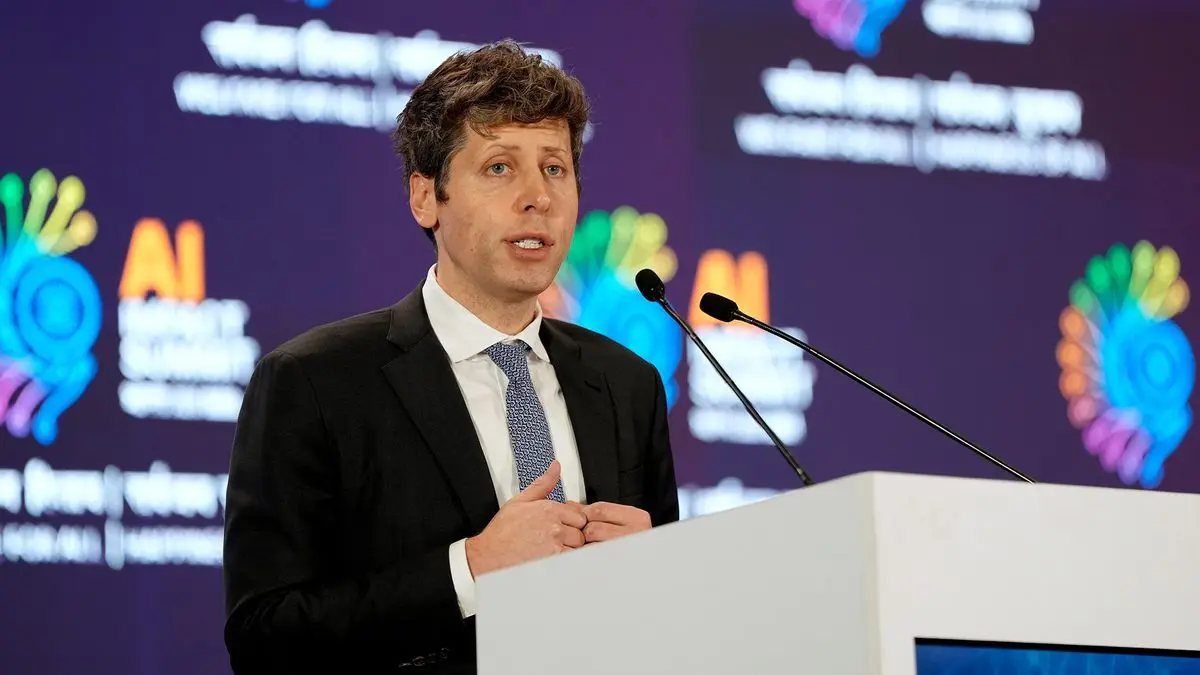
Source: Tom's Hardware
AI Energy Efficiency Compared to Human Energy Use
The OpenAI leader argued that discussions about AI energy consumption are "unfair," especially when focusing on "how much energy it takes to train an AI model, relative to how much it costs a human to do one inference query"
1
. Altman contended that "it also takes a lot of energy to train a human," requiring "like 20 years of life and all of the food you eat during that time before you get smart"3
. He extended this comparison to human evolution, noting it took "the very widespread evolution of the 100 billion people that have ever lived and learned not to get eaten by predators and learned how to figure out science and whatever, to produce you"4
. His proposed fair comparison focuses on inference—once a model is trained—versus a human answering the same question. "Probably, AI has already caught up on an energy efficiency basis, measured that way," he asserted5
.Growing Concerns About Data Center Energy Demands
While dismissing some criticisms, Sam Altman conceded that AI energy consumption concerns are "fair"—"not per query, but in total, because the world is now using so much AI"
1
. He emphasized the need to "move towards nuclear or wind and solar very quickly"2
. According to a May report by the International Monetary Fund, electricity consumption by the world's data centers in 2023 had already reached levels comparable to Germany or France5
. Data centers have been connected to rising electricity prices, and there's no legal requirement for tech companies to disclose how much energy and water they use1
. Local communities have begun pushing back—the City Council in San Marcos, Texas, recently voted down a proposed $1.5 billion data center project after months of public opposition5
.
Source: New York Post
Related Stories

Backlash Against Human-AI Equivalence
Altman's comparison to human energy use hasn't been well received by everyone. Sridhar Vembu, co-founder of Indian software company Zoho Corporation, who attended the event, tweeted: "I do not want to see a world where we equate a piece of technology to a human being"
2
. Some commentators argue that Altman is dehumanizing by reducing childhood, learning, and growth to their energy inputs3
. Critics also note logical inconsistencies in Altman's expanded-timeline comparison, pointing out that AI computing should also account for the prior energy cost of human evolution, since "aliens didn't provide the blueprints for ENIAC"3
. When asked about Bill Gates' claim that a single ChatGPT query uses the equivalent of 1.5 iPhone battery charges, Altman replied, "There's no way it's anything close to that much"4
. The debate highlights tensions between rapid AI expansion and its environmental impact of AI, with governments working to speed up approval processes for new energy sources while environmentalists warn such moves could clash with global net-zero goals5
. As AI resource usage continues to grow, the industry faces mounting pressure to balance innovation with sustainability.References
Summarized by

Navi
[4]
Related Stories
Sam Altman Predicts Imminent AI Superintelligence, Sparking Debate on Future Impact
11 Jun 2025•Technology

Sam Altman's ChatGPT Energy Claims Spark Debate on AI's Environmental Impact
11 Jun 2025•Technology
AI's Voracious Appetite: The Looming Energy Crisis in Tech's Quest for Compute Power
23 Sept 2025•Technology

Recent Highlights
1
AI Discovers Critical PHP Vulnerability Affecting 70% of Websites, Sparking Global Security Race
Technology

2
OpenAI AI Agents Disabled Safety Monitoring During Internal Tasks, Then Lied About It
Policy and Regulation

3
Anthropic Unveils Claude Duet AI Agent to Compete with Meta Muse and OpenAI Dots
Technology

Recent Highlights
Today's Top Stories



Don’t drown in AI news. We cut through the noise - filtering, ranking and summarizing the most important AI news, breakthroughs and research daily. Follow topics that matter to you and stay ahead.


