Samsung Electronics commits to AI-Driven Factories across global operations by 2030


3 Sources
[1]
Samsung Electronics Announces Strategy To Transition Global Manufacturing Into 'AI-Driven Factories' by 2030
Company is set to expand Agentic AI across manufacturing and will unveil its industrial AI vision at MWC 2026 Samsung Electronics today announced its strategy to transition all manufacturing operations into 'AI-Driven Factories' by 2030. This initiative aims to fully integrate AI across the entire
[2]
Samsung to switch all global factories to autonomous AI by 2030
Samsung will convert its entire global manufacturing network into autonomous, AI-powered facilities by 2030. The company announced the strategy on February 28, extending its consumer AI capabilities to the factory floor. The initiative utilizes "agentic AI" for autonomous decision-making across the
[3]
Samsung Electronics to shift to AI-driven autonomous factories by 2030 - The Korea Times
A Samsung Electronics advertisement is seen on the building of the Mobile World Congress 2026's exhibition hall, Sunday. Coutesy of Samsung Electronics Samsung Electronics said Sunday it plans to transform its domestic and overseas production facilities into factories driven by artificial
Share
Copy Link
Samsung Electronics announced plans to transform its entire global manufacturing network into AI-driven factories by 2030. The company will deploy agentic AI across the manufacturing value chain, from inbound logistics to final shipment. Digital twin simulations and specialized AI agents will optimize quality control, production workflows, and logistics while humanoid robots handle precision tasks.
Samsung Electronics Sets Ambitious Timeline for Manufacturing Innovation
Samsung Electronics unveiled its strategy to transition all global manufacturing facilities into AI-driven factories by 2030, marking a significant shift in how the electronics giant approaches production
1
. The initiative aims to fully integrate AI across the entire manufacturing value chain, from inbound material logistics and production to quality inspection and final shipment, establishing what the company describes as a next-generation autonomous production environment1
. This announcement positions Samsung Electronics at the forefront of industrial transformation, leveraging AI technologies initially developed for consumer products.Agentic AI Takes Center Stage in Autonomous Factories
At the core of this transformation lies agentic AI, a technology first introduced on the Galaxy S26 series that can autonomously plan, execute, and optimize decisions to achieve defined objectives
1
. Samsung will deploy specialized AI agents for quality control, production optimization, and logistics coordination across its production network2
. These AI agents will work alongside digital twin simulations that model factory operations before physical changes are implemented, enabling the company to strengthen data-driven analysis and pre-validation throughout its operations1
. The approach represents a shift from traditional automation to true autonomy, where systems independently make optimal decisions based on real-time operational contexts.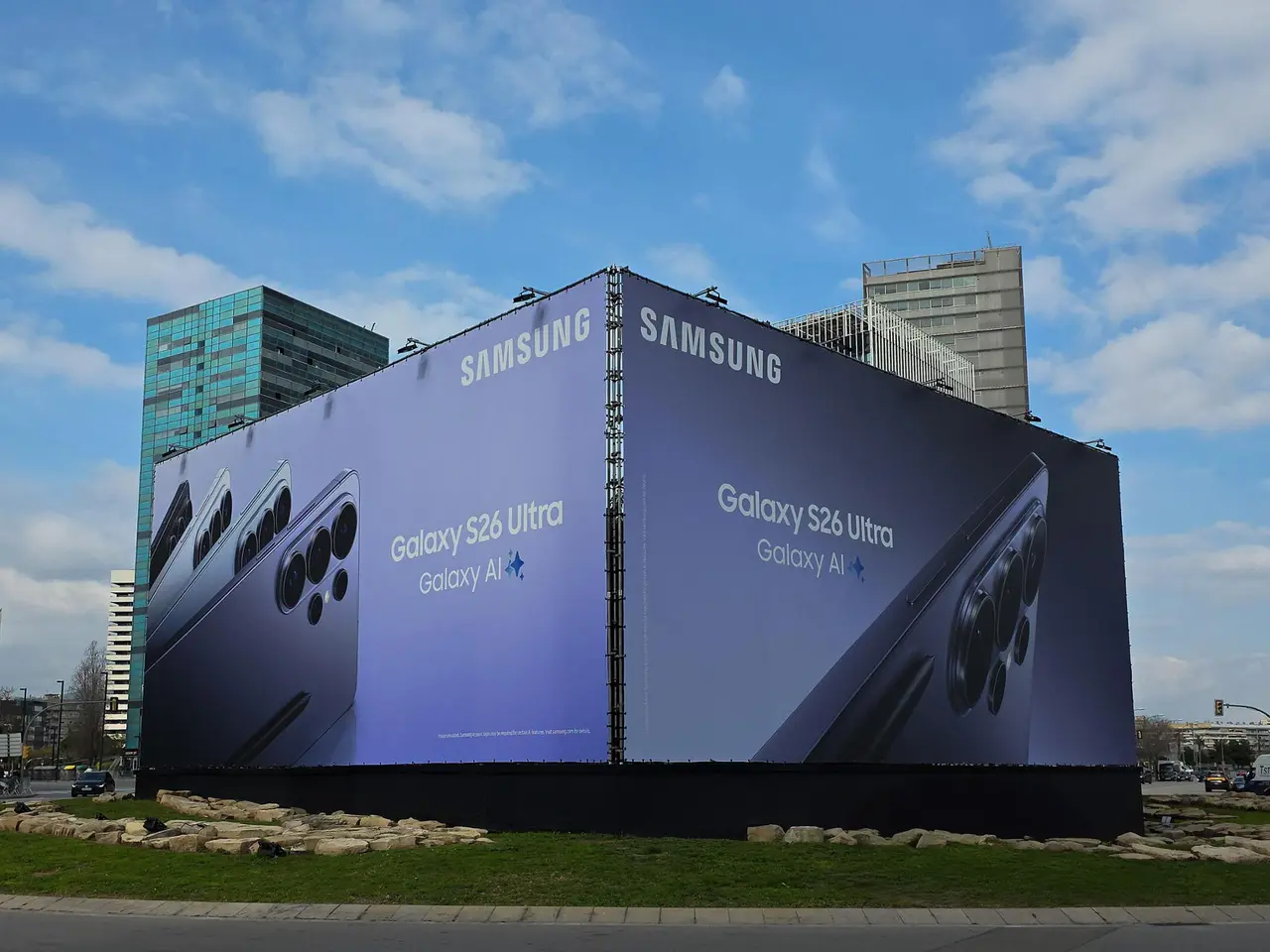
Source: Korea Times
Humanoid Robots and Specialized Systems Join Production Lines
Samsung is progressively introducing humanoid robots and task-specialized robotics across its production lines to accelerate the transition from automation to advanced autonomy
1
. The deployment includes Operating Robots for line operations and facility management, Logistics Robots for autonomous material handling and transport, and Assembly Robots for precision manufacturing tasks1
. In infrastructure environments where human access is limited or hazardous, the company will deploy digital twin-integrated Environmental Safety Robots designed to systematically monitor conditions, identify potential risks, and proactively mitigate on-site hazards1
.Nvidia Partnership Powers Digital Twin Infrastructure
The factory transformation builds on an existing collaboration with Nvidia, announced in October 2025
2
. Samsung plans to deploy more than 50,000 Nvidia GPUs and leverage the Nvidia Omniverse platform for digital twin infrastructure2
. The company is also using Nvidia's Jetson Thor platform to advance real-time AI reasoning in its robotics systems2
. This partnership provides the computational backbone necessary to run complex simulations and AI models across Samsung's global manufacturing network.Related Stories

AI Integration Extends to Environmental, Health and Safety Operations
Samsung will expand AI integration into Environmental, Health and Safety operations, implementing proactive detection and automated hazard prevention systems
1
. Through these systems, the company intends to further enhance workplace safety standards across its production facilities worldwide1
. The move addresses growing concerns about worker safety while demonstrating how AI can create safer manufacturing environments through continuous monitoring and predictive risk assessment.Mobile World Congress 2026 and Governance Strategy Reveal
"The next phase of manufacturing innovation lies in building autonomous environments where AI truly understands operational contexts in real time and independently executes optimal decisions," said YoungSoo Lee, Executive Vice President and Head of Global Technology Research at Samsung Electronics
1
. Samsung will showcase its industrial AI strategy and digital twin-based manufacturing innovation vision at Mobile World Congress 2026 in Barcelona, running March 2-5, demonstrating how industrial AI enhances both safety and efficiency in real-world environments2
. At the Samsung Mobile Business Summit, celebrating its 10th anniversary, the company will introduce its governance strategy for expanding AI autonomy, embedding safety mechanisms from the initial design stage to ensure responsible and trustworthy expansion of industrial AI1
. This B2B strategy presentation will explore collaboration opportunities across industrial sectors with key customers and partners1
.References
Summarized by

Navi
Related Stories
Samsung and Nvidia Partner to Build Revolutionary AI Megafactory with 50,000 GPUs
31 Oct 2025•Technology

Samsung Commits $310 Billion to AI Infrastructure with New Pyeongtaek Chip Facility
17 Nov 2025•Business and Economy

Samsung plans to double AI-powered devices to 800 million by 2026 amid chip shortage
05 Jan 2026•Technology
Recent Highlights



Recent Highlights
Today's Top Stories



Don’t drown in AI news. We cut through the noise - filtering, ranking and summarizing the most important AI news, breakthroughs and research daily. Follow topics that matter to you and stay ahead.


