8 Sources
[1]
SAP Sapphire 2026: The Autonomous Enterprise Is Credible, But It Comes With Concentration Risk
At SAP Sapphire 2026, SAP consolidated eighteen months of M&A, product development, and AI strategy into a single integrated vision it dubbed the "Autonomous Enterprise". JPMorgan Chase CFO Jeremy Barnum confirmed live on stage that the bank is migrating its general ledger to SAP's latest version. Bayer, Novartis, Takeda, Ericsson, and H&M anchored the production credibility. Top Developments At SAP Sapphire 2026 * The model layer consolidated into a portfolio architecture. SAP Business AI Platform unifies BTP, Business Data Cloud, and Business AI, anchored by: 1) Anthropic's Claude as the primary reasoning model, 2) SAP's Rapid 1.5 tabular foundation model (which shipped today), 3) the pending Prior Labs acquisition for non-SAP tabular workloads, and 4) Mistral and Cohere for sovereign options. Large language models, tabular foundation models, and domain-specific models each handle the workloads they are structurally best at. Claude-as-anchor creates ecosystem bifurcation where Microsoft-OpenAI and SAP-Anthropic become the two dominant alignments, leaving Salesforce, Workday, and Oracle as multi-model neutral. Important caveat: the portfolio strategy depends on continued partnership stability with Anthropic and on Prior Labs closing on schedule in Q2-Q3 2026. * Agent governance became the decade's control point. SAP AI Agent Hub, built on the SAP LeanIX foundation, which is already frequently deployed across the Fortune 500, governs SAP and non-SAP agents with verified-agent enforcement, Cloud ALM telemetry, Signavio agent mining, and SuccessFactors workforce mapping. It will GA Q3 2026, bundled at no additional charge. Microsoft made the same move earlier in May with the launch of Agent 365. Important caveat: AI Agent Hub's ability to govern competitor agents at parity with native SAP agents is a marketing claim until demonstrated. * Company Memory introduces the customer-specific intelligence flywheel. Built on SAP Signavio, Company Memory ingests process models, policies, Teams chats, and email approval chains into structured process atoms that govern agent behavior; every exception updates the memory, every override teaches the next agent. Horizontal AI platforms cannot replicate this without 50-plus years of ERP context. Important caveat: zero public production reference at announcement. * Joule Work makes screen-based ERP architecturally obsolete. The conversational front door generates application experiences on demand. Mobile GA now, desktop GA H2 2026, full Agent-to-Agent interoperability Q4 2026. SAP is no longer competing on application design; it is competing on dynamic context generation. Screen-by-screen ERP design becomes obsolete over 36 months, forcing enterprises to rethink user training, change management, and information architecture. The Q4 2026 A2A GA date is the architectural milestone that matters. Important caveat: earlier GA dates cover demo-ready capabilities, not full enterprise readiness at F500 scale. * SAP made the agent runtime free through year-end 2026. Joule Studio 2.0 is free, the Joule agent runtime is free through December 31, 2026, A2A interoperability is free with no cap. This is the most aggressive commercial move SAP has made in a decade. The Microsoft Teams 2017 playbook applied to enterprise agents. Important caveat: the 2027 pricing cliff is unmodeled in most customer 2026 budgets because no post-promotion pricing has been disclosed. * Hybrid landscape support reversed three years of cloud-only positioning. A significant subset of Joule Assistants and agents will operate on S/4HANA on-premise and ECC for RISE customers. ECC and on-prem customers committed to a cloud migration path gain access to select AI scenarios during transition, resolving the "wait until we are in the cloud" objection to AI investment. Largest concession SAP has made to its installed base in three years. The DSAG pressure won. A Calibrated Caution For Tech Leaders The vision is credible. The execution is partial. Most of the 224 agents and 51 assistants sit in mixed GA, early-adopter, and preview status. Claude-as-anchor creates concentration risk that becomes board-level in regulated industries within 24 months. Forrester research finds that 21% of enterprise SaaS decision-makers cite vendor lock-in as a top commercial concern, a risk that compounds with each architectural layer of consolidation. Commit at the architectural pattern level. Pilot at the product level. Define explicit go and no-go criteria before declaring SAP your strategic AI architecture for 2030. Forrester clients can engage with our analyst team to pressure-test SAP within their broader enterprise AI and applications strategy, including model portfolio design, agent governance architecture, and vendor concentration risk. Schedule a guidance session to align your 2027-2030 enterprise architecture with the post-Sapphire reality.
[2]
SAP U-turn brings AI features to ECC and on-prem S/4HANA
SAP has navigated an apparent U-turn to bring AI to its legacy and on-prem ERP systems, as predicted in The Register earlier this year. The German software giant had been steadfast that it would not introduce "innovation" such as AI for on-prem systems, including its legacy ERP platform ECC, a move that outraged some members of the user community. In July 2023, CEO Christian Klein told investors SAP's "newest innovations and capabilities" would only be delivered in the public or private cloud using RISE with SAP, the vendor's lift-shift-and-transform program launched with partners and cloud providers in early 2021. "This is how we will deliver these innovations with speed, agility, quality and efficiency. Our new innovations will not be available for on-premise or hosted on-premise ERP customers on hyperscalers," he said at the time. However, during SAP's Sapphire conference in Orlando this week, Klein said there was "no confusion at all." New tech, such as the AI agents built on the SAP Joule platform, would be available to customers on-prem, so long as they had signed up for a cloud "journey," he said. "The majority of our Joule assistants and agents [will be available] also on-prem, on ECC, and S/4HANA for customers that have already committed the majority of the landscape to the journey, as an interim solution so that they can benefit from AI while they are modernizing. That's absolutely the right thing to do, and I'm excited to see customers taking advantage of this." In March, Alisdair Bach, head of SAP practice at consultancy Dragon ERP, predicted that SAP AI agents based on Joule would become available for on-prem systems after The Register revealed SAP's plan for migrating customers to the cloud was €2 billion off target in terms of declining on-prem support revenue. Muhammad Alam, executive board member for product and engineering, told the conference SAP would bring "a significant percentage of Joule assistants and agents to work in hybrid landscapes with the ability to connect to your S/4 on-premises and ECC landscape." He said the offer would be available to "customers that have started their modernization journey on RISE with SAP." The new capability will be available in a bundle of services under the new Business AI Platform banner, he said. "We've done this so you can start generating value from AI today on the SAP Business AI Platform while you're modernizing your estate." It will only be available to customers signing up for the Max Success Plan, a commercial deal. The company announcement said the plan would enable customers to fast-track assistant and agent activation, and allow "customers to adopt AI, including cloud and eligible on-premises systems, at their own pace as they move to the cloud." General availability is planned for May 2026. ®
[3]
SAP unveils Autonomous Enterprise with 200+ AI agents and Anthropic partnership at Sapphire 2026
Christian Klein opened the SAP Sapphire keynote on Monday with a question that no chief executive of Europe's most valuable technology company should need to ask. "Will SAP be a software company in the future?" The answer, delivered by SAP's own AI assistant Joule at the end of the presentation, was that SAP is becoming a business AI company. The question was rhetorical. The 41 per cent decline in SAP's share price over the past six months was not. SAP unveiled what it calls the Autonomous Enterprise, a unified platform comprising more than 50 domain-specific AI assistants orchestrating over 200 specialised agents across finance, supply chain, procurement, human resources, and customer experience. The company announced a partnership with Anthropic to embed Claude as a primary reasoning engine across its AI-enabled portfolio. It launched a 100 million euro partner fund to accelerate deployment. It introduced seven vertical Industry AI solutions. It revealed agent-led migration tooling that it claims can reduce ERP transformation efforts by more than 35 per cent. The announcement is the largest AI product launch in SAP's 53-year history. It is also, unmistakably, a survival strategy. SAP's stock has lost more than a third of its value since peaking at 306.60 euros in July 2025. The January 2026 earnings call triggered a 15 per cent single-day decline, the steepest since 2020, after cloud revenue guidance fell short of expectations. The Q1 2026 results in April showed cloud revenue growing 27 per cent at constant currencies to 5.96 billion euros, but total revenue of 9.56 billion missed analyst forecasts, sending the stock down another six per cent in after-hours trading. The problem is not SAP's cloud business. Cloud ERP Suite revenue grew 30 per cent at constant currencies. Current cloud backlog reached 21.9 billion euros. The problem is the market's judgement of what cloud revenue will be worth when AI agents start replacing the human users who generate per-seat licence fees. In February, Workday's chief technology officer traded his C-suite title for a technical staff role at Anthropic, a defection that crystallised the talent drain from legacy enterprise software to the AI companies building tools to displace it. The same month, a wave of agentic AI product launches from Anthropic, Salesforce, and Google erased roughly 285 billion dollars from SaaS company valuations in 48 hours, an event the financial press now calls the SaaSpocalypse. SAP's market capitalisation has fallen from more than 300 billion dollars to roughly 200 billion. The company that runs the back office of the global economy is being repriced as though it might not run the back office of the future. The Autonomous Enterprise is SAP's answer. The architecture has three layers. The SAP Business AI Platform provides the infrastructure for building, contextualising, and governing AI agents. The Autonomous Suite embeds those agents into core business applications. And Joule Work, a new interface, replaces the traditional screen-by-screen navigation with a conversational layer in which users describe a desired business outcome and Joule orchestrates the workflows, data, and agents to deliver it. The most concrete demonstration is the Autonomous Close Assistant, which SAP says can compress a financial close process from weeks to days by automating journal entries, reconciliation, and error resolution across the entire cycle. The assistant does not replace the finance team. It orchestrates the agents that execute the tasks the finance team currently performs manually, while the humans approve, override, and govern. This distinction matters. SAP is not selling AI that eliminates enterprise software. It is selling AI that makes enterprise software do more of the work that humans currently do inside enterprise software. The agents run within the same approval workflows, compliance frameworks, and governance controls that already govern human decisions in SAP systems. The lock-in does not weaken. It deepens. The Anthropic deal makes Claude a primary reasoning and agentic capability embedded across SAP's solution portfolio. The integration goes beyond a standard API arrangement. Anthropic and SAP will collaborate to build custom agents and agentic workflows optimised for industries including public sector, healthcare, education, life sciences, and utilities. SAP also announced expanded partnerships with Microsoft, bringing RISE with SAP onto Azure with deeper integration; Amazon Web Services, enabling zero-copy data sharing between SAP Business Data Cloud and Amazon Athena; Google Cloud, for bidirectional agent-to-agent interoperability; and Palantir, whose AIP platform will handle data migration scenarios alongside SAP's agent-led transformation toolchain. Anthropic is already embedding Claude into accounting software through its partnership with Xero, bringing AI-powered financial intelligence to millions of small businesses. The SAP deal extends that logic to the enterprise. Claude will power agents that take action for hundreds of thousands of SAP customers across finance, HR, procurement, and supply chain. A treasury manager can ask Joule to prepare a CFO briefing for a bank meeting and receive a completed presentation populated with live data, flagged risks, and analysis within minutes. The question is whether the AI partner is also the AI competitor. Anthropic's enterprise revenue has grown to the point where more than 1,000 businesses spend over a million dollars a year on its services. Its marketplace sells Claude-powered tools that perform functions SAP's own applications handle. SAP is embedding the technology of a company whose long-term trajectory is to make SAP's traditional product unnecessary. SAP holds one card that no AI startup can match. Roughly 17,000 companies are still running SAP ECC, the legacy ERP system whose mainstream maintenance ends in December 2027. Extended support runs to 2030, but at higher cost and with diminishing returns. Every one of those companies must migrate to S/4HANA Cloud or find an alternative. Most will migrate. The Autonomous Enterprise announcement converts that forced migration into an AI upsell. RISE with SAP customers will receive three Joule Assistants activated within their first year. SAP GROW customers get access to the full assistant portfolio at onboarding. The agent-led transformation tooling, built with Palantir, automates system analysis, code remediation, configuration, and testing at scale, reducing the effort, cost, and risk that have kept thousands of companies on the legacy platform. SAP is using the deadline it created to sell the AI platform it just built. The 17,000 holdouts are not just a migration challenge. They are a captive market for the most expensive AI product launch in enterprise software history. The five largest technology companies are collectively spending more than 650 billion dollars on AI infrastructure in 2026, and the enterprise software companies that sit on top of that infrastructure are racing to prove that AI agents generate revenue rather than destroy it. Salesforce's Agentforce has reached 540 million dollars in annual recurring revenue across 18,500 enterprise customers. ServiceNow is positioning itself as the AI control tower for IT and HR workflows. Oracle has assembled more than 16 billion dollars in data centre financing to pivot toward AI infrastructure, a bet that the future of enterprise technology is measured in compute capacity rather than software licences. SAP's approach is different. It is not building data centres. It is embedding agents into the business processes that the data centres ultimately serve. The strategic logic is that AI will commoditise software interfaces but not business process logic. Anyone can build a chatbot. Not anyone can build a chatbot that understands the intercompany elimination rules in a multinational financial close, or the procurement compliance requirements of a German automotive manufacturer, or the lot-tracing regulations in pharmaceutical supply chains. SAP's 53 years of accumulated process knowledge is the moat. The AI agents are the means of monetising it. Anthropic has reached a one trillion dollar implied valuation on secondary markets, roughly five times SAP's current market capitalisation. The company that SAP just made its primary AI partner is worth more than SAP. The company that builds the reasoning engine is valued higher than the company that owns the business processes the engine reasons about. That valuation gap is the market's current answer to Klein's question. The market believes that AI companies will capture more value than the enterprise software companies AI is embedded into. SAP is betting that the market is wrong, that the value accrues to whoever owns the process, the data, and the governance layer, not whoever builds the model. The Autonomous Enterprise will take years to validate. The 200 agents and 50 assistants are launching in phases through 2026 and into 2027. The Industry AI solutions roll out quarterly. The Anthropic integration is in its early stages. The migration deadline will force millions of decisions over the next 18 months about whether to adopt SAP's AI stack or look elsewhere. Klein asked whether SAP will be a software company in the future. The honest answer is that SAP does not know. What it knows is that 300,000 customers run their most critical business operations on SAP systems, and that the only way to keep them is to make those systems do things that used to require the people who operate them. The Autonomous Enterprise is not a product launch. It is a wager that the company which automates the work will remain more valuable than the companies whose workers it automates away.
[4]
'Almost right' just isn't good enough': SAP CEO unveils the "Autonomous Enterprise", with AI at the core
SAP has revealed its vision of the AI-enabled workforce with a host of new software tools and platforms to boost the technology for users across the world. At its SAP Sapphire event, CEO Christian Klien unveiled its theme of "the Autonomous Enterprise", covering every a business needs to make sure humans and AI work together effectively. This includes an all-new SAP Business AI Platform, a central location for some of the company's most important offerings in one place. What makes up the Autonomous Enterprise? The new SAP Business AI Platform brings together SAP Business Technology Platform, SAP Business Data Cloud and SAP Business AI into a single, governed environment. But it adds several new intriguing offerings, including SAP Knowledge Graph, where AI agents can see a structured map of business entities, processes and relationships across a firm's SAP landscape. There's also Joule Studio, a new platform for building enterprise agents, applications and agentic workflows using the no-code, pro-code and AI frameworks of their choice on SAP-managed infrastructure. Staying with its AI product, SAP also revealed Joule Work, allowing users to interact directly with Joule in a central location, bringing together all an organization's workflows, data and agents, bringing an end to having to trek across multiple apps and tools. And speaking of agents, the company also introduced SAP Autonomous Suite, which brings its existing business applications with AI agents capable of running processes from start-to-finish. "For the mission-critical processes of our customers, 'almost right' just isn't good enough," said Christian Klein, CEO of SAP SE. "By uniting SAP Business AI Platform with SAP Autonomous Suite, we anchor AI agents in the business processes, data and governance so they can deliver accurate, compliant and secure outcomes, unlocking new sources of revenue and meaningful cost savings." Follow TechRadar on Google News and add us as a preferred source to get our expert news, reviews, and opinion in your feeds.
[5]
SAP recasts Joule as the front door to autonomous enterprise AI - SiliconANGLE
SAP recasts Joule as the front door to autonomous enterprise AI SAP SE today introduced at Sapphire 2026, the company's annual conference, what it calls Autonomous Enterprise, a suite of artificial intelligence tools and agents designed to enhance how humans and AI work together. The announcements are built on SAP Business AI Platform, a new governed foundation for building and deploying enterprise AI grounded in business context. The company said the platform unifies its Business Technology Platform, Business Data Cloud and Business AI into a single environment designed to give agents access to the data, processes and controls needed to operate inside large companies. "We are completely reimagining [Joule] from a natural language chat client interface towards a new engagement layer," Manoj Swaminathan, general manager and chief product officer for business suite, finance and spend, told SiliconANGLE in an interview. Swaminathan said SAP is pitching what it calls the "autonomous enterprise" -- not simply a collection of AI assistants, but a reworking of how business users and developers interact with SAP applications. Joule, SAP's generative AI assistant, debuted in 2023 and now touches every part of the company's platform. Since then, it has gained numerous upgrades, making it a powerful automation, productivity and development tool for customers, enterprise business users and information technology teams. The company's strategy puts Joule at the center of the user experience, wraps agents and assistants around core business domains such as finance, supply chain and human capital management, and backs it with a platform designed to let customers build, extend, reason over and govern AI-powered business workflows. At its core, SAP uses the Knowledge Graph, which provides AI agents with a structured map of every part of a business. It is populated with curated information about every business entity, unit, process and relationship. Business users will get access to more than 50 domain-specific Joule assistants, Swaminathan said, built within what is known as the SAP Autonomous Suite. They will be organized around five horizontal business domains: finance, supply chain management, spend management, human capital management and customer engagement. Each domain is augmented by assistants and agents, enhanced with industry-specific AI capabilities layered on top for specialized workflows, localizations and vertical requirements. Users can call agents from anywhere by opening an AI chat window and simply asking for help. "[Joule] is intelligent enough to be able to pick up the context and put the right assistant to use with the right disambiguation needs," Swaminathan said. For power users who want to be absolutely certain a specific agent is being called to task; he said individual agents can be summoned using an @mention-style command. Ideally, Swaminathan said, users will not need to browse through a catalog of agents in most circumstances. They will simply be ready when users need them and in the context where they are appropriate. Some agents will run in the background, triggered by events or schedules, while others will wait for users to trigger them through Joule's routing. With Joule Studio, a new tool, customers can quickly build and shape their own agentic AI experiences. Developers can build in the language and framework of their choice, including Python or TypeScript, or use tools such as Claude Code or Cursor, and deploy agents into a managed space without the need to worry about infrastructure. Swaminathan said Studio will be useful for both professional coders and what he called "citizen developers," people with less technical experience. "This capability gives you a very simplified conversational experience so that you can describe your intent... [and] the system [can] generate the actual code," he explained. According to Swaminathan, Joule studio doesn't simply generate snippets or components; business users can use it to produce entire apps and experiences. It produces requirements, technical specifications, code and tests within its own software development lifecycle. Looking at the numbers, SAP sees agentic automation coming, but it's a marathon, not a sprint. A recent report from International Data Corp. suggests agentic adoption is accelerating, with AI agent deployments expected to expand tenfold by 2027 and reach 40 times today's level by 2029. Much of this adoption is being driven by bespoke agents built with low-code and no-code editors, such as Joule Studio. Swaminathan said many SAP customers are looking to bring agents into the enterprise, but they want to be sure they can deploy them safely and control them. The slow pace is governed by caution about how agents interact with company resources as more agents are integrated into back-office work. SAP's push into autonomous agents builds on years of deterministic automation, but the company now sees an opportunity to handle less predictable business processes. Traditional work and routines are designed around fixed pathways, Swaminathan said, while AI agents can help users respond to exceptions, disruptions and business shocks that do not always fit neatly into predefined rules.
[6]
SAP Unveils New Central AI Hub, Application Agent Suite At Sapphire Event
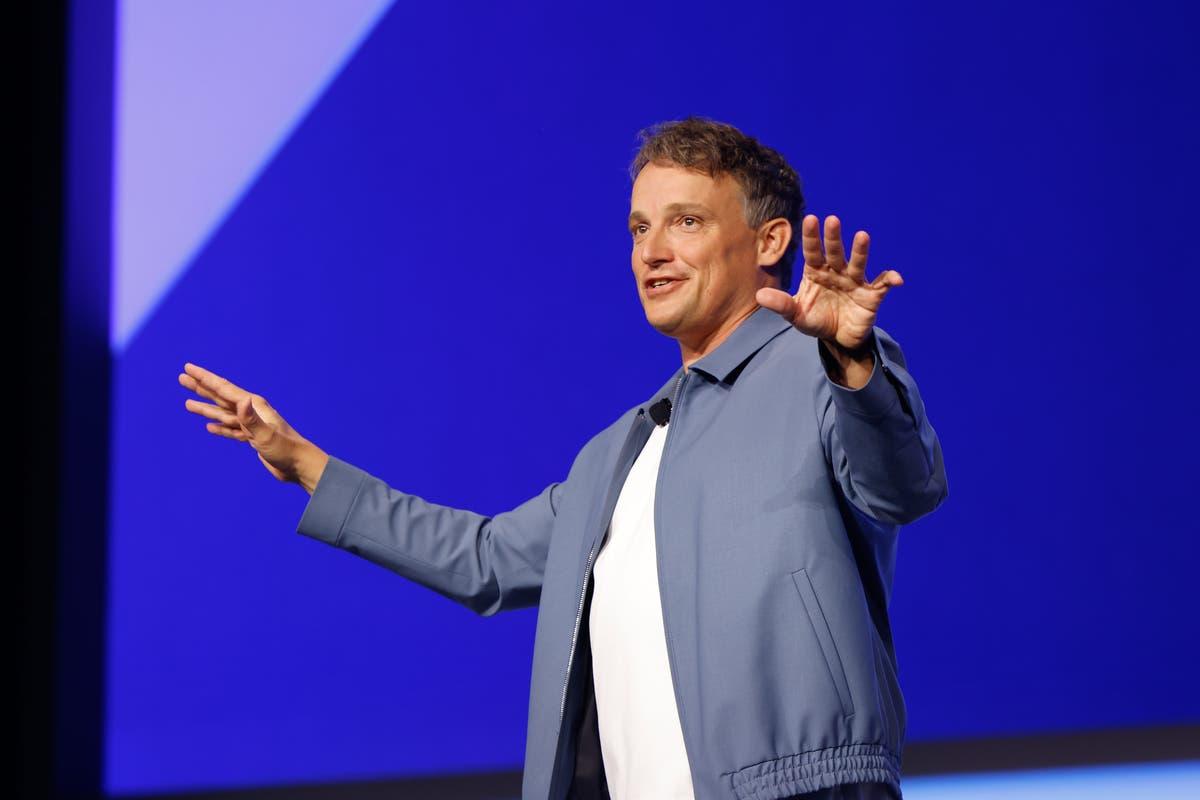
SAP launched a wave of new AI and agent products and technologies that the software giant said will speed customer AI adoption and help them transform into "autonomous enterprises." SAP is taking its artificial intelligence offerings to the next level, debuting today the SAP Business AI Platform, a unified system that combines the SAP Technology Business Platform, SAP Business Data Cloud and SAP Business AI -- the latter the company's earlier AI offerings built into SAP applications -- into a single governed environment. The software giant, which is holding its Sapphire customer and partner event in Orlando this week, also launched the SAP Autonomous Suite, a series of AI agents for specific business functions that augment the company's existing business applications. And the company has expanded its Joule generative AI copilot with new functionality including Joule Work, a new user interface for Joule. [Related: SAP To Buy Dremio And Prior Labs To 'Lead' Agentic And AI Models] "AI is the most significant trend in technology in a generation and, frankly, in society at large in a generation," said Jeremy Barnum, CFO at financial services giant JPMorganChase, a major SAP customer, speaking during the Sapphire opening keynotes session. "And as a result, everyone, I think all of us, are experiencing pressure to use it everywhere," Barnum said. "But in a finance organization, the risk of that is that you sprinkle AI on broken [business] processes and you miss the opportunity to retire technical debt and modernize the entire ecosystem. From our perspective, AI is only as good as the data and processes underneath it." The new SAP Business AI Platform, according to SAP, provides the foundation for building, contextualizing, deploying and governing AI agents. The platform "forms the basis for our vision of the future of business, the autonomous enterprise," SAP CEO Christian Klein (pictured onstage) said, introducing the new offering in his Sapphire keynote. The concept of the AI-powered "autonomous enterprise," which incorporates the Business AI Platform, SAP Autonomous Suite and the Joule Work agentic workspace, was the overriding framework at Sapphire for SAP's announcements. CEO Klein noted that AI systems today are often only about 80 percent accurate - a poor track record for business operations like financial accounting, payroll and supply chain management. While large language models, meanwhile, are trained on huge volumes of publicly available data, they don't work well with an organization's own business data and processes. And many agents fail to comply with governance or security requirements. At its core the SAP Business AI Platform includes the SAP Knowledge Graph data modeling technology, introduced in 2024, that connects business data with semantic context across SAP systems. The AI Platform unifies the functionality of the SAP Business Technology Platform, the company's PaaS system for application and data integration and automation, the SAP Business Data Cloud that unifies and governs SAP and third-party data, and the earlier SAP Business AI portfolio of enterprise-grade AI capabilities embedded into SAP applications. "We're so excited about Business AI platform, a platform that is designed to close the adoption gap by delivering outcome, speed, enterprise readiness, and, of course, all the context you need. It's the place where you build, contextualize, reason and govern AI, end to end," SAP CTO Philipp Herzig said during the Sapphire Keynote. The SAP Autonomous Suite is a collection of Joule agentic assistants that work with SAP's existing applications, including its flagship S/4HANA applications, to help automate end-to-end business processes. "The power of the new AI platform enables us to transform our software application layer, and as a result we are re-imagining how your businesses will run our ERP and industry applications," Klein said. The suite includes 50 domain-specific Joule Assistants across finance, supply chain, procurement, human capital management and customer experience. The Joule Assistants, in turn, orchestrate a subset of more than 200 specialized tasks. And the suite includes Industry AI, domain-specific agents with vertical industry knowledge and processes. Industry solutions have always been the superpower of SAP," said Sebastian Steinhaeuser, SAP COO, during the keynote presentations. "Real business transformation requires deep industry understanding." SAP's vision with the new Joule Work user experience interface is that users will now interact primarily with Joule across all SAP applications rather than navigating individual applications and entering data across multiple screens. Users will describe a desired business outcome, according to the company, and Joule will orchestrate the workflows, data and agents to accomplish the task. A new AI Agent Hub will also be generally available in the third quarter of this year. The AI roadmap presented by SAP executives at Sapphire also included several recent acquisitions by the company. In March the company struck a deal to buy master data management platform developer Reltio and today Herzig said that technology will be used within the SAP Business Data Cloud to create a master data record of SAP and non-SAP data that agents can tap into. Earlier this month SAP announced a deal to acquire Dremio, which develops a data lakehouse that supports the Apache Iceberg data table standard. The Dremio technology will be used to transform the SAP Business Data Cloud into an agentic data lakehouse to power AI agents, according to Herzig. SAP is revising its Rise with SAP and SAP Grow service programs to accelerate AI adoption, including providing access to the Joule Assistants portfolio, and introducing new ERP migration Joule assistants. (SAP Rise is the company's business transformation services for migrating legacy on-premises SAP applications to SAP S/4HANA Cloud. SAP Grow is a bundle of applications and services that mid-size businesses use to rapidly adopt SAP S/4HANA Cloud Public Edition.) Klein announced the creation of a €100 million fund for the company's partner ecosystem to help customers deploy SAP-built AI assistants and agents. The fund is also available to partners that extend or build new partner agents on the SAP Business AI Platform using Joule Studio. In a pre-Sapphire interview with CRN Sid Misra, chief marketing officer for SAP Business Technology Platform, said the Sapphire announcements open up new opportunities for partners by offering a unified platform that partners can use to develop AI extensions and custom agents for their clients. SAP's AI offensive comes at a time when some SAP customers are taking steps to upgrade their systems. Mainstream support and maintenance for aging SAP ECC (ERP Central Component) applications expire at the end of 2027. And many customers, perhaps more than half of SAP's core ERP customer base, are still running on-premises software despite the fact that SAP is limiting most of its new AI capabilities to its cloud software. Just last week, Lemongrass, an SAP consulting and transformation services partner, and cbs, a global SAP consulting firm specializing in data migration and transformation projects, announced that they had completed a complex SAP transition project for Propelis, a global marketing services company. The work, completed in eight months, included moving from a shared ECC system to S/4HANA. Eamonn O'Neill, CTO and co-founder at Dublin, Ireland-based Lemongrass, said in a pre-Sapphire interview with CRN that many clients today are looking to upgrade their SAP systems and, while doing so, adopt AI capabilities as quickly as possible. "How can we maximize the amount of AI they can access. That's the big demand from customers right now," O'Neill said. "Everybody wants to know what they can get their hands on [and] how they can see real AI, agentic AI, working around SAP. And the good news is it's possible today." "We're saying: 'Look AI today. But also modernize. Don't stop the modernization. Keep going on the SAP roadmap, get the S/4HANA, get the Rise with SAP. The more you do that, the more access you'll have to innovation,'" O'Neill said. Clients who don't run SAP upgrades and AI adoption in parallel are "missing out on an opportunity to reduce costs massively." PwC, a major provider of implementation and business transformation services around SAP software, is also seeing significant demand for its services as clients look to upgrade their SAP applications -- often as part of broader digital modernization initiatives, said Cory King, a principal at PwC who recently took over as the firm's U.S. SAP alliance leader. While customers are looking to migrate off their aging ECC systems, many use the projects as a chance to simplify their IT landscapes, eliminate "technical debt" and remove old customizations and extensions that prevent them from getting to a "clean core," King said, also in a pre-Sapphire interview with CRN. "They're really doing what I call application rationalizations" and "lots of workflow redesigns," King said. "Having an ERP foundation that is modernized and ready to roll is incredibly important." Many clients, of course, are asking for AI, King said, and "expectations are certainly super-high" for initiative outcomes. But many are also wary of starting AI projects and generally underestimate what's required from a personnel perspective. The PwC executive said his firm has been applying AI during customer engagements to reduce the amount of time clients have to be involved and using AI to help eliminate risk during the project work. "At the highest level, it's transforming how we do work," King said of AI. "From the way we do projects to the way that we work internally, to the way our internal business runs, it's changing significantly because of AI. And frankly, we're disrupting ourselves every day with bringing new AI tools into the way we do business." "And it's really just the beginning, in my mind," he said.
[7]
SAP Intros Program to Help Enterprises Incorporate AI Agents | PYMNTS.com
The German software giant's "Autonomous Enterprise" initiative, announced Tuesday (May 12), focuses on a new unified platform and specialized tools intended to automate end-to-end tasks across various corporate functions. "For the mission-critical processes of our customers, 'almost right' just isn't good enough," Christian Klein, SAP's chief executive, said in a news release. "By uniting SAP Business AI Platform with SAP Autonomous Suite, we anchor AI agents in the business processes, data and governance so they can deliver accurate, compliant and secure outcomes, unlocking new sources of revenue and meaningful cost savings." SAP Business AI Platform, the release added, unifies the company's SAP Business Technology Platform, SAP Business Data Cloud and SAP Business AI into a "single, governed environment." At its center is the SAP Knowledge Graph solution, which gives AI agents a "structured map of business entities, processes and relationships." In addition to the new product rollouts, SAP is also announcing a series of AI partnerships tied to its various tools, with companies that include Anthropic, Amazon Web Services and Nvidia. SAP began this year by rolling out a series of agentic artificial intelligence enhancements for its retailer customers. "Retailers face a landscape where AI is no longer optional," Balaji Balasubramanian, SAP's chief product officer for customer experience and consumer industries, said at the time. "SAP provides one closed-loop, AI-enhanced retail operating system that ties planning, execution and engagement together. We put data and AI at the heart of retail, delivering speed, personalization and growth across every channel and segment." The company is launching these tools at a moment when "agentic artificial intelligence is moving from frontier technology to operational table stakes," as PYMNTS wrote recently. Agentic AI, that report said, marks a shift from tools that help shape decisions to systems that carry them out. "For CFOs, this changes the calculus," PYMNTS added. "The question is no longer whether artificial intelligence can improve finance operations, but whether it can do so within a framework of control and accountability." That's where the "agentic AI harness" comes in. This term may sound technical, but its implications are chiefly operational. The harness isn't the model itself, but the system that controls how models perform in the real world. It sets the parameters for what an AI agent can access, what it is permitted to do, how it is monitored and when it needs to defer to a human. "For chief financial officers, understanding this layer is becoming as important as understanding internal controls or capital allocation," the report added.
[8]
SAP Unveils the Autonomous Enterprise
The company introduces a unified SAP Business AI Platform, deepening partnerships with Anthropic, Amazon Web Services, Google Cloud, Microsoft, NVIDIA and Palantir At SAP Sapphire in 2026, SAP SE introduced the Autonomous Enterprise to help enhance the world's most critical business workflows, so that humans and AI work together to meet the accelerating demands of global business profitably, strategically and safely. "For the mission-critical processes of our customers, 'almost right' just isn't good enough," said Christian Klein, CEO of SAP SE. "By uniting SAP Business AI Platform with SAP Autonomous Suite, we anchor AI agents in the business processes, data and governance so they can deliver accurate, compliant and secure outcomes, unlocking new sources of revenue and meaningful cost savings." The Autonomous Enterprise includes a unified AI platform for building, contextualizing and governing agents, an autonomous suite that executes core business operations and a new user experience that redefines how people work with enterprise software. Introducing SAP Business AI Platform SAP Business AI Platform is a new foundation for building and deploying enterprise AI grounded in real business context. SAP Business AI Platform now unifies SAP Business Technology Platform, SAP Business Data Cloud and SAP Business AI into a single, governed environment. At its core is the SAP Knowledge Graph solution, which gives AI agents a structured map of business entities, processes and relationships across a customer's SAP landscape. Joule Studio is SAP's AI-first solution for building enterprise agents, applications and agentic workflows. Developers can build using the no-code, pro-code and AI frameworks of their choice on SAP-managed infrastructure that is secure, scalable and optimized for enterprise AI. Deploying SAP Autonomous Suite Across Every Business Function and Industry Building on this foundation, SAP also introduced SAP Autonomous Suite, which enables SAP's existing business applications with AI agents capable of running processes from start-to-finish. The suite will deploy more than 50 domain-specific Joule Assistants across finance, supply chain, procurement, human capital management and customer experience. These assistants will automate end-to-end processes by orchestrating a subset of over 200 specialized agents to execute precise tasks. For example, the new Autonomous Close Assistant can compress the financial close process from weeks to days by automating journal entries, reconciliation and error resolution across the entire process. SAP also launched Industry AI, expanding its deep industry portfolio through seven autonomous solutions that will enable start-to-finish industry processes and embed sector-specific process logic, data models and regulatory requirements. At SAP Sapphire, SAP showcased its work with European energy giant RWE to leverage Industry AI, helping reduce unplanned downtime across its offshore wind turbines. With SAP's Autonomous Asset Management scenario, AI agents are designed to analyze data from thousands of past incidents, identify the likely root cause and generate pre-filled work orders with the right tools and proven fixes from other sites. Designing the Autonomous User Experience The company also revealed Joule Work, redefining how users engage with SAP software. Instead of navigating individual applications and entering data across several screens, users will now interact primarily with Joule. By describing a desired business outcome, Joule will orchestrate the right combination of workflows, data and agents to get it done. Joule Work goes beyond conversation, proactively surfacing relevant insights and automating routine tasks behind the scenes so work moves forward even when humans aren't actively steering it. It will be available on desktop, mobile and voice across SAP and non-SAP systems. Accelerating the Customer Journey Toward Autonomy with €100 Million Infusion SAP evolved its customer and partner programs to help accelerate the organization's journey to the Autonomous Enterprise. To catalyze adoption, the company has launched a €100 million fund for SAP partners to help customers deploy SAP-built AI assistants and agents. The fund is also available to partners that extend or build new partner agents on the new SAP Business AI Platform using Joule Studio. SAP has enhanced its RISE with SAP and SAP GROW offerings to accelerate AI adoption. Both include access to the Joule Assistants portfolio; RISE with SAP customers will have three assistants activated within their first year, while SAP GROW customers receive full portfolio access at onboarding. SAP S/4HANA on-premises and SAP ERP Central Component (SAP ECC) customers are not excluded: those that commit to transitioning the majority of their current landscape to SAP Cloud ERP gain access to select AI scenarios, bridging the gap between their current landscape and their cloud destination SAP also introduced new agent-led transformation tooling that can reduce ERP migration efforts by more than 35 percent, driving faster and more predictable projects by automating system analysis, code remediation, configuration and testing at scale. Lastly, SAP announced a full slate of strategic partnerships across each category: * Platform and suite partnerships include Anthropic, with Claude among the foundation models SAP's AI platform will leverage to power Joule agents across HR, procurement and supply chain; Amazon Web Services, bringing zero-copy data integration between SAP Business Data Cloud and Amazon Athena; Google Cloud and Microsoft, enabling bidirectional agent-to-agent interoperability between Joule and external agent frameworks; Mistral AI and Cohere, delivering sovereign model options on SAP's cloud infrastructure; n8n, providing visual AI workflow orchestration inside Joule Studio; NVIDIA, whose OpenShell provides the trusted secure runtime for Joule Studio; and Parloa, bringing AI agents into SAP Service Cloud to handle customer interactions with full access to business data and service processes.
Share
Copy Link
SAP introduced its Autonomous Enterprise vision at Sapphire 2026, featuring over 200 AI agents and 50 domain-specific assistants powered by Anthropic's Claude. The company reversed its cloud-only policy, bringing AI capabilities to on-premise ECC and S/4HANA systems. While JPMorgan Chase and major enterprises anchor production credibility, analysts warn of concentration risk tied to the Anthropic partnership.
SAP consolidated eighteen months of acquisitions, product development, and AI strategy into a unified vision called the Autonomous Enterprise at SAP Sapphire 2026 in Orlando
1
. The German software giant unveiled more than 50 domain-specific assistants orchestrating over 200 specialized AI agents across finance, supply chain, procurement, human resources, and customer experience3
. CEO Christian Klein positioned SAP as a Business AI company, though the announcement comes as the company's stock has declined 41 per cent over the past six months3
. JPMorgan Chase CFO Jeremy Barnum confirmed live on stage that the bank is migrating its general ledger to SAP's latest version, while Bayer, Novartis, Takeda, Ericsson, and H&M provided production credibility1
.
Source: CRN
The SAP Business AI Platform unifies Business Technology Platform, Business Data Cloud, and Business AI into a single governed environment, with Anthropic's Claude serving as the primary reasoning engine across SAP's AI-enabled portfolio
1
3
. The Anthropic partnership goes beyond a standard API arrangement, with both companies collaborating to build custom agents and agentic workflows optimized for industries including public sector, healthcare, education, life sciences, and utilities3
. SAP's architecture also includes its Rapid 1.5 tabular foundation model, which shipped at the conference, the pending Prior Labs acquisition for non-SAP tabular workloads, and Mistral and Cohere for sovereign options1
. This creates ecosystem bifurcation where Microsoft-OpenAI and SAP-Anthropic become the two dominant alignments, leaving Salesforce, Workday, and Oracle as multi-model neutral1

.
Source: TechRadar
In a significant policy reversal, SAP announced that on-premise AI features will be available to customers running ECC and S/4HANA systems
2
. Klein stated that "the majority of our Joule assistants and agents [will be available] also on-prem, on ECC, and S/4HANA for customers that have already committed the majority of the landscape to the journey"2
. This marks the largest concession SAP has made to its installed base in three years, reversing Klein's July 2023 statement that newest innovations would only be delivered in the public or private cloud2
. The capability will be available through the Max Success Plan with general availability planned for May 2026, enabling customers to generate value from AI while modernizing their estate2
.Joule Work introduces a conversational front door that generates application experiences on demand, making screen-based ERP architecturally obsolete
1
. The generative AI assistant allows users to interact directly with Joule in a central location, bringing together all workflows, data and agents without navigating multiple apps4
. Mobile is generally available now, desktop launches in H2 2026, and full agent-to-agent interoperability arrives Q4 20261
. The SAP Knowledge Graph provides AI agents with a structured map of business entities, processes and relationships across a firm's SAP landscape4
5
. SAP is no longer competing on application design but on dynamic context generation, with screen-by-screen ERP design becoming obsolete over 36 months1
.
Source: SiliconANGLE
Related Stories
SAP made its most aggressive commercial move in a decade by offering Joule Studio 2.0 and the Joule agent runtime free through December 31, 2026, with agent-to-agent interoperability free with no cap
1
. Joule Studio enables customers to build enterprise agents, applications and agentic workflows using no-code, pro-code and AI frameworks on SAP-managed infrastructure4
. Developers can build in Python or TypeScript, use tools like Claude Code or Cursor, and deploy agents without worrying about infrastructure5
. The platform serves both professional coders and citizen developers, generating requirements, technical specifications, code and tests within its own software development lifecycle5
. However, no post-promotion pricing has been disclosed for 2027, creating an unmodeled pricing cliff in most customer 2026 budgets1
.SAP introduced AI Agent Hub, built on the SAP LeanIX foundation already deployed across the Fortune 500, which governs SAP and non-SAP agents with verified-agent enforcement, Cloud ALM telemetry, Signavio agent mining, and SuccessFactors workforce mapping
1
. The hub will reach general availability in Q3 2026, bundled at no additional charge, following Microsoft's similar move with Agent 365 in May1
. Company Memory, built on SAP Signavio, ingests process models, policies, Teams chats, and email approval chains into structured process atoms that govern agent behavior, with every exception updating the memory1
. Forrester analysts warn that Claude-as-anchor creates concentration risk that becomes board-level in regulated industries within 24 months, noting that 21% of enterprise SaaS decision-makers cite vendor lock-in as a top commercial concern1
. The SAP Autonomous Suite embeds agents into core business applications organized around five horizontal domains: finance, supply chain management, spend management, human capital management and customer engagement5
.Summarized by
Navi
[1]
[2]
[3]
[4]
08 Oct 2024•Technology

08 Jan 2026•Technology

14 Feb 2025•Technology

1
Technology

2
Technology

3
Business and Economy