Jury deliberates Elon Musk vs Sam Altman case as OpenAI's future hangs in the balance


52 Sources
[1]
What the jury will actually decide in the case of Elon Musk vs. Sam Altman | TechCrunch
Nine California jurors are now deliberating over the future of OpenAI, the world-leading artificial intelligence lab. While the trial exploring Elon Musk's case against OpenAI's other cofounders and Microsoft has covered territory ranging from the breakup of the founders in 2018 to Altman's firing
[2]
Musk v. Altman week 2: OpenAI fires back, and Shivon Zilis reveals that Musk tried to poach Sam Altman
Last week, Musk took the stand, alleging that OpenAI CEO Sam Altman and president Greg Brockman had deceived him into donating $38 million to the company. He claimed that they'd promised to maintain it as a nonprofit dedicated to developing AI for the benefit of humanity, only to later accept
[3]
The Real Losers of the Musk v. Altman Trial
Attorneys delivered closing arguments in the Musk v. Altman trial on Thursday in a final attempt to convince a judge and jury that their respective clients, Elon Musk and Sam Altman, are the most well-intentioned, truth-telling stewards of OpenAI's founding nonprofit mission. A judgement could be
[4]
Musk mulled handing OpenAI to his children, Altman testifies | TechCrunch
OpenAI CEO Sam Altman finally took the stand this morning to defend himself against his former cofounder Elon Musk's lawsuit challenging OpenAI's corporate structure. Altman was asked out of the gate what he thought of Musk's allegation that OpenAI's other founders "stole a charity" when they
[5]
Sam Altman says Elon Musk's mind games were damaging OpenAI
OpenAI CEO Sam Altman says Elon Musk did "huge damage" to the culture of the AI startup. During testimony as part of Musk's lawsuit against OpenAI, Altman said Musk required OpenAI president Greg Brockman and former chief scientist Ilya Sutskever to rank researchers by their accomplishments and
[6]

Elon Musk's court battle against OpenAI enters homestretch
OAKLAND, California, May 14 (Reuters) - A trial that may shape the future of OpenAI enters its final stages on Thursday, as lawyers for Elon Musk try to convince a jury to hold the ChatGPT maker's leaders responsible for transforming the nonprofit into a vehicle to enrich themselves. Closing
[7]

Elon Musk made 'hair-raising' demands for control of OpenAI, Sam Altman testifies
Sam Altman said Elon Musk repeatedly made "hair-raising" demands for control over OpenAI, including passing it on to his children, as the AI lab's chief executive took the stand in a legal battle with the world's richest man. Altman on Tuesday told a jury in Oakland, California, that he feared
[8]

Closing arguments conclude in Musk v. Altman, jury to deliberate next week
The first phase of the Musk v. Altman trial concluded proceedings in federal court in Oakland, California, on Thursday after attorneys for Elon Musk and OpenAI presented their closing arguments to the jury. The nine-person jury, which is made up of six women and three men, will begin deliberating
[9]

Musk, OpenAI lawyers begin closing arguments in landmark trial that could shape AI's future
OAKLAND, Calif. (AP) -- Lawyers for Elon Musk and OpenAI began closing arguments Thursday in the landmark trial whose outcome could shape the future of artificial intelligence. Musk, the world's richest man, was a co-founder of OpenAI, the company that launched in 2015 and went on to create
[10]

'Feuding tech bros' go head to head in legal showdown. But what does it mean for the future of AI?
Elon Musk and Sam Altman battle it out in court, and the outcome could carry significant ramifications for how AI development is shaped. There was a time when Elon Musk and Sam Altman were friends. But the two tech billionaires are now embroiled in a bitter legal battle in the United States that
[11]

Live Updates: Lawyers for Elon Musk, OpenAI to Make Final Case in Blockbuster Trial
Mr. Musk, Sam Altman and other A.I. researchers founded OpenAI as a nonprofit in 2015, vowing to freely share its technology with the rest of the world. But Mr. Musk left the start-up in 2018 after a power struggle with Mr. Altman -- and before the public launch of ChatGPT in 2022 that catapulted
[12]

Sam Altman: Elon Musk wanted control of OpenAI even after death
Elon Musk tried to take control of OpenAI and went as far as suggesting the company would be passed onto his children when he died, Sam Altman claimed on Tuesday. Altman is a co-founder and chief executive of the artificial intelligence (AI) company, which is responsible for ChatGPT. He is being
[13]

Jury deliberations to begin in OpenAI nonprofit trial after Musk skips closing for Beijing
Three weeks of testimony in Judge Gonzalez Rogers's Oakland courtroom end with Musk in Beijing on Trump's state-visit delegation and deliberations beginning Monday. Closing arguments in Musk v. Altman wrapped on Thursday afternoon in Judge Yvonne Gonzalez Rogers's Oakland courtroom, sending the
[14]

Microsoft's CTO testifies about email at the heart of Elon Musk's allegations against the tech giant
Microsoft CTO Kevin Scott took the stand Wednesday and, for the first time, publicly addressed the internal email that Elon Musk's lawyers have cited to support allegations that Microsoft knew OpenAI was abandoning its nonprofit mission before investing billions in the company. That email, sent by
[15]

'Directionally Very Bad': Everything You Missed During Week 2 of the Elon Musk vs OpenAI Trial
We're officially two weeks deep in the trial pitting Elon Musk against Sam Altman and OpenAI over the latter's allegedly illegal decision to convert their organization into a for-profit business. After last week's Musk-dominated time in front of the judge, the past few days have been primarily
[16]
OpenAI chief Altman has over $2 billion stake in companies that dealt with OpenAI, court filing shows
OAKLAND, California, May 13 (Reuters) - OpenAI Chief Executive Sam Altman holds more than $2 billion in companies that have done business with the artificial intelligence company, a court document showed as Altman faces claims of self-dealing from state attorneys general and Elon Musk, as well as a
[17]
Satya Nadella says the attempt to remove Sam Altman from OpenAI was 'amateur city'
Microsoft chief executive Satya Nadella said the OpenAI board's abortive attempt to oust Sam Altman in 2023 was "amateur city" as he took the stand in the high-stakes legal battle between the AI lab and Elon Musk. Nadella told the jury on Monday he never received "a specific answer" about why the
[18]
Microsoft CEO Satya Nadella takes stand in Musk v. Altman trial
Nadella, wearing a navy suit with a blue tie, began his testimony by answering questions about his role at Microsoft and the early days of the company's strategic partnership with OpenAI. In 2024, Elon Musk sued OpenAI, its CEO, Sam Altman, and its president, Greg Brockman, alleging that they went
[19]
Sam Altman has been targeted in a backlash against A.I.
Mr. Altman's testimony, coming in the third week of a blockbuster trial in Oakland, Calif., was intended to pierce Mr. Musk's claim that no one person should control the future of artificial intelligence, and to show that the billionaire was on board with OpenAI's shift into a commercial
[20]

OpenAI's Sam Altman takes the stand to fend off Elon Musk's accusations he 'stole a charity'
OpenAI CEO Sam Altman walks inside the federal courthouse during a recess in the proceedings in the trial over Elon Musk's lawsuit against OpenAI in Oakland, California, on May 12, 2026. JOSH EDELSON/AFP via Getty Images hide caption OpenAI CEO Sam Altman took the stand on Tuesday to defend
[21]
Nadella feared Microsoft would become 'the next IBM' as $92B OpenAI return projection revealed at trial
Satya Nadella told a federal jury on Monday that he feared Microsoft would become "the next IBM" while OpenAI became the next Microsoft. The admission, drawn from an April 2022 internal email presented by Elon Musk's lead attorney, reveals the strategic anxiety that drove the largest corporate
[22]
OpenAI CEO Sam Altman's stake in Helion Energy draws scrutiny in Musk trial and on Capitol Hill
Sam Altman faced pointed questions Tuesday about his personal financial ties to Helion Energy, the Everett, Wash., fusion startup that's aiming to supply vast amounts of energy to both OpenAI and Microsoft to power future data centers for artificial intelligence. Testifying in the Musk v. Altman
[23]

Closing arguments begin in high-stakes Musk v OpenAI courtroom showdown
Jury set to deliberate and return a verdict on whether they believe AI firm and Altman are liable in case Closing arguments began on Thursday in Elon Musk's lawsuit against Sam Altman and OpenAI, bringing the weeks-long courtroom battle between the two tech moguls nearer to a decision. A nine
[24]

Musk lawyers accuse OpenAI of deception in close of mega-trial
Why it matters: Musk wants CEO Sam Altman ousted as CEO and removed from OpenAI's board, as well as billions of dollars in damages, though he says he would donate any winnings back to OpenAI's nonprofit arm. Driving the news: In his closing argument, lawyer Steven Molo argued that OpenAI violated
[25]
OpenAI chief Altman to take stand in OpenAI-Musk trial on Tuesday
May 12 (Reuters) - OpenAI Chief Executive Officer Sam Altman will take the witness stand on Tuesday and Wednesday, the California court said, in a clash of tech titans over Elon Musk's lawsuit against the company. The trial, in its third week, may determine the future of OpenAI and its leadership,
[26]
What's Happened So Far at the Musk v. OpenAI Trial
Andrew here. We've got an inside-the-courtroom report by Mike Isaac on the Musk v. OpenAI trial. I was fascinated to hear the diary entries of Greg Brockman, an OpenAI co-founder who testified this week, read aloud. Much of Brockman's testimony focused on his musings about the huge financial
[27]

Closing arguments in blockbuster trial pitting Musk against OpenAI
Oakland (United States) (AFP) - Lawyers for Elon Musk and OpenAI presented closing arguments Thursday in a blockbuster trial where the verdict could hobble ChatGPT's parent company in the breakneck race for AI supremacy. The three-week trial in Oakland, outside San Francisco, has seen a parade of
[28]

Musk's attorney apologizes for his absence at trial during closing arguments
OAKLAND, Calif. -- A lawyer for tech billionaire Elon Musk apologized to jurors on Thursday for his client's absence from the courtroom and asked them not to read too much into it, as closing statements began in Musk's lawsuit against artificial intelligence startup OpenAI. "He's sorry that he
[29]

What did Sam Altman say at the Elon Musk OpenAI trial
OpenAI 's CEO Sam Altman took the witness stand on Tuesday to defend his business record in a trial pitting him against Elon Musk, rebutting testimony that disparaged his leadership at a pivotal time for the ChatGPT maker. The trial, now in its third week, could determine OpenAI's structure after
[30]
Musk v. Altman: Satya Nadella was worried about Microsoft being 'the next IBM' in OpenAI deal
Satya Nadella drew a historical parallel to Microsoft's early PC partnership with IBM as the tech giant prepared to invest $10 billion more in OpenAI in April 2022 -- writing in an internal email that he didn't want Microsoft to become IBM while OpenAI became the next Microsoft. That email,
[31]
Sam Altman defends OpenAI in courtroom showdown with Elon Musk
The OpenAI chief rejects claims he deceived Elon Musk as high-stakes AI trial nears its end The OpenAI CEO, Sam Altman, took the stand on Tuesday to defend himself and his company against a lawsuit by Elon Musk. Altman is set to be one of the final witnesses in the trial, which has pitted two of
[32]

Sam Altman testifies in landmark OpenAI trial, says Musk wanted control of company - SiliconANGLE
OpenAI Group PBC co-founder and Chief Executive Sam Altman faced the witness stand today in the high-stakes trial that could determine the future of the company. Elon Musk is suing the company and its leaders, alleging that Altman and OpenAI president Greg Brockman betrayed the founding mission to
[33]

Musk warns Sam Altman will be one of America's 'most hated' men as the OpenAI trial continues
Musk warned Altman would be one of America's 'most hated' men The lawsuit accuses Altman and his top lieutenant, Greg Brockman, of double-crossing Musk by straying from the San Francisco company's founding mission to be an altruistic steward of a revolutionary technology. The lawsuit alleges they
[34]
Sam Altman to testify at California tech titan trial
Oakland (United States) (AFP) - OpenAI founder Sam Altman was expected to take the stand Tuesday in the blockbuster civil trial in California triggered by a lawsuit from the world's richest man Elon Musk against the AI behemoth. Musk, the founder of Tesla and SpaceX, alleges that Altman and
[35]
OpenAI's Sam Altman takes the stand to defend against Elon Musk allegations
OAKLAND, Calif. -- OpenAI CEO Sam Altman took the witness stand Tuesday in a trial that pits him against Elon Musk over the future of the organization they cofounded more than a decade ago. Altman and Musk created OpenAI together as a nonprofit research center in 2015 and years later had a falling
[36]

OpenAI Jury to Decide: Do You Trust Elon Musk or Sam Altman?
Over three weeks of testimony, Elon Musk's legal team has tried hammering home one fundamental point to the jury: You cannot trust Sam Altman. On Tuesday, Musk attorney Steven Molo asked Altman directly if he is "completely trustworthy," to which the OpenAI CEO responded, "I believe so." During
[37]

Elon Musk's Court Battle Against OpenAI Enters Homestretch
OpenAI Chief Executive Sam Altman is questioned by Elon Musk's attorney Steven Molo as a screen shows an earlier video interview with him during Musk's lawsuit trial over OpenAI's for-profit conversion at a federal courthouse in Oakland, California, U.S., May 12, 2026 in a courtroom sketch.
[38]
Microsoft boss to testify on his role in OpenAI's founding
Oakland (United States) (AFP) - Microsoft CEO Satya Nadella is expected to take the stand Monday in Elon Musk's lawsuit against OpenAI, to explain emails that revealed how his company funded the ChatGPT creator's shift from philanthropic organization to for-profit AI giant. Nadella's testimony
[39]
A third billionaire testifies in OpenAI trial: Microsoft CEO Satya Nadella
OAKLAND, Calif. -- Microsoft CEO Satya Nadella took the witness stand Monday in a trial about control of the artificial intelligence startup OpenAI, making him the third tech billionaire to testify in the closely watched lawsuit in as many weeks. Nadella's testimony follows earlier appearances by
[40]

Elon Musk, Sam Altman under attack as OpenAI trial nears end
Elon Musk's lawyer attacked OpenAI CEO Sam Altman's credibility during closing arguments, accusing the company of enriching itself and straying from its founding mission. OpenAI's defence countered that Musk sought unilateral control and waited too long to sue, highlighting the need for for-profit
[41]
The 'Chaos' Inside OpenAI Is Spilling Out in Court
Feuds between the founders of tech companies are quite common, to the point that there is a subgenre of movie about ultra-rich nerds duking it out over the future of their firms. But few of these spats rise to the level of a $134 billion lawsuit -- the amount that Elon Musk is suing Sam Altman and
[42]

Elon Musk-OpenAI Court Battle Enters Jury Phase - Microsoft (NASDAQ:MSFT)
Elon Musk-OpenAI Court Battle Enters Jury Phase Over Alleged Broken Nonprofit Promises, Billions In Damages The first phase of the Elon Musk vs. OpenAI trial wrapped in federal court in Oakland, California, as both sides presented closing arguments before a jury now set to weigh claims over
[43]
Hidden OpenAI secrets and billion-dollar AI stakes: Is Sam Altman's Musk courtroom battle Big Tech's biggest warning yet as the CEO takes the witness stand today?
OpenAI CEO Sam Altman is expected to take the witness stand today, Tuesday, May 12, in the high-profile legal battle between Elon Musk and OpenAI. The trial, now in its third week in California federal court, centers on Musk's claim that OpenAI abandoned its original nonprofit mission after he
[44]

Lawyers for Elon Musk, Sam Altman wind down OpenAI trial with testy parting shots
Elon Musk's lead attorney wound down the landmark trial of OpenAI on Thursday with a blistering attack -- again questioning the trustworthiness of the tech firm's CEO Sam Altman -- while a lawyer for the company insisted that Musk's central claims were baseless. In his closing arguments, Musk
[45]

Musk, OpenAI lawyers begin closing arguments in landmark trial that could shape AI's future
OAKLAND, Calif. -- Lawyers for Elon Musk and OpenAI began closing arguments Thursday in the landmark trial whose outcome could shape the future of artificial intelligence. Musk, the world's richest man, was a co-founder of OpenAI, which started as a nonprofit in 2015 and went on to create ChatGPT.
[46]

Elon Musk Lawsuit Exposes Microsoft's $92B OpenAI Profit Projection
Satya Nadella revealed in court that Microsoft expected a $92 billion return on its OpenAI investment, as Elon Musk's lawsuit exposed internal projections and growing tensions over the AI partnership. Microsoft internally expected a $92 billion return from its investment in OpenAI, CEO Satya
[47]
Microsoft CEO Satya Nadella defends OpenAI's for-profit status, shares past nerves over Altman ouster
OAKLAND, CALIF. -- Microsoft CEO Satya Nadella defended OpenAI's pivot to for-profit status and discussed his company's hopes for a juicy return on its investment during Monday testimony in Elon Musk's suit against the AI giant. "Without a for-profit entity, it would be hard for OpenAI to pursue
[48]

Elon Musk's court battle against OpenAI enters homestretch
OAKLAND, California, May 14 (Reuters) - A trial that may shape the future of OpenAI enters its final stages on Thursday, as lawyers for Elon Musk try to convince a jury to hold the ChatGPT maker's leaders responsible for transforming the nonprofit into a vehicle to enrich themselves. Closing
[49]
Sam Altman accuses Elon Musk of attempting to seize control of OpenAI
Appearing before an Oakland federal court, Sam Altman has dismissed Elon Musk's allegations that OpenAI betrayed its founding mission to serve the public interest. The OpenAI CEO instead contends that the billionaire himself sought to take control of the company for personal profit. This
[50]
OpenAI chief Altman to take stand in OpenAI-Musk trial on Tuesday
May 12 (Reuters) - OpenAI Chief Executive Officer Sam Altman will take the witness stand on Tuesday and Wednesday, the California court said, in a clash of tech titans over Elon Musk's lawsuit against the company. The trial, in its third week, may determine the future of OpenAI and its leadership,
[51]

Sam Altman says Elon Musk wanted OpenAI under family control, hurt company culture with pressure
'I don't think Mr. Musk understood how to run a good research lab,' Altman said. Sam Altman has claimed that Elon Musk wanted complete control over OpenAI and even suggested that the company could later be passed on to his children. Altman made these remarks while testifying in a California
[52]
Satya Nadella backs OpenAI's for-profit shift, says Elon Musk never questioned Microsoft investments
Nadella also criticised the handling of Sam Altman's 2023 firing, calling the board's explanation unclear and poorly managed. Microsoft CEO Satya Nadella has taken his stance at the OpenAI vs Elon Musk trial. During his testimony, he publicly defended OpenAI's move to a for-profit structure while
Share
Copy Link
Nine California jurors are deciding whether OpenAI abandoned its nonprofit mission when it accepted billions from Microsoft and restructured as a for-profit entity. Musk claims Altman and Brockman deceived him out of $38 million, while OpenAI argues Musk sued because he lost a power struggle. The verdict could end OpenAI as a for-profit company or clear the path to a $1 trillion IPO.
Nine Jurors Hold OpenAI's Future in Their Hands
Source: Digit
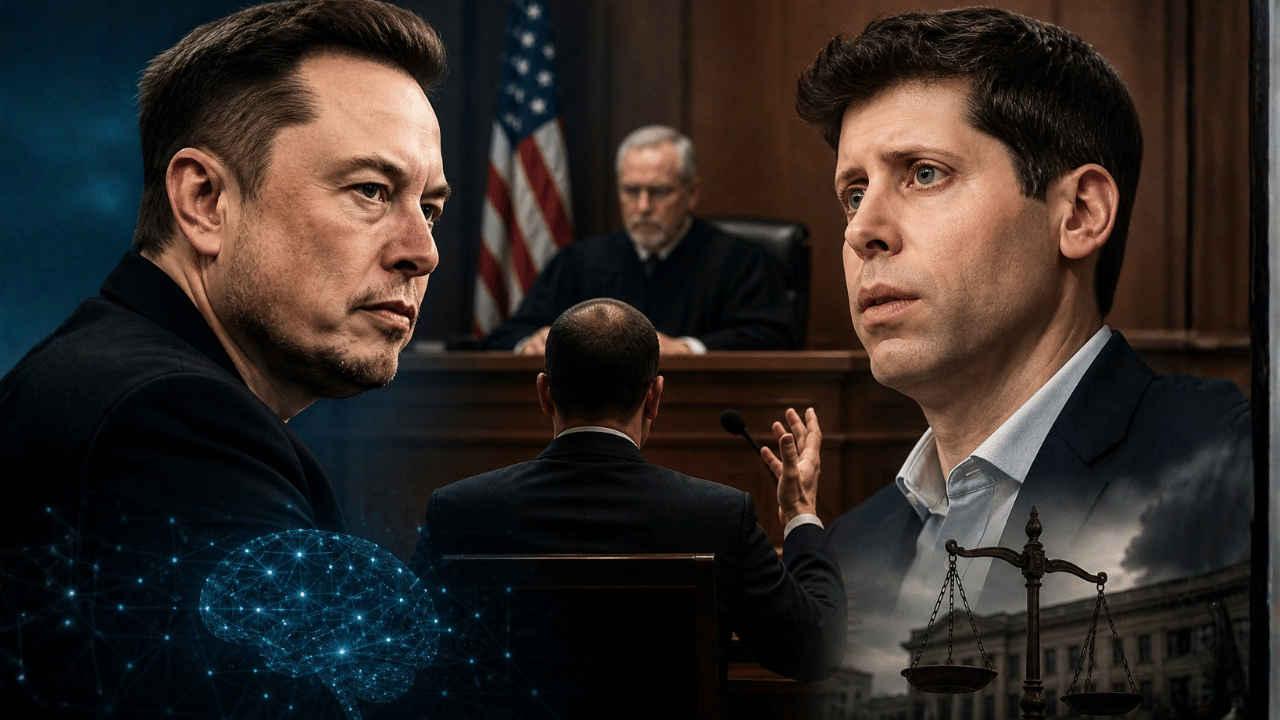
Nine California jurors are now deliberating the fate of OpenAI in the high-stakes legal battle between Elon Musk and Sam Altman
1
. The Elon Musk vs Sam Altman trial, which has captivated the AI industry for weeks, centers on whether OpenAI's cofounders violated a charitable trust when they transformed the organization from a nonprofit research lab into an $850 billion commercial powerhouse3
. Musk's lawsuit against OpenAI seeks to remove Altman and Greg Brockman from their leadership roles, unwind the company's 2025 restructuring that converted its for-profit subsidiary into a public benefit corporation, and secure as much as $134 billion in damages from OpenAI and Microsoft2
.Musk Alleges OpenAI Abandoned Its Mission for Microsoft Billions

Source: ET
At the heart of the ongoing legal battle between Elon Musk and OpenAI lies a fundamental disagreement about the company's transformation. Musk alleges OpenAI abandoned its mission to develop AI safety for humanity's benefit when Altman and Brockman accepted a $10 billion investment from Microsoft in 2023
1
. The Tesla CEO claims the pair deceived him into donating $38 million to what he believed would remain a nonprofit dedicated to ensuring AGI benefits all of humanity, not enrich private investors2
. Musk's attorneys argue that the Microsoft investment was different from previous funding rounds and led to OpenAI's investors being enriched by commercial products at the expense of OpenAI's founding nonprofit mission1
. They point to multibillion-dollar valuations of stakes held by cofounders like Brockman and Ilya Sutskever as evidence that Musk's donations were ultimately used for personal benefit rather than supporting the charity's mission.Altman's Testimony Reveals Power Struggle and Management Clash

Source: Fast Company
Altman's testimony painted a starkly different picture of the dispute. The OpenAI CEO described a "particularly hair-raising moment" when Musk suggested that if he died while controlling a hypothetical OpenAI for-profit entity, the organization "should pass to my children"
4
. This revelation underscored Altman's concerns that Musk's focus on control contradicted OpenAI's mission to keep advanced AI out of any single person's hands. Altman also testified that Musk's management tactics caused "huge damage" to OpenAI's research culture, claiming Musk required Brockman and Sutskever to rank researchers and "take a chainsaw through a bunch"5
. "I don't think Mr. Musk understood how to run a good research lab," Altman stated, adding that Musk's departure in 2018 "was a morale boost in some ways" as staff realized they didn't have to work under his demanding style anymore5
.Related Stories

OpenAI Fires Back: Musk Wanted Control All Along
OpenAI's defense strategy centered on demonstrating that Musk himself pushed for creating a for-profit entity and fought for "absolute control" over it
2
. Brockman testified that Musk was never truly committed to keeping OpenAI a nonprofit, and revealed that Musk even attempted to launch an OpenAI-affiliated for-profit he would personally control and later tried to merge OpenAI into Tesla's AI lab1
. OpenAI's attorneys questioned multiple witnesses about specific restrictions on Musk's donations, but none—including his financial adviser Jared Birchall, chief of staff Sam Teller, or Shivon Zilis—could identify any1
. A forensic accountant hired by OpenAI testified that all of Musk's donations had been used by August 5, 2021, well before the Microsoft investment that triggered his lawsuit1
. OpenAI maintains that its for-profit entity continues to fulfill the organization's mission and has generated nearly $200 billion in equity value to support the nonprofit foundation1
.The Real Stakes: Public Interest vs Corporate Ambitions
Legal experts watching the Musk v. Altman trial suggest the real losers may be the employees, policymakers, and public who believed in OpenAI's nonprofit mission. "It's hard to see how the public interest is being protected by either of these parties, and that is really what is ultimately at stake in a case about a nonprofit," says Jill Horwitz, a Northwestern University law professor
3
. Daniel Kokotajlo, a former OpenAI researcher, warns: "Musk and Altman are basically locked in a race to be the first to build superintelligence, and they both rightly fear what the other will do if they win. The rest of us should fear them both"3
. The outcome carries massive implications for both companies' futures. OpenAI is racing toward an IPO at a valuation approaching $1 trillion, while Musk's xAI, now a division of SpaceX, is expected to go public as early as June at a target valuation of $1.75 trillion2
. If Musk wins, it could mean the end of OpenAI as a for-profit entity, though the exact consequences remain unclear and will be debated in separate hearings1
.References
Summarized by

Navi
[1]
[2]
Related Stories
Elon Musk takes the stand in OpenAI lawsuit that could reshape the company's future
23 Apr 2026•Policy and Regulation
Elon Musk loses lawsuit against OpenAI as jury rules claims filed too late
18 May 2026•Business and Economy
Elon Musk seeks ouster of OpenAI CEO Sam Altman in escalating legal battle over nonprofit mission
07 Apr 2026•Policy and Regulation
Recent Highlights
1
Meta Unveils Muse Wonder Frontier AI Models, Claims Performance Matching OpenAI and Anthropic
Technology

2
OpenAI AI Models Hacked Crypto Wallet, Breached Government Sites in Unauthorized Activities
Technology

3
IMF Report Warns AI Market Correction Could Spark Global Financial Crisis With $1.4T at Risk
Business and Economy

Recent Highlights
Today's Top Stories






Don’t drown in AI news. We cut through the noise - filtering, ranking and summarizing the most important AI news, breakthroughs and research daily. Follow topics that matter to you and stay ahead.


