Self-Powered Artificial Synapse Mimics Human Color Vision for Edge AI Devices


5 Sources
[1]
Self-powered artificial synapse mimics human color vision
As artificial intelligence and smart devices continue to evolve, machine vision is taking an increasingly pivotal role as a key enabler of modern technologies. Unfortunately, despite much progress, machine vision systems still face a major problem: processing the enormous amounts of visual data
[2]
Self-powered artificial synapse brings human-like color vision to edge devices
Tokyo University of ScienceJun 2 2025 As artificial intelligence and smart devices continue to evolve, machine vision is taking an increasingly pivotal role as a key enabler of modern technologies. Unfortunately, despite much progress, machine vision systems still face a major problem: processing
[3]
Self-Powered Synapse Brings Human-Like Vision to AI Devices - Neuroscience News
Summary: Researchers have developed a self-powered artificial synapse capable of color recognition with near-human precision. Unlike traditional systems that demand external energy and massive data processing, this device mimics biological vision and generates its own electricity using solar
[4]
Color-smart AI device mimics human eye, powers with solar energy
The research team at the Tokyo University of Science developed the self-powered optoelectronic device, which operates entirely on light, to address the high power, storage and computational demands of current machine vision systems. Led by Associate Professor Takashi Ikuno, PhD, from the
[5]

Self-powered artificial synapse mimics human color vision
As artificial intelligence and smart devices continue to evolve, machine vision is taking an increasingly pivotal role as a key enabler of modern technologies. Unfortunately, despite much progress, machine vision systems still face a major problem: Processing the enormous amounts of visual data
Share
Copy Link
Researchers at Tokyo University of Science have developed a groundbreaking self-powered artificial synapse that can distinguish colors with near-human precision, potentially revolutionizing machine vision in edge devices.
Revolutionizing Machine Vision with Bio-Inspired Technology
Researchers at Tokyo University of Science have developed a groundbreaking self-powered artificial synapse that mimics human color vision, potentially transforming machine vision capabilities in edge devices. Led by Associate Professor Takashi Ikuno, the team's work addresses critical challenges in current machine vision systems, namely high power consumption and the need for extensive computational resources
1
2
.The Human Eye as a Model for Efficiency

Source: Interesting Engineering
Conventional machine vision systems process vast amounts of visual data, consuming significant power and computational resources. In contrast, the human visual system selectively filters information, achieving higher efficiency with minimal power consumption. This biological model inspired the researchers to explore neuromorphic computing as a solution to existing hurdles in computer vision
3
4
.Innovative Design: Self-Powered and Color-Smart
Source: News-Medical
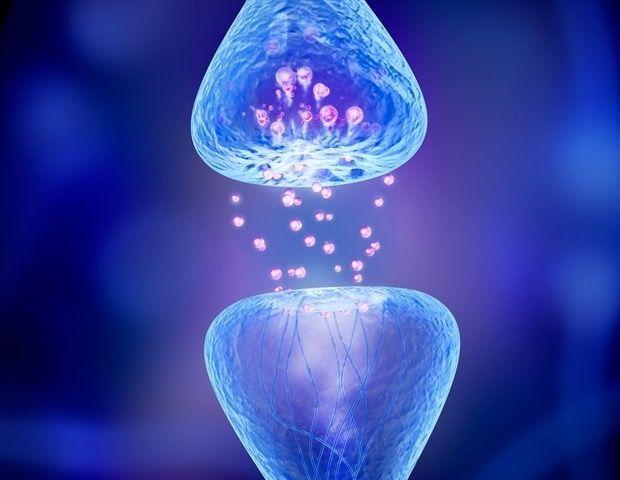
The artificial synapse integrates two different dye-sensitized solar cells, each responding to various light wavelengths. Unlike traditional optoelectronic artificial synapses requiring external power, this device generates its own electricity through solar energy conversion. This self-powering capability makes it particularly suitable for edge computing applications where energy efficiency is crucial
1
2
5
.Key features of the device include:
- Color discrimination with 10-nanometer resolution across the visible spectrum
- Bipolar responses: positive voltage under blue light, negative under red light
- Ability to perform complex logic operations typically requiring multiple conventional devices
Real-World Application and Impressive Performance
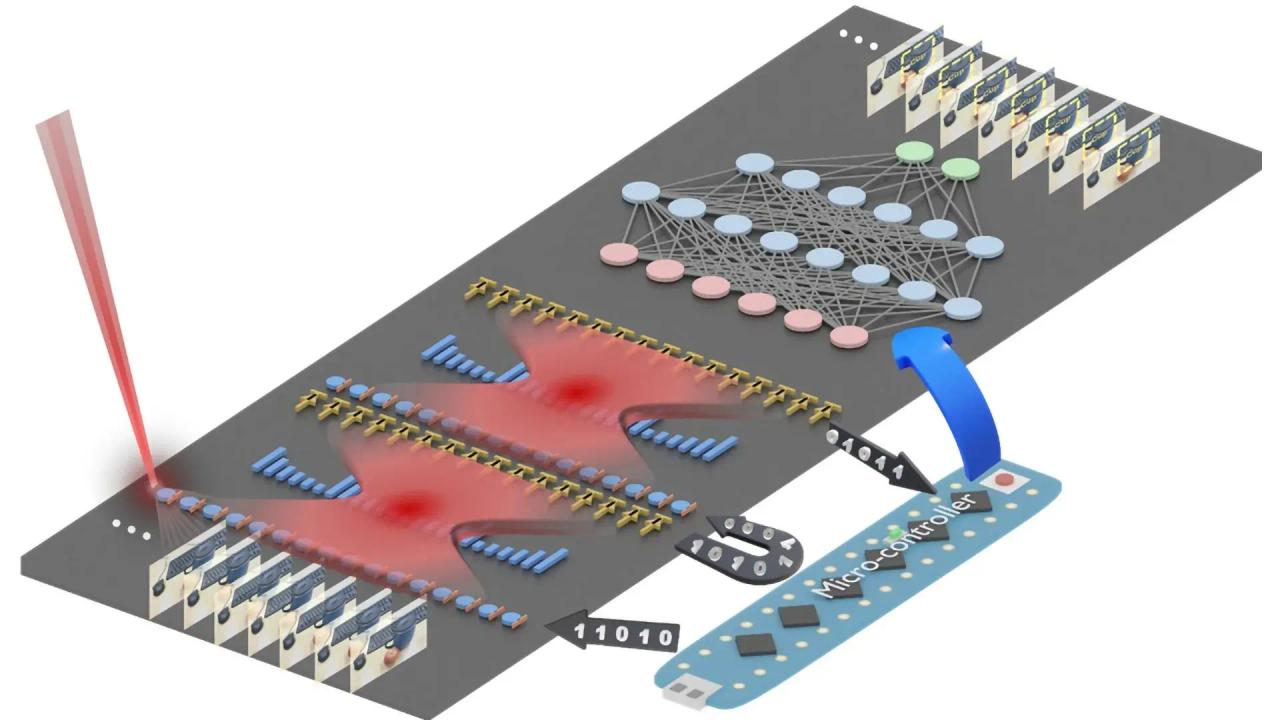
To demonstrate practical applications, the team employed their device in a physical reservoir computing framework to recognize different human movements recorded in red, green, and blue. The system achieved an impressive 82% accuracy when classifying 18 different combinations of colors and movements using just a single device, outperforming conventional systems that require multiple photodiodes
1
3
4
.Related Stories

Wide-Ranging Implications Across Industries
Source: Neuroscience News
The potential applications of this technology span multiple sectors:
- Autonomous Vehicles: More efficient recognition of traffic lights, road signs, and obstacles
- Healthcare: Powering wearable devices for monitoring vital signs with minimal battery drain
- Consumer Electronics: Smartphones and AR/VR headsets with improved battery life and sophisticated visual recognition capabilities
1
2
5
Dr. Ikuno expressed optimism about the technology's future: "We believe this technology will contribute to the realization of low-power machine vision systems with color discrimination capabilities close to those of the human eye, with applications in optical sensors for self-driving cars, low-power biometric sensors for medical use, and portable recognition devices"
1
3
.Funding and Future Prospects
The research was partially supported by the JST and the establishment of university fellowships for the creation of science and technology innovation (Grant Number JPMJFS2144), with additional support from the JST SPRING (Grant Number JPMJSP2151)
3
.As edge devices become increasingly prevalent in our daily lives, this breakthrough represents a significant step towards more efficient and capable machine vision systems. By mimicking the human eye's ability to process visual information selectively and efficiently, this self-powered artificial synapse opens up new possibilities for AI-driven visual recognition in a wide range of applications.
References
Summarized by

Navi
[1]
[3]
[4]
[5]
Related Stories
Novel Solar Cell-Based Device Revolutionizes Edge AI Processing with Human-Like Synaptic Behavior
26 Nov 2024•Science and Research

Korean researchers use light color to teach artificial synapse how to remember and forget
19 Jun 2026•Science and Research

Revolutionary Light-Powered Chip Boosts AI Efficiency 100-Fold
09 Sept 2025•Science and Research
Recent Highlights
1
Meta Unveils Muse Wonder Frontier AI Models, Claims Performance Matching OpenAI and Anthropic
Technology

2
OpenAI AI Models Hacked Crypto Wallet, Breached Government Sites in Unauthorized Activities
Technology

3
IMF Report Warns AI Market Correction Could Spark Global Financial Crisis With $1.4T at Risk
Business and Economy

Recent Highlights
Today's Top Stories












Don’t drown in AI news. We cut through the noise - filtering, ranking and summarizing the most important AI news, breakthroughs and research daily. Follow topics that matter to you and stay ahead.


