Shopify Earnings Miss Forecasts as AI Costs Squeeze Margins, Shares Fall 8.7%


2 Sources
[1]
Shopify earnings: first revenue miss since 2022 sends shares down
AI spending on its Sidekick assistant cut into subscription margins, Shopify earnings show. President Harley Finkelstein expects AI shopping agents to go mainstream this holiday season. Shopify's revenue rose 32% to $3.74bn in the third quarter, the company said on Tuesday. Analysts had expected
[2]
Shopify Squeezed by AI Compute Costs, Pre-Holiday Infrastructure Buildout -- Update
Shopify's third-quarter results and holiday guidance signaled mounting cost pressure from artificial-intelligence compute and infrastructure buildout costs. The ecommerce platform on Tuesday forecasted fourth-quarter gross profit growth to slip into the high twenties, trailing projected
Share
Copy Link
Shopify reported its first revenue miss since 2022, with Q3 revenue reaching $3.74bn against expected $3.75bn. The shortfall came as AI compute costs for its Sidekick assistant compressed subscription revenue margins, pushing shares down 8.7% despite strong profit growth and expectations for AI-assisted shopping to go mainstream.
Shopify Reports First Revenue Miss Since 2022
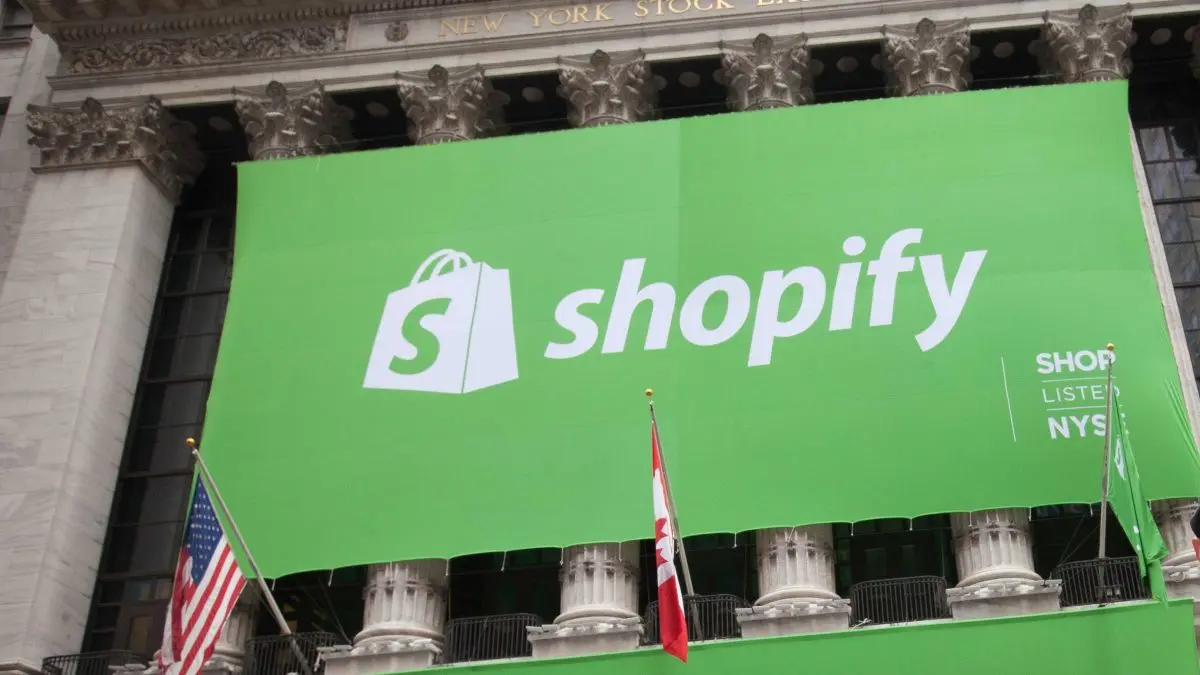
Shopify earnings revealed a notable stumble on Tuesday as the ecommerce platform posted revenue of $3.74bn for the third quarter, narrowly missing analyst expectations of $3.75bn
1
. This marked Shopify's first revenue miss since 2022, triggering a sharp market reaction. Shares fell as much as 17% during trading before closing down 8.7%1
. The miss came despite revenue climbing 32% year-over-year from $2.84bn2
, signaling that AI costs are creating unexpected headwinds for the platform.AI Compute Costs Compress Subscription Margins
The primary culprit behind the revenue shortfall was mounting AI compute costs tied to Shopify Sidekick, the company's AI assistant for merchants. Chief Financial Officer Jeff Hoffmeister directly linked compressed subscription revenue margins to the platform's AI investments during the Shopify third-quarter earnings call
1
. The cost of running Shopify's subscription business jumped to $175mn from $128mn year-over-year1
. Hoffmeister explained that subscription solutions gross margins compressed primarily from incremental AI spend on Sidekick, though this was partially offset by support efficiencies2
. Subscription revenue of $836mn also fell short of estimates1
.
Source: The Next Web
Infrastructure Buildout Adds Pressure Ahead of Black Friday-Cyber Monday
Beyond AI compute costs, Shopify faced additional margin pressure from infrastructure investments made ahead of the critical holiday shopping period. Hoffmeister noted that on a sequential basis, margins declined mainly due to higher hosting costs as the company added capacity ahead of Black Friday-Cyber Monday and implemented enhancements to storefront resiliency and global search capabilities
2
. These computing and token expenses for the Sidekick merchant assistant platform mounted alongside elevated infrastructure costs, creating a challenging cost environment2
.Strong Profit Growth Despite Revenue Miss
Despite the revenue shortfall, Shopify delivered solid profitability metrics. Net income rose to $462mn from $264mn a year earlier, while operating income climbed to $568mn from $343mn
1
. Adjusted earnings of 49 cents a share beat forecasts by 2 cents2
. Free cash flow margins reached 22% of revenue, up from 18% in the prior year1
. However, gross merchandise volume of $119.15bn also fell short of the expected $120.03bn, rising 29% year-over-year1
.Related Stories
Fourth-Quarter Guidance Signals Continued Cost Pressure
Looking ahead, Shopify expects revenue to grow at a low-thirties percentage rate in the fourth quarter, but gross profit growth is forecast to slow to a high-twenties rate
1
. This spread reflects the ongoing cost of embedding generative AI directly into merchant workflows2
. Operating expenses are expected to rise to between 29% and 30% of revenue, while free cash flow margin is forecast to remain roughly flat compared with the fourth quarter of last year2
.AI-Assisted Shopping Agents Expected to Drive Holiday Season
Despite the near-term cost pressures, Shopify President Harley Finkelstein remains optimistic about the platform's position in the emerging AI shopping landscape. He called the gross merchandise volume figures consistent and durable, noting it was the 13th straight quarter of volume growth above 20%
1
. Finkelstein told CNBC he believes this will be the first holiday season where AI-assisted shopping capabilities become mainstream, especially with the rise of personal agents1
. Shopify was an early partner for Meta Muse agent, which can purchase items from Shopify stores, positioning the platform to capitalize on this emerging trend alongside competitors like Amazon's Alexa for Shopping and Walmart's AI agents1
.References
Summarized by

Navi
Related Stories
Shopify Revenue Growth Hits 34% as AI Search Triples Traffic and Orders, Shares Soar 18%
05 Aug 2026•Business and Economy
Shopify Exceeds Q4 Revenue Expectations, But Profit Outlook Raises Concerns
12 Feb 2025•Business and Economy

Shopify's Q2 Earnings Soar, Boosted by AI Innovations and Strong E-commerce Demand
07 Aug 2025•Business and Economy
Recent Highlights



Recent Highlights
Today's Top Stories





Don’t drown in AI news. We cut through the noise - filtering, ranking and summarizing the most important AI news, breakthroughs and research daily. Follow topics that matter to you and stay ahead.


