SK hynix targets $14B US IPO to fuel AI memory chip production and end RAMmageddon crisis


4 Sources
[1]
Memory chip giant SK hynix could help end 'RAMmageddon' with blockbuster US IPO | TechCrunch
SK hynix, a South Korean memory chip giant already listed on the KOSPI, is laying the groundwork for a potential U.S. listing that could reportedly raise an estimated $10 billion to $14 billion. The company announced this week that it has confidentially filed a Form F-1 with the the listing,
[2]
SK Hynix to Float US Shares This Year to Feed AI Memory Surge
SK Hynix Inc. said it seeks to list in the US this year, part of a bid to raise money to keep pace with artificial intelligence's voracious demand for memory. The South Korean supplier of high-bandwidth memory chips made a confidential submission to the US Securities and Exchange Commission for an
[3]
SK Hynix files confidentiality for U.S. listing as it rides intense demand for AI memory chips
A SK Hynix flag (R) and a South Korean national flag (L) flutter outside the company's Bundang office in Seongnam on Jan. 26, 2024. SK Hynix revealed Wednesday that it made a confidential filing with the U.S. Securities and Exchange Commission for a potential listing on Wall Street this year. The
[4]
SK Hynix Targets Massive US IPO To Fuel Global AI Chip Expansion - Advanced Micro Devices (NASDAQ:AMD), ASML Holding (NASDAQ:ASML)
SK Hynix is pursuing a major capital raise and expanding production amid intensifying competition in the AI chip market. U.S. IPO Plans To Fund Expansion SK Hynix plans to confidentially file for a U.S. IPO in the second half of 2026, potentially selling 2% to 3% of its shares, Reuters reported
Share
Copy Link
South Korean memory chip giant SK hynix has confidentially filed for a US IPO that could raise up to $14 billion in the second half of 2026. The company seeks to close a valuation gap with global peers while funding massive capital investments to meet surging demand for high-bandwidth memory chips that power AI systems. The move comes as the industry grapples with RAMmageddon, a critical memory shortage expected to persist until 2027.
SK hynix Files Confidential U.S. IPO to Secure AI Memory Funding
SK hynix, a South Korean memory chip giant already listed on the KOSPI, has confidentially filed a Form F-1 with the U.S. Securities and Exchange Commission for a potential US IPO targeting the second half of 2026
1
. The company plans to list American Depositary Receipts (ADRs) in what could become one of the largest New York listings by a foreign company, with estimates suggesting the offering could raise between $10 billion and $14 billion2
3
. The announcement comes as SK hynix rides a wave of intense demand for AI memory driven by the artificial intelligence boom, with its stock surging 274% in 2025 and climbing approximately 60% so far this year3
.
Source: Benzinga
Closing the Valuation Gap with Global Semiconductor Peers
Despite its critical role in High-Bandwidth Memory (HBM), a key component powering AI systems from companies like Nvidia, SK hynix has historically traded at a discount to global peers
1
. With a market cap of around $440 billion, the company's valuation multiples remain below those of U.S.-listed semiconductor firms such as Micron, raising questions about whether geography rather than fundamentals drives the valuation gap1
. A Seoul-based semiconductor analyst told TechCrunch that "SK hynix's U.S. listing could help close a long-standing valuation gap with global peers. Despite having comparable - or in some areas stronger production capacity than U.S.-based chipmakers, the Korean company has historically traded at a discount, partly due to its primary listing in Korea"1
. There's precedent for this strategy: Taiwan Semiconductor Manufacturing Company (TSMC) has seen its U.S.-listed shares trade at a premium to its domestic shares at times, particularly during periods of strong AI-driven demand1
.Addressing RAMmageddon Through Capital Investments
The confidential U.S. IPO is widely seen as a strategic move to secure funding ahead of increased capital investments to meet the rising demand for AI memory chips
1
. At its annual shareholders' meeting on March 25, SK hynix CEO Kwak Noh-jung said financial capacity will be key to sustaining growth in the AI era, adding that the company is targeting approximately $75 billion in net cash to support long-term investments1
. Soaring costs for memory and limited supply have created a bottleneck slowing AI builds while impacting other industries like consumer gaming—a situation dubbed RAMmageddon that is expected to continue until at least 20271
. Companies including Meta Platforms and Alphabet are buying ever-rising amounts of memory by purchasing millions of Nvidia AI accelerators that come with large packs of DRAM to run AI applications2
. This global memory shortage has triggered a surge in prices and sparked a race between SK hynix, Samsung Electronics, and Micron Technology for greater share in the lucrative advanced memory business2
.
Source: Bloomberg
Massive Infrastructure Expansion and Strategic Acquisitions
SK hynix is gearing up for a wave of capital-intensive projects to support Global AI Chip Expansion. The company plans to invest around $400 billion by 2050 to build a semiconductor cluster in Yongin, South Korea
1
. It is also constructing new chip factories in South Korea and Indiana, with planned investments of about $25 billion and $3.3 billion respectively1
4
. The chipmaker announced it will acquire advanced extreme ultraviolet (EUV) lithography scanners from ASML by 2027 in a deal worth $7.9 billion, aimed at boosting high-bandwidth memory production for AI1
. These investments underscore the scale of capital required to meet demand from AI data centers4
.Related Stories
Structural Considerations and Shareholder Concerns
Structural factors are shaping the deal's parameters. SK Square, SK hynix's largest shareholder holding 20.07% as of December 2025, is required to maintain a stake of at least 20% under South Korea's Fair Trade Act holding company rules
1
. Based on current share prices, issuing roughly 2% to 3% in new shares could raise the targeted amount while allowing SK Square to maintain its ownership threshold1
4
. However, the Korea Corporate Governance Forum warned that issuing new shares could lead to shareholder dilution for existing investors4
. IBK Asset Management fund manager Kim Hyun-su criticized the plan, suggesting the company could use existing shares and buybacks instead4
.Ripple Effects Across the Korean Chip Sector
The move is already creating ripples across the broader Korean chip sector. Following SK hynix's filing, some investors are now pushing Samsung to consider a similar U.S. listing
1
. Artisan Partners, a major shareholder, said Friday that a U.S. listing could help Samsung boost its valuation while giving U.S. retail investors a chance to buy its stock1
. While tech giants like Google are working on solutions such as TurboQuant, an ultra-efficient AI memory compression algorithm, signals indicate that more memory production will be necessary to meet the AI boom's demands1
. Time will tell whether SK hynix's blockbuster U.S. IPO leads other Korean chip makers to follow suit and whether increased production capacity can truly address the ongoing memory crisis.
Source: TechCrunch
References
Summarized by

Navi
[1]
[3]
Related Stories
SK hynix files for $29 billion Nasdaq listing to fund AI memory fabs and advanced packaging plants
22 Jun 2026•Business and Economy
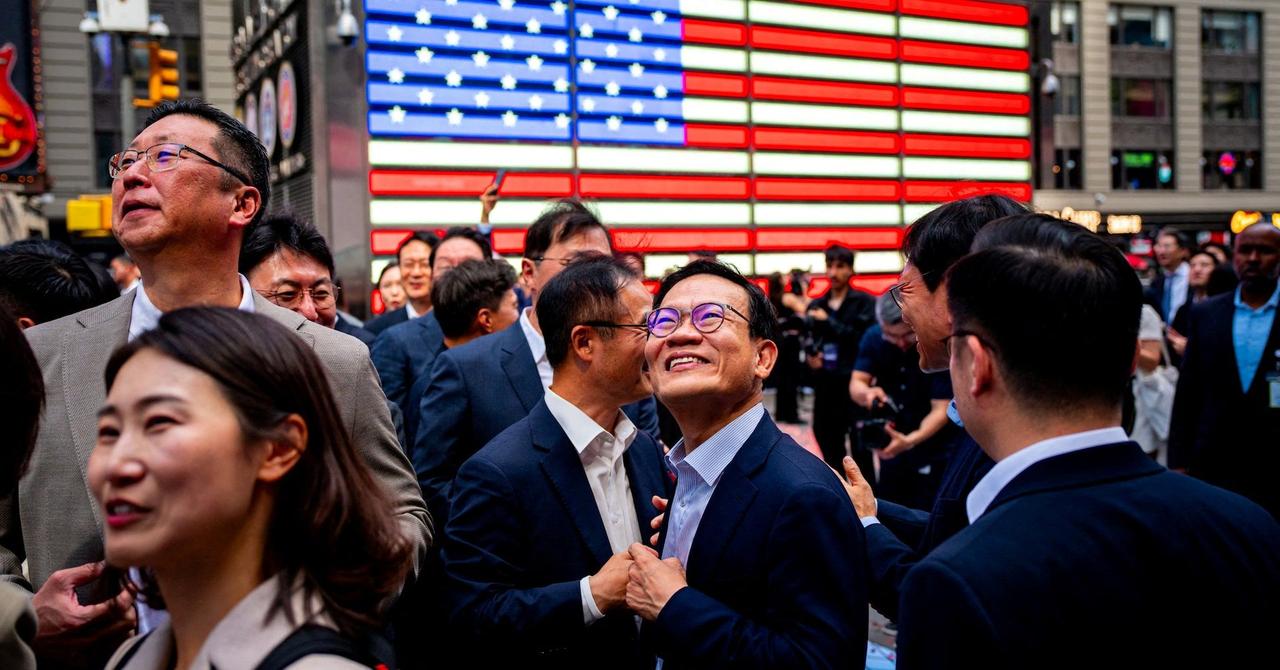
SK Hynix raises $26.5B in largest foreign US IPO as AI boom fuels memory chip demand
06 Jul 2026•Business and Economy

SK Hynix raises $26.5B in record Nasdaq debut, but volatility signals selective AI investor appetite
13 Jul 2026•Business and Economy
Recent Highlights



Recent Highlights
Today's Top Stories







Don’t drown in AI news. We cut through the noise - filtering, ranking and summarizing the most important AI news, breakthroughs and research daily. Follow topics that matter to you and stay ahead.


