Smallest.ai Raises $13M Series A to Build Ultra-Fast Voice AI That Mimics Human Conversation


2 Sources
[1]
Smallest.ai raises $13M to build ultra-fast voice AI that sounds genuinely human
While AI agents are increasingly capable of solving customer support problems, most people can still tell immediately when they're talking to a machine instead of a human. Smallest.ai, a startup founded in late 2024, is betting the next leap in voice agents will not come from making large language
[2]
Smallest.ai raises $13M to accelerate the development of its asynchronous voice AI architecture
The momentum behind voice artificial intelligence is accelerating with Smallest.ai becoming the latest startup in this emerging niche to secure more funding. Officially known as Smallest Inc., it said today it has closed on a $13 million Series A investment led by Seligman Ventures, with
Share
Copy Link
Smallest.ai secured $13 million in Series A funding led by Seligman Ventures to develop voice AI that sounds genuinely human. The startup unveiled Hydra, an asynchronous speech-to-speech model built on Voice 4.0 architecture, designed to eliminate latency and enable real-time conversational flows. Unlike traditional systems, Hydra processes listening, reasoning, and responding simultaneously rather than sequentially.
Smallest.ai Closes $13 Million Series A Funding Round
Smallest.ai has raised $13 million in Series A funding led by Seligman Ventures, with participation from Sierra Ventures and 3one4 Capital
1
2
. This brings the startup's total funding to over $21 million since its founding in late 20241
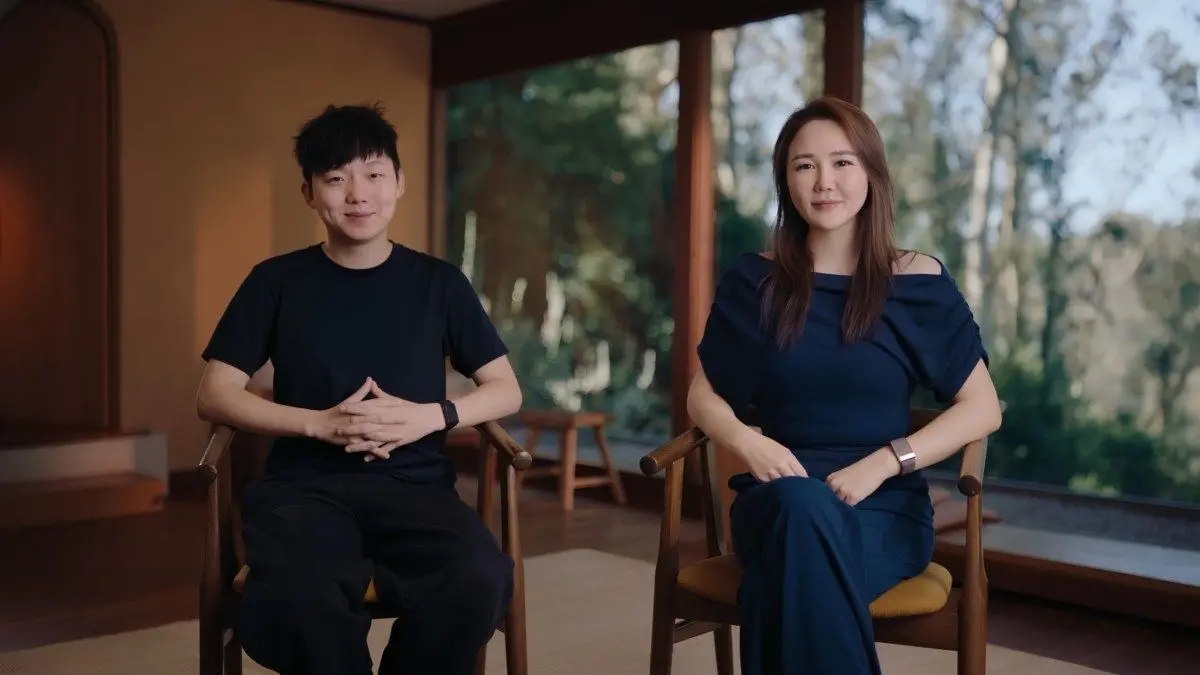
. The fresh capital will accelerate development of voice AI models designed to make conversations with AI agents indistinguishable from speaking with humans. Founded by Sudarshan Kamath, Smallest.ai is betting that the next leap in voice AI won't come from making large language models faster, but from using smaller, specialized models built specifically for human conversation1
.
Source: TechCrunch
Introducing Hydra and Voice 4.0 Architecture for Real-Time Conversational Flows
Coinciding with the funding announcement, Smallest.ai unveiled Hydra, an asynchronous speech-to-speech model built on its most advanced Voice 4.0 architecture
2
. This represents a fundamental shift in how voice AI systems operate. Traditional voice AI relies on a chained stack of separate technologies including speech recognition, large language model processing, orchestration layers, memory systems, text-to-speech engines, and guardrails that must execute sequentially2
. This disjointed process creates noticeable latency and interactions that feel unmistakably artificial. Hydra's asynchronous voice AI architecture processes listening, reasoning, taking actions, and responding in parallel rather than sequentially2
. "Humans don't wait for someone to finish speaking before they begin thinking. We listen, think, and respond simultaneously," Kamath explained. "Voice AI needs to work the same way"2
.
Source: SiliconANGLE
How Smallest.ai Achieves Human-Like Interactions Through Specialized Voice AI Models
Smallest.ai's approach fundamentally differs from conventional AI agents. The startup's model serves as a real-time intelligence layer that enables natural customer conversations on specific topics with virtually zero response lag
1
. When the model encounters a subject outside its limited knowledge base, it hands off the query to a large foundational model, briefly placing the customer on hold to "research" the issue, just as a real human would do1
. "While I'm speaking to you, you're already thinking, and you might interrupt me if I talk for too long," Kamath told TechCrunch, explaining how the startup's model mimics human information processing1
. Kamath believes all AI agents will soon rely on two models: a small voice model for real-time interaction and an "offline" LLM called upon as needed to solve complex problems1
.Tackling Latency and Voice-Specific Challenges in Enterprise Customer Support
Unlike large foundational models, Smallest.ai focuses strictly on voice-specific nuances including handling diverse accents, supporting dozens of languages, and operating in noisy environments
1
. The company addresses a critical problem: while latency is acceptable in text chat, even a short pause in voice conversation feels unnatural1
. Smallest.ai has developed speech-to-text models such as Pulse STT Pro and Lightning V3.1, which consistently rank among the highest voice AI systems on the Artificial Analysis benchmark2
. The original Lightning model, released last year, was described as the fastest text-to-speech model on the market, able to generate 10 seconds of speech in 100 milliseconds2
. Lightning has since expanded to support 38 languages and been enriched with emotion detection, speaker diarization, data redaction, and noise reduction features2
.Related Stories

Current Customers and Market Positioning Against ElevenLabs and Cartesia
Smallest.ai's existing customers include companies in the voice space such as RingCentral and Truecaller, along with Kogtal Financial and Readymode
1
2
. These deployments have helped reduce customer support costs by as much as 80% in some cases2
. Kamath said any customer support company, including newer ones like Sierra and Decagon, represents a potential customer for the startup1
. When asked why well-funded AI customer support companies wouldn't build their own voice models, Kamath argued that for customer support startups, becoming "extremely good at doing voice is a distraction from their core business"1
. Smallest.ai competes with voice AI leader ElevenLabs, as well as Cartesia and regional players like Sarvam that focus on local languages1
. While some competitors apply voice AI to use cases like audio dubbing and podcasting, Smallest.ai focuses strictly on real-time conversational voice agents for enterprise customers1
.The Growing Voice AI Market and Quest to Pass the Turing Test
The global voice AI industry is currently valued at just $2.4 billion annually but is expected to grow to more than $47.5 billion by the end of 2034, according to a study by Market.US
2
. Despite this enormous potential, AI currently accounts for less than 1% of the world's voice interactions2
. Existing voice AI systems simply aren't able to handle the complexity of real-world interactions, which is why they're only deployed in very narrow customer service use cases2
. "We want our models to break the Turing test," Kamath stated. "You should speak to our model and not know it's AI or human. That's the sole focus of the company"1
. Watch for Smallest.ai to expand its language support and deploy Hydra across more enterprise customer support scenarios as it pursues this ambitious goal of creating truly indistinguishable human-like interactions.References
Summarized by

Navi
Related Stories
ElevenLabs Secures $180 Million in Series C Funding to Advance AI Voice Technology
31 Jan 2025•Business and Economy

Fish Audio raises $50M seed to build expressive AI voice models for creators and enterprises
28 Jul 2026•Startups
Gradium Emerges from Stealth with $70M to Revolutionize Voice AI with Ultra-Low Latency Models
02 Dec 2025•Startups

Recent Highlights



Recent Highlights
Today's Top Stories






Don’t drown in AI news. We cut through the noise - filtering, ranking and summarizing the most important AI news, breakthroughs and research daily. Follow topics that matter to you and stay ahead.


