Smart Glasses Race Heats Up as Chinese Companies Challenge Meta's Dominance with Affordable AI-Powered Models


2 Sources
[1]
Can smart glasses ever earn our trust?
Imagine being able to read a foreign language through artificial intelligence-powered smart glasses, watching it translated before your eyes. That is the experience Alibaba is offering with its new AI-powered eyewear, as Chinese tech groups race to make smart glasses practical and affordable after
[2]
Are smart glasses finally moving beyond the hype into real-world use?
Gift 5 articles to anyone you choose each month when you subscribe. Imagine being able to read a foreign language through artificial intelligence-powered smart glasses, watching it translated before your eyes. That is the experience Alibaba is offering with its new AI-powered eyewear, as Chinese
Share
Copy Link
Chinese tech giants like Alibaba are launching affordable AI-powered smart glasses priced around $560, challenging Meta's premium market position and potentially making the technology mainstream through practical features like real-time translation.
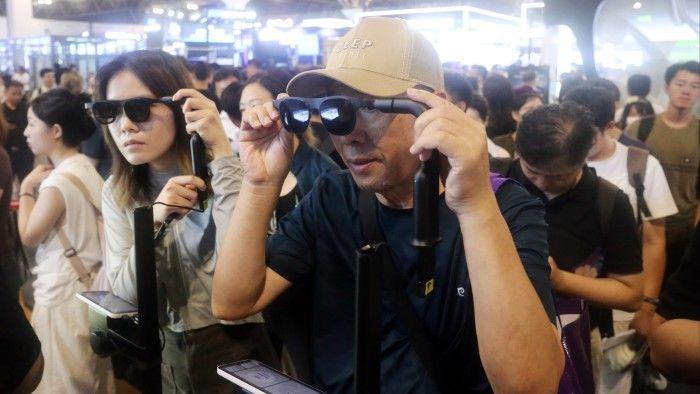
Chinese Tech Giants Challenge Smart Glasses Market
Chinese technology companies are making a significant push into the smart glasses market, with Alibaba leading the charge through its new AI-powered Quark glasses priced at approximately $560 after discounts
1
. This aggressive pricing strategy positions Chinese manufacturers to directly compete with established players like Meta and Apple, whose upcoming models are expected to carry premium price tags.The competitive landscape includes major Chinese tech firms such as Xiaomi, Huawei, Tencent, and Baidu, all investing heavily in smart glasses technology
1
. These companies are focusing on practical applications rather than flashy features, emphasizing real-time translation, voice assistance, navigation cues, and sports metrics to drive consumer adoption.Overcoming the Privacy Barrier
The smart glasses industry has long struggled with consumer acceptance due to privacy concerns. Google Glass famously failed to gain traction because it made bystanders uncomfortable with the possibility of being recorded without their knowledge
1
. This fundamental issue of human discomfort with potential surveillance has remained the primary obstacle for smart glasses adoption for over a decade.Recognizing these concerns, manufacturers are now pivoting toward utility-focused designs. The next generation of smart glasses may increasingly eliminate video recording functions entirely, responding to privacy concerns and consumer preferences for non-recording devices
1
. This shift represents a strategic move away from intrusive novelty gadgets toward practical everyday tools.Practical Applications Drive Adoption
The current focus on practical applications spans multiple use cases across different sectors. For everyday consumers, smart glasses offer turn-by-turn navigation for drivers and cyclists, instant translation for tourists reading street signs or menus, and real-time subtitles for translators during conversations
1
. Warehouse workers can access inventory data and instructions while keeping their hands free for work.In healthcare, smart glasses are being tested as discreet hearing aids for people with partial hearing loss who prefer alternatives to traditional devices. Surgeons are exploring their use for viewing real-time patient data, imaging scans, and vital signs during procedures
1
.Related Stories


Market Dynamics and Geopolitical Challenges
Meta currently dominates the global smart glasses market with a 66 percent share, followed by China's Huawei at approximately 6 percent
1
. However, Meta's premium pricing strategy, with Ray-Ban partnership models starting around $800, creates opportunities for competitors focused on affordability and practicality.Geopolitical factors complicate the global expansion of Chinese smart glasses manufacturers. Western regulators and consumers remain concerned about Chinese data practices, while Beijing's cybersecurity and data security laws include state oversight of local information flows
1
. Even devices without cameras that transmit voice or location data risk triggering regulatory scrutiny in Europe and the United States.Following the Smartwatch Playbook
The smart glasses industry appears to be following a similar trajectory to smartwatches, which became mainstream only after proving their utility and reaching accessible price points. Chinese brands have transformed the wearables market over the past decade, with Huawei capturing a record 21 percent of worldwide smartwatch shipments in the second quarter, overtaking Apple
1
.This success was achieved by focusing on practical features like fitness tracking, heart rate monitoring, and notifications rather than flashy branding. Even Apple repositioned its watch from a fashion statement to a health and fitness companion, suggesting that smart glasses may follow the same utility-first approach to achieve mass market adoption.
References
Summarized by

Navi
[2]
Related Stories
Recent Highlights



Recent Highlights
Today's Top Stories



Don’t drown in AI news. We cut through the noise - filtering, ranking and summarizing the most important AI news, breakthroughs and research daily. Follow topics that matter to you and stay ahead.


