SoftBank's $60 Billion AI Bet on OpenAI Faces Critical Debt Reckoning as Earnings Reveal Funding Gap


8 Sources
[1]
SoftBank's AI funding plans to face reckoning at earnings
TOKYO, Aug 4 (Reuters) - Technology investor SoftBank Group (9984.T), opens new tab reports first-quarter earnings on Thursday, with analysts focused on how it will fund its ongoing investment in OpenAI and the impact of rising leverage on its balance sheet. SoftBank has become one of the biggest
[2]
Japanese tech company SoftBank Group sees profit drop despite AI investments
TOKYO (AP) -- Technology investor SoftBank Group Corp. reported Thursday an 18% drop in fiscal first quarter profit, as higher costs offset its investment gains. SoftBank Group, which invests aggressively in artificial intelligence, energy and robotics, recorded a 347.3 billion yen ($2.2 billion)
[3]
SoftBank's debt-fuelled AI bet faces its reckoning at earnings
SoftBank's AI bet meets its accountants this week. When the Japanese group reports earnings, the headline profit will look healthy, but the real story is the mountain of funding commitments Masayoshi Son has stacked behind OpenAI. Analysts expect net profit of around ¥148bn, close to $940m, for
[4]
Global Market: SoftBank's AI strategy stays on course despite flat OpenAI valuation in Q1
SoftBank reported an 18% decline in first-quarter net profit, though earnings exceeded expectations as strong gains from Intel and ByteDance investments offset weaker contributions from OpenAI. The company remains focused on expanding its AI portfolio, with major investments, new financing and
[5]

SoftBank beats profit expectations as chip bets compensate for muted AI gains
SoftBank Group has reported a smaller-than-expected decline in quarterly net income, helped by a rally in its chip-stock holdings while it awaits further gains from its bets on OpenAI. The Tokyo-based technology investor's net income fell 18% to ¥347.3 billion ($2.2 billion) in its fiscal first
[6]
SoftBank's AI funding plans to face reckoning at earnings
SoftBank announced record net profit in the year ended March 2026, but its share price has dropped by almost half since the start of June, and the cost to insure its debt against default has soared. SoftBank is expected to post net profit of 148.4 billion yen ($941.2 million) over the April-June
[7]

SoftBank Group Reports Lower Quarterly Profit
SoftBank Group's first-quarter net profit dropped due to lower gains from its Vision Funds business. The Japanese technology investment company said Thursday that net profit fell 18% from a year earlier to 347.33 billion yen, equivalent to $2.20 billion, for the three months ended June. That still
[8]
SoftBank's AI funding plans to face reckoning at earnings
TOKYO, Aug 4 (Reuters) - Technology investor SoftBank Group reports first-quarter earnings on Thursday, with analysts focused on how it will fund its ongoing investment in OpenAI and the impact of rising leverage on its balance sheet. SoftBank has become one of the biggest backers of OpenAI and
Share
Copy Link
SoftBank reported an 18% profit decline to $2.2 billion in Q1 2026, beating analyst expectations despite mounting concerns over its $60 billion OpenAI commitment. With $30 billion in debt maturing in H2 2026 and a stalled plan to borrow against its OpenAI stake, the Japanese conglomerate's aggressive AI strategy now confronts a critical funding test.
SoftBank Group Earnings Beat Expectations Despite Profit Decline
SoftBank Group reported a first-quarter net profit of 347.3 billion yen ($2.2 billion) for the April-June 2026 period, marking an 18% year-over-year decline but significantly exceeding analyst expectations of 148.4 billion yen
1
2
. The better-than-expected performance was driven by strong unrealized gains from investments in chipmakers, particularly Intel and ByteDance, which generated investment gains of 1.86 trillion yen during the quarter4
. Quarterly sales rose nearly 11% to 2 trillion yen ($12.7 billion), reflecting the conglomerate's continued expansion across AI investments, semiconductors, and robotics2
. Chief Financial Officer Yoshimitsu Goto highlighted that Arm, the British semiconductor and software design company, was performing well, providing a crucial anchor for SoftBank's broader technology portfolio2
.SoftBank's AI Funding Commitments Create Mounting Pressure
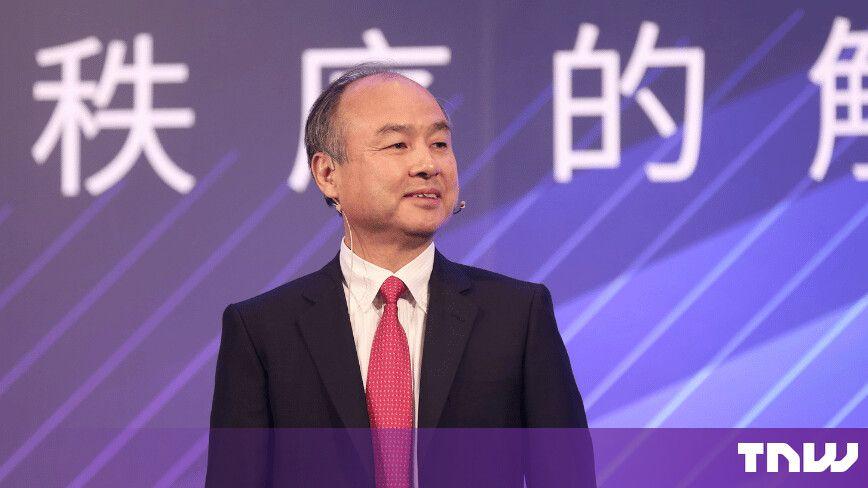
Under founder Masayoshi Son's vision to establish SoftBank as a dominant force in AI, the company has committed more than $60 billion to OpenAI and related AI infrastructure projects
1
3
. SoftBank's cumulative investment in OpenAI is expected to reach $64.6 billion by October, giving it an ownership stake of roughly 13%, with total investment gains from OpenAI currently standing at $45 billion4
. The company faces a near-term tranche of approximately $22.5 billion to OpenAI by the end of 20263
. Beyond investments in OpenAI, SoftBank has committed $20 billion in additional funding for the AI company, $5.4 billion to acquire ABB Robotics business, and $3.1 billion to acquire digital infrastructure investor DigitalBridge4
. Son recently dismissed concerns about an AI bubble as "blasphemy," predicting AI infrastructure costs will reach $5 trillion annually by 20403
. This conviction has shaped SoftBank's AI strategy, though investors remain focused on how the company will finance these ambitious commitments amid rising leverage1
.
Source: The Next Web
Debt Obligations and Leverage Concerns Intensify Scrutiny
SoftBank faces approximately $30 billion of debt obligations due in the second half of 2026, including a $40 billion bridging loan that matures in March 2027
1
3
. The company has arranged a $20 billion margin loan secured against its stake in chip designer Arm, but its attempt to use its OpenAI holding as collateral for another loan has stalled as lenders grew more cautious about extending credit backed by private companies1
. In August, SoftBank secured a $10 billion loan from financial institutions using its OpenAI stake as collateral, though negotiations were delayed due to challenges in valuing the privately held company4
. S&P Global Ratings estimated SoftBank's loan-to-value ratio at 33% in March, significantly higher than the company's internal calculation of 17%, though the ratings agency expects this figure to have dropped to between 20% and 25% by June1
. Makiko Yoshimura from S&P Global Ratings noted that "Arm has a solid credit profile but OpenAI is very weak. It's a startup with significant AI innovation risk and lots of competition"1
.Related Stories
AI Market Volatility Threatens SoftBank's Balance Sheet

Source: AP
SoftBank's share price has dropped by almost half since the start of June, and the cost to insure its debt against default has soared, reflecting growing investor concerns about AI market volatility
1
. The company's net asset value reached a record high in June before easing in recent weeks, standing at 58.3 trillion yen as of August 54
. Analysts warn that SoftBank's debt-fuelled AI bet creates a circularity where the company borrows to fund OpenAI, whose rising value underpins those very loans, meaning a wobble in one leg of the structure quickly travels to others3
. Amir Anvarzadeh of Asymmetric Advisors cautioned that "if Arm's valuation drops, the value of the loan against it does not. A significant drop in the price of its assets could mean a liquidity squeeze"1
. Competition from cheaper Chinese AI models may spark a price war, potentially hitting the margins of frontier developers such as OpenAI as well as demand for semiconductors powering them1
.OpenAI Valuation and IPO Plans Shape Future Outlook
The key question for SoftBank is whether OpenAI can secure funding from other parties through a public listing or another private round at a higher valuation
1
. OpenAI is reportedly seeking an IPO valuation of $1 trillion, a jump from its $852 billion valuation, though a New York Times report suggested this may be delayed to next year1
3
. However, skeptics put OpenAI's true worth closer to $300 billion, judging by the smaller IPO plans of Chinese competitors, according to Anvarzadeh1
3
. Despite no fresh valuation gains from OpenAI during the quarter, the artificial intelligence company remains central to SoftBank's long-term investment strategy4
. Fifteen of twenty sell-side analysts maintained buy or strong buy ratings on SoftBank stock in August, betting that Son's access to capital and the OpenAI upside outweigh the strain on the balance sheet1
3
. Fitch Ratings has identified an AI market correction as a major credit risk, citing rising valuations, the scale of AI infrastructure costs, and the uncertainty of AI company returns1
.References
Summarized by

Navi
[3]
Related Stories
SoftBank's AI investments deliver $1.62 billion profit as OpenAI stake drives turnaround
12 Feb 2026•Business and Economy

SoftBank Reports $7.8 Billion Annual Profit, Doubles Down on AI Investments
13 May 2025•Business and Economy
SoftBank Returns to Profit, Fueled by Tech Investments and AI Ambitions
12 Nov 2024•Business and Economy

Recent Highlights
1
Microsoft and Nvidia Launch Surface Laptop Ultra: A $2,599 AI-Ready PC With RTX Spark Chip
Technology

2
OpenAI Releases 722 AI-Generated Math Papers on GitHub, Igniting Fury Among Mathematicians
Science and Research

3
Trump Consulted Grok AI Before Ordering Venezuela Invasion and Capture of Nicolás Maduro
Policy and Regulation

Recent Highlights
Today's Top Stories












Don’t drown in AI news. We cut through the noise - filtering, ranking and summarizing the most important AI news, breakthroughs and research daily. Follow topics that matter to you and stay ahead.


