Solo Developer Successfully Runs CUDA Applications on AMD GPUs Using ZLUDA and HIP Translation Layer


2 Sources
[1]
GitHub - Speedstu/CUDA-for-AMD-Windows: Run CUDA-targeted Windows applications on AMD GPUs with ZLUDA + ROCm/HIP.
WORKING REPRODUCIBLE STACK IS NOW UPLOADED. Run CUDA-targeted Windows applications on AMD GPUs through ZLUDA + ROCm/HIP. A reproducible Windows CUDA compatibility setup built around ZLUDA + AMD HIP/ROCm. It is intended for CUDA-facing compute applications, including workloads that use
[2]
Solo developer wires ZLUDA to AMD's HIP, getting multiple CUDA libraries running on a Radeon RX 9060 XT in Windows -- CUDA-exclusive workloads on AMD hardware in Windows is possible without virtualization or dual-booting
It's too early to consider the CUDA moat officially drained, but this is definitely a yank on the plug. With the latest ROCm updates, AMD finally brought robust, official PyTorch and HIP SDK support to Windows for consumer GPUs, fully supporting the Radeon RX 7000 and the RX 9000 series. For
Share
Copy Link
A solo developer has created an open-source toolkit that enables CUDA-targeted Windows applications to run on AMD GPUs through ZLUDA and ROCm/HIP translation. The project successfully trained a 2.2-million-parameter reinforcement learning network on a Radeon RX 9060 XT, proving CUDA-exclusive workloads can execute on AMD hardware without virtualization or dual-booting.
ZLUDA Bridges CUDA on AMD GPUs Through Automated Windows Setup
A solo developer known as Speedstu has released an open-source project called CUDA-for-AMD-Windows that enables CUDA-targeted Windows applications to run on AMD GPUs without virtualization or dual-booting
1
2
. The project creates a reproducible Windows CUDA compatibility setup built around ZLUDA, a CUDA-to-HIP/ROCm translation layer, combined with AMD's HIP SDK for Windows. This development addresses a persistent challenge for developers who want to run CUDA-exclusive workloads on AMD hardware but face software that stubbornly demands NVIDIA cards.
Source: GitHub
The toolkit uses automated PowerShell scripts to detect GPU architecture, pins a specific ZLUDA version (v6-preview.69), and maps CUDA APIs to AMD's native ROCm math libraries already present in Windows
2
. Rather than creating a new runtime, the project serves as a highly automated bridge between existing technologies, making it easier for developers to experiment with CUDA-only tools natively on their Windows machines.Successful Validation on Radeon RX 9060 XT with Multiple CUDA Libraries
Speedstu validated the public upstream path using official ZLUDA releases and AMD's HIP SDK 6.4 on a Radeon RX 9060 XT
1
. The developer successfully intercepted and mapped the CUDA driver API along with cuBLAS, cuBLASLt, cuSPARSE, and cuFFT libraries directly to their AMD equivalents2
. As proof-of-concept, a 2,216,347-parameter PPO reinforcement learning network completed forward inference, learning, and optimizer work using the CUDA-facing LibTorch training workload1
.One validation iteration processed 65,536 timesteps using the runtime produced by this repository, demonstrating that complex AI workloads can execute on AMD GPUs through this translation approach
1
. The integration test used the same CUDA-facing training workload that originally motivated the project, though the developer cautions this doesn't mean every CUDA program or AI model will work, as CUDA API and library coverage remains workload-dependent.Performance Testing Shows Competitive Throughput with Official Stack
A controlled A/B test conducted on September 13, 2026, ran 10 iterations per runtime on the same Radeon RX 9060 XT PPO workload
1
2
. After discarding the first iteration as warmup, the public upstream path achieved 13,278 median steps per second (SPS) versus 12,876 SPS for a recovered custom overlay. The custom overlay proved roughly 3.03% slower, making the official upstream stack the default choice1
.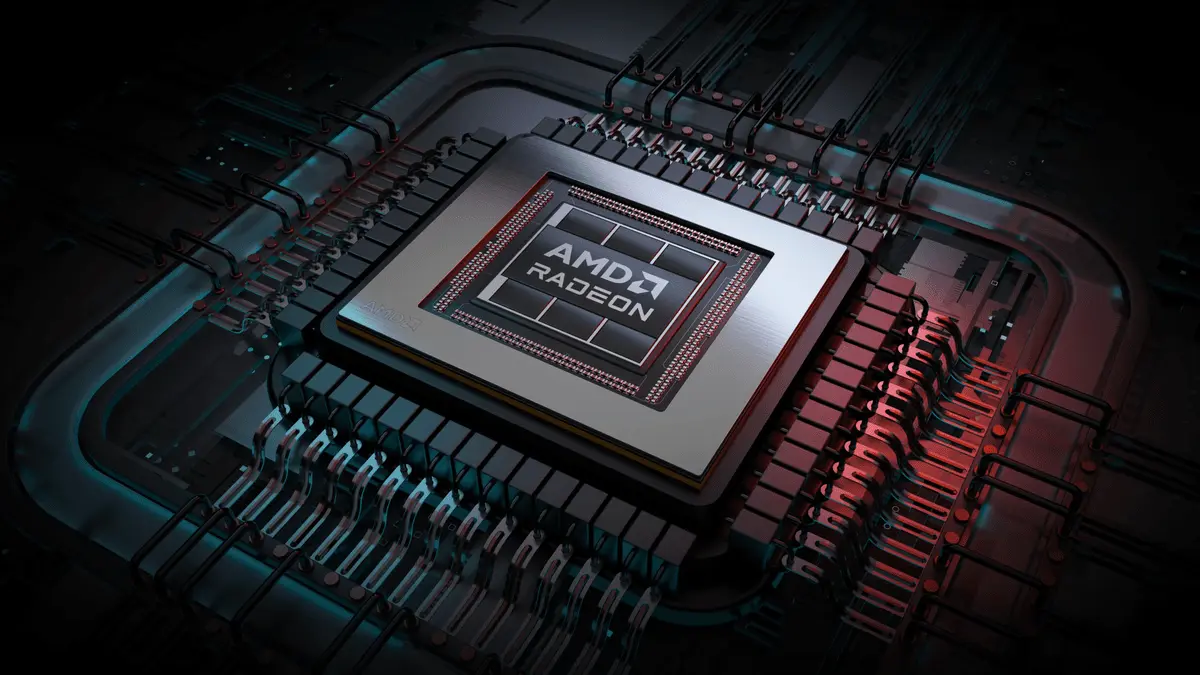
Source: Tom's Hardware
Historical tuned runs using different training configurations reached approximately 70,000 to 109,000 overall steps per second
1
. The developer notes that a later rewrite removed LibTorch and ZLUDA from PPO and achieved substantially higher throughput, indicating there remains a performance hit for this stack of translators2
. Still, the results demonstrate competitive performance for experimental and development workloads.Related Stories
Significant Limitations Remain for Production Deployment
The project comes with transparent limitations that prevent it from serving as an enterprise-grade solution. Critical machine learning libraries like cuDNN, TensorRT, and NCCL do not resolve yet, meaning compatibility is strictly workload-dependent
2
. AMD's current Windows HIP SDK does not ship the full ROCm AI-library stack such as MIOpen, so convolution-heavy software requiring cuDNN may need a newer nightly HIP stack or additional work1
.Only the Radeon RX 9060 XT is currently validated by this project, though the GPU scanner recognizes other Windows HIP architecture families and marks them as unverified candidates
1
. ZLUDA itself is not a complete CUDA implementation, and Windows exposes only a subset of the full ROCm ecosystem1
. The developer emphasizes this is a tinkerer's tool for experimental work, not a corporate IT deployment strategy.Why This Development Matters for AI Development Community
This project proves the barrier to run CUDA applications on AMD GPUs isn't an insurmountable hardware flaw but a tractable translation tooling problem
2
. For developers who want to experiment with CUDA-only tools on their Windows daily driver machines without dealing with WSL2 passthrough issues or waiting for original authors to write HIP ports, this offers a desirable translation pipeline.Even with AMD's official ROCm support on Windows for consumer GPUs including the RX 7000 and RX 9000 series, the developer community frequently encounters dependency challenges when trying experimental GitHub repositories or specialized AI tools that hardcode CUDA as a requirement
2
. Because the project is entirely open-source and MIT licensed, its potential extends beyond this initial proof-of-concept, with community contributions potentially expanding hardware detection and adding patches for additional CUDA libraries. The project demonstrates that running CUDA-exclusive workloads on AMD hardware in Windows is achievable, though ZLUDA currently operates as a weekend hobby project after losing commercial backing2
.References
Summarized by

Navi
Related Stories
ZLUDA Project Advances: Bringing NVIDIA's CUDA to Non-NVIDIA GPUs
04 Jul 2025•Technology

ZLUDA Open-Source Library Revived: Aims to Enable CUDA-Based AI Workloads on Multiple GPU Architectures
05 Oct 2024•Technology

NVIDIA CUDA Applications Now Compatible with AMD GPUs Thanks to SCALE Toolkit
17 Jul 2024

Recent Highlights



Recent Highlights
Today's Top Stories






Don’t drown in AI news. We cut through the noise - filtering, ranking and summarizing the most important AI news, breakthroughs and research daily. Follow topics that matter to you and stay ahead.


