Sonos Ace Ultra headphones arrive in September with AI voice control and five new colors


5 Sources
[1]
Sonos Ace Ultra over-ear headphones show up in FCC filing - Engadget
During Sonos' third quarter financial call, the company said that it was planning a product launch in September. Based on a new FCC filing spotted by Lowpass, one of the products it's unveiling at the event could be a pair of headphones called the "Ace Ultra." While the filing is heavily redacted,
[2]
Sonos Plans September Launch Event and Deeper Push Into Home AI
Tom Conrad is betting the models will converge and the hardware will decide it, starting with a September launch and a second attempt at headphones Sonos chief executive Tom Conrad says model quality will converge and the advantage will sit with hardware that already knows a home. An FCC filing
[3]
Sonos is planning Ace Ultra headphones with a big AI push, report says
Two years ago, Sonos made the leap from wireless speakers to over-ear headphones. Now it sounds like Sonos is preparing a more premium, AI-infused encore. Sonos Ace Ultra headphones are on the way Chris Welch reports for Bloomberg that Sonos is developing the Sonos Ace Ultra, a higher-end
[4]
Sonos Preparing AirPods Max Rival With Voice Assistant Support
Sonos is working on an upgraded version of its Ace headphones that will support AI, reports Bloomberg. The Sonos Ace Ultra showed up in an FCC filing earlier this week, with the product likely set to debut in September. Sonos debuted the original Sonos Ace in 2024. Reviews praised the sound
[5]

Sonos could make its next headphones smarter with built-in voice controls
Sonos is readying new Ace Ultra headphones with a bigger AI bet Sonos is preparing to launch a new pair of wireless headphones called the Sonos Ace Ultra, and this time the company appears to be taking a much more serious swing at AI. The headphones were revealed through an FCC filing, first
Share
Copy Link
Sonos is launching the Ace Ultra headphones in September with voice assistant support and AI integration. An FCC filing reveals five color options and voice command capabilities, addressing the original Ace's ecosystem shortcomings. CEO Tom Conrad positions the hardware as part of Sonos' broader push into conversational computing and predictive intelligence for the home.

Sonos Ace Ultra Emerges in FCC Filing Ahead of September Launch
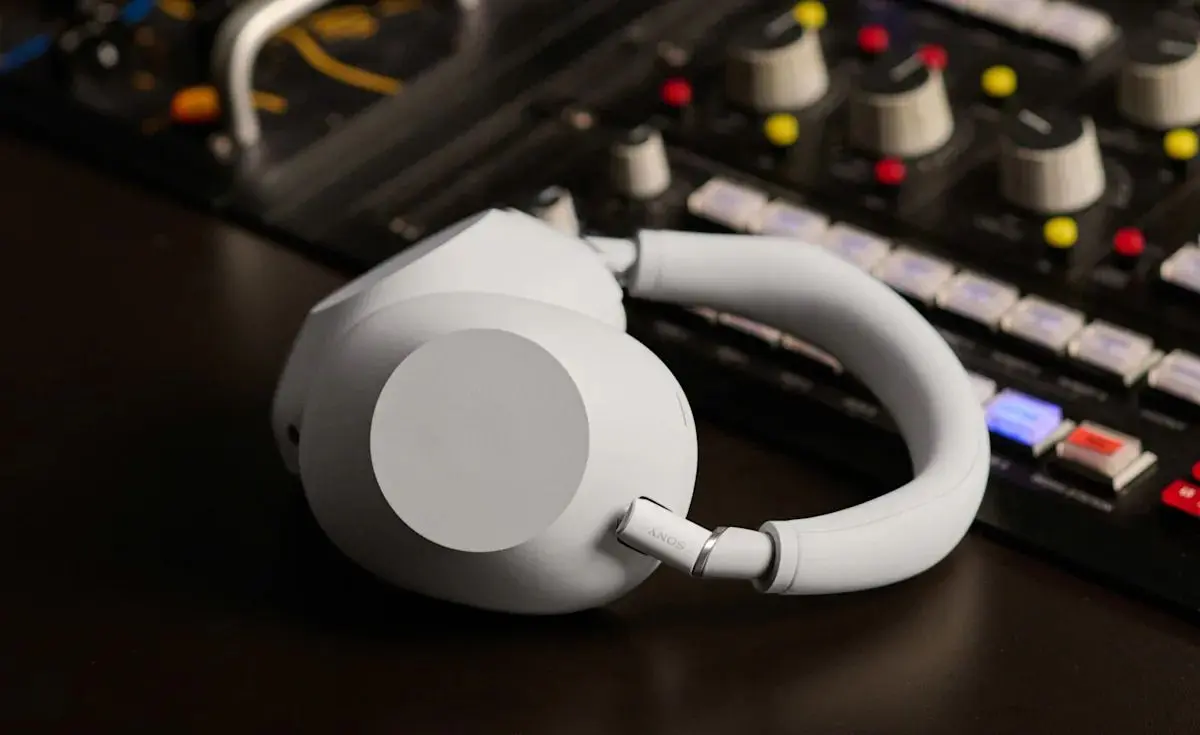
Sonos is preparing to launch the Ace Ultra headphones, a second-generation over-ear headphones model that signals the company's deeper commitment to AI integration. An FCC filing spotted by Lowpass reveals the product name and confirms availability in five colors: Greige, Shadow Black, Agave, Blush, and Sand
1
2
. This marks a significant expansion from the original Sonos Ace, which launched in 2024 with just two color options3
. The timing aligns with Sonos' planned September product launch event, which CEO Tom Conrad announced during the company's third-quarter financial call1
.Voice Assistant Support Positions Ace Ultra as AI Gateway
Technical details within the FCC filing indicate the Ace Ultra headphones will support Sonos Voice Control, the company's proprietary voice assistant
1
. This voice command capability represents a critical evolution for hardware without a screen, enabling interaction with AI assistants and third-party AI chatbots4
. Tom Conrad emphasized during the earnings call that AI will become a core component of Sonos' business strategy, positioning the Ace Ultra as the first hardware manifestation of this vision1
. The company has already expanded Sonos Voice Control to manage Philips Hue lights and Lutron Caseta accessories, demonstrating its ambition to create conversational computing experiences across the smart home3
.Hardware Over Models: Conrad's AI Strategy for the Home
Conrad is making a deliberate bet that hardware differentiation, rather than AI model superiority, will determine success in home AI. "Much of the industry conversation about AI in the home is about who has the best model," Conrad told analysts. "We think that's the wrong question."
2
He argues that access to strong AI models will become ubiquitous and differences between them will narrow. What matters instead is "the hardware that can converse with quality across every room, the system that already knows the shape of a home and the way a family lives in it"2
. Sonos operates 53 million connected devices across 17 million homes, providing a foundation for predictive intelligence that understands household patterns2
. This whole-home integration advantage could differentiate Sonos from competitors like Apple, Sony, and Bose in the crowded headphone market5
.Learning from the Original Ace's Troubled Launch
The first-generation Sonos Ace faced significant challenges when it launched in 2024. The headphones shipped alongside a disastrous Sonos app redesign that broke platform functionality and cut sales, forcing the company to pause new hardware releases
2
. The original Ace was built for the new software and remained incompatible with the older version, contributing to the premature app release2
. While reviewers praised the industrial design and sound quality, the headphones lacked meaningful ecosystem integration with other Sonos products5
. Users could privately listen to TV audio through Sonos soundbars but couldn't seamlessly transfer music between home speakers and headphones2
. Conrad has since acknowledged that shipping without deeper system integration was a mistake3
. The company sold approximately 200,000 units of the original Ace, falling far short of its internal target of one million units4
.TrueCinema and Delayed Feature Rollout Highlighted Integration Gaps
The original Ace's launch troubles extended beyond the Sonos app crisis. The headphones' TrueCinema spatial audio enhancement feature, intended as a key selling point, didn't arrive until a year after launch
1
. TrueCinema creates spatial audio by analyzing room acoustics when paired with Sonos soundbars, demonstrating the type of whole-home integration the company now emphasizes1
. This delayed rollout illustrated the ecosystem integration shortcomings that made the original Ace unappealing to existing Sonos users who expected seamless connectivity across their devices4
.Competing Against AirPods Max in a Crowded Market
The Sonos Ace Ultra will position itself as an AirPods Max rival, competing in the premium over-ear headphones segment
4
. The original Ace launched at $449, matching the AirPods Max price point and feature set4
. Apple's AirPods Max 2 arrived in March with the H2 chip, stronger noise cancellation, and Live Translation capabilities, while Siri AI features will extend to AirPods as part of iOS 273
. Since Apple has no immediate plans for another AirPods Max update, the Ace Ultra will still compete against the current generation4
. Sonos faces the challenge of differentiating its offering beyond simply making quality hardware—it needs to provide compelling reasons for consumers to choose Sonos over established competitors, and the company's AI ambitions may provide that differentiation5
.Related Stories
Organizational Changes Signal Focus on Speed
Sonos cut approximately 3% of its workforce in July, including senior design and product staff, in a move Conrad framed as prioritizing speed rather than cost reduction
2
. This leaner team structure accompanies the Ace Ultra development and suggests Sonos is streamlining operations to accelerate product iterations. The company also brought on Colleen DeCourcy as chief marketing officer in January, with a new marketing campaign launching this autumn that Conrad describes as "the clearest expression in a decade of what makes Sonos singular in the world"2
. These organizational shifts indicate Sonos is repositioning itself for a more aggressive push into AI-enabled products beyond the Ace Ultra1
.Third-Party AI Integration Remains Uncertain
While Sonos has pitched itself as a platform for third-party AI models, progress has been slow. Amazon's Alexa+ remains absent from Sonos hardware nearly a year after the company appeared on a partner slide, even as Amazon has shifted focus to integrating Alexa into search functionality
2
. This delay raises questions about Sonos' ability to deliver on its promise of supporting multiple AI assistants and third-party AI chatbots through the Ace Ultra4
. The success of Sonos' AI strategy may depend on whether the company can establish partnerships that bring diverse conversational AI capabilities to its hardware ecosystem, or whether it will rely primarily on its proprietary Sonos Voice Control1
.What This Means for Sonos' Future Product Strategy
The Ace Ultra represents the opening move in what Conrad envisions as a multi-product AI strategy for the home. With Sonos posting third-quarter revenue of $375 million, up 9%
2
, the company has financial momentum to invest in this vision. Conrad believes Sonos holds a unique advantage, having competed "with the biggest of big tech for customers in the home for nearly a decade"2
. The September launch will test whether consumers value AI-enabled whole-home integration enough to choose Sonos hardware over established competitors. Watch for how effectively the Ace Ultra integrates with existing Sonos speakers and soundbars, whether voice commands deliver genuinely useful AI interactions, and whether Sonos can avoid the technical execution problems that plagued the original Ace launch. The headphones' reception will signal whether Sonos can successfully pivot from pure audio hardware into an AI-first smart home platform.References
Summarized by

Navi
[2]
Related Stories
Sonos Launches AI-Powered Audio Operating System With Ace Ultra Headphones and Beam Ultra Soundbar
01 Sept 2026•Technology

Bose Unveils New Smart Soundbar and Innovative Earbuds: A Leap in Home Audio Technology
18 Sept 2024

Apple May Launch Camera-Equipped AirPods and AirPods Ultra Earlier Than Expected in September 2026
04 Aug 2026•Technology
Recent Highlights
1
Meta Unveils Muse Wonder Frontier AI Models, Claims Performance Matching OpenAI and Anthropic
Technology

2
IMF Report Warns AI Market Correction Could Spark Global Financial Crisis With $1.4T at Risk
Business and Economy

3
OpenAI Releases 722 AI-Generated Math Solutions, Triggering Existential Crisis in Mathematics
Technology

Recent Highlights
Today's Top Stories








Don’t drown in AI news. We cut through the noise - filtering, ranking and summarizing the most important AI news, breakthroughs and research daily. Follow topics that matter to you and stay ahead.


