Musk and Bezos ignite space race as orbital data centers emerge to solve AI's energy crisis


9 Sources
[1]
Galactic Brain space datacenter promised in 2027
Getting inferencing infrastructure into orbit may soon be cheaper than building it down here Space startup Aetherflux says it plans to put its first data center satellite into orbit during the first quarter of 2027. The company, founded and run by Baiju Bhatt, co-founder of financial firm
[2]
'Greetings, earthlings': Nvidia-backed Starcloud trains first AI model in space as orbital data center race heats up
Starcloud's output Gemma in space. Gemma is a family of open models built from the same technology used to create Google's Gemini AI models. Starcloud wants to show outer space can be a hospitable environment for data centers, particularly as Earth-based facilities strain power grids, consume
[3]
SpaceX Hypes 2026 IPO With Predictable Ingredient: AI in Orbit
SpaceX is reportedly preparing a 2026 initial public offering that would raise over $30 billion, targeting a valuation of about $1.5 trillion. Part of the funding is said to toward an ambitious venture that CEO Elon Musk and other tech billionaires have been eyeing for some time now: AI in
[4]
Bezos vs Musk: Space race heats up with new orbital data center push
Elon Musk and Jeff Bezos both believe space data centers can overcome AI's power problem. The world is gearing up for the generative AI boom, for better and worse. Scientists are warning that AI will create a massive, unsustainable energy demand. The data centers used to train and run these AI
[5]

Bezos and Musk explore building AI data centers in space
Blue Origin has been developing technology for artificial-intelligence data centers in orbit for more than a year, according to a Wall Street Journal report citing a person familiar with the matter (via Reuters). The report also says Elon Musk's SpaceX plans to use upgraded Starlink satellites to
[6]

The 20-year Elon Musk-Jeff Bezos space rivalry may shift to orbiting AI data centers (BORGN:Private)
The long rivalry between Elon Musk and Jeff Bezos with their space endeavors is shifting into a new area as orbital data centers designed to power artificial intelligence enter the realm. Blue Origin (BORGN) has spent more than a Blue Origin and SpaceX are developing space-based AI data centers,
[7]

Earth Can't Handle AI? Bezos and Musk Look to Space for Data Centers
The push comes amid a global AI boom that has sharply increased demand for computing power. In the United States alone, nearly 4,000 data centers are either operational or under construction, according to Pew Research Center data. Globally, estimates from management consultancy McKinsey suggest
[8]

Billionaires Jeff Bezos, Elon Musk racing to build AI data centers in...
Jeff Bezos' aerospace firm Blue Origin has been working for over a year on the necessary technology for artificial intelligence data centers in space, the Wall Street Journal reported Wednesday, citing a person familiar with the matter. Meanwhile, Musk's SpaceX plans to use an upgraded version of
[9]

Bezos' Blue Origin working on orbital data center technology, WSJ reports
Dec 10 (Reuters) - Jeff Bezos' aerospace firm Blue Origin has been working for over a year on the necessary technology for artificial intelligence data centers in space, the Wall Street Journal reported on Wednesday, citing a person familiar with the matter. Meanwhile, Musk's SpaceX plans to use
Share
Copy Link
SpaceX and Blue Origin are racing to build AI in space as terrestrial data center limitations threaten AI growth. With SpaceX preparing a $1.5 trillion IPO and Starcloud already training the first AI model in space, orbital data centers promise constant solar energy without the environmental strain of Earth-based facilities. The competition intensifies as Elon Musk vs Jeff Bezos battle for dominance in this emerging frontier.
SpaceX and Blue Origin Enter the Orbital Data Centers Arena
The space race between tech billionaires has found a new battlefield. SpaceX is preparing a 2026 initial public offering that could raise over $30 billion toward a valuation of approximately $1.5 trillion, with significant capital earmarked for developing AI in space
3
. Meanwhile, Blue Origin has been developing technology for orbital data centers for more than a year, according to reports5
. This Elon Musk vs Jeff Bezos competition reflects a broader industry shift as terrestrial data center limitations become increasingly apparent.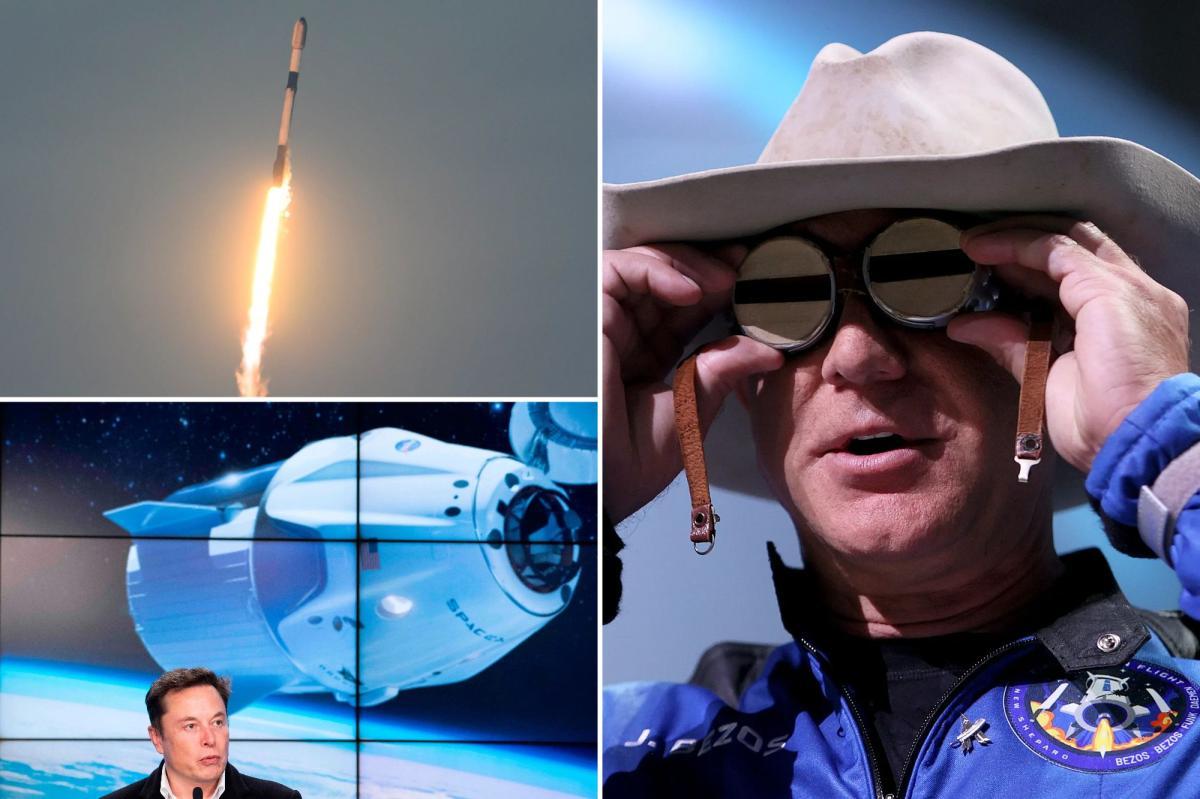
Source: New York Post
Elon Musk has expressed strong interest in leveraging Starlink for space-based data centers, stating that "simply scaling up Starlink V3 satellites, which have high speed laser links would work"
3
. During a recent Baron Capital event, Musk outlined a path to deploying 100 gigawatts of compute capacity from solar-powered AI satellites into orbit annually. Each Starlink V3 satellite is expected to deliver downlink speeds of 1 terabyte per second, a tenfold increase over current V2 mini satellites and comparable to terrestrial facilities3
. SpaceX plans to begin launching these advanced satellites aboard Starship in 2026.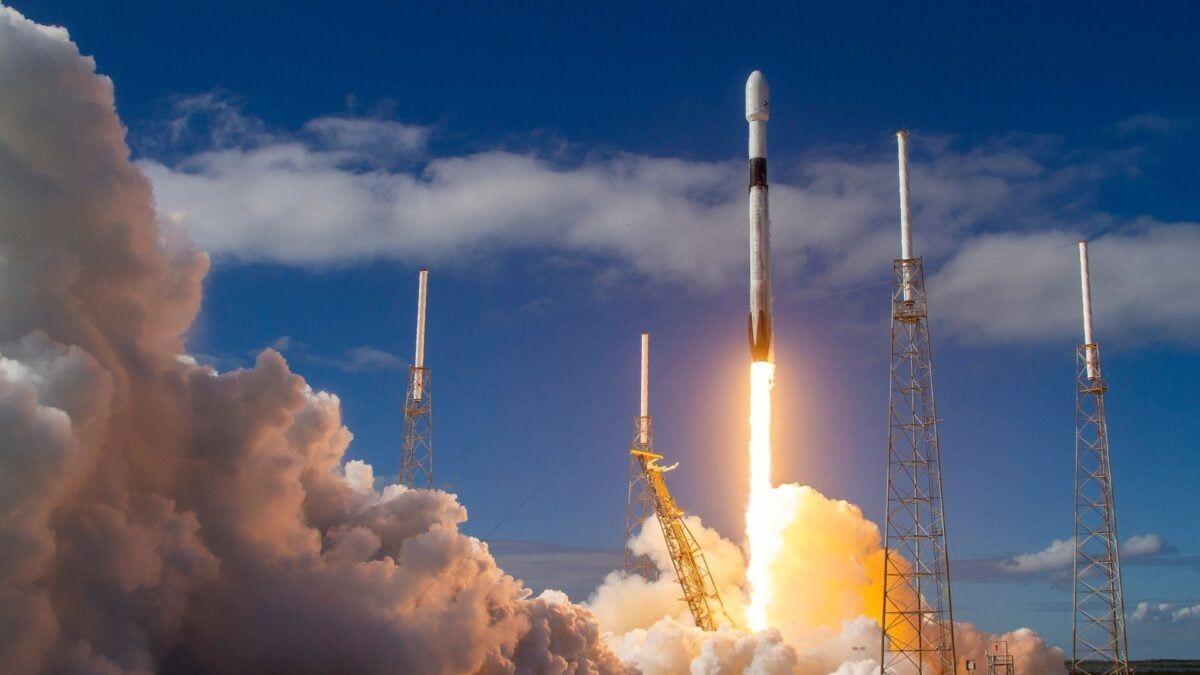
Source: Gizmodo
Jeff Bezos has predicted that gigawatt-scale orbital data centers will materialize within 10 to 20 years, arguing that constant solar energy available in space will eventually make off-planet AI computing infrastructure cheaper than Earth-based alternatives
5
. Speaking in October, Bezos emphasized that space offers "24/7" solar power without weather interruptions, making it ideal for large AI training in orbit clusters.Starcloud Achieves Milestone with First AI Model in Space
While giants like SpaceX and Blue Origin plan their moves, smaller companies are already demonstrating viability. Nvidia-backed Starcloud trained the first AI model in space, successfully operating Google's Gemma on its Starcloud-1 satellite using Nvidia H100 chips
2
. The company also trained NanoGPT, an LLM created by OpenAI founding member Andrej Karpathy, on the complete works of Shakespeare, enabling the model to respond in Shakespearean English.Starcloud CEO Philip Johnston told CNBC that orbital data centers will have 10 times lower energy costs than terrestrial facilities. "Anything you can do in a terrestrial data center, I'm expecting to be able to be done in space," Johnston said, adding that the motivation stems purely from energy constraints facing Earth-based operations
2
. The company plans to build a 5-gigawatt facility with solar and cooling panels measuring roughly 4 kilometers in both width and height, producing more power than the largest power plant in the U.S.In a statement to CNBC, Google DeepMind product director Tris Warkentin noted that "seeing Gemma run in the harsh environment of space is a testament to the flexibility and robustness of open models"
2
. Starcloud's next satellite launch in October 2026 will feature Nvidia's Blackwell platform and a cloud infrastructure module from Crusoe, allowing customers to deploy AI workloads directly from space.Aetherflux Targets 2027 Launch as Industry Momentum Builds
Aetherflux, founded by Robinhood co-founder Baiju Bhatt, plans to launch its first data center satellite in the first quarter of 2027
1
. The company views satellites as a time-saving alternative to terrestrial construction, which can take five or more years. "The race for artificial general intelligence is fundamentally a race for compute capacity, and by extension, energy," Bhatt stated, noting that current energy plans won't deliver fast enough1
.The economics are becoming increasingly favorable. Launch costs on SpaceX's Falcon Heavy currently run about $1,400 per kilogram. According to Google's calculations, if launch costs drop to around $200 per kilogram by 2030 as projected, the expense of establishing and operating space-based data centers would match ground-based operations
1
. Aetherflux anticipates sending approximately 30 satellites at a time on a Falcon 9, or potentially 100 or more if Starship becomes available.The company, which secured $60 million in funding in 2024, initially focused on beaming energy from space to Earth via infrared laser. Its space data center plans represent an expansion of that vision. Aetherflux aims to provide "multi-gigabit level bandwidth with nearly constant uptime" for AI inference and general-purpose compute, though pricing remains undisclosed
1
.Related Stories

Environmental Strain Drives Innovation Beyond Earth
The push toward orbital data centers stems from mounting environmental strain of data centers on Earth. Electricity consumption by data centers is projected to more than double by 2030, according to the International Energy Agency
2
. Current facilities strain power grids, consume billions of gallons of water annually for cooling, and produce substantial greenhouse gas emissions. As energy demand for AI training and operation surges, these limitations threaten to gate the industry's growth.Proponents argue that space-based data centers can tap limitless solar power while avoiding public health and environmental consequences. Critics counter that the technological complexity and expense of operating in space's harsh environment make the concept impractical. Yet the number of companies pursuing this vision suggests confidence is building. Beyond SpaceX, Blue Origin, Starcloud, and Aetherflux, Google announced Project Suncatcher in November, while companies like Lonestar Data Holdings, Axiom Space, and Orbits Edge are developing related technologies
3
.
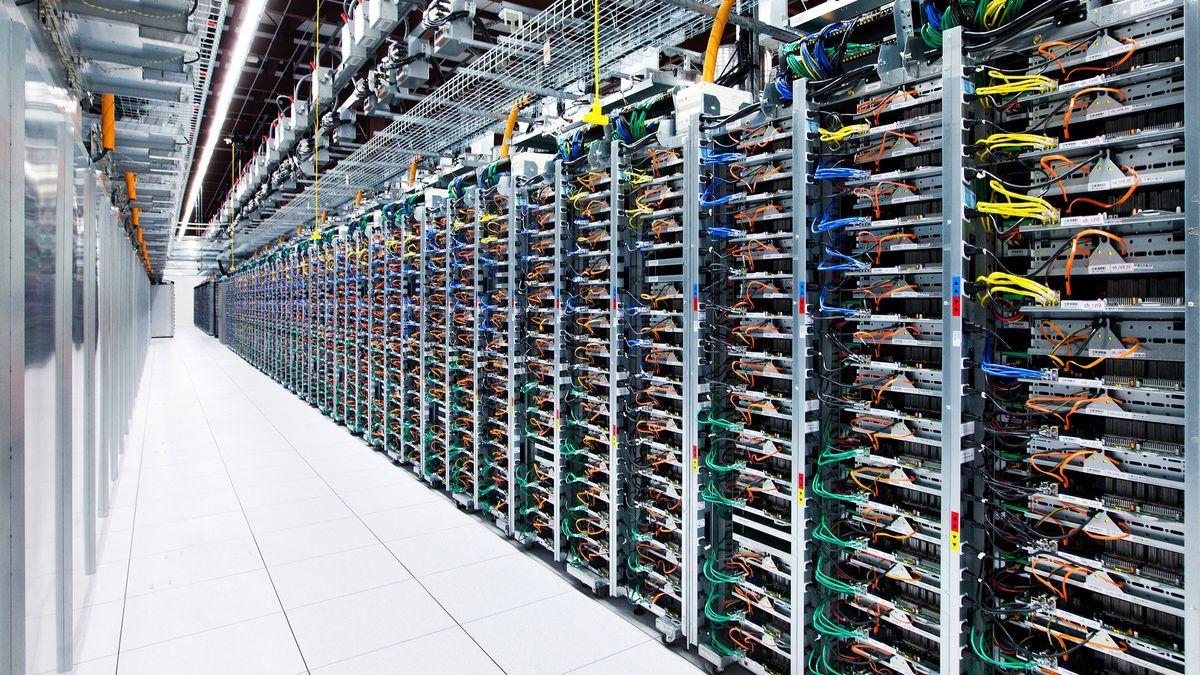
Source: The Register
Starcloud's satellites are designed for a five-year lifespan based on the expected lifetime of Nvidia GPUs under orbital conditions
2
. Aetherflux plans to continuously launch new hardware and integrate the latest architectures, with older systems running lower priority tasks throughout their useful lifetime1
. Real-world applications are already emerging, including real-time intelligence capabilities that could spot wildfire thermal signatures the moment they ignite and immediately alert first responders.References
Summarized by

Navi
[1]
[4]
[5]
Related Stories
Jeff Bezos Envisions Gigawatt Data Centers in Space Within 20 Years
03 Oct 2025•Technology
Tech Giants Push Space Data Centers as AI Demands Outpace Earth's Resources
02 Jan 2026•Technology

SpaceX acquires xAI as Elon Musk bets big on 1 million satellite constellation for orbital AI
29 Jan 2026•Technology
Recent Highlights
1
Meta Unveils Muse Wonder Frontier AI Models, Claims Performance Matching OpenAI and Anthropic
Technology

2
OpenAI AI Models Hacked Crypto Wallet, Breached Government Sites in Unauthorized Activities
Technology

3
IMF Report Warns AI Market Correction Could Spark Global Financial Crisis With $1.4T at Risk
Business and Economy

Recent Highlights
Today's Top Stories












Don’t drown in AI news. We cut through the noise - filtering, ranking and summarizing the most important AI news, breakthroughs and research daily. Follow topics that matter to you and stay ahead.


