Startups race to deploy orbital data centers for AI computing despite massive technical hurdles


5 Sources
[1]
The Orbital Data Center Hype Machine Is Already in Orbit
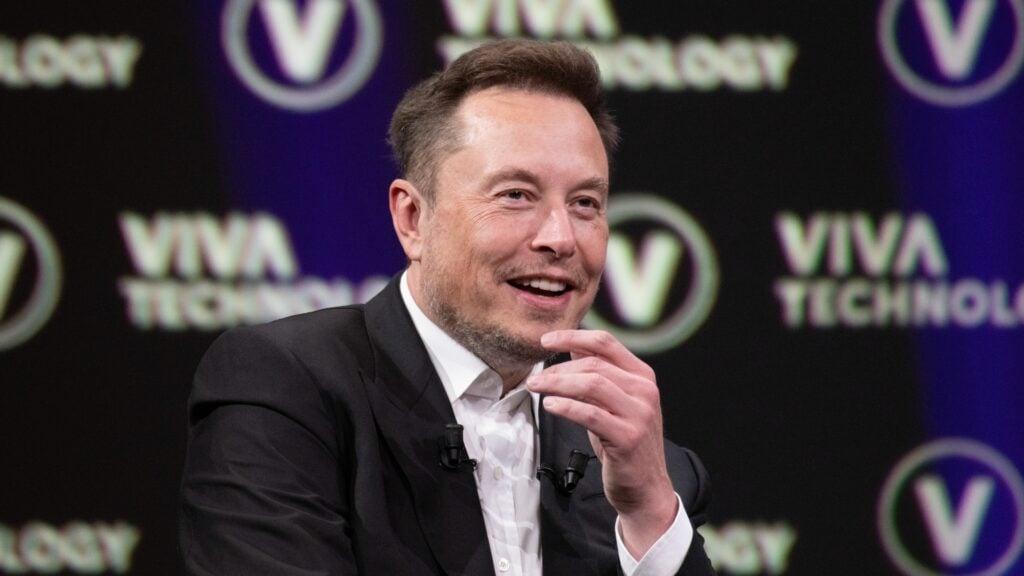
Why the stars -- and the math -- won't align for space compute anytime soon "The lowest-cost place to put AI will be in space, and that will be true within two years, maybe three at the latest," SpaceX founder Elon Musk told the World Economic Forum in Davos this past January, as his company was
[2]
US startup proposes 100,000-satellite data center constellation
The next major battleground for the survival of artificial intelligence is being fought roughly 300 miles above our heads. And now, to challenge the tech giants, a newly launched, five-month-old startup has set a big, ambitious goal. Los Angeles-based startup Orbital Compute, Inc. recently laid
[3]
Orbital plans space data centres to power AI, seeks FCC clearance for 100,000 satellites
A US startup, Orbital, is looking to set up space-based data centres to meet the surging demand for AI computing power. The company aims to launch its first data centre satellite next year, with plans for 100,000 satellites in low Earth orbit to deliver 10 gigawatts of compute. Orbital plans to
[4]
Elon Musk Says Space Is 'the Only Way to Scale at Scale' for AI Computing Amid Earthbound Bottlenecks - S
Elon Musk on Sunday emphasized the need for orbital infrastructure to prevent artificial intelligence (AI) computing from being held up by Earth's limits and regulatory bottlenecks. Musk Says Space Can Bypass Earth's Bottlenecks Replying to a post about space-based data centers, Musk said, "Space
[5]
US Startup Plans Data Centres' Space Odyssey
It sounds like science fiction, but US-based satellite startup Orbital is looking to set up data centres in space that may power responses given by chatbots as artificial intelligence (AI) drives an unprecedented demand for computing power. Orbital founder and CEO Euwyn Poon told ET it plans its
Share
Copy Link
Multiple companies including Orbital Compute and SpaceX have filed FCC applications to launch up to 1 million satellites for space-based AI infrastructure. The startups promise to solve Earth's power grid constraints using solar energy and space cooling, but face significant challenges in thermal management, launch costs, and manufacturing capacity that could delay deployment for years.
Orbital Data Centers Emerge as Bold Solution to AI Computing Demands
A new wave of startups is betting that the future of AI computing lies not on Earth, but in low Earth orbit. Los Angeles-based Orbital Compute, founded just five months ago by former Spin scooter company CEO Euwyn Poon, has filed an FCC application to deploy up to 100,000 data center satellites capable of delivering 10 gigawatts of computing power
2
. SpaceX has gone even further, filing plans for up to 1 million orbital data centers operating between 500 and 2,000 kilometers above Earth1
. Elon Musk claimed in January at the World Economic Forum that "the lowest-cost place to put AI will be in space, and that will be true within two years, maybe three at the latest"1
. The concept addresses real constraints facing terrestrial data centers: power grid strain, water shortages for cooling, and community opposition to massive facilities2
.Space-Based Infrastructure Promises Unlimited Solar Power and Natural Cooling

Source: Interesting Engineering
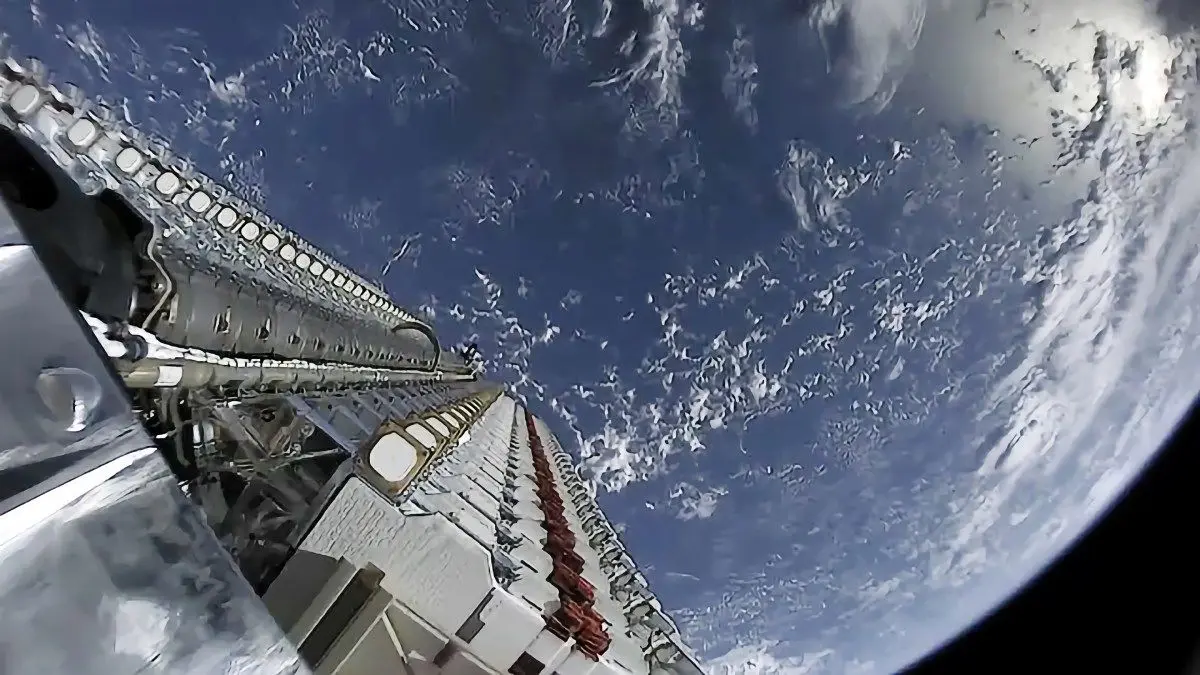
The appeal of space-based AI infrastructure centers on solving three critical bottlenecks simultaneously. Each planned satellite would function as a flying server rack powered by massive solar arrays receiving perpetual, uninterrupted sunlight in sun-synchronous orbits
2
. Poon explained to ET that "the demand for AI compute is outrunning what we can reasonably build on the ground -- we're short on power, land, and water all at once. Space solves all three"2
. Musk echoed this sentiment, stating that "space is the only way to scale at scale," positioning orbit as a way around lawsuits, land disputes, power-grid constraints and local opposition that delay Earth-based facilities4
. The satellites would be relatively compact—roughly the size of a refrigerator—with extending solar panels and radiators5
. Orbital plans to focus primarily on AI inference workloads, where trained models make predictions on new data, rather than the energy-intensive training phase5
.Logistical Challenges and Thermal Management Cast Doubt on Near-Term Viability

Source: ET
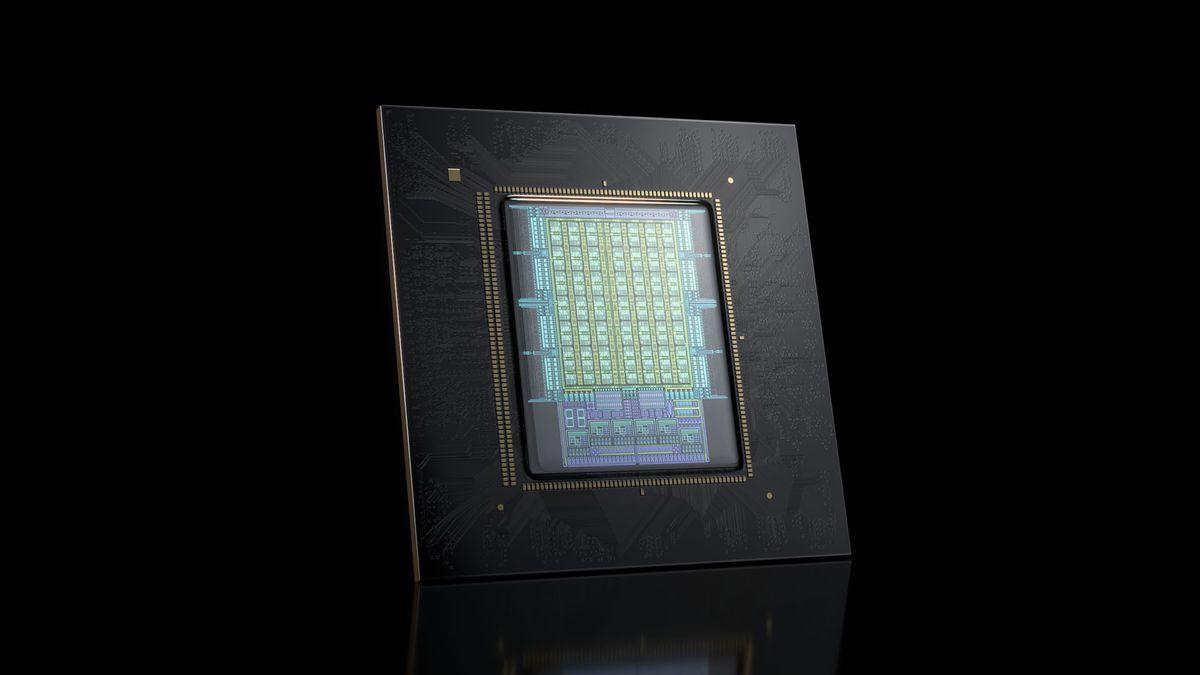
Despite the ambitious vision, scaling AI computing through orbital data centers faces formidable technical and economic barriers. Cooling remains the most immediate challenge: a single Nvidia H100 GPU drawing 700 watts requires 1.4 square meters of radiator at 60°C, while a 100-megawatt data center would need 2,500 radiators of 80 square meters each
1
. Starcloud, another startup pursuing space-based AI infrastructure, sent one Nvidia H100 GPU to space but discovered their radiator was too weak to let the chip run at full power1
. The vacuum of space lacks air, forcing heat dissipation solely through radiation—a slow thermodynamic process that makes thermal management particularly difficult2
. Manufacturing and launch capacity present equally daunting obstacles. There are roughly 14,500 active satellites in orbit today, with Musk's Starlink constellation accounting for two-thirds of them1
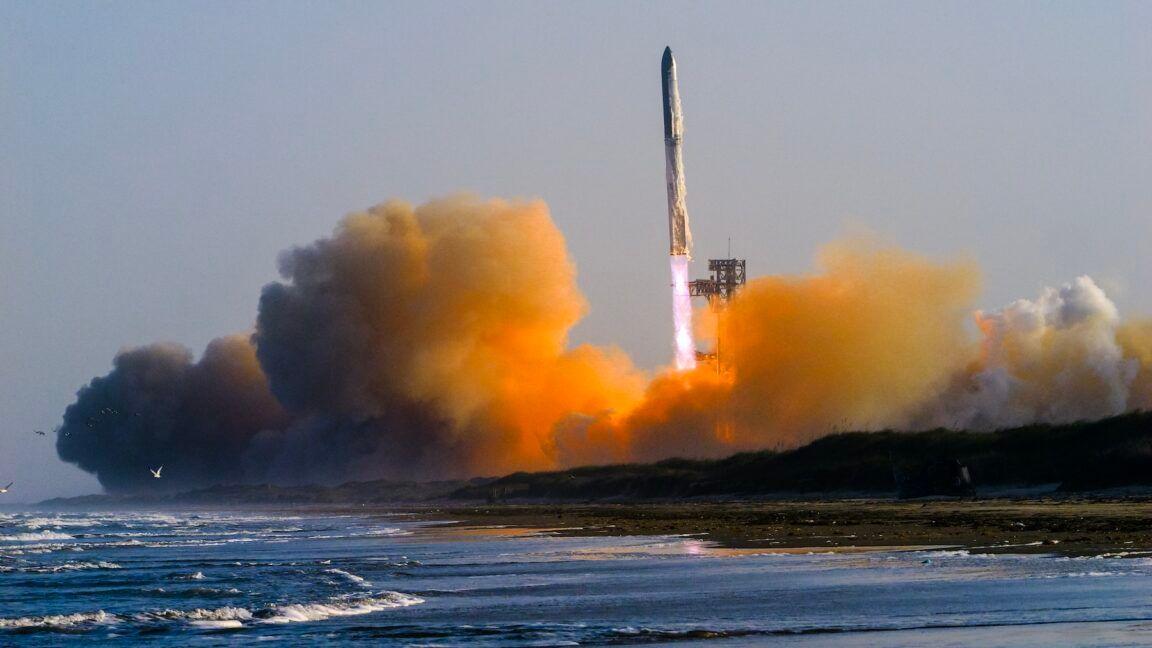
. Deploying 1 million satellites on SpaceX's Starship, designed to carry up to 60 satellites per vehicle, would require 16,666 launches exclusively devoted to satellite deployments—compared to SpaceX's record 165 orbital missions in 20251
. At Starlink's current manufacturing pace of around 4,000 satellites per year, even a tenfold increase would require 25 years to build 1 million units1
.Related Stories
Launch Economics Determine Whether Orbital Compute Becomes Reality
The economic viability of satellite constellation data centers hinges almost entirely on dramatic reductions in launch costs through SpaceX's Starship. Poon acknowledged to ET that "a satellite costs us roughly $5 million, and launching it on a Falcon could cost another $5 million or more. We need launch costs to come down to around $100,000 with Starship—a lot of the economics rests there"
5
. Orbital secured $5 million in pre-seed funding and plans to launch a single-GPU demonstration payload on a SpaceX Falcon 9 next year to test how Nvidia chips withstand space radiation, with their first full-scale satellite, Orbital-1, targeted for 20282
. SpaceX has announced plans for an 11-million-square-foot Gigasat facility in Bastrop, Texas, targeting AI satellite production by late 2027 with a goal of 100 gigawatts of annual space AI compute by around 20304
. Musk has also announced Terafab, a proposed Texas chip project meant to produce 1 terawatt of compute power annually, much of it for space use4
. Technology giants including Google and Blue Origin are exploring similar concepts alongside startups like Starcloud and Kepler Communications5
.Skepticism Mounts Over Environmental Impact and Technical Feasibility
Source: Benzinga
Not everyone shares the enthusiasm for space-based infrastructure. OpenAI CEO Sam Altman dismissed orbital data centers as "ridiculous" earlier this year
2
. The European Southern Observatory has warned that large satellite constellations threaten astronomy, ecosystems, and air quality4
. Astronomers worry that a million satellites with giant radiative wings would obstruct views of the stars and increase the risk of triggering Kessler syndrome—a cascade of orbital debris collisions1
. Space radiation poses another threat to sensitive chips, while launching thousands of two-ton objects threatens to choke low Earth orbit with space junk2
. Poon expects orbital compute to remain complementary to terrestrial data centers for at least the next decade, noting that "if total data centre capacity today is on the order of 100 gigawatts on earth, we can offload a meaningful chunk. Our 100,000 satellites get to 10 gigawatts"3
. For now, the race to deploy AI workloads in space represents an audacious bet on future technology rather than an imminent solution to scaling AI computing demands.🟡 teasing_text=🟡A new wave of startups is betting that the future of AI computing lies not on Earth, but in low Earth orbit. Los Angeles-based Orbital Compute, founded just five months ago by former Spin scooter company CEO Euwyn Poon, has filed an FCC application to deploy up to 100,000 data center satellites capable of delivering 10 gigawatts of computing power2
. SpaceX has gone even further, filing plans for up to 1 million orbital data centers operating between 500 and 2,000 kilometers above Earth1
. Elon Musk claimed in January at the World Economic Forum that "the lowest-cost place to put AI will be in space, and that will be true within two years, maybe three at the latest"1
. The concept addresses real constraints facing terrestrial data centers: power grid strain, water shortages for cooling, and community opposition to massive facilities2
.References
Summarized by

Navi
[2]
[4]
Related Stories
SpaceX pushes AI data centers into orbit as Musk predicts space will beat Earth in 36 months
06 Feb 2026•Technology
Nvidia unveils Vera Rubin Space Module for orbital AI data centers as space computing race heats up
17 Mar 2026•Technology

SpaceX acquires xAI as Elon Musk bets big on 1 million satellite constellation for orbital AI
29 Jan 2026•Technology
Recent Highlights
1
Meta Unveils Muse Wonder Frontier AI Models, Claims Performance Matching OpenAI and Anthropic
Technology

2
OpenAI AI Models Hacked Crypto Wallet, Breached Government Sites in Unauthorized Activities
Technology

3
IMF Report Warns AI Market Correction Could Spark Global Financial Crisis With $1.4T at Risk
Business and Economy

Recent Highlights
Today's Top Stories






Don’t drown in AI news. We cut through the noise - filtering, ranking and summarizing the most important AI news, breakthroughs and research daily. Follow topics that matter to you and stay ahead.


