Spacetop's AR Software Revolutionizes Desktop Experience, but Price May Hinder Adoption


3 Sources
[1]
I Always Dreamed of Expanding My Desktop With Glasses. This Software Made It Real
The fantasy is this: I have my laptop -- or tablet, or phone, whatever's nearby -- and by plugging a small pair of display glasses into it, all the things I need can expand on a big virtual display, making seemingly infinite monitor space for myself. Why? To get more space for myself without having
[2]
I Tried Working With a 100-Inch Display on My Nose. Here's How It Went
I'm one of the consumer PC experts at PCMag, with a particular love for PC gaming. I've played games on my computer for as long as I can remember, which eventually (as it does for many) led me to building and upgrading my own desktop. Through my years here, I've tested and reviewed many, many
[3]
Spacetop's AR computing is a game-changer, except for one thing that may hold it back
Sightful launched Spacetop for Windows, an AR glasses and software combo, earlier this month. Packaged with XReal's Air 2 Ultra glasses, Spacetop is a piece of AR virtual display management software, designed to solve a few key pain points in the AR space. With a travel mode for better motion
Share
Copy Link
Spacetop, a new AR software solution, offers an innovative approach to expanding desktop workspace using smart glasses, but its high price point may limit widespread adoption.

Spacetop: Revolutionizing Desktop Experiences with AR
Spacetop, a new augmented reality (AR) software solution developed by startup Sightful, is pushing the boundaries of how we interact with our digital workspaces. By leveraging smart glasses technology, Spacetop aims to expand users' desktop environments beyond the confines of traditional screens
1
2
3
.How Spacetop Works
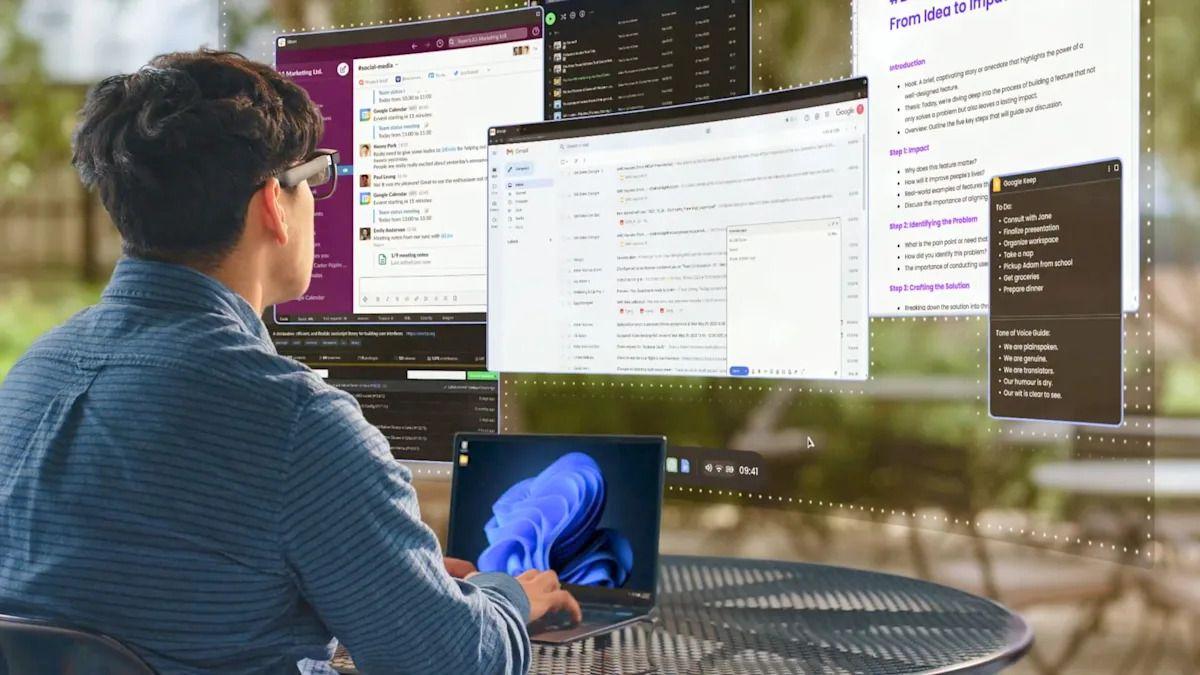
Spacetop creates a virtual 100-inch display that users can access through XReal Air 2 Ultra AR glasses. This expansive digital canvas allows for multiple windows and applications to be arranged and viewed simultaneously, effectively creating a multi-monitor setup without the need for physical screens
1
2
.The software utilizes the neural processing units (NPUs) in Intel Core Ultra processors to power its AI-driven features, including motion tracking for a stable viewing experience even when on the move
1
3
.Key Features and Benefits
- Travel Mode: AI-powered motion tracking ensures the virtual display remains stable in moving environments
3
. - Privacy: The virtual nature of the display allows for confidential work in public spaces
3
. - Customizable Layout: Users can arrange windows and applications across the large virtual canvas as desired
2
. - Cursor Management: The software prevents users from losing their mouse cursor in the expansive virtual space
3
. - Tilt Function: Allows users to adjust the AR canvas for optimal ergonomics
3
.
Hardware Requirements and Compatibility
Spacetop currently requires XReal Air 2 Ultra AR glasses and a Windows 11 laptop with an Intel Core Ultra processor. The company initially planned to develop custom hardware but pivoted to focus on software compatible with existing AI-enabled laptops
1
3
.Pricing and Market Positioning
Spacetop is offered at $899, which includes the XReal Air 2 Ultra glasses and a 12-month software subscription. After the first year, users must pay a $200 annual renewal fee
2
3
.Related Stories



Challenges and Limitations
- Comfort: Some users may find the AR glasses uncomfortable for extended use
2
. - Limited Field of View: The viewing area is restricted to a boxed-out rectangle in the center of vision
1
. - High Price Point: The cost may be prohibitive for individual consumers, potentially limiting Spacetop's market to enterprise customers
3
.
Competition and Alternatives
While Spacetop offers unique features, it faces competition from free alternatives such as XReal's Nebula for Windows, Lenovo's Virtual Display Manager, and Viture's ARMoni. These options, though less polished, support multiple brands of AR glasses and come without subscription fees
3
.Future Outlook
Spacetop's innovative approach to AR computing shows promise, particularly in enterprise settings. However, its high price point and limited hardware compatibility may hinder widespread adoption among individual consumers. As AI PCs become more prevalent and AR technology advances, Spacetop's potential for growth in both enterprise and consumer markets could increase
1
3
.References
Summarized by

Navi
Related Stories
Recent Highlights



Recent Highlights
Today's Top Stories



Don’t drown in AI news. We cut through the noise - filtering, ranking and summarizing the most important AI news, breakthroughs and research daily. Follow topics that matter to you and stay ahead.


