Stanford University Used AI to Swap Hispanic Student Billy Ramirez in Promotional Photo


10 Sources
[1]
Stanford Used A.I. to Swap Black Student for Hispanic Student in a Photo
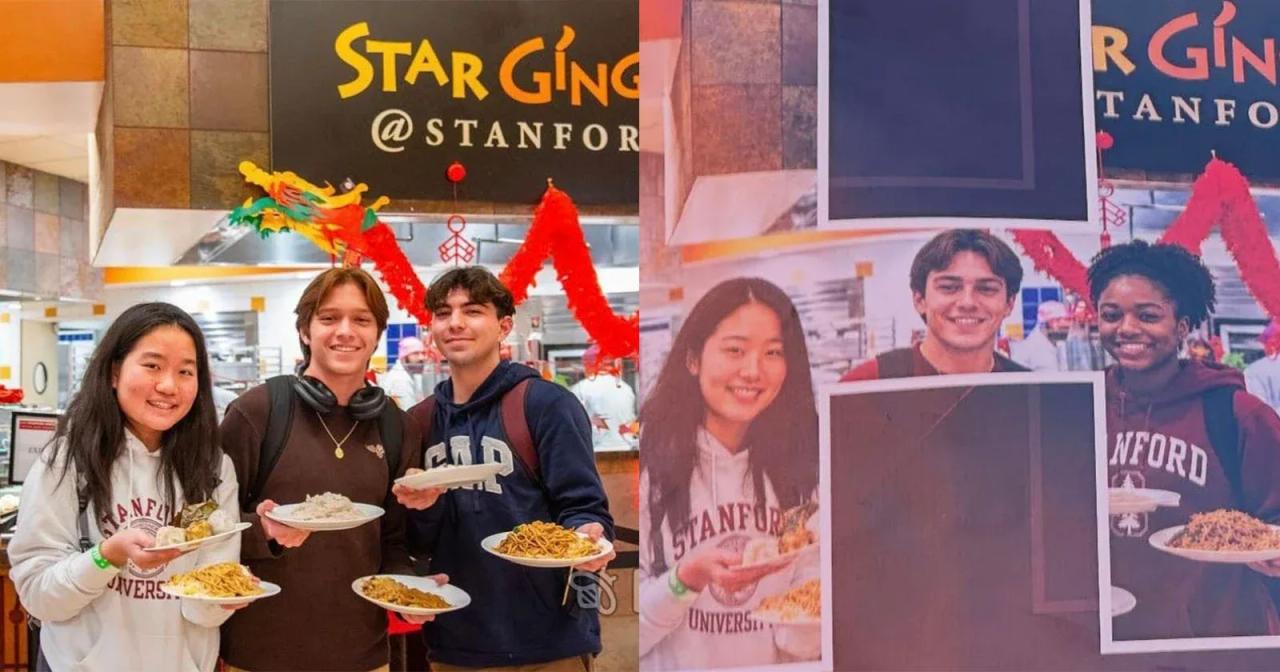
Billy Ramirez had collected a plate of noodles at a Lunar New Year party in 2024 when a Stanford University photographer snapped a picture of him alongside two other students. The university's dining service posted the photo online the next day. But when Stanford used the image on a banner last
[2]
Stanford removes AI-altered photo that replaced Hispanic student with Black woman
Going to school in Silicon Valley, artificial intelligence is everywhere, Stanford University senior Billy Ramirez said. But he never expected to be deleted by it. On his way back to school Friday, a friend sent him a photo that had been taken his freshman year, along with an altered version of
[3]
Stanford AI-Edits Photo to Change Student's Race and Gender
Stanford University violated its own policies after using AI to swap out a Hispanic male student with a Black female student. Billy Ramirez, the student who was replaced in the photo, spoke to the independent student newspaper, The Stanford Review, which broke the story. Ramirez says he was
[4]
Stanford University Caught Using AI to Create Fake Black Student on Banners Hung Around Campus
More information Adding us as a Preferred Source in Google by using this link indicates that you would like to see more of our content in Google News results. Stanford University was caught using AI to swap out a student in a photo and replace him with a Black woman who didn't exist. That edited
[5]

Stanford apologizes saying AI-altered photo that changed student's gender and race violated policy
Stanford University said the use of artificial intelligence to alter the race and appearance of students in a promotional photo violated its policy and was "a serious error in judgment." The controversy centers on an image taken of three students posing in front of Star Ginger in the university's
[6]

Stanford used AI to change student's race in a photo
Billy Ramirez had collected a plate of noodles at a Lunar New Year party in 2024 when a Stanford University photographer snapped a picture of him alongside two other students. The university's dining service posted the photo online the next day. But when Stanford used the image on banners last
[7]

Stanford admits AI was used to swap gender, race of student image
(NewsNation) -- Stanford University has acknowledged its own policies were violated when a promotional image for its residential and dining offerings removed a male Hispanic student and replaced him with a Black female. The AI-altered image was confirmed by the school after The Stanford Review
[8]

Stanford AI photo controversy: White male student replaced by Black woman in ad, 'silenced and erased'
Stanford Residential & Dining Enterprises has come under intense backlash for allegedly using AI to race- and gender-swap students. The students had been photographed for its advertisements and Stanford even allegedly altered their appearances by slimming down their faces, reports The New York
[9]

Stanford admits using AI to race swap white male student for black female in ad: 'Erased'
Stanford University has admitted it violated its own artificial-intelligence rules by using AI to alter a promotional image that transformed a male student into a Black woman -- and acknowledged that the university failed to disclose the manipulation. The admission comes days after the student-run
[10]

World's second best university admits using AI to change students' race, gender in promotional image
Stanford University in the U.S. has admitted using AI to alter students' race, gender and appearance in a promotional image, violating its own policy. "We have reviewed the matter and confirmed that AI was used to alter the image in violation of university policy," Stanford said in an email to Fox
Share
Copy Link
Stanford University violated its AI policy after using AI to alter images from a Lunar New Year party. The AI-altered photo replaced Hispanic student Billy Ramirez with an AI-generated Black female student on campus banners. The incident raises concerns about the ethical implications of using AI in diversity representation and highlights ongoing debates about DEI initiatives.
Stanford University Admits Violation of AI Policy
Stanford University confirmed it violated its own artificial intelligence policy after using AI to alter images of students in promotional materials
1
. The AI-altered photo, originally taken at a Lunar New Year party in 2024, replaced Hispanic student Billy Ramirez with an AI-generated Black female student2
. The altered images appeared on "Welcome Home" promotional banners distributed around campus by Stanford Residential and Dining Enterprises3
.
Source: PetaPixel
The university stated: "Stanford's A.I. policy is clear: The use of A.I. in producing or altering images of Stanford people, events, research, facilities or achievements is strictly prohibited"
1
. Officials acknowledged that both the alteration and lack of disclosure violated policy, calling it a "serious error in judgment"5
.Erasure of His Identity Sparks Student Outcry
Billy Ramirez, a first-generation Hispanic student raised by a single mother who emigrated from Mexico, learned about the manipulation from a friend
2
. "To see me erased like that so easily was kind of very upsetting," Ramirez told The New York Times1
. The senior majoring in human biology initially found the situation "hilarious" but quickly realized the deeper implications3
."Seeing my identity changed and being left out of the picture made me feel, in a way, silenced and erased from a representation that was supposed to include me," Ramirez explained to The Stanford Review
5
. The AI to alter images also made the other two students in the photograph appear noticeably thinner4
.Manipulated Imagery Reflects Broader Pattern
This incident involving the replaced Hispanic student isn't isolated in higher education. The University of Wisconsin-Madison faced similar criticism in 2000 after adding a Black student to its undergraduate application booklet cover, spending approximately $64,000 to reprint 100,000 brochures
1
. York College of Pennsylvania removed two white students from a photograph in 2019, replacing them with more diverse representations1
.Research published in the Journal of Marketing for Higher Education in 2013 found that schools' recruitment materials often suggested higher Black student enrollment than reality. The study concluded that "racial diversity is being used as a commodity in the marketing of higher education"
1
.Related Stories

Ethical Implications of Using AI in Campus Representation
The violation of AI policy at Stanford University raises questions about rewriting reality through artificial intelligence
4
. Ramirez noted the unsettling ease with which history could be erased: "It's kind of like how some parts of history could be erased with AI. It's scary"2
.The two other students in the original photo filed a discrimination claim with the university, demanding a formal apology, investigation into how the image was created, commitment to avoid AI-generated student photos, and "increased efforts to reinstate DEI initiatives"
2
.Diversity Efforts Under Scrutiny
The incident occurs amid heightened pressure on diversity efforts following President Trump's administration actions. The Justice Department is examining Stanford's medical school admissions practices, while the Education Department opened an inquiry into whether Stanford illegally used race-conscious admissions in a teacher training program
1
.
Source: Washington Post
Enrollment records show Stanford had 17,314 students last fall, with 3,406 classified as "underrepresented minority" and 4,431 international students
1
. About 16 percent of undergraduates were Hispanic or Latino in October 2025, while 6.5 percent were Black2
.Ramirez suggested the incident revealed deeper issues: "If you're trying to use years-old photos that aren't even accurate of the student body, then it just shows that Stanford needs to increase the enrollment of students from historically underrepresented backgrounds"
2
. Stanford University has launched an investigation and promised additional training to prevent future violations5
.References
Summarized by

Navi
[2]
[4]
Related Stories
UC Berkeley Professor Admits AI Use in Viral Op-Ed Criticizing Student Math Abilities
20 Aug 2026•Entertainment and Society
AI-Altered Image of Alex Pretti Reaches US Senate Floor, Exposing Misinformation Crisis
31 Jan 2026•Entertainment and Society

AI-Generated Nude Images of Students Spark Controversy at Pennsylvania Private School
20 Nov 2024•Technology

Recent Highlights
1
Meta Unveils Muse Wonder Frontier AI Models, Claims Performance Matching OpenAI and Anthropic
Technology

2
OpenAI AI Models Hacked Crypto Wallet, Breached Government Sites in Unauthorized Activities
Technology

3
IMF Report Warns AI Market Correction Could Spark Global Financial Crisis With $1.4T at Risk
Business and Economy

Recent Highlights
Today's Top Stories









Don’t drown in AI news. We cut through the noise - filtering, ranking and summarizing the most important AI news, breakthroughs and research daily. Follow topics that matter to you and stay ahead.


