Dartmouth Provost Resigns After Undisclosed AI Use in Academic Papers and Washington Post Op-Ed


7 Sources
[1]
Dartmouth's provost warned us about AI cheating -- but his own AI use cost him his job
People who love AI don't always love telling others they used it. On August 9, 2026, Dartmouth College provost Santiago Schnell wrote a Washington Post op-ed called "Universities are fighting AI cheating. But there's a deeper problem." This week, Schnell discovered the depths of the problem
[2]
Dartmouth provost resigns following accusations he used artificial intelligence for writing
A top administrator at Dartmouth College has resigned after a faculty committee found he used artificial intelligence to shape his writing, including in a guest column in The Washington Post on AI cheating. The announcement Wednesday of Provost Santiago Schnell's departure from the Ivy League
[3]
A Top Dartmouth Leader Steps Down Over Undisclosed A.I. Use in Writings
Santiago Schnell, who had been provost since last year, will leave after a review found that he had improperly used A.I. in published opinion articles. Dartmouth College said on Wednesday that its provost had resigned after a review found that his use of A.I. fell short of the university's code of
[4]
Senior official at Dartmouth College resigns over AI use
Provost Santiago Schnell, accused of failing to disclose his use of AI in his writing, is the most prominent academic known to have stepped down over the issue. A top administrator at Dartmouth College resigned after a faculty committee determined that he had improperly failed to disclose the use
[5]

Dartmouth Provost Resigns Following Accusations He Used Artificial Intelligence for Writing
The provost of Dartmouth College has resigned after a faculty committee found that he used artificial intelligence in his writing, including in a Washington Post guest column on AI cheating A top administrator at Dartmouth College has resigned after a faculty committee found he used artificial
[6]

Dartmouth official resigns over AI use
A top Dartmouth official has resigned from his position after allegations he violated the school's AI use policy. The university announced Wednesday Provost Santiago Schnell resigned from his position after a university committee released the results of its investigation into the matter it opened
[7]

Dartmouth provost resigns over AI use in published articles
Dartmouth College Provost Santiago Schnell resigned Wednesday after a faculty-led investigation concluded he used artificial intelligence (AI) to substantially alter his published writing, violating university and publisher integrity standards. An independent committee organized last month by
Share
Copy Link
Santiago Schnell stepped down as Dartmouth College provost after a faculty committee found he failed to disclose AI use in academic papers and a Washington Post column about AI cheating. The investigation revealed extensive use of Claude for editing manuscripts and generating figures, raising questions about transparency in academia as institutions navigate AI adoption.
Dartmouth Provost Steps Down Amid Undisclosed AI Use Controversy
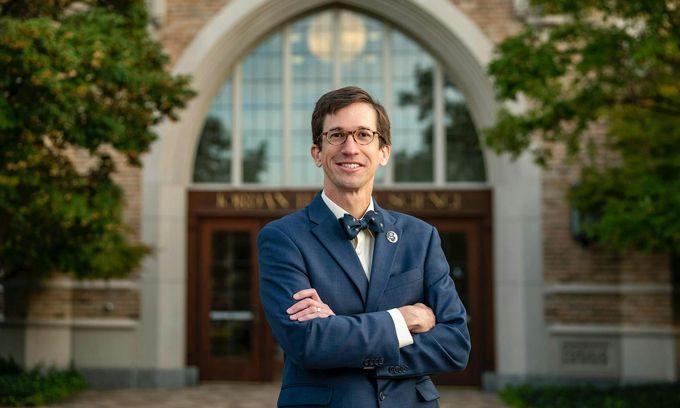
Santiago Schnell resigned as Dartmouth College provost after a faculty committee determined he violated academic integrity standards by failing to disclose his AI use in scholarly publications and public writing
1
4
. The Venezuelan-born mathematical biologist, who served as the university's chief academic officer since July 2025, became the most prominent academic known to step down over AI-related ethical concerns4
. His departure comes at a critical moment as universities nationwide grapple with how AI tools are transforming academic work and teaching.The irony cuts deep. On August 9, 2026, Schnell authored a Washington Post op-ed titled "Universities are fighting AI cheating. But there's a deeper problem." Investigations later revealed the column itself was entirely written by AI according to Semafor, which ran guest columns through AI detection filters
2
5
. Schnell initially defended himself, claiming he used ChatGPT to "refine a few arguments" and "check for grammatical errors," insisting the column reflected his "own thinking"2
. This violated The Washington Post's disclosure requirements4
.
Source: VnExpress
Investigation Reveals Extensive Use of Claude for Academic Work
The faculty committee's investigation uncovered logs from Schnell's Dartmouth-provided Claude enterprise account showing substantial reliance on the large language model for revising papers, debugging code, and generating figures
1
. In one instance, Schnell prompted Claude: "Imagine that you are a reviewer for this paper with expertise in nonlinear chemical dynamics and mathematical chemical kinetics. What would be your referee report for this paper?"1
For a manuscript submitted to the journal ChemSystemsChem, Schnell asked Claude to "make the corrections to the files, and the repo. If you have to generate new figures, please provide them to me"
1
. He also submitted prompts like "Do you find any scientific issue with the paper, problem or contradiction that it would prevent me to submit it?"4
. The publication required AI disclosure at the time, but Schnell provided none4
.The committee found that Schnell's public statements may have understated "the nature of the Provost's actual AI use" and that he regularly "went beyond his other public descriptions of his use of AI in writing"
1
. One particularly revealing exchange showed Schnell uploading a manuscript and asking Claude: "Are there many signatures of AI writing in this article?" He later submitted a revised version incorporating Claude's suggested changes1
.Insufficient Cooperation Hampers Full Understanding of AI Use
The investigation faced obstacles as Schnell provided what the committee termed "insufficient cooperation"
1
. While he surrendered his Dartmouth laptop, he refused to provide logs from personal LLM accounts related to the writings under review and declined to meet with the committee1
. This lack of transparency made it impossible to determine the full scope of his AI use, leaving questions about whether his reliance on AI tools went beyond editorial assistance.The Dartmouth student newspaper added fuel to the controversy by running Schnell's recent publications through AI detectors. Writing predating ChatGPT's November 2022 public release tested as human-written, but recent work showed high rates of AI use
2
. When Schnell emailed the paper explaining he uses AI for "language refinement, copyediting, improving clarity and organization and making writing processes more efficient," the newspaper ran that statement through an AI detector—it too was flagged as AI-written2
.Related Stories

Dartmouth Pushes Forward on AI Despite Leadership Scandal
Source: Ars Technica
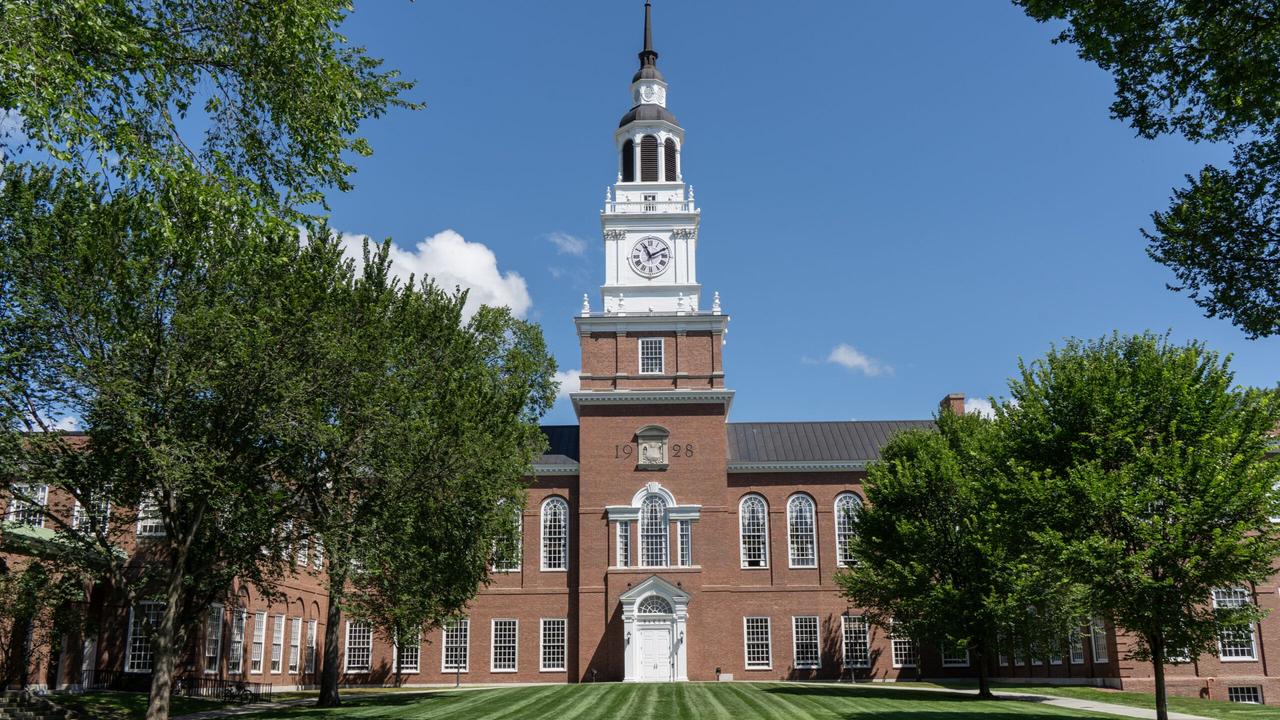
The timing proves particularly awkward for Dartmouth, which positions itself as the birthplace of AI. In 1956, a small group of scientists gathered at the New Hampshire campus for a summer research project where the term "artificial intelligence" was coined
2
5
. A conference commemorating the 70th anniversary, titled "What Must Remain Human?", began just one day after Schnell's resignation announcement, featuring speakers like Mira Murati and Yann LeCun, plus a student hackathon sponsored by Anthropic1
.Dartmouth President Sian Leah Beilock, who wrote "Why I Want More AI at Dartmouth" for The Atlantic in September, emphasized that university leaders must "hold themselves to the highest standards"
1
. In announcing Schnell's departure, she stressed that "keeping Dartmouth at the forefront of AI inevitably means leading through an environment that is fluid and fast-changing"2
4
. The key requirement appears clear: transparency and AI disclosure.What This Means for Academic Integrity Standards
Schnell's case exposes the murky boundaries between acceptable AI assistance and academic misconduct. He consistently maintained he used AI as an "editorial tool" comparable to grammar checkers, telling one journal editor he "did not understand that this type of AI-assisted editing required disclosure"
1
. The faculty committee concluded he used AI to "meaningfully alter his writing" and "was not forthcoming about his AI use"5
, falling short of the university's code of ethical conduct.Matthew Delmont, a history professor and associate dean, will serve as interim provost through June 2028
4
. Beilock acknowledged that "each of us brings a different perspective on how and when to incorporate AI into our work and our lives," but insisted leaders must "model the transparency and human judgment that we expect from our students and scholars"4
5
.
Source: The Hill
As universities establish policies around AI in academia, Schnell's resignation signals that ethical concerns of AI use center not just on whether AI tools are used, but whether that use is honestly disclosed. The case raises urgent questions: Where does editorial assistance end and substantive AI authorship begin? How should institutions balance AI adoption with academic integrity? For now, the answer appears straightforward—disclose your AI use or face consequences, regardless of your position.
References
Summarized by

Navi
[1]
[4]
Related Stories
UC Berkeley Professor Admits AI Use in Viral Op-Ed Criticizing Student Math Abilities
20 Aug 2026•Entertainment and Society

Brown University Professor Exposes Mass AI Cheating After Exam Scores Plunge From 96% to 48%
09 Jul 2026•Entertainment and Society

University of Illinois Students Caught Using AI to Apologize for Cheating, Highlighting Academic Integrity Crisis
30 Oct 2025•Entertainment and Society

Recent Highlights


Recent Highlights
Today's Top Stories







Don’t drown in AI news. We cut through the noise - filtering, ranking and summarizing the most important AI news, breakthroughs and research daily. Follow topics that matter to you and stay ahead.


