Starcloud Reaches $1.1 Billion Valuation Building AI Data Centers in Space


8 Sources
8 Sources
[1]
Starcloud raises $170 million Series Ato build data centers in space | TechCrunch
Starcloud's latest funding round values the space compute company at $1.1 billion, making it one of the fastest startups to reach unicorn status after graduating from Y Combinator. The company's Series A, which closed 17 months after its demo day presentation, was led by Benchmark and EQT Ventures. It's another sign of the interest in outsourcing data centers to orbit as resource and political obstacles slow their development on Earth, but the business model depends on unproven technology and significant capital expenditure. Starcloud has now raised a total of $200 million, and launched its first satellite with an Nvidia H100 GPU in November 2025. The company will launch a more powerful version, Starcloud 2, later this year with multiple GPUs, including an Nvidia Blackwell chip and an AWS server blade, as well as a bitcoin mining computer. The company will also begin developing a data center spacecraft designed to launch from Starship, the reusable heavy lift rocket being built by Elon Musk's SpaceX. Starcloud 3, as the spacecraft is named, will be a 200 kilowatts, three-ton spacecraft that fits the "pez dispenser" system SpaceX designed to deploy its Starlink satellites from Starship. CEO and founder Philip Johnston said he expects that will be the first orbital data center that is cost-competitive with terrestrial data centers, with costs on the order of $.05 per kw/hour of power -- if commercial launch costs land around $500 per kilogram. The challenge is that Starship isn't flying yet; Johnston says he expects commercial access to open up in 2028 and 2029. That's the reality facing all the big space data center projects: powerful space computers will be cost-prohibitive until a new generation of rockets starts launching at a high operational cadence, something that might not happen until the 2030s. "If it ends up being delayed, we'll just carry on launching the smaller versions on Falcon 9," Johnston said. "We're not going to be competitive on energy costs until Starship is flying frequently." "There's kind of two business models," Johnston explains: One is selling processing power to other spacecraft on orbit; the company's first satellite, for example, analyzes data collected by Capella Space's radar spacecraft. Then, in the future when launch costs go down, more powerful distributed data centers could potentially pull work from their terrestrial counterparts. That gets at how new this industry really is. When Nvidia CEO Jensen Huang unveiled the company's Vera Rubin Space-1 chip modules at his company's annual GPU Technology Conference last week, he didn't note that none had been produced or shared with the company's development partners. In fact, the number of advanced GPUs on orbit is numbered in the dozens, while Nvidia is estimated to have sold nearly 4 million to terrestrial hyperscalers in 2025. Or consider that SpaceX's Starlink communications network, the largest satellite network in orbit with 10,000 spacecraft, produces something around 200 megawatts of energy, while data centers with more than 25 gigawatts of power are currently under construction in the U..S, according to Cushman and Wakefield. Johnston argues that his company is well ahead of the competition, with the first terrestrial GPU deployed in orbit. It was used to train an AI model in orbit, a first, according to Starcloud, and run a version of Gemini. Beyond the performance, Johnston says Starcloud now has valuable data about what it takes to run a powerful chip in space. "An H100 is probably not the best chip for space, to be honest, but the reason we did it is we wanted to prove that we could run state of the art terrestrial chips in space," he told TechCrunch. That hard-won knowledge -- another GPU, an Nvidia A6000, failed during launch -- will influence future designs. There is a laundry list of technical challenges to be solved, including efficient power generation and cooling the hot-running chips. Starcloud-2 will have the largest deployable radiator flown on a private satellite; he expects at least two additional versions of that spacecraft will head to orbit, Johnston said. Then there is the challenge of synchronization. The largest datacenter workloads, often for training, require hundreds or thousands of GPUs to work in tandem. Doing that in space will either require fantastically large spacecraft, or powerful and reliable laser links between spacecraft flying in formation. Most companies working on this technology expect those workloads to come long after simpler inference tasks take place on orbit. Besides Starcloud, Aetherflux, Google's Project Suncatcher, and Aethero -- which launched Nvidia's first space-based Jetson GPU in 2025 -- are all developing space data center businesses. The elephant in the room is SpaceX itself, which has asked the U.S. government for permission to build and operate a million satellites for distributed compute in space. Going head-to-head with SpaceX is a daunting task for any entrepreneur, but Johnston sees room for coexistence. "They are building for a slightly different use case than us," he told TechCrunch. "They're mainly planning on serving Grok and Tesla workloads. It may be at some point that they offer a third party cloud service, but what I think they are unlikely to do is what we're doing [as] an energy and infrastructure player."
[2]
Starcloud reaches $1.1 billion valuation as AI space race heats up
March 30 (Reuters) - Orbital compute infrastructure startup Starcloud has raised $170 million at a $1.1 billion valuation, as companies including Elon Musk's SpaceX and Jeff Bezos' Blue Origin race to move power-hungry AI data centers off-planet. Led by Benchmark and EQT Ventures, the fundraise underscores surging investor appetite for space infrastructure bets as massive AI computing requirements strain terrestrial energy grids and data center capacity, even as space-based systems offer access to near-continuous solar power. Starcloud, which has long-term plans for an 88,000-satellite data center constellation, will use the new capital to fund next-generation satellites, manufacturing expansion and future launch contracts as it moves toward commercial operations, it said on Monday. "The main customer contracts that are committed are for other spacecraft, particularly Earth Observation and DOW satellites. We are also working on some binding energy offtake agreements with the hyperscalers to be announced in the coming months," co-founder and CEO Philip Johnston told Reuters. In February, Elon Musk's SpaceX acquired his AI startup xAI and revealed plans for a million-satellite orbital data center network. Blue Origin, the space venture of Amazon's Jeff Bezos, has expressed similar ambitions. Meanwhile, Starcloud is already working with partners including Nvidia (NVDA.O), opens new tab and the cloud units of Amazon (AMZN.O), opens new tab and Google (GOOGL.O), opens new tab. In November, it launched a satellite carrying Nvidia's H100 chip, demonstrating AI training and inference in orbit in an industry-first move. It now plans a second launch in October featuring Amazon Web Services' AWS Outposts offering. While space infrastructure would ease power and land constraints, high launch costs remain a challenge. But Starcloud expects them to fall enough by 2028 or 2029 to make space-based data centers cost-competitive with Earth facilities, Johnston said. The latest round brings Starcloud's total funding to $200 million, with the Redmond, Washington-based company having raised $34 million earlier from investors including Andreessen Horowitz and In-Q-Tel, the Central Intelligence Agency's venture capital firm. Reporting by Akash Sriram in Bengaluru; Editing by Jonathan Ananda Our Standards: The Thomson Reuters Trust Principles., opens new tab * Suggested Topics: * Artificial Intelligence Akash Sriram Thomson Reuters Akash reports on technology companies in the United States, electric vehicle companies, and the space industry. His reporting usually appears in the Autos & Transportation and Technology sections. He has a postgraduate degree in Conflict, Development, and Security from the University of Leeds. Akash's interests include music, football (soccer), and Formula 1.
[3]
AI satellite start-ups gain traction with investors ahead of SpaceX IPO
Venture capitalists are pouring hundreds of millions of dollars into start-ups planning to launch AI systems into space, after billionaires including Jeff Bezos, Elon Musk and Nvidia chief Jensen Huang poured rocket fuel on the idea in recent weeks. Musk's SpaceX and Bezos's Blue Origin are both working on projects to launch AI data centres made up of thousands of satellites into orbit, while Nvidia this month unveiled new AI chips designed to work in space. That has helped drive investor interest in US start-ups Starcloud and Aetherflux, which are also developing solar-powered orbital AI data centres. The companies' planned systems would handle requests sent from terrestrial users to AI apps such as ChatGPT or Claude Code, beaming the responses back to Earth. In the coming years, advocates believe AI computers in space could operate more cheaply than comparable systems on Earth. Starcloud said on Monday it had raised $170mn from investors including Benchmark and EQT Ventures. The deal values the two-year-old start-up at $1.1bn, including the new capital. "By moving AI compute to space, we unlock access to unlimited solar power and completely remove the energy bottleneck," said Philip Johnston, Starcloud's co-founder and chief executive. "This funding allows us to rapidly scale our orbital infrastructure and meet the massive commercial demand for sustainable AI compute." Chetan Puttagunta, a partner at Benchmark who is joining Starcloud's board, said an acute shortage of energy on Earth to power ever-growing AI computing demands demonstrated a "pretty big market need for new ways to approach the problem". "If you project out the future, this feels pretty on trend on where the world is going," he said. That deal comes as California-based Aetherflux, which is led by Robinhood co-founder Baiju Bhatt, is in discussions to raise as much as $300mn at a valuation of about $2bn, according to people familiar with the deal. Aetherflux, which is backed by venture capital firms including Andreessen Horowitz and Index Ventures, declined to comment on the talks, which were previously reported by the Wall Street Journal. Musk has made orbital AI central to his pitch for SpaceX's forthcoming initial public offering, after merging his AI start-up xAI into his rocket company last month. Both SpaceX and Blue Origin have applied to the US Federal Communications Commission for permission to launch thousands of AI satellites, with Musk's rocket company targeting a constellation of as many as 1mn units. After raising $3mn in its initial funding round, Starcloud has designed, built and in November launched its first satellite, becoming the first group to put into orbit an Nvidia H100 AI chip. "The fact that such a small team with so little capital actually got it to work was thoroughly impressive to us," said Puttagunta. Starcloud has scheduled its second launch for later this year, while Aetherflux has said it plans to launch its first commercial AI data centre early in 2027. Both companies are likely to rely on SpaceX to launch their satellites. "[SpaceX] are tightly vertically integrated and that will translate to benefits for them," Bhatt told the FT last month. "But there is enough demand for multiple companies to be competitive in this space." Despite Nvidia's debut of its Space-1 Vera Rubin Module at its GTC event earlier this month, Huang has cautioned that running AI in a vacuum poses technical challenges that will "take years" to solve. "Obviously there's a lot of energy in space," he said on a recent episode of the All-In podcast. "The challenge of course is cooling -- you can't take advantage of conduction or convection. You can only use radiation. Radiation requires very large surfaces." He added: "That's not an impossible thing to solve. There's a lot of space in space."
[4]
Orbital AI: Seattle-area startup Starcloud hits $1.1B valuation to build space-based data centers
Starcloud, a startup building solar-powered data centers that operate in space, announced $170 million in new funding Monday, vaulting it to unicorn status with a $1.1 billion valuation. The Redmond, Wash.-based company is now the fastest in Y Combinator history to hit that milestone, reaching the billion-dollar mark just 17 months after its accelerator demo day. The meteoric rise follows a period of heavy skepticism. Philip Johnston, Starcloud's CEO and co-founder, said the company was "fairly roundly pilloried" in its early days. "If you go back to some of the comments on X when we announced, people said it was impossible and we couldn't do it." Starcloud is engineering satellites equipped with solar panels, radiation shielding to protect the electronics from the harsh environment of outer space, communication devices, and a cooling system adapted from International Space Station technology to manage the heat generated by high-performance computing. Accomplishment and new milestones. In November, the startup partnered with SpaceX to launch Starcloud-1, its 130-pound satellite carrying an Nvidia H100 chip. The mission successfully demonstrated that the hardware could process AI workloads reliably in orbit, including becoming the first to train a large language model in space, the startup reported. Its next milestone will be the launch later this year of Starcloud-2, a satellite with 100 times the power generation capacity of the first and featuring Nvidia's Blackwell B200 chip, considered the most powerful AI chip in the world. The system will run customer workloads. Starcloud's orbital pitch arrives as terrestrial data centers face a dual crisis: surging power demand and growing "not in my backyard" opposition from local communities. Residents and officials across the country have pushed back against new computing facilities that can potentially drive up electricity rates and consume vast volumes of water for cooling. From local governments to President Trump, leaders are trying to rein in the impacts of new data center deployments. "We need to start looking for new ways to do this," Johnston said. "And actually, what we're doing is the most sensible." The new race to space. Starcloud was founded in January 2024 by Johnston, Chief Technology Officer Ezra Feilden and Chief Engineer Adi Oltean. The founders previously held roles at SpaceX's Starlink, Airbus and McKinsey & Co. The team has been on the leading edge of space-based data centers, with an initial focus on processing data from other satellites before transmitting it to Earth. The longer-term plan is to handle all manner of workloads, including data uplinked from the ground. Other companies are joining the pursuit as well. SpaceX filed an application with the Federal Communications Commission earlier this year for the deployment of up to one million data center satellites, according to reports. Axiom Space, Kepler Communications and Sophia Space are likewise developing the technology, and Google began exploring the concept with its Project Suncatcher. Johnston touts Starcloud's head start. "We have a huge edge by being first," he said. "We've got the best team in the world for this. We're moving incredibly quickly. We're two years ahead in terms of having any kind of data and telemetry from how these chips perform on orbit." The economic path forward. Not everyone is convinced. At a recent Microsoft event, company President Brad Smith said the tech giant might eventually pursue the satellite strategy, but he wasn't "betting on that." "We're keeping our feet on the ground," Smith said. Johnston acknowledges that space-based computing won't displace terrestrial data centers anytime soon. He expects the economics to shift in space's favor within three to five years, but even then, less than 1% of new compute capacity coming online would be in orbit. About a decade out, he expects the sector to hit a tipping point when satellite data centers "will be by far the fastest growing segment," he said, "and it will continue to be fast growing until it hits almost all compute being in space." Funding details. A notable roster of venture capitalists is already betting on it. The Series A round was split into two tranches: a first tranche led by Benchmark with participation from EQT -- which operates more than 70 terrestrial data centers -- and an extension round co-led by both firms. As part of the deal, Benchmark general partner Chetan Puttagunta will join Starcloud's board. The round also included the infrastructure fund Macquarie Capital, NFX, Nebular, Y Combinator, Adjacent, 776 Ventures, Fuse Ventures, Manhattan West and Monolith Power Systems. Angel investors included retired U.S. Air Force Gen. Stephen Wilson, former Boeing CEO Dennis Muilenburg, and former Starbucks CEO Kevin Johnson. The startup has raised a total of $200 million.
[5]

Starcloud CEO Philip Johnston on Putting the First A.I. Data Center in Space
Philip Johnston's Starcloud is chasing limitless solar energy in orbit to fuel A.I.'s exponential growth. But the idea also faces technical and regulatory challenges. In November, a 60-kilogram satellite the size of a small refrigerator called Starcloud-1 streaked into low Earth orbit aboard a SpaceX rocket carrying the first data-center-class GPU ever operated in space -- an Nvidia H100 roughly 100 times more powerful than any prior orbital compute. Within weeks, Starcloud, the company making the satellite, announced it had trained a language model on the complete works of Shakespeare and had run Google's Gemini from roughly 200 miles above Earth. Sign Up For Our Daily Newsletter Sign Up Thank you for signing up! By clicking submit, you agree to our <a href="http://observermedia.com/terms">terms of service</a> and acknowledge we may use your information to send you emails, product samples, and promotions on this website and other properties. You can opt out anytime. See all of our newsletters "The spacecraft is performing better than we could have hoped for," Philip Johnston, co-founder and CEO of Starcloud, told Observer. Johnston founded the Redmond, Wash. company in early 2024, backed by a conviction that has since attracted $200 million from investors, including Nvidia, In-Q-Tel, Sequoia Capital and Y Combinator: Rather than build better infrastructure on Earth to satiate A.I.'s runaway energy appetite, move the infrastructure off of Earth entirely. Today (March 30), the company announced it raised a $170 million in Series A funding at a $1.1 billion valuation, helping it reach unicorn status in just 17 months (and the quickest to do so in Y Combinator's history). Johnston, 39, brings a distinctly financial pragmatism to the cosmos. Before pivoting to aerospace, Johnston served as an algorithmic trader at BNP Paribas, consulted for national space agencies at McKinsey and co-founded Opontia, an e-commerce aggregator that raised $46 million before being acquired. A self-avowed space nerd, Johnston came upon the idea for Starcloud after a solo weekend trip to Starbase, the Texas city where SpaceX is headquartered, to see the Starship rocket. What struck him was across the road from the rocket: two gigafactories "similar to Tesla production lines," he shared in a TED Talk in October, designed to each produce a new Starship every day. He went home, called his co-founders Ezra Feilden, a materials engineer he had grown up with in the U.K., and Adi Oltean, a former principal software engineer at SpaceX, and started running the numbers on what that launch capacity could enable. Data centers kept coming up as the answer. Starcloud-1 is the first data center in space The numbers driving his conviction are hard to argue with. A typical A.I.-focused data center consumes as much electricity annually as 100,000 households, according to the International Energy Agency. In space, Johnston says, one square meter of solar panel produces eight times the energy of an equivalent panel on Earth. Starcloud-1 is a 60-kilogram aluminum box packed with five Nvidia GPUs in total, with the H100 drawing the most attention, and other supporting hardware. It circles Earth every 90 minutes in a dawn-dusk orbit designed to keep its solar panels in near-constant sunlight. Starcloud is already running edge computing workloads in space for Earth-observation and military satellites: Running inference -- say, real-time ChatGPT-like requests that don't need as much computing power or data transfer as training LLMs -- in orbit. "We can shorten the time to actionable insight from a few days to potentially a few seconds," Johnston said. Longer term, he has filed with the Federal Communications Commission (FCC) for a constellation of up to 88,000 satellites and envisions a 5-gigawatt orbital hypercluster. Starcloud is positioned not as the next AWS, but as neutral infrastructure. "I would view us more like an Equinix," the CEO said, referring to the global data center developer and operator giant. Starcloud plans to launch its second satellite, Starcloud-2, in October this year, and a third, Starcloud-2.1, in 2027. The commercial inflection point will happen with Starcloud-3: a 200-kilowatt, three-ton satellite. It's designed so that 50 satellites, each weighing 3 tons, can be launched with SpaceX's Starship rocket, which is still in development. Johnston projects mid-2028 as the moment when orbital data centers become cost-competitive with terrestrial facilities, so Starcloud-3 would presumably launch sometime between now and then, though it's an ambitious bet on a launch vehicle that has repeatedly slipped its own schedules. Further along in the future is Starcloud-4: a Starship-deployed satellite with a four-kilometer solar array powering a 5-gigawatt data center, a structure that would exceed the generating capacity of the largest power plant in the U.S. For now, however, it's more concept video than engineering blueprint. "By moving A.I. compute to space, we unlock access ot unlimited solar power and completely remove the energy bottleneck," Johnston said in regards to the latest fundraise, which will go mainly toward development of Starcloud-3, increased headcount, more manufacturing capacity and business development. "This funding allows us to rapidly scale our orbital infrastructure and meet the massive commercial demand for sustainable A.I. compute." Orbital data centers have a cooling problem Many experts consider thermodynamics the most severe bottleneck for orbital data centers. Since space is essentially a vacuum, containing almost no matter to dissipate heat, it's inherently cold. It might seem ideal for chilling high-performance electronics, but it's also an insulator. "How do you dissipate heat into a vacuum? It's like your thermos," Josep Miquel Jornet, a distinguished professor of electrical and computer engineering at Northeastern University, told Observer. "The outside is cold, great. The inside is hot-great if you want a tea, but not if you want to operate a data center in space." Without air or water for convective cooling, spacecraft rely on thermal radiation. Cooling a modern A.I. training cluster requires massive radiator panels. Pushing gigawatts of infrared radiation into deep space has consequences, many of which aren't yet understood. Jornet noted that the astronomical community relies on those same electromagnetic signatures to observe the formation of stars and galaxies. At the constellation scale, radiating infrared outward could interfere with NASA and other observatories scanning those frequencies. "If we start shooting infrared everywhere, it's going to piss off many people," he said. Even taking Starcloud's dawn-dusk sun-synchronous orbit window into account, Jornet says that twilight is a significant window for wide-field surveys that track near-Earth objects, and that space-based infrared telescopes like NASA's SPHEREx operate entirely above the atmosphere, unaffected by Earth's day-night cycle. In a recent episode of Sequoia Capital's Training Data podcast, Johnson said that cooling consumes roughly 70 percent of his engineering team's attention. Starcloud-1 is equipped with a proof-of-concept cooling system that can't run continuously. The production version -- a liquid-loop radiator with custom heat sinks feeding a large deployable radiator panel aimed out at space -- will go on Starcloud-2 in October. "We've tested it in thermal and vacuum chambers, and it works," he said. Johnston added that chip reliability is another concern: even a 10 percent higher failure rate in space than on Earth "would basically wipe out all of the savings from the energy," he said. Luckily, the H100 on Starcloud-1 has had no chip-level restart failures to date. Space data centers are gaining steam amid regulatory and political risks Starcloud, which currently employs 13 people, is hardly alone in the race. In January, SpaceX filed plans with the FCC for a constellation of up to one million orbital data center satellites. The company cites orbital data centers as a primary growth driver as it prepares for a historic IPO. In the same months, Jeff Bezos's Blue Origin unveiled its own data center effort, Project Sunrise, which plans to launch up to 51,600 satellites (per its FCC filing) in orbit. Google's Project Suncatcher plans to launch two test satellites with its A.I. processing chips in 2027 in partnership with Planet Labs. Aetherflux, founded by Robinhood co-founder Baiju Bhatt and backed by Andreessen Horowitz and Breakthrough Energy Ventures, is also targeting a 2027 launch for its first orbital data center node. Axiom Space has already deployed a data center node to the International Space Station. Against that backdrop, Starcloud's distinction is concrete: It's the only company to have already demonstrated working A.I. compute hardware in orbit. Ian Christensen, senior director of private-sector programs at the Secure World Foundation, which filed formal comments with the FCC on SpaceX's data center application, noted that Starcloud's filing for 88,000 satellites represents close to an order of magnitude increase over Starlink's current fleet of 10,000 satellites, and that existing safety standards were established for a far smaller orbital population. Currently, most satellites simply burn up upon re-entry to the Earth's atmosphere. Space policy experts at the SWF warn that burning up large numbers of aluminum satellites at scale could have unknown effects on the ozone layer. The FCC began reviewing its 1980s-era categorical environmental exemptions roughly a year ago without producing change. "It's an area where I think there might be some downstream regulatory risk in certain jurisdictions that may take a more forward-leaning approach," Christensen told Observer. He advises executives and investors to actively price in these unique liabilities, noting that environmental law might eventually apply in ways that go far beyond standard space regulation. "Space is a unique domain," he said. "There are unique regulatory risks that are going to affect your business plan in ways you might not think about for a terrestrial plan." Johnston has been building against skepticism since before Starcloud-1 left the ground. Now he has a satellite in orbit running real workloads for paying customers, a production cooling system that hasn't yet been tested in space and a chip reliability risk he identifies as potentially existential to the business case. And given how much oil and, subsequently, energy prices have risen as a result of increased global conflicts over the past few weeks, the appetite for risk that could solve energy scarcity has grown significantly almost overnight. While he may not have had specific current events in mind, it's worth noting something that Johnston told a TED audience in San Francisco last October: "The most effective way that we can save our own children and grandchildren from the scourge of war will be to stop competing over the fundamentally finite resources of Earth and to start utilizing the near limitless energy of our solar system and eventually of our galaxy."
[6]

Starcloud reaches $1.1 billion valuation as AI space race heats up
Led by Benchmark and EQT Ventures, the fundraise underscores surging investor appetite for space infrastructure bets as massive AI computing requirements strain terrestrial energy grids and data center capacity, even as space-based systems offer access to near-continuous solar power. Orbital compute infrastructure startup Starcloud has raised $170 million at a $1.1 billion valuation, as companies including Elon Musk's SpaceX and Jeff Bezos' Blue Origin race to move power-hungry AI data centers off-planet. Led by Benchmark and EQT Ventures, the fundraise underscores surging investor appetite for space infrastructure bets as massive AI computing requirements strain terrestrial energy grids and data center capacity, even as space-based systems offer access to near-continuous solar power. Starcloud, which has long-term plans for an 88,000-satellite data center constellation, will use the new capital to fund next-generation satellites, manufacturing expansion and future launch contracts as it moves toward commercial operations, it said on Monday. "The main customer contracts that are committed are for other spacecraft, particularly Earth Observation and DOW satellites. We are also working on some binding energy offtake agreements with the hyperscalers to be announced in the coming months," co-founder and CEO Philip Johnston told Reuters. In February, Elon Musk's SpaceX acquired his AI startup xAI and revealed plans for a million-satellite orbital data center network. Blue Origin, the space venture of Amazon's Jeff Bezos, has expressed similar ambitions. Meanwhile, Starcloud is already working with partners including Nvidia and the cloud units of Amazon and Google. In November, it launched a satellite carrying Nvidia's H100 chip, demonstrating AI training and inference in orbit in an industry-first move. It now plans a second launch in October featuring Amazon Web Services' AWS Outposts offering. While space infrastructure would ease power and land constraints, high launch costs remain a challenge. But Starcloud expects them to fall enough by 2028 or 2029 to make space-based data centers cost-competitive with Earth facilities, Johnston said. The latest round brings Starcloud's total funding to $200 million, with the Redmond, Washington-based company having raised $34 million earlier from investors including Andreessen Horowitz and In-Q-Tel, the Central Intelligence Agency's venture capital firm.
[7]

Starcloud reaches US$1.1 billion valuation as AI space race heats up
Orbital compute infrastructure startup Starcloud has raised US$170 million at a $1.1 billion valuation, as companies including Elon Musk's SpaceX and Jeff Bezos' Blue Origin race to move power-hungry AI data centers off-planet. Led by Benchmark and EQT Ventures, the fundraise underscores surging investor appetite for space infrastructure bets as massive AI computing requirements strain terrestrial energy grids and data center capacity, even as space-based systems offer access to near-continuous solar power. Starcloud, which has long-term plans for an 88,000-satellite data center constellation, will use the new capital to fund next-generation satellites, manufacturing expansion and future launch contracts as it moves toward commercial operations, it said on Monday. "The main customer contracts that are committed are for other spacecraft, particularly Earth Observation and DOW satellites. We are also working on some binding energy offtake agreements with the hyperscalers to be announced in the coming months," co-founder and CEO Philip Johnston told Reuters. In February, Elon Musk's SpaceX acquired his AI startup xAI and revealed plans for a million-satellite orbital data center network. Blue Origin, the space venture of Amazon's Jeff Bezos, has expressed similar ambitions. Meanwhile, Starcloud is already working with partners including Nvidia NVDA.O and the cloud units of Amazon and Google. In November, it launched a satellite carrying Nvidia's H100 chip, demonstrating AI training and inference in orbit in an industry-first move. It now plans a second launch in October featuring Amazon Web Services' AWS Outposts offering. While space infrastructure would ease power and land constraints, high launch costs remain a challenge. But Starcloud expects them to fall enough by 2028 or 2029 to make space-based data centers cost-competitive with Earth facilities, Johnston said. The latest round brings Starcloud's total funding to $200 million, with the Redmond, Washington-based company having raised $34 million earlier from investors including Andreessen Horowitz and In-Q-Tel, the Central Intelligence Agency's venture capital firm. (Reporting by Akash Sriram in Bengaluru; Editing by Jonathan Ananda)
[8]

Starcloud reaches $1.1 billion valuation as AI space race heats up
March 30 (Reuters) - Orbital compute infrastructure startup Starcloud has raised $170 million at a $1.1 billion valuation, as companies including Elon Musk's SpaceX and Jeff Bezos' Blue Origin race to move power-hungry AI data centers off-planet. Led by Benchmark and EQT Ventures, the fundraise underscores surging investor appetite for space infrastructure bets as massive AI computing requirements strain terrestrial energy grids and data center capacity, even as space-based systems offer access to near-continuous solar power. Starcloud, which has long-term plans for an 88,000-satellite data center constellation, will use the new capital to fund next-generation satellites, manufacturing expansion and future launch contracts as it moves toward commercial operations, it said on Monday. "The main customer contracts that are committed are for other spacecraft, particularly Earth Observation and DOW satellites. We are also working on some binding energy offtake agreements with the hyperscalers to be announced in the coming months," co-founder and CEO Philip Johnston told Reuters. In February, Elon Musk's SpaceX acquired his AI startup xAI and revealed plans for a million-satellite orbital data center network. Blue Origin, the space venture of Amazon's Jeff Bezos, has expressed similar ambitions. Meanwhile, Starcloud is already working with partners including Nvidia and the cloud units of Amazon and Google. In November, it launched a satellite carrying Nvidia's H100 chip, demonstrating AI training and inference in orbit in an industry-first move. It now plans a second launch in October featuring Amazon Web Services' AWS Outposts offering. While space infrastructure would ease power and land constraints, high launch costs remain a challenge. But Starcloud expects them to fall enough by 2028 or 2029 to make space-based data centers cost-competitive with Earth facilities, Johnston said. The latest round brings Starcloud's total funding to $200 million, with the Redmond, Washington-based company having raised $34 million earlier from investors including Andreessen Horowitz and In-Q-Tel, the Central Intelligence Agency's venture capital firm. (Reporting by Akash Sriram in Bengaluru; Editing by Jonathan Ananda)
Share
Share
Copy Link
Starcloud raised $170 million in Series A funding at a $1.1 billion valuation, becoming the fastest Y Combinator startup to reach unicorn status in just 17 months. The company is building solar-powered data centers in space to address AI's growing energy demands, having already launched the first Nvidia H100 GPU to orbit in November 2025.
Starcloud Achieves Unicorn Status With $170 Million Series A
Starcloud has raised $170 million Series A at a $1.1 billion valuation, making it the fastest startup in Y Combinator history to reach unicorn status just 17 months after its demo day presentation
1
4
. The round, led by Benchmark and EQT Ventures, brings the Redmond, Washington-based company's total funding to $200 million and signals surging investor appetite for space computing solutions as AI data centers strain terrestrial energy grids2
.
Source: Observer
The funding comes as venture capitalists pour hundreds of millions into orbital compute infrastructure startups, with California-based competitor Aetherflux reportedly in discussions to raise as much as $300 million at a $2 billion valuation
3
. CEO and founder Philip Johnston told Reuters that the main customer contracts committed are for other spacecraft, particularly Earth observation and defense satellites, while the company is also working on binding energy offtake agreements with hyperscalers to be announced in coming months2
.First Nvidia H100 GPU Successfully Operates in Orbit
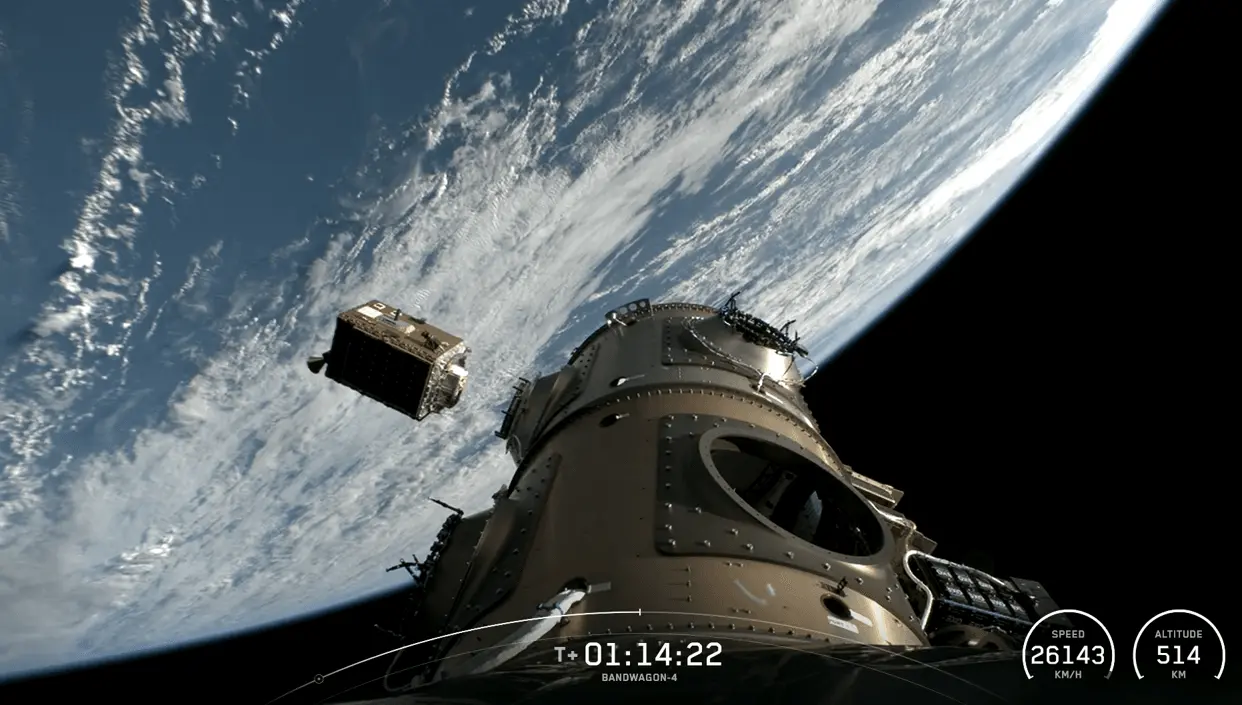
In November 2025, Starcloud launched its first satellite carrying an Nvidia H100 GPU, becoming the first company to deploy a data-center-class GPU in space
1
5
. The 60-kilogram Starcloud-1 satellite successfully demonstrated AI training and inference in orbit, including training a language model on the complete works of Shakespeare and running Google's Gemini from roughly 200 miles above Earth5
.
Source: GeekWire
Chetan Puttagunta, a partner at Benchmark who is joining Starcloud's board, said the fact that such a small team with so little capital actually got it to work was thoroughly impressive
3
. Johnston argues that Starcloud now has valuable data about what it takes to run powerful chips in space, noting that another GPU, an Nvidia A6000, failed during launch1
.Solar-Powered Data Centers Address Energy Bottleneck
The business model centers on leveraging near-continuous solar power available in orbit to handle AI workloads in orbit while removing the energy bottleneck facing terrestrial data centers
3
. One square meter of solar panel in space produces eight times the energy of an equivalent panel on Earth, according to Johnston5
. Data centers with more than 25 gigawatts of power are currently under construction in the U.S., while SpaceX's Starlink network of 10,000 spacecraft produces only around 200 megawatts1
.
Source: TechCrunch
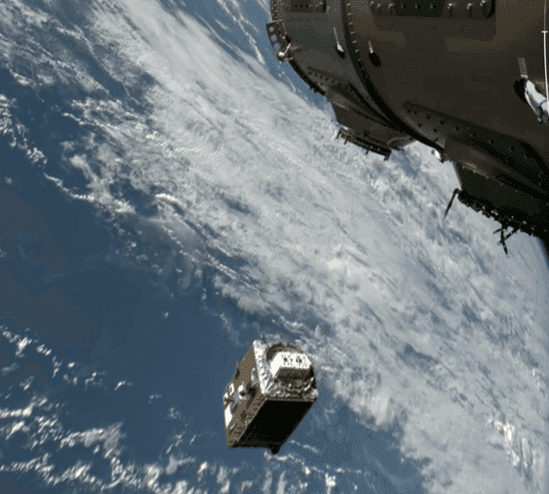
Starcloud plans to launch Starcloud-2 in October this year, featuring 100 times the power generation capacity of the first satellite and equipped with Nvidia's Blackwell B200 chip, considered the most powerful AI chip in the world
4
. The satellite will include multiple GPUs and an AWS server blade, as well as the largest deployable radiator flown on a private satellite to address cooling challenges1
.Related Stories
Path to Cost Competitiveness Depends on Starship Launch Costs
The company will begin developing Starcloud-3, a 200-kilowatt, three-ton spacecraft designed to launch from SpaceX's Starship reusable heavy lift rocket
1
. Johnston expects this will be the first orbital data center cost-competitive with terrestrial data centers, with costs around $0.05 per kilowatt-hour of power—if commercial launch costs land around $500 per kilogram1
.The challenge is that Starship isn't flying commercially yet. Johnston expects commercial access to open up in 2028 and 2029, though he acknowledges that if delayed, the company will continue launching smaller versions on Falcon 9
1
. Starcloud expects launch costs to fall enough by 2028 or 2029 to make data centers in space cost-competitive with Earth facilities2
.Technical Challenges and Competition From SpaceX
There remains a laundry list of technical challenges to solve, including efficient power generation and cooling in a vacuum. Nvidia CEO Jensen Huang cautioned that running AI in space poses challenges that will take years to solve, noting that cooling requires very large surfaces since only radiation can be used, not conduction or convection
3
. The largest datacenter workloads for training require hundreds or thousands of GPUs to work in tandem, which will require either fantastically large spacecraft or powerful laser links between spacecraft flying in formation1
.The elephant in the room is Elon Musk's SpaceX itself, which has asked the U.S. government for permission to build and operate a million satellites for distributed compute in space
1
. In February, SpaceX acquired Musk's AI startup xAI and revealed plans for a million-satellite orbital data center network2
. Besides Starcloud, competitors include Aetherflux, Google's Project Suncatcher, and Aethero, which launched Nvidia's first space-based Jetson GPU in 20251
.Starcloud has filed with the Federal Communications Commission for a satellite data center constellation of up to 88,000 satellites and envisions a 5-gigawatt orbital hypercluster
5
. The company is currently running edge computing workloads for Earth observation and military satellites, shortening the time to actionable insight from days to potentially seconds5
.References
Summarized by

Navi
[4]
Related Stories
SpaceX pushes AI data centers into orbit as Musk predicts space will beat Earth in 36 months
06 Feb 2026•Technology
Google Announces Project Suncatcher: Ambitious Plan for AI Data Centers in Space
04 Nov 2025•Technology

Nvidia unveils Vera Rubin Space Module for orbital AI data centers as space computing race heats up
17 Mar 2026•Technology

Recent Highlights
1
Apple Plans Major Siri AI Overhaul in iOS 27 With Third-Party Chatbot Integration
Technology

2
OpenAI shuts down Sora after six months, ending Disney's $1 billion licensing partnership
Technology

3
AI chatbots validate you too much, making you less kind to others, Stanford study reveals
Science and Research
Recent Highlights
Today's Top Stories





Your Daily Dose of Curated AI News
Don’t drown in AI news. We cut through the noise - filtering, ranking and summarizing the most important AI news, breakthroughs and research daily. Spend less time searching for the latest in AI and get straight to action.

