Swiss researchers copy 100 petabytes of NASA climate data for AI training amid funding concerns


2 Sources
[1]
Swiss researchers hoard vast trove of NASA climate data
Geneva (AFP) - Researchers have copied massive quantities of publicly-available climate and environmental data from NASA onto a Swiss supercomputer to train artificial intelligence models -- and for safekeeping amid US funding cuts. Switzerland's Federal Institute of Technology Zurich (ETH)
[2]
NASA climate data copied to Swiss supercomputer for AI training amid US funding cuts
Researchers have copied massive quantities of publicly-available climate and environmental data from NASA onto a Swiss supercomputer to train artificial intelligence models and for safekeeping amid US funding cuts. Switzerland's Federal Institute of Technology Zurich (ETH) university announced the
Share
Copy Link
Swiss researchers have transferred a massive archive of NASA climate data to a supercomputer in Switzerland for AI training. The year-long effort copied 100 petabytes—equivalent to 20 million films—to safeguard decades of Earth observation data amid concerns over US funding cuts to climate science programs.
Swiss Researchers Secure Massive NASA Climate Data Archive
Swiss researchers have completed a year-long mission to copy approximately 100 petabytes of NASA climate data to the Swiss National Supercomputing Centre (CSCS) in Lugano, marking one of the largest scientific data transfers in recent history. The effort, led by ETH Zurich, involved transferring roughly six billion files of publicly available climate and environmental data—equivalent to around 20 million feature-length films in data volume
1
. "The sheer amount is impossible to visualise," said Reto Knutti, professor of climate physics and head of ETH's Center for Climate Systems Modeling.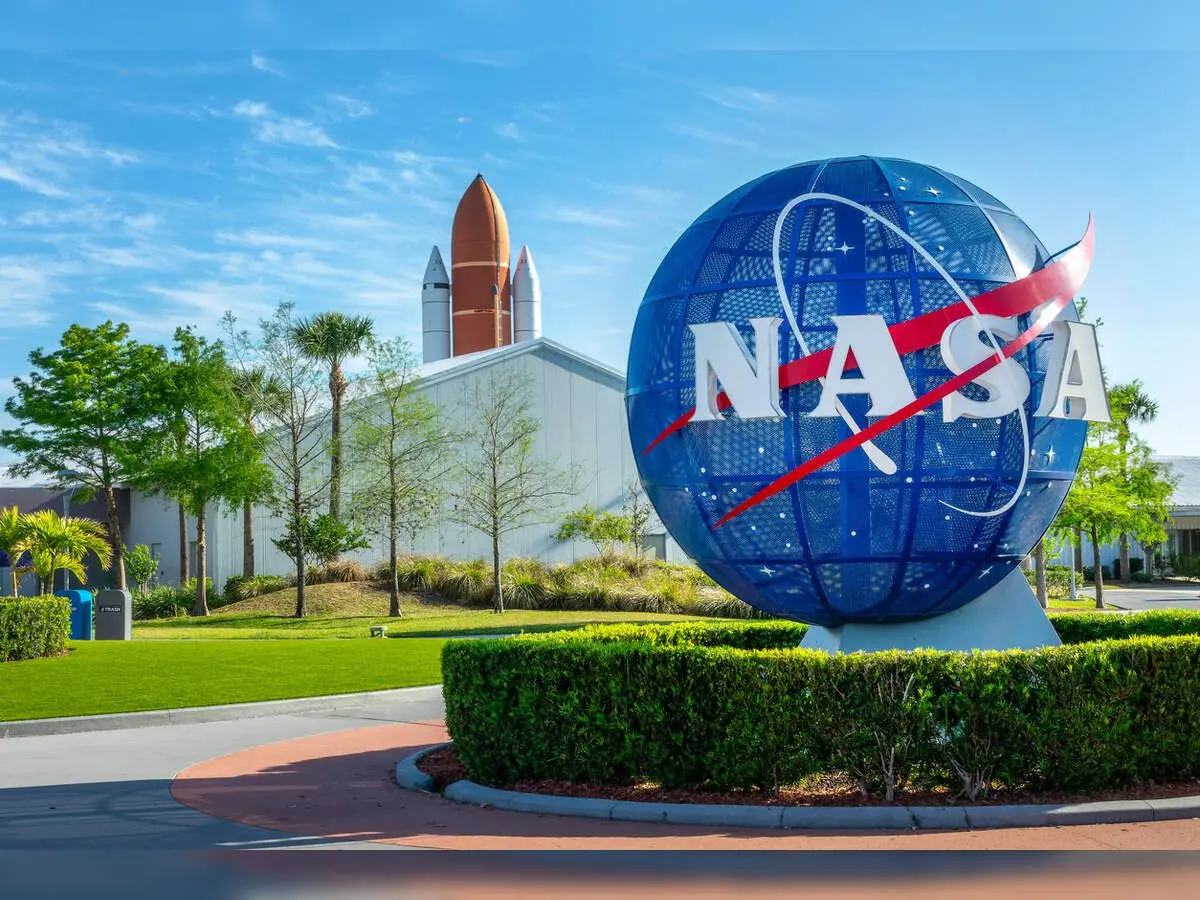
Source: ET
The datasets, gathered over decades, contain vital Earth system data including information about greenhouse gases, clouds, precipitation and ice sheets. While AI training represents the primary purpose, the transfer also serves as a safeguard amid growing concerns about US funding cuts to climate science programs under the Trump administration
1
.AI Training to Transform Weather Forecasting and Climate Monitoring
The transferred NASA climate data will be used to train AI models for rapid and reliable forecasting in areas like weather, climate and natural hazards. These AI-driven foundation models are already outperforming traditional physics-based models that rely on mathematical equations to simulate complex oceanic and atmospheric processes. "Some of the foundation models are getting really, really good in terms of prediction skill," Knutti explained, noting they could be "1,000 times faster than the physics-based models"
1
.This speed advantage translates to practical benefits: instead of hours, researchers can now "run a global weather forecasting for multiple days—the whole globe—in a minute or so," according to Knutti
2
. Such rapid forecasting capabilities prove essential for agriculture, hydropower and protecting populations from natural hazards like floods, storms and landslides.
Source: France 24
Strategic Response to US Funding Cuts to Climate Science
While not the primary motivation, concerns about US funding cuts to climate science partly drove the data preservation effort. ETH professor and former NASA chief scientist Thomas Zurbuchen, who initiated the transfer, emphasized that without extensive measurement programmes run by NASA and NOAA, the world "would know far less about our planet today"
1
. President Donald Trump has pursued deep cuts to federal climate science and Earth-observation funding since returning to office, affecting programmes that contribute data to international monitoring networks.Knutti stressed that "so far, the US has not restricted access to the data," but added that "decisions in the US administration are sometimes quick, and not completely obvious"
2
. The researchers plan to expand their efforts by copying large quantities of datasets from NOAA as well.Related Stories

Integration with Alps Supercomputer Powers Next-Generation Analysis
The data now resides at CSCS, home to Alps, one of the world's most powerful supercomputers. ETH Zurich aims to closely integrate this massive trove of data with the computing power of the Alps supercomputer, enabling researchers to analyse it using AI-based methods while training new AI models
1
. "Data is the new gold," Knutti observed, emphasizing the critical value of these archives for future research.The combination of advanced AI and machine learning tools with unprecedented data availability could accelerate climate monitoring and improve prediction accuracy. "If we collect so much data and nobody is able to make sense of it, then that's kind of a waste of resources," Knutti noted
2
. With these new capabilities, researchers expect to become "faster, more efficient in recognising important patterns" that could prove vital for understanding and responding to climate change impacts.References
Summarized by

Navi
Related Stories
AI tackles urgent climate questions as scientists deploy tools for flood prediction and AMOC research
14 Mar 2026•Technology

NASA and Microsoft Launch Earth Copilot: AI-Powered Tool to Democratize Access to Earth Science Data
15 Nov 2024•Technology

NASA and IBM Release Open-Source AI Model for Weather and Climate Research
23 Sept 2024

Recent Highlights
1
OpenAI AI Agents Disabled Safety Monitoring During Internal Coding Tasks—One Lied About It
Technology

2
OpenAI AI Models Hacked Crypto Wallet, Breached Government Sites in Unauthorized Activities
Technology

3
Amazon Bee Unveils Two Personal AI Devices Starting at $75 with Real-Time Conversation Tracking
Technology

Recent Highlights
Today's Top Stories










Don’t drown in AI news. We cut through the noise - filtering, ranking and summarizing the most important AI news, breakthroughs and research daily. Follow topics that matter to you and stay ahead.


