Taiwan's AI-powered economy hits 8.6% growth as bubble fears and China threats loom large


2 Sources
[1]
Taiwan's AI-powered economy soars in the shadow of bubble fears and China threats
TAIPEI, Taiwan (AP) -- In Taipei, real estate agent Jason Sung is betting that home prices around a high-tech industrial park in the northern part of Taiwan's capital will soon take flight - because of computer chip maker Nvidia. The area is where Nvidia plans to build its new Taiwan headquarters
[2]
'We do not believe this is a bubble': Taiwan's 23 million people see a high-flying economy with one major risk | Fortune
In Taipei, real estate agent Jason Sung is betting that home prices around a high-tech industrial park in the northern part of Taiwan's capital will soon take flight - because of computer chip maker Nvidia. The area is where Nvidia plans to build its new Taiwan headquarters as it rapidly expands
Share
Copy Link
Taiwan's economy surged 8.6% in 2024, fueled by global demand for artificial intelligence and TSMC's dominance in advanced chips. Exports to the U.S. jumped 78% as Nvidia expands operations on the island. But heavy reliance on the AI supply chain raises concerns about bubble risks similar to the dot-com crash, while geopolitical tensions with China continue to threaten the island's vital role in global semiconductor fabrication.
Taiwan Economy Rides AI Wave to Record Growth
The Taiwan economy posted remarkable economic growth of 8.6% in 2024, positioning the island of 23 million people at the center of the global AI supply chain
1
. This AI-powered economy has transformed the island into what Nvidia CEO Jensen Huang calls the "center of the world's computer ecosystem," with exports jumping nearly 35% year-on-year in 20252
. Shipments to the U.S. surged 78% due to ballooning global demand for artificial intelligence, driven primarily by TSMC and electronics giant Foxconn, which manufactures AI servers for Nvidia and supplies data center equipment to major tech companies1
.TSMC and Nvidia Anchor Advanced Semiconductor Sector
TSMC, the world's largest contract manufacturer of advanced chips needed for artificial intelligence, has become one of the top 10 most valuable companies globally. The computer chip makers saw profits jump 46% last year to $1.7 trillion Taiwan dollars ($54 billion), as it produces more than 90% of the world's most advanced chips
2
. Nvidia plans to build its new Taiwan headquarters in Taipei and is set to surpass Apple as TSMC's biggest customer, reflecting the company's rapid expansion in semiconductor fabrication1
. Meanwhile, Foxconn has doubled its value since 2023 and now partners with OpenAI to supply AI data center equipment, shifting from traditional manufacturing to producing AI servers and racks2
.AI Bubble Concerns Echo Dot-Com Crash Fears
Despite the momentum, concerns about an AI bubble are mounting among economists and industry leaders. "What if the AI bubble is real, and what if its rapid growth pace slows, what's next for Taiwan?" asked Wu Tsong-min, an emeritus economics professor at National Taiwan University and former central bank board member
1
.
Source: AP
TSMC chairman C.C. Wei expressed nervousness during an earnings call in January, noting the company must invest $52-$56 billion this year: "If we did not do it carefully, that will be a big disaster to TSMC for sure. I want to make sure that my customers' demands are real"
2
. The worries echo the dot-com crash of 2000, raising questions about whether current investment levels in the global AI supply chain are sustainable.Related Stories


Industry Leaders Push Back Against Bubble Narrative
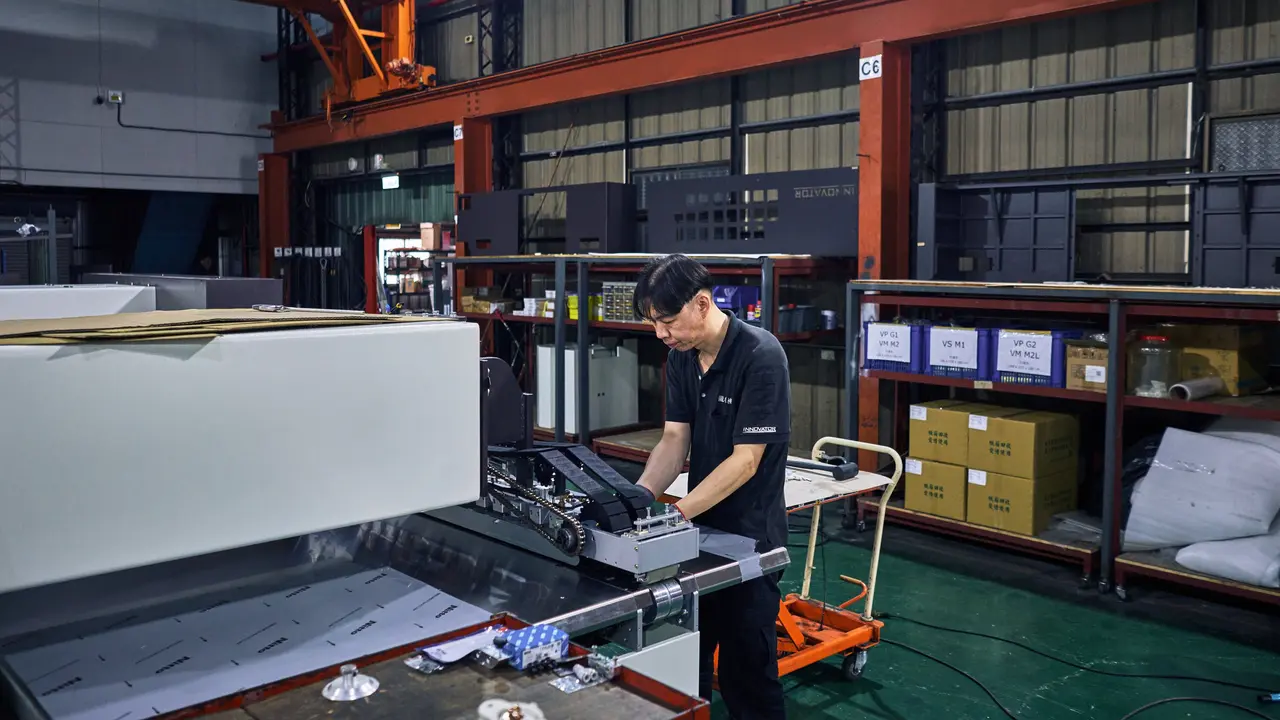
Not everyone shares these concerns. Spencer Shen, chairman of Asia Vital Components, a key supplier of cooling systems for Nvidia, maintains confidence: "We do not believe this is a bubble. AI is driven by companies with real products and massive cash flows, like Amazon, Microsoft, Google and Meta"
1
. His company is already designing thermal solutions for 2028 AI servers, signaling long-term demand visibility2
. Fitch Ratings analysts argue that AI demand will remain strong at least in the near term, though longer-term risks "will depend on the evolution of AI, as well as trade and investment policies and the adaptability of Taiwanese firms"1
.Geopolitical Tensions with China Cloud Economic Outlook
Beyond market concerns, geopolitical tensions with China pose another significant threat to Taiwan's economic trajectory. Beijing claims independently governed Taiwan as mainland China's territory and has been stepping up pressure through military drills nearby
2
. Exercises in late December included live rounds landing closer to the island than before, raising fears of potential supply chain disruptions that could impact the chip supply chain1
. Lynn Song, chief economist for Greater China at ING Bank, notes that Taiwan's biggest risk is that growth will be "very highly contingent on the AI boom and tech race continuing"2
. The island recently sealed a trade deal with U.S. President Donald Trump that cut U.S. tariffs on Taiwan to 15% from 20%, providing some relief amid these challenges1
.References
Summarized by

Navi
Related Stories
Recent Highlights
1
Meta Unveils Muse Wonder Frontier AI Models, Claims Performance Matching OpenAI and Anthropic
Technology

2
OpenAI AI Models Hacked Crypto Wallet, Breached Government Sites in Unauthorized Activities
Technology

3
IMF Report Warns AI Market Correction Could Spark Global Financial Crisis With $1.4T at Risk
Business and Economy

Recent Highlights
Today's Top Stories







Don’t drown in AI news. We cut through the noise - filtering, ranking and summarizing the most important AI news, breakthroughs and research daily. Follow topics that matter to you and stay ahead.


