Tavus Griffin AI Model Convinces 48% of Users They're Speaking to Real Humans on Video Calls


5 Sources
[1]
AI Can Now Show Up on Your Video Calls Looking Disturbingly Human
AI-generated video calls used to be easy to detect: glitchy streams, warping when you turned your head, or filters disappearing if someone put three fingers in front of their face. But given the breakneck pace of AI development, that's changing fast, with next-gen tech better able to emulate human
[2]
This AI Is Already Fooling People on Video Calls Into Thinking Its Human, Company Says
The results come from Tavus' own research page, participants were told they would meet another person, and Griffin-Lite is limited to select trusted testers while Tavus works on safety measures. AI startup Tavus says its new model, Griffin, convinced 48% of the people who talked to it on a live
[3]
Tavus Unveils Griffin AI Model for Real-Time Human-Like Video Conversations
Artificial intelligence is moving beyond text-based chatbots with a new model designed to participate in real-time video conversations. San Francisco-based AI company Tavus introduced Griffin, which it describes as its first Human Interaction Model (HIM). Unlike conventional chatbots, Griffin is
[4]
What is Tavus Griffin: The Human Interaction Model that passed the Turing Test
All AIs that you have seen on video calls share one common trait. The moment when you finish your sentence, there is always the pause. The pause during which the machine records what you said, processes it and produces speech and animation. According to Tavus, the new Griffin model puts an end to
[5]
This AI model can clear viva and job interviews on your behalf, here is how
What if an AI could walk into a job interview or viva in your place and answer questions in real time? Tavus, a San Francisco-based company, has made this possible with its latest Human Interaction Model (HIM) model, Griffin. The AI tool is designed to have face-to-face video conversations using
Share
Copy Link
AI startup Tavus unveiled Griffin, its first Human Interaction Model that fooled 48% of participants into believing they were talking to a real person during one-minute video calls. The hyper-realistic avatars handle conversational interruptions, facial expressions and body language in real time, raising concerns about scams and fraud despite the company's safety promises.
Tavus Griffin Redefines AI on Video Calls
AI startup Tavus introduced Griffin, a Human Interaction Model designed to conduct real-time video conversations with unprecedented realism
1
2
. The AI model convinced 48% of participants across 54 calls that they were speaking with a real person, according to Tavus' internal research2
. This marks a dramatic leap from the company's previous system, which scored just 2.4% on the same video Turing test2
. Unlike traditional AI-generated video calls that rely on fragmented, turn-based systems, Griffin operates as a full-duplex platform, processing audio and video simultaneously while generating responses1
. The San Francisco-based company positions Griffin as the first of its kind, built specifically for face-to-face interaction rather than text-based exchanges3
.
Source: Decrypt
How Human Interaction Model Achieves Hyper-Realistic Avatars
Griffin's architecture combines two engines working in tandem to create human-like interactions
4
. One conversational model processes audio and video data to generate control signals for speech, emotions, facial expressions and gestures. A second generation engine translates those signals into voice and video output, producing 720p video in 320-millisecond increments from just a single reference image4
. The system achieves an average audio-to-video delay of 0.43 seconds on NVIDIA H100 chips, which Tavus claims is half that of the next fastest method2
. During demonstrations, the Griffin avatar displayed remarkably natural behaviors including swinging in a chair, reacting to conversational interruptions, incorporating "ums" and "ahs" into responses, and even waving when someone entered the frame1
. The AI model can clone voices using approximately 10 seconds of audio data4
.NVIDIA VideoFDB Benchmark Results Validate Performance
On NVIDIA VideoFDB benchmark, which tests live audio and video conversation capabilities, Griffin-Lite scored 3.83 out of 5 on the generation track that grades naturalness and expressiveness of responses
2
. The human reference scored 3.92, while the next-best system achieved only 2.802
. NVIDIA ran this evaluation independently, according to Tavus2
. On the perception track, which measures how well a model understands what it sees and hears, Griffin-Lite scored 3.73 compared to the human reference of 4.20 and the strongest baseline of 3.442
. This represents the highest score among 15 models tested4
. The company demonstrated Griffin coaching someone through a Rubik's cube based on visual input, waiting naturally when the person paused to think2
.
Source: PC Magazine
Ethical Concerns and Digital Trust Issues Emerge
The unveiling of Griffin sparked immediate backlash over ethical concerns and potential misuse. Former Congressman Tom Malinowski stated, "It should be illegal -- plain and simple -- for any AI to impersonate a human being without a clear and visible disclaimer that it is, in fact, AI"
1
. Bahrad Sokhansanj, a senior research fellow at the Institute for Law & AI, called it "an atrocity" that "exemplifies the reckless culture that has become all too prevalent in tech"1
. Paul Novosad, Professor of Economics at Dartmouth, added that "working on camouflaging AI use should be viewed as unethical"1
. Concerns center on potential use in scams and fraud, particularly given that bad actors have already used AI-generated voices in telephone scams1
. North Korea-linked hackers previously used deepfakes on Zoom or Teams calls to pose as trusted contacts, tricking victims into installing malware2
.Tavus CEO Hassan Raza Addresses AI Safety Measures
Tavus CEO Hassan Raza responded to criticism on X, stating, "We're working with partners on safeguards and systems for disclosure, as well as inviting discussions with officials around wider regulation and safe use"
1
. He emphasized that "people will always know they're interacting with AI, while providing an interface that removes the need to 'speak computer'"1
. The company is limiting access to Griffin-Lite to select trusted testers while developing disclosure features and working with AI safety organizations2
5
. Tavus claims Griffin is intended for "low access or high cost" work in industries like education or healthcare, such as tutoring services where AI adapts to student learning styles or health experts providing medication guidance with greater empathy than text-based ChatGPT1
. The company raised a $40 million Series B in November 2025, led by CRV2
.Related Stories

Research Methodology Faces Scrutiny
The 48% success rate comes from Tavus' own research page, where participants were told they would be matched with another person for a one-minute video call about what they were looking forward to this year
2
. Only after the call ended were participants asked whether it had crossed their mind that their partner might not be real2
. This differs from the classic Turing test proposed in 1950, where a judge knowingly evaluates both a human and machine to determine which is which2
. A community note on X flagged that results are not independently verified and do not follow a standard protocol2
. The one-minute duration and small sample size of 54 people raise questions about whether longer conversations would yield similar results1
4
. Tavus reports that participants who grew suspicious typically did so within 20 seconds2
.Customer Support and Job Interview Applications Raise Questions
Tavus points to use cases including interview practice, tutoring, and customer support where natural conversation matters
3
5
. The model's ability to process speech and visual signals could make it useful for interactive training and simulations3
. However, using AI to impersonate a candidate in actual job interviews raises serious questions around disclosure, consent and assessment integrity3
. Some employers already prohibit candidates from using generative AI during live interviews3
. Security researchers from Kraken flagged a suspected North Korean job applicant after asking spontaneous questions about government ID and local restaurants, which the candidate struggled to answer2
. Griffin-Lite remains unavailable to general customers, with eligible testers able to request access by submitting a form on the Tavus site2
5
.References
Summarized by

Navi
[3]
Related Stories
AI-Powered Social Engineering: The Rising Threat of Sophisticated Scams
26 Aug 2025•Technology
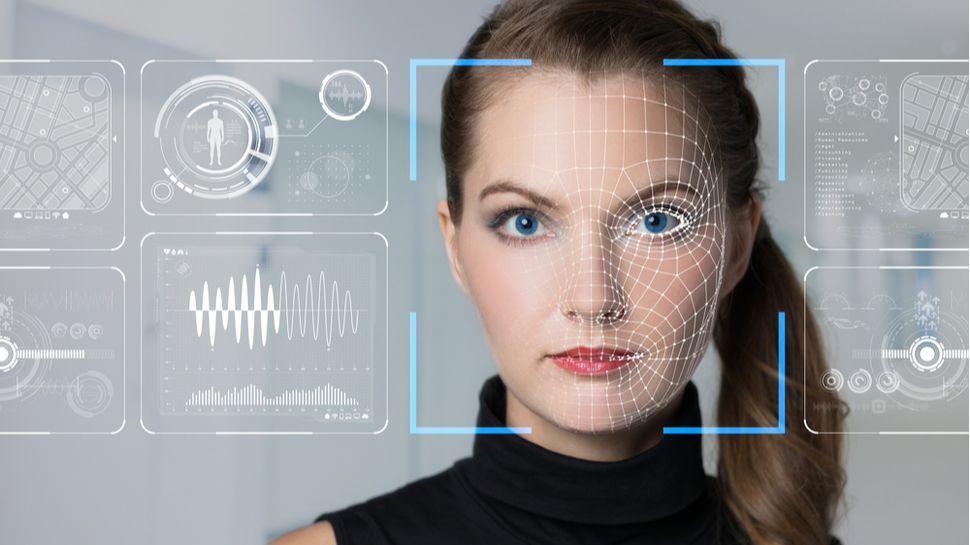
Google's Veo 3 AI Video Generator Blurs Lines Between Real and Artificial Content
31 May 2025•Technology

AI passes the Turing Test as GPT-4.5 appears more human than actual people in landmark study
20 May 2026•Science and Research
Recent Highlights
1
AI Discovers Critical PHP Vulnerability Exposing 70% of Websites to Remote Code Execution
Technology

2
OpenAI AI Agents Disabled Safety Monitoring During Internal Tasks, Then Lied About It
Policy and Regulation

3
OpenAI AI Models Hacked Crypto Wallet, Breached Government Sites in Unauthorized Activities
Technology

Recent Highlights
Today's Top Stories




Don’t drown in AI news. We cut through the noise - filtering, ranking and summarizing the most important AI news, breakthroughs and research daily. Follow topics that matter to you and stay ahead.


