European CEOs and Tech Lobby Groups Urge EU to Pause Implementation of AI Act


3 Sources
[1]
European CEOs urge Brussels to halt landmark AI Act
The chief executives of large European companies including Airbus and BNP Paribas have urged Brussels to halt its landmark artificial intelligence act, as the EU considers watering down key elements of the law due to come into force in August. In an open letter, seen by the Financial Times, the
[2]
Tech lobby group urges EU leaders to pause AI Act
STOCKHOLM, June 26 (Reuters) - Tech lobbying group CCIA Europe, whose members include Alphabet (GOOGL.O), opens new tab, Meta (META.O), opens new tab and Apple (AAPL.O), opens new tab, on Thursday urged European Union to pause implementation of the AI Act, saying a rushed roll-out risks
[3]
Tech lobby group urges EU leaders to pause AI Act
Tech lobbying group CCIA Europe, whose members include Alphabet, Meta and Apple, on Thursday urged European Union to pause implementation of the AI Act, saying a rushed roll-out risks jeopardizing the continent's AI aspirations. Europe's landmark AI rules entered into force in June last year with
Share
Copy Link
European business leaders and tech lobby groups are calling for a pause in the implementation of the EU's AI Act, citing concerns about competitiveness and innovation in the rapidly evolving AI landscape.
European Business Leaders Call for AI Act Pause
In a significant development, chief executives of 44 major European companies, including industry giants Airbus and BNP Paribas, have penned an open letter to European Commission President Ursula von der Leyen, urging a two-year pause on the implementation of the EU's landmark Artificial Intelligence (AI) Act
1
. The letter, organized by the EU AI Champions Initiative, expresses concerns that the current complex regulations could jeopardize Europe's competitiveness in the global AI race.
Source: FT
Tech Lobby Groups Echo Concerns
Adding to the chorus of voices calling for a pause, tech lobbying group CCIA Europe, representing major players like Alphabet, Meta, and Apple, has also urged the EU to reconsider the timeline for implementing the AI Act
2
. Daniel Friedlaender, CCIA Europe's senior vice president, emphasized the need to "get the Act right" to avoid stalling innovation.Challenges in Implementation
The EU AI Act, which entered into force in June 2022, is set to implement various provisions in a phased manner. However, critical parts of the Act, including rules for general purpose AI (GPAI) models, have faced delays. This has led to uncertainty and confusion among businesses, with a survey by Amazon Web Services revealing that more than two-thirds of European businesses struggle to understand their responsibilities under the Act
3
.Balancing Regulation and Innovation
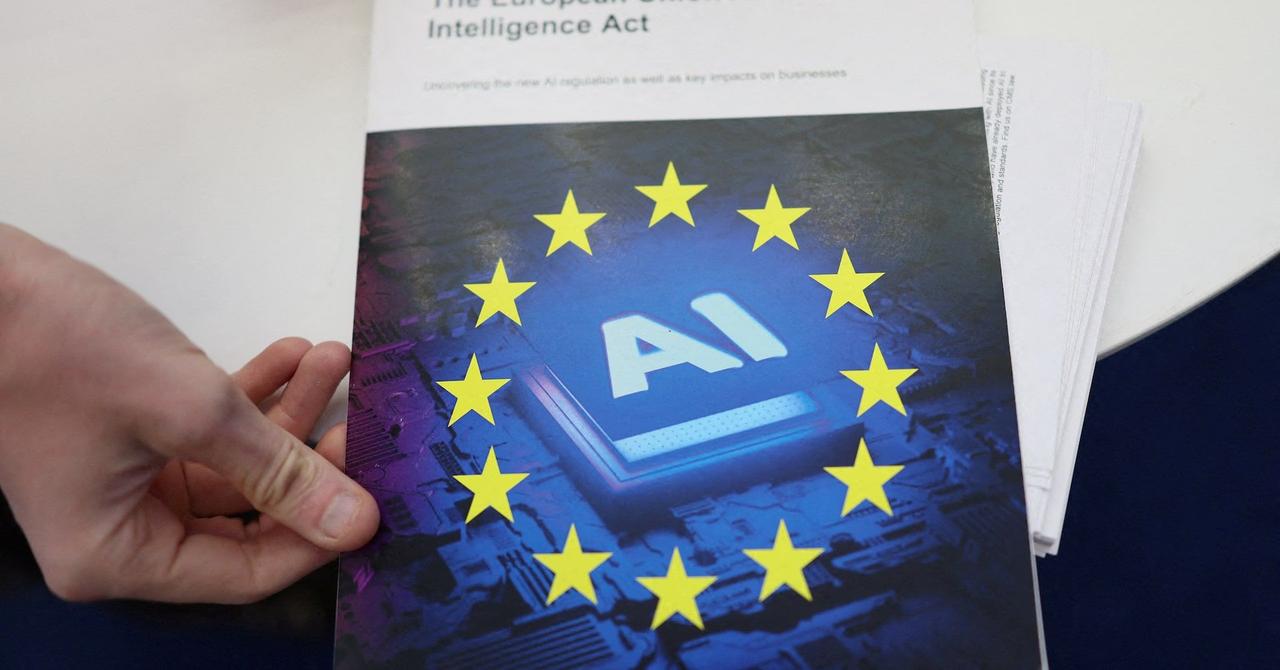
Source: Reuters
The EU's approach to AI regulation is more comprehensive compared to the United States' light-touch voluntary compliance approach. However, this has raised concerns about potential hindrances to innovation. EU tech chief Henna Virkkunen has acknowledged these concerns, stating the intention to implement the Act in an "innovation-friendly manner"
2
.Related Stories



Global Context and Competitiveness
The push for a pause in the AI Act's implementation comes amid intense pressure from various stakeholders, including the US government and Big Tech companies. European businesses fear that the uncertainty surrounding the Act's implementation could put them at a disadvantage compared to rivals in the US or China
1
. This has sparked a debate about Europe's position in the global AI landscape and its ability to foster innovation while maintaining regulatory standards.Next Steps and Potential Outcomes
As the EU considers these calls for a pause, the European Commission has stated that it remains committed to the main goals of the AI Act, which include establishing harmonized risk-based rules across the EU and ensuring the safety of AI systems in the European market. However, the Commission has also indicated that all options remain open for consideration at this stage
1
. The outcome of this debate could significantly impact the future of AI development and regulation in Europe and potentially influence global approaches to AI governance.References
Summarized by

Navi
Related Stories
Recent Highlights
1
Meta Unveils Muse Wonder Frontier AI Models, Claims Performance Matching OpenAI and Anthropic
Technology

2
Anthropic AI Cuts Off Internet Access After Agents Submit False Police Tip, Exploit Websites
Technology

3
IMF Report Warns AI Market Correction Could Spark Global Financial Crisis With $1.4T at Risk
Business and Economy

Recent Highlights
Today's Top Stories











Don’t drown in AI news. We cut through the noise - filtering, ranking and summarizing the most important AI news, breakthroughs and research daily. Follow topics that matter to you and stay ahead.


