TensorX Secures €8M and $1B Partnership to Build Europe's Sovereign AI Infrastructure


5 Sources
[1]
TensorX and Solstice line up $1bn to finance Europe's sovereign AI buildout
The partnership will fund EU AI hardware and data centres, and launch aiUSX, a yield asset that puts companies' idle AI cash to work as infrastructure lending. Building sovereign AI in Europe takes chips, and chips take capital. TensorX and Solstice said they would supply the second to help buy
[2]
TensorX raises €8M to build sovereign AI inference for Europe on Nvidia Blackwell
The Irish startup is buying B300 GPUs to expand a GDPR-compliant inference platform aimed at the banks, hospitals, and law firms that cannot send their data abroad. TensorX, a startup building AI inference infrastructure that keeps European data inside Europe, has raised €8m to buy Nvidia
[3]
Dublin's TensorX to partner with Solstice on sovereign European AI
Earlier this week, TensorX raised €8m in a seed funding round, which its founder Shane Morton described as an 'opening move' ahead of a much larger build-out. Irish AI infrastructure company TensorX is to collaborate with finance provider Solstice in a partnership to deliver up to €1bn-worth of
[4]
Ireland's TensorX bags €8m to build sovereign AI infrastructure
TensorX runs open-source models on Nvidia GPUs with zero data retention. Irish start-up TensorX has raised €8m in a seed round to help further Europe in its plans for sovereign AI infrastructure. Founded by Shane Morton, TensorX is committing the funds to procure Nvidia Blackwell GPUs for its EU
[5]
Solstice and Tensorx to Buy $1 Billion in AI Infrastructure to Support EU Sovereign AI Demand
London, United Arab Emirates, June 25th, 2026, Chainwire Solstice to launch aiUSX, a yield-bearing asset that lets companies help finance the buildout with the capital they already hold for AI. TensorX owns and operates a fleet of NVIDIA GPUs and delivers AI models in EU data centres with zero
Share
Copy Link
Dublin-based TensorX raised €8M in seed funding and partnered with Solstice on a $1 billion financing facility to expand sovereign AI infrastructure across the EU. The company is purchasing Nvidia Blackwell GPUs to deliver GDPR-compliant AI inference from EU-based data centers, targeting regulated industries that cannot send data abroad. Solstice will also launch aiUSX, a yield-bearing asset that lets companies finance the buildout with capital they already hold for AI.
TensorX Raises €8M to Expand Sovereign AI Infrastructure Across Europe
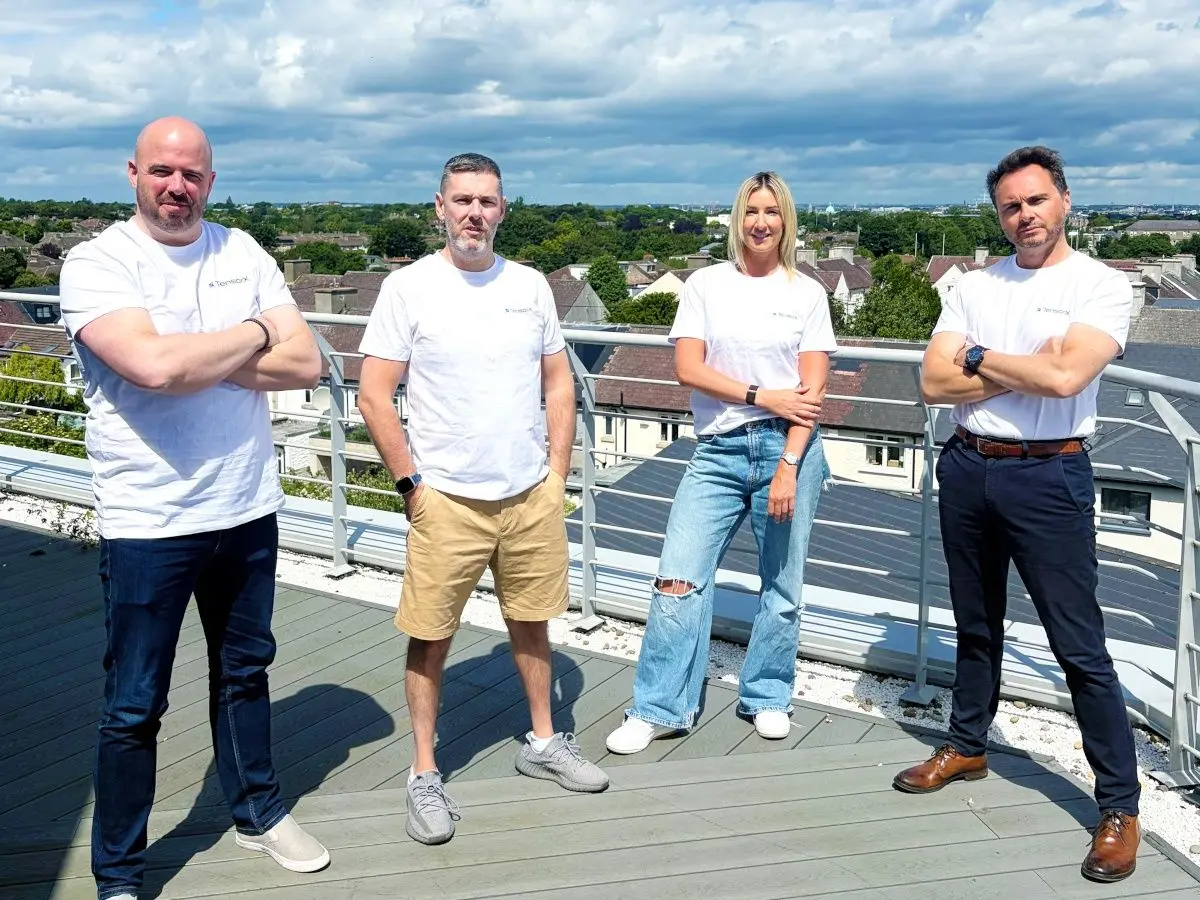
Dublin-based TensorX has secured €8 million in seed funding to accelerate the buildout of sovereign AI infrastructure across the European Union, addressing a market where demand for compliant compute capacity is outpacing supply
4
. The Irish startup, founded by Shane Morton, is committing the funds to procure Nvidia Blackwell GPUs, including the latest B300 chips, for its EU AI inference platform that currently operates from data centers in Dublin and Helsinki2
. The financing comes from Darius Cubed Ventures, with €6.5 million committed toward NVIDIA GPUs through Dell, including €1.5 million already delivered and a further €5 million on order2
.
Source: Silicon Republic
The platform runs private AI inference on dedicated Nvidia infrastructure located in Europe, supporting more than 33 open-weight models with an OpenAI-compatible API that allows developers to switch over with minimal code changes
2
. TensorX emphasizes zero data retention, meaning nothing is stored, logged, or reused, giving enterprises full control over where their data lives and how it's used4
. This GDPR-compliant approach targets banks, hospitals, and law firms that face regulatory obligations around data residency rather than mere preferences2
.$1 Billion Partnership with Solstice to Finance European AI Infrastructure
In a parallel move, TensorX announced a partnership with Solstice to create a financing facility with up to $1 billion in capacity for AI hardware and data-center capacity across the EU
1
. The aim is to meet rising EU sovereign AI demand for compute that stays on European soil, with Solstice providing the onchain settlement for the buildout1
. Tim Grant, executive chairman of TensorX, explained that Europe wants AI that can run on its own terms without handing data to someone else's cloud on the world stage, and meeting that accelerating demand takes hardware and a lot of it3
.
Source: Benzinga
The $1 billion figure represents capacity rather than a commitment, with actual deployment depending on how fast demand materializes
1
. Both companies operate within the Deus X Capital ecosystem, a connection that Stuart Connolly, chief investment officer of Deus X Capital, describes as uniquely positioning them to deliver sovereign AI infrastructure financing to the market5
. Solstice itself is an onchain settlement and yield protocol with a three-year audited track record and more than $500 million in total value locked5
.Solstice Launches aiUSX to Turn Idle AI Capital Into Infrastructure Lending
Alongside the partnership, Solstice is launching aiUSX, a yield-bearing asset designed to let companies finance AI buildouts using capital they already hold
1
. The logic addresses a mismatch: companies hold growing piles of cash and stable assets for their AI spend while their inference bills climb, and the two pools sit apart with the cash earning nothing while it waits1
. Ben Nadareski, CEO of Solstice, frames it as treasury management for the AI era, noting that every company is turning into an AI company and every one of them watches its inference bill climb3
.Capital set aside for AI goes into the asset, which opens access to the AI-infrastructure lending Solstice finances, the same deals large institutions fund
1
. At launch, aiUSX will be capped at $5 million, with yield generated by the lending it gives access to . The capital stays liquid and redeemable, and what it earns is meant to go toward the cost of inference later1
.Related Stories

Rising Demand for Sovereign European AI Driven by Regulatory and Geopolitical Concerns
The push for sovereign AI infrastructure reflects mounting concerns about US technology companies' control over European technology infrastructure and data
4
. Recent events have sharpened the argument, particularly the EU losing access to Anthropic's leading AI models Mythos and Fable after a US export control directive earlier this month4
. For European firms watching a top model pulled by a foreign government overnight, the case made the abstract risk of depending on someone else's stack feel concrete2
.The demand signals are substantial. Accenture research finds that 62% of European organisations are seeking sovereign AI solutions, while Gartner forecasts that more than 75% of European and Middle Eastern enterprises will move workloads into geopolitically lower-risk arrangements by 2030
2
. European AI spending is projected to reach approximately $144.6 billion by 20282
. For regulated industries in finance, healthcare, and legal services, data residency is not a preference but a regulatory obligation, one that American-hosted services struggle to satisfy regardless of where their servers physically sit because of the reach of US law over US-owned providers2
.Expansion Plans Target Key European Markets Ahead of EU AI Act Compliance
TensorX is already generating revenue with customers across finance, healthcare, and legal services, with named clients including APEX, TradeLocker, and Cor Prime, and developer demand routed through the aggregator OpenRouter
2
. The company is in advanced talks to tap further financing to expand its European footprint, with compute capacity planned across Ireland, the UK, Germany, France, and the Nordics ahead of the EU AI Act's tightening compliance rules for regulated sectors2
. TensorX has plans to deploy up to €100 million in Blackwell GPUs as part of this expansion4
.Morton, who built and sold financial trading software before acquiring ICT Services, an Irish data centre infrastructure provider, describes the €8 million investment as an opening move ahead of a far bigger buildout to come
4
. The company currently employs 14 people and plans to hire six new workers, with most if not all based out of Dublin4
. TensorX is a member of the Nvidia Inception programme and sources its hardware through Dell, which means its sovereign offering is built on American silicon at the bottom of the stack2
. The sovereignty on offer is over data and jurisdiction rather than the hardware itself, reflecting the prevailing shape of a market where Nvidia's hold on high-end accelerators means almost every European sovereignty play runs on American chips2
.References
Summarized by

Navi
[3]
[4]
Related Stories
TensorWave Secures $43M Funding to Challenge Nvidia's AI GPU Dominance with AMD-Powered Cloud
08 Oct 2024•Technology

TensorWave Secures $100M to Expand AMD-Powered AI Infrastructure
14 May 2025•Technology

Nvidia's $500B AI Infrastructure Financing Plan Creates Secondary Market for Aging GPUs
10 Aug 2026•Business and Economy
Recent Highlights



Recent Highlights
Today's Top Stories






Don’t drown in AI news. We cut through the noise - filtering, ranking and summarizing the most important AI news, breakthroughs and research daily. Follow topics that matter to you and stay ahead.


