Tesla says millions need Full Self-Driving hardware upgrades after promising they didn't


3 Sources
[1]
Tesla says millions will need Full Self-Driving upgrades -- after promising they didn't
Tesla has held an earnings call to discuss its first quarter 2026 results, and revealed more about its plans, including a change of heart on promises that millions of cars would only need software updates for zero-supervision Full-Self Driving. In the Q1 2026 call, CEO Elon Musk said that cars
[2]
Tesla announces HW4 Plus with doubled memory -- will HW4 follow HW3 to the grave?
During Tesla's Q1 2026 earnings call, CEO Elon Musk revealed that Tesla is planning an "AI4.1 or AI4 Plus" upgrade to its self-driving computer that doubles the RAM from 16 gigabytes to 32 gigabytes per chip -- taking the total system memory to 64 gigabytes. The announcement came on the same call
[3]
Tesla Drops Hardware 3 From Unsupervised FSD Path, Offers Upgrade Route
Tesla has officially ruled out Hardware 3 as a platform for Full Self-Driving in unsupervised mode, marking a notable change in the company's long-term autonomy roadmap. During its latest quarterly earnings presentation, CEO Elon Musk said the older in-vehicle computer no longer meets the technical
Share
Copy Link
Tesla has reversed its long-standing promise that millions of vehicles would only need software updates for unsupervised Full Self-Driving. During its Q1 2026 earnings call, CEO Elon Musk confirmed that Hardware 3 vehicles lack the capability for zero-supervision autonomy and will require both new computers and cameras. The announcement affects roughly 4 million owners who paid up to $15,000 for FSD based on assurances their cars had all necessary hardware.
Tesla Abandons Software-Only Promise for Full Self-Driving
Tesla has officially abandoned its promise that millions of vehicles equipped with Hardware 3 would achieve unsupervised Full Self-Driving through software updates alone. During the company's Q1 2026 earnings call, CEO Elon Musk confirmed that cars based on HW3 would need hardware retrofits including both new computers and new cameras to reach zero-supervision autonomy
1
. The reversal marks a significant shift in Tesla's FSD strategy after years of assurances that existing hardware was sufficient.
Source: Guru3D
The admission carries substantial implications for Tesla's customer base. According to the company's earnings report, there are 1.28 million active FSD purchases and subscriptions, with some customers having paid as much as $15,000 for the option based on promises their vehicles contained all necessary hardware
1
. Hardware 3 arrived in Tesla vehicles in 2019, and executives offered hope for software-only upgrades as recently as October 2025 despite Musk expressing doubts in January that year1
.Hardware 3 Limitations Expose Memory Bandwidth Constraints
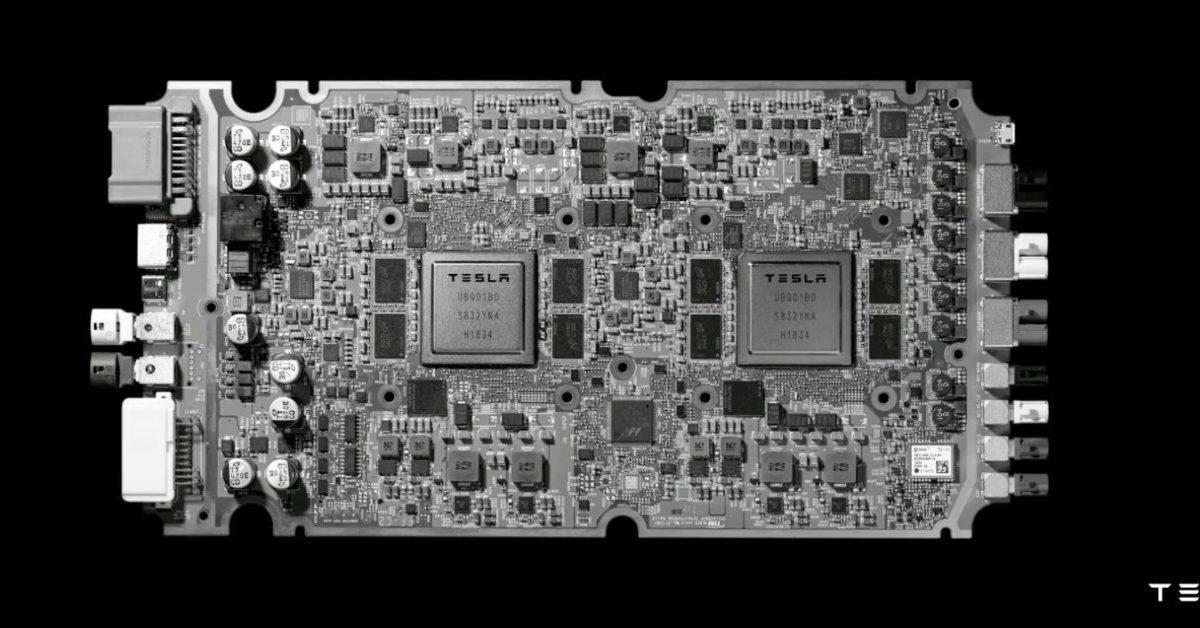
The technical justification for abandoning HW3 centers on memory bandwidth, which Musk identified as "the choke point" for AI inference. Hardware 3 has only one-eighth the memory bandwidth available on Hardware 4 vehicles, creating a gap Tesla now considers insurmountable for unsupervised operation
2
. According to Musk, Tesla initially believed Hardware 3 would be sufficient, but further development revealed the bandwidth deficit as a critical constraint preventing the self-driving computer from processing the neural networks required for unsupervised autonomy3
.
Source: Electrek
The hardware split is already visible in Europe, where Tesla recently introduced FSD Supervised in the Netherlands exclusively for Hardware 4 vehicles after testing and approval with Dutch regulator RDW
3
. HW3 cars remain outside the approved rollout. Tesla's Head of Autopilot and AI Software, Ashok Elluswamy, indicated a lighter build of FSD V14 for Hardware 3 is expected at the end of June, but it will not place HW3 on the unsupervised path3
.Costly Retrofits Require New Infrastructure
Tesla is proposing two upgrade paths for owners: trade-in incentives for customers moving to newer Hardware 4 vehicles, or a retrofit option that involves replacing both the onboard computer and camera hardware
3
. The upgrade process could be elaborate and slow. Musk said during the earnings call that Tesla was exploring "micro-factories" in major urban areas to avoid overwhelming service centers, where retrofits would reportedly be "extremely slow"1
. He did not provide a timeline for when these factories might be ready or when upgrades would begin.The scale of the challenge is significant, with roughly 4 million HW3 vehicles requiring attention
2
. The need for dedicated retrofit facilities suggests Tesla is still working out how to industrialize the conversion process before broad deployment3
. While customers won't necessarily have to pay extra for the upgrades, they now face waits for hardware installations even when unsupervised self-driving is ready1
.Related Stories

HW4 Plus Announcement Raises Questions About Future Obsolescence
During the same earnings call, Musk revealed Tesla is planning an "AI4.1 or AI4 Plus" upgrade to its self-driving computer that doubles RAM from 16 gigabytes to 32 gigabytes per chip, taking total system memory to 64 gigabytes
2
. The announcement raises concerns for millions of Tesla owners currently driving HW4 cars about whether their hardware will follow HW3 to obsolescence. Musk acknowledged that AI4 hardware will eventually age, stating "at some point the AI4 hardware is going to get like so old" and noting the upgrade would deliver an estimated 10 percent improvement to computing power1
2
.This isn't the first AI4 revision. Tesla quietly started shipping a new "AI4.5" computer in the 2026 Model Y built at Fremont in January 2026, using a three-chip design instead of AI4's original two-chip architecture
2
. The upgrade path is now AI4 → AI4.5 (shipped) → AI4 Plus (announced for 2027 production, dependent on Samsung completing modifications)2
. That represents three hardware revisions in roughly two years for a computer Tesla claims is already sufficient for unsupervised driving.AI Pivot Drives Capital Expenses to $25 Billion
Musk used the Q1 2026 earnings call to outline Tesla's near-term plans, particularly its expansion into AI and autonomy. He warned that Tesla's capital expenses would surge to $25 billion in 2026 to cover its AI pivot, including manufacturing, software, and data centers
1
. That's $5 billion higher than Tesla's previous peak, but Musk argued it was "well justified" for a future where the company relies on more than EVs and energy for revenue.Musk confirmed that Cybercab production had begun at Gigafactory Texas, with the robotaxi built to meet federal safety standards without facing the 2,500-car yearly exemption cap that limits rivals like Waymo
1
. He also revealed that manufacturing for the third-generation Optimus humanoid robot at the Fremont plant is expected to start in late July or August, just months after the end of Model S and X production1
. However, Musk tempered expectations, noting Cybercab production would be "very slow" at first with "exponential" growth late in 2026, and he's no longer predicting specific Optimus robot numbers after previously claiming 10,000 units by the end of 20251
.The robotaxi service itself remains small, with existing service in Austin expanded and unsupervised rides recently started in Dallas and Houston, while San Francisco Bay Area trips still require safety drivers
1
. Tesla reported quarterly revenue of $22.39 billion, up 16 percent year over year, with operating profit rising 30 percent to $3.67 billion and around 358,000 vehicles delivered during the quarter3
.References
Summarized by

Navi
[1]
Related Stories
Tesla Cybertruck Receives Full Self-Driving Update, Marking a Milestone in Autonomous Vehicle Technology
30 Sept 2024

Tesla's Q2 Earnings: Musk's Vision Meets Market Reality
24 Jul 2024

Tesla reveals 1.1 million FSD subscribers as subscription prices set to climb with capabilities
23 Jan 2026•Business and Economy

Recent Highlights



Recent Highlights
Today's Top Stories





Don’t drown in AI news. We cut through the noise - filtering, ranking and summarizing the most important AI news, breakthroughs and research daily. Follow topics that matter to you and stay ahead.


