8 Sources
[1]
Microsoft launches Scout, an OpenClaw-inspired personal assistant
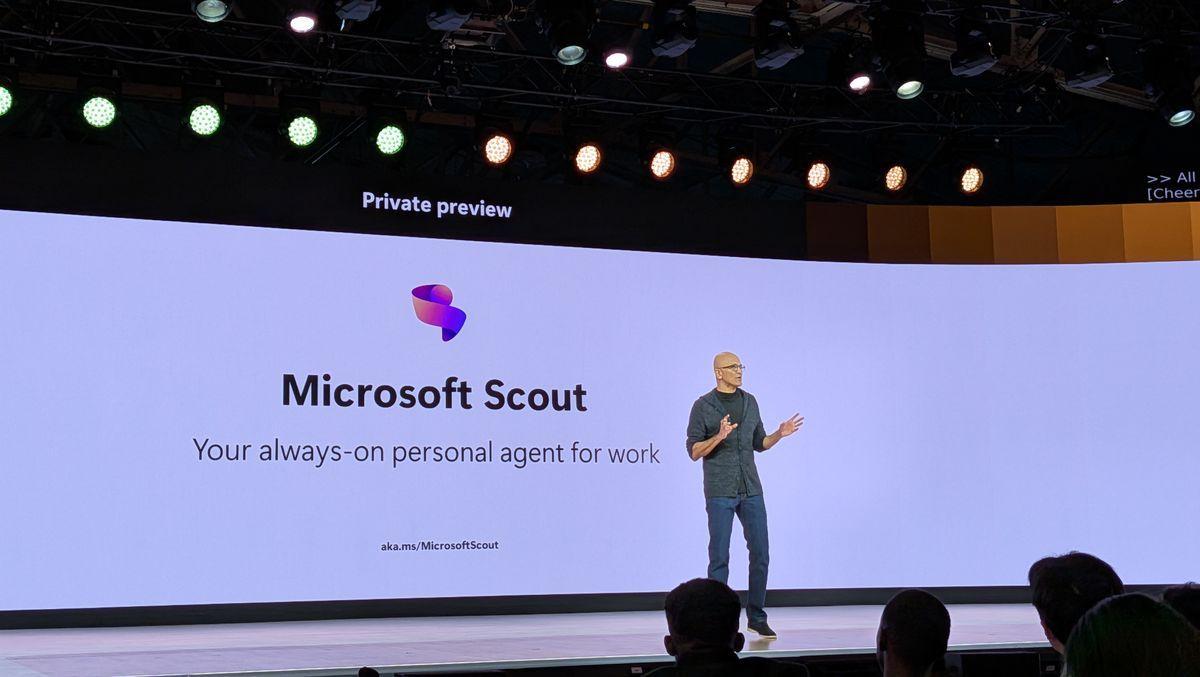
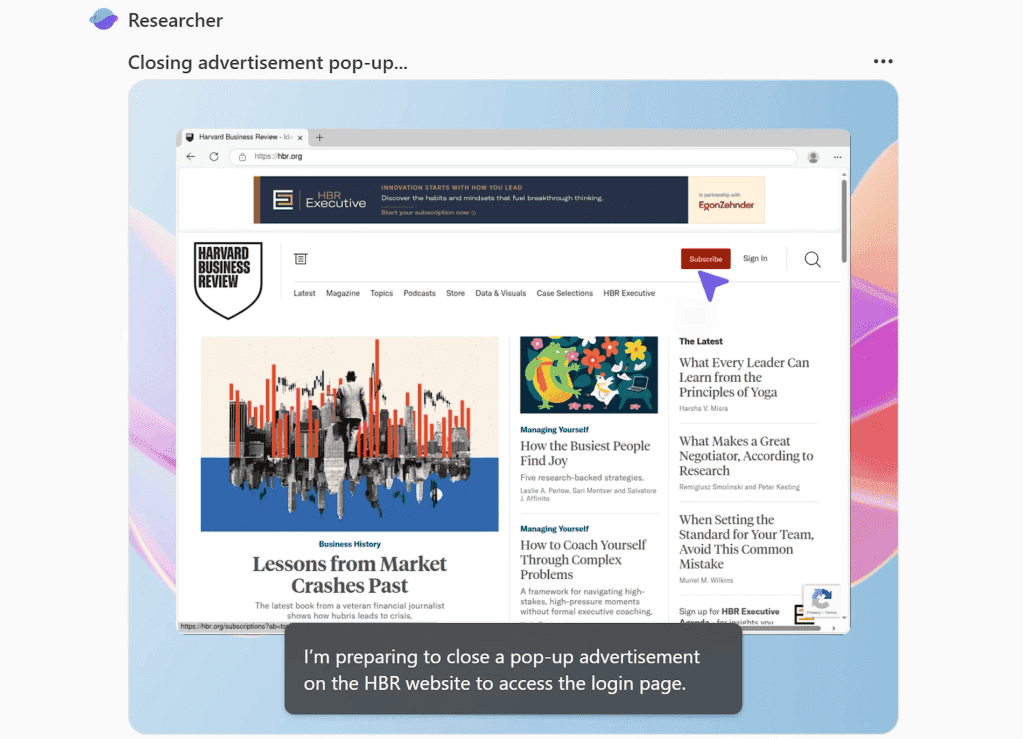
In the first weeks of 2026, OpenClaw spread through the AI world like a sonic boom, introducing many of the industry's most ambitious technologists to the joy and chaos of an unrestrained AI agent. The project's momentum tailed off after OpenAI scooped up its founder, but the influence is still being felt -- particularly at Microsoft Today, Microsoft is launching Scout, a new AI assistant meant to bring the power and flexibility of OpenClaw into the Microsoft 365 system. Built on the OpenClaw framework, Scout is an always-on agentic assistant, designed to work alongside the user with a persistent identity and style. Users name their own Scout instance -- in my demo, it was named Sebastian -- and are meant to give it ongoing feedback on tasks that could be automated. As Scout VP Omar Shahine put it, the idea is to create an assistant that actively adapts to the user's needs. "We all have our interesting quirks in how we work, and people are codifying those patterns into memories and skills that persist in their agent," Shahine told me. "Then the agent becomes more capable, better understanding you and gaining more agency and exercising judgments." Scout is based in the cloud, but operates across the desktop and web browser also, so it's easy to connect to inboxes, calendars and other systems. Scout will come with prepackaged skills for calendar management and drafting meeting agendas, among others, but Shahine expects the real value to be in the skills users come up with on their own. The system also comes with extensive security protections, meant to address concerns of unsupervised OpenClaw agents running amok. Scout will come with a built in "policy conformance system" that will continuously check whether the system is operating according to guidelines, and each conformance check will producing its own audit trail. It's part of a range of AI products launched at Build, including the hardware-oriented Project Solara, an update to Copilot, and a new reasoning AI model.
[2]
Meet Microsoft Scout, Your AI Coworker That Never Logs Off
Soon, your coworkers in Microsoft Teams might not all be human. Scout, an always-on AI agent announced at Microsoft's Build developer conference on Tuesday, can go through your work messages, calendar, and email inbox to automate tasks, reschedule meeting conflicts, and draft professional-sounding responses. Microsoft more or less built an enterprise agent on top of OpenClaw, the AI tool that riveted San Francisco's early adopters at the start of 2026. Scout is designed specifically to be an assistant for office folks, who can send commands directly in Teams as if the agent was a carbon-based coworker. Scout is part of Microsoft's larger, agent-first transformation, automating how knowledge workers use software and inserting AI assistants into daily office interactions. "Your company essentially hires your assistant," says Omar Shahine, the newly appointed corporate vice president of Microsoft Scout. "The whole point of having a personal assistant is that they're working when you're not working." So, while you're munching on some Doritos and gossiping next to the office vending machine, Scout is busy blocking off calendar time for next Tuesday's all-hands meeting and generating talking points based on recent messages. Microsoft is launching this feature with a small group of customers, with the hope of expanding access soon. In addition to the Teams integration, Microsoft is also testing a desktop app for Scout. This app is rolling out today to subscribers who've opted for "frontier" feature access, and it currently requires users also to have an active GitHub Copilot subscription. If users tell Scout their goals and preferences, the bot can proactively assign tasks. For example, Shahine told Scout always to protect dinnertime with the family, so whenever a meeting was proposed on his calendar during that time, the agent would flag it and automatically suggest rescheduling options to your colleagues. With access to your email and messages, the AI agent can attempt tasks tailored to your workload. Shahine asked Scout to comb through all his data and make a constantly updated list of every time someone makes a promise to him as well as every time he makes a commitment to someone else. Then, Scout can send reminders to you about open tickets and draft follow-up plans. Anyone who experiments with Scout should expect some rough edges as Microsoft iterates on this agent. Shahine says his Scout -- nicknamed Sebastian -- sent an email the other day. "It was just one big run-on sentence, no formatting." It's critical to find a balance of what tasks you feel comfortable automating away and what needs to happen under your direct supervision. Shahine still sees Scout as eventually being a boon to all knowledge workers, especially those who aren't as technical and wouldn't feel comfortable operating an agent through the terminal. "Internally our sales organization is probably the largest and fastest growing group that's using this," he says. With more automation comes more risks. Agentic tools, like Scout, can open users to prompt injection attacks, where bad actors confuse bots to do tasks or reveal information they shouldn't. Microsoft is responding to Scout's potential risks by starting with a limited rollout as well as building tools so administrators can track everything agents do. As more companies build OpenClaw-style tools for productivity, many of these releases are directly targeting office workers. Google's version, called Gemini Spark, was announced at that company's recent developer conference. While Google demonstrated ways that it can help automate aspects of a user's personal life, like planning a birthday party, the company also has its eye on the office, with Spark rolling out to enterprise customers sometime this year. This is all part of a growing, agentic transformation that's permanently altering white-collar, 9-to-5 jobs and how teams communicate with each other. Coders and software developers were the first group really to experience radical change when agents hit their workflows. Now, less technical members are increasingly expected to automate their daily logistics planning and internal messaging. Even when you're out of the office, this agent can keep circling back on work projects and touching base with key stakeholders, because unlike you, a mere human, Scout never logs off.
[3]
Microsoft Scout is "the first real personal assistant we've offered customers
Much like Google, Microsoft is launching its own version of OpenClaw. Microsoft Scout is an always-on assistant that integrates into Microsoft 365 apps like Outlook, OneDrive, and Microsoft Teams, allowing businesses to assign a virtual assistant to employees to help with organizing calendars, expense reporting, email drafts, and much more. Unlike Copilot that lives inside Microsoft 365 apps, Microsoft Scout can see and do a lot more. "This is a personal assistant, it's the first real personal assistant we've offered customers," explains Omar Shahine, corporate vice president of Microsoft Scout, in an interview with The Verge. "I think it's important for customers to understand that you're going to get a phone call from this assistant, it's a very different type of AI than chat." Microsoft Scout can monitor local road traffic and your calendar to recommend the best time to leave for appointments, school pickups, and dinner dates. It also works much like a real assistant, surfacing things that it learns are important to you by reading Teams threads, transcripts, and email in the background. Microsoft is starting off slowly with Scout, and only releasing a desktop preview version to its Frontier customers in the US this week, but the goal is to have this running in the cloud and always on. A more limited preview will be available to a small number of customers in the coming months, before Microsoft rolls out the full cloud version more broadly. The desktop app has already proved popular internally, with more than 3,000 Microsoft employees already using the app. Engineers have been using Scout to schedule meetings, help with paperwork, book travel, and fill out forms. A lot of Microsoft Scout usage is simply staying on top of tasks, whether work related or personal. "A lot of people are using it to just be better versions of themselves... we all have aspirations we want for ourselves but we just often lose time and can't do," says Shahine. Instead of creating a separate version of OpenClaw, Microsoft is contributing directly to the core technology of the open-source project. It's surprising to see Microsoft embrace OpenClaw just months after CEO Satya Nadella compared the technology to a virus. OpenClaw's AI "skill" extensions have also been branded a security nightmare. I asked Shahine why Microsoft was now confident it could manage the security and privacy aspects of an AI agent that can access a lot of critical corporate data. "We have a process for intake [of OpenClaw] that makes sure we're protecting ourselves from things like supply chain risk, and also just breaking changes," says Shahine. "It's a very fast-moving open-source project, one of the fastest I've ever seen. We operate OpenClaw in a cloud environment that's in a sandbox, and we treat OpenClaw as untrusted so it doesn't have secrets or access to any of your Microsoft 365 data." Microsoft also uses its suite of security capabilities to control OpenClaw, including Agent 365, Purview, and Defender. Then there's the usual red teaming, privacy reviews, and security reviews to ensure it's safe for enterprise environments. "I feel good that we're doing things that Microsoft has a history of doing to run the service and protect it," says Shahine. "OpenClaw is very powerful... so we're also curating a set of features that we're going to offer customers out of the box." With Google pushing to make Gemini Spark, its own take on OpenClaw, available to connect to Workspace apps like Gmail and Docs, it feels like there's a new AI race emerging to own the personal assistant of the enterprise. The real test will be just how well Gemini Spark or Microsoft Scout manage to organize daily work life without any major security hiccups, and just how quickly these AI agents can learn habits and preferences, just like a human assistant.
[4]
Microsoft's new OpenClaw assistant will make phone calls, read your email, and manage your schedule
Well, it's finally here. After OpenClaw set the world on fire in late 2025 and showed us all what an agentic system can do, companies have been scrambling to get their own automatic assistant out the door. We've been checking out Claude Code a lot lately, and we caught wind last month that Google was introducing its OpenClaw-like Gemini assistant. It was only a matter of time until Microsoft announced its own, and during Build 2026, it pulled back the curtain to reveal Scout. Microsoft Scout is the Redmond giant's foray into an agentic world It's one of many AI ventures the company revealed at Build 2026 Over on the Microsoft website, the company announced Scout. Scout is an AI assistant that's the first of a new strain of Microsoft agent, called an "Autopilot." While a Copilot product works alongside you, an Autopilot agent does work without the need for constant input. Of course, it works with Microsoft 365's suite, so you can ask it to get the more tedious jobs done while you focus on the important stuff. There's just one problem: adding an OpenClaw-esque agent to a company's workflow is bound to make a manager break out in a cold sweat. There are so many horror stories out there about unattended OpenClaw agents wreaking havoc among databases that people will understandably feel nervous about deploying Scout. Fortunately, something that Microsoft reiterated a lot during the Build 2026 keynote and in the blog post is the importance of giving businesses the tools they need to ensure that the agents don't go off the rails: Every agent operates under its own governed Entra identity, not a shared, anonymous service account, so the work it does is attributable to a known actor your directory already understands. The credentials behind that identity are protected end to end: scoped to the task at hand, redacted from logs or diagnostics, and managed with the same rigor you expect from any first-party Microsoft service. When Microsoft Scout acts on your behalf, you know precisely whose authority it carried and that nothing sensitive leaked along the way. Microsoft Scout is currently rolling out to a "select group of customers in private preview and to Frontier organizations," and as an experimental feature in the Frontier tier. Microsoft wants Copilot to run like OpenClaw, autonomously managing your inbox around the clock It's claws out time for big AI companies. Posts By Simon Batt
[5]
Microsoft's Scout AI agent is aimed directly at your workplace
Unlike Gemini Scout, which aims to be a 24/7 AI agent for everyone, Microsoft is aiming its always-on Scout agent directly at the workplace. The biggest challenge with personal AI agents is often figuring out what to do with them. In a home setting, that can be surprisingly tricky. Take a 24/7 AI agent like Google's Gemini Spark, which can-on paper-plan meals, manage your calendar, and perform other household tasks. But while Spark is capable of impressive agentic feats, some early users are finding the agent is hit-or-miss with home-oriented duties like planning summer activities or searching for online coupons. (I'm still waiting my turn to give Spark a try.) Always-on personal AI agents do their best work in an office setting, where they can work across dozens of projects, organize large meetings, divvy up tasks, and churn out daily status reports. Enter Scout, Microsoft's take on the 24/7 personal AI agent, which (for now, at least) is skipping the household and heading straight to the workplace. Unveiled-fittingly-during Microsoft Build, an annual developer conference, Scout is a "new personal agent for work" that's "specifically always-on" and "autonomous," according to the company. Based in part on OpenClaw, the viral open-source tool that kicked off the whole "personal AI agent" craze, Scout will tap directly into core services like Teams and Outlook, and "proactively handle things like meeting prep, scheduling conflicts, and routine tasks without asking," Microsoft says. Scout lives within the new Copilot "superapp" and will be the first of a series of "Autopilots" or enterprise-level AI agents that can be customized for a variety of business-minded purposes. Scout will be the default Autopilot in the revamped Copilot app. Access to Scout will initially be limited to Microsoft's enterprise Frontier users, yet another signal that Scout is primarily designed as a corporate AI assistant rather than a household helper. Microsoft CEO Satya Nadella had little else to share about Scout during the Build keynote, with Microsoft later promising to "share more soon as we expand what Scout can do and roll it out more broadly." The broad strokes of Scout bring to mind another business-minded AI agent that hasn't been officially announced yet. Anthropic is said to be working on a "proactive agent" called "Orbit," which connects to tools like Gmail, Slack, GitHub, Google Calendar, Drive, and Figma. Like Scout, the rumored Orbit agent is aimed at the workplace-and specifically developers, given the chatter about GitHub and Figma connectors.
[6]
Autopilots: Microsoft launches Microsoft Scout, a new personal AI agent
Microsoft Scout is a new AI agent thats available today to early-access Microsoft 365 customers. Credit: Samuel Boivin / Shutterstock Microsoft delivered major AI announcements this year at its annual developer conference, Microsoft Build. One of the biggest AI announcements from today's event is arguably Microsoft Scout, a brand new personal AI agent from the company. Microsoft Scout is the first in a new category of AI agents that Microsoft is calling Autopilots, "always-on agents that work autonomously, with their own identity, and act on your behalf." "As models become more capable and more available, the differentiator for any organization is no longer access to intelligence, but ownership," Microsoft said in a statement. "How does your expertise, data and way of working become a system that continuously learns and drives better outcomes? The goal is an ecosystem that gives companies their own agency, not one that funnels value back to a consultant or the model maker." "Your agents should reflect how you think and operate, from your business logic and institutional knowledge, down to your workflows," the company continued. That's where Microsoft Scout comes in. Microsoft Scout is a new "always-on" personal autonomous agent for work. Microsoft says the AI agent will "understand how you work, use the tools you already live in, like Teams and Outlook, and proactively handle things like meeting prep, scheduling conflicts, and routine tasks without asking." According to Microsoft, the new agent is built on OpenClaw and WorkIQ. OpenClaw is an open-source AI agent that took the industry by storm late last year. Earlier this year, in February, OpenAI acquired OpenClaw and hired its founder. According to Microsoft, WorkIQ is "the core AI intelligence layer behind Microsoft 365 Copilot." During the Microsoft Build 2026 keynote, Microsoft positioned its tools as a safer way to run AI agents. "Agents can execute multi-step workflows locally while running inside an operating system-enforced boundary rather than unmanaged user sessions," said Microsoft Developer CMO Kyle Daigle. "This reduces risk when agents execute code, access files, or interact with networks on the device." At a media briefing ahead of Microsoft Build, the company also outlined new Microsoft execution containers designed to run agents securely. "Microsoft is making Windows an agent-native runtime, and that starts with the new Microsoft execution containers," Daigle said. "These will be in preview, and it gives developers and IT administrators a single way to create those enterprise-grade sandbox environments for agents with containment that's enforced by the operating system itself. So you can describe your requirements once, and Windows enforces them everywhere your agents run." How to try Microsoft Scout Microsoft Scout is available now for Frontier customers. Frontier is Microsoft's platform that provides early access to its latest AI products in Microsoft 365. The company says that any Microsoft 365 subscriber has access to Frontier. Microsoft says it will have more to share about Scout as well as a broader rollout soon. You can learn more about Autopilots and Microsoft Scout at the Microsoft website.
[7]
Microsoft Turns OpenClaw Into an Enterprise AI Agent With Scout
Microsoft is wrapping Scout with enterprise security and contributing policy controls. Copilot isn't enough. Microsoft wants to build an AI that doesn't wait for you to ask it something. Microsoft Scout, announced at Build 2026 today, connects to your Teams messages, Outlook, OneDrive, and SharePoint, then runs in the background doing the coordination work you keep forgetting to do -- scheduling meetings across time zones, flagging stalled decisions, blocking calendar time before your deadline ambushes you on a Tuesday afternoon. Microsoft calls this a new category: "Autopilots." Not agents you prompt. Not chatbots you supervise. Things that just run. Now, the Hermes and OpenClaw dudes may be rolling their eyes because, yes, they have been doing this for what feels like ages. The difference now is who's getting it next. Scout lives inside Microsoft 365, which means it lands on the desks of people who have never heard of (or cared about) OpenClaw, haven't opened a terminal in their lives, and just want their 2 p.m. meeting prep handled without digging through three calendar apps. That's a much larger population than the developers raving about OpenClaw on GitHub. Microsoft's long agentic arc To be fair, Microsoft was early. In February 2023, Yusuf Mehdi introduced the Copilot sidebar for Edge -- a context-aware assistant sitting alongside your browser, aware of what you were reading. Most people closed it immediately. The idea was right; the timing was early and the use case wasn't obvious enough yet. Then at Build 2025, GitHub Copilot became a fully autonomous coding agent. By July, Copilot Mode for Edge brought agentic browsing into the new-tab experience. Now Scout brings the same logic to the layer where most people actually work -- email, calendar, meetings, files -- rather than code or browser tabs. Scout is based on OpenClaw, the agentic AI tool that sparked a new era of AI applications. The project launched in January 2026 as an open-source personal agent you could run locally, accumulated 180,000 GitHub stars in roughly three months, and turned its Austrian developer Peter Steinberger into someone both OpenAI and Meta were racing to hire. (For those not keeping track, OpenAI won that race in February). Microsoft, rather than compete with another closed agent framework, built Scout on top of the already solid and known OpenClaw repository and committed to contributing enterprise-grade policy controls back upstream. OpenClaw gets mainstream distribution through Microsoft. Microsoft gets a shortcut to a billion dollar idea, gets the credibility of an open-source foundation, and skips the part where it has to explain what an "agent runtime" is to enterprise customers who just want their meeting prep done. What else Microsoft announced this week Scout didn't land alone. The Work IQ APIs go generally available June 16 -- that's the organizational intelligence layer that builds a real-time model of how your company actually operates, pulling from email, calendar, meetings, files, and collaboration patterns. According to Microsoft, Fortune 500 organizations average over 600 terabytes of this data. The APIs process it 2x faster than traditional Microsoft 365 APIs and cut token usage by 80% in testing -- numbers that matter to the developers building the next generation of enterprise agents on top of this stack. Microsoft CEO Satya Nadella opened Build 2026's keynote at Fort Mason Center in San Francisco telling 2,500 developers that agents are "the new operating system for work." Windows itself is being repositioned as a runtime for AI agents, with new execution containers and local model support announced alongside Scout. Scout is available now in private preview for a select group of customers and through Microsoft's Frontier program. Access requires Intune policy configuration, an opt-in attestation, and a GitHub Copilot license to install.
[8]
Microsoft launches AI assistant that acts as virtual employee By Investing.com
Investing.com -- Microsoft Corp. introduced new artificial intelligence software called Scout on Tuesday that functions as an autonomous executive assistant within workplace systems. The company announced the product at its Build developer conference in San Francisco. Scout differs from existing AI tools like ChatGPT or Microsoft's Copilot because it appears as a distinct entity on internal email and calendar systems rather than operating only for individual users. Charles Lamanna, who oversees product development for Microsoft's business applications teams, said Scout can handle tasks independently across the organization. The assistant can request meeting reschedules when conflicts arise and respond to queries from colleagues, such as salespeople asking questions through their manager's Scout assistant. "It has its own identity and therefore is shareable," Lamanna said in an interview. Lamanna did not reveal pricing details for Scout. The software will initially require a subscription to Microsoft's GitHub Copilot coding assistant. The company plans to charge customers based on usage volume rather than implementing a flat subscription fee. Lamanna said Microsoft aims to include more AI products in standard subscription plans as the costs of accessing AI models decline. Microsoft continues efforts to increase adoption of its AI tools through paid subscriptions. The company offers a new software bundle called E7. Currently, only a small portion of subscribers pay for Copilot, the company's main AI assistant product. This article was generated with the support of AI and reviewed by an editor. For more information see our T&C.
Share
Copy Link
Microsoft unveiled Scout at Build 2026, an always-on AI assistant built on the OpenClaw framework for Microsoft 365. The agentic assistant integrates with Teams, Outlook, and other workplace tools to automate scheduling, email drafting, and task management. Unlike consumer-focused alternatives, Scout targets enterprise users with extensive security protections and governance controls.
Microsoft has launched Microsoft Scout, an always-on AI assistant built on the OpenClaw framework and designed specifically as an AI agent for workplace productivity . Announced at Microsoft Build, the company's annual developer conference, Scout represents Microsoft's first true personal AI assistant and marks a shift toward agentic systems that operate autonomously rather than requiring constant user input
3
. The tool integrates deeply with Microsoft 365 integration across Teams, Outlook, OneDrive, and other core services to automate office tasks like calendar management, meeting preparation, email drafting, and expense reporting2
.
Source: XDA-Developers
Unlike Google Gemini Spark, which targets both personal and professional use cases, Microsoft Scout focuses exclusively on enterprise users and workplace productivity scenarios
5
. Omar Shahine, corporate vice president of Microsoft Scout, emphasized that the agentic assistant actively adapts to individual work patterns. "We all have our interesting quirks in how we work, and people are codifying those patterns into memories and skills that persist in their agent," Shahine explained . Users can name their Scout instance and provide ongoing feedback to help the system learn preferences and develop custom skills.Scout operates as Microsoft's first "Autopilot agent," a new category distinct from Copilot products that work alongside users
4
. The system runs in the cloud but operates across desktop and web browsers, making it easy to connect to inboxes, calendars, and other systems . Users can send commands directly in Microsoft Teams as if the agent was a human coworker, and the assistant continues working even when employees are offline2
.
Source: The Verge
The personal AI assistant comes with prepackaged skills for common tasks but gains real value from user-created customizations. For example, Shahine configured his Scoutânicknamed Sebastianâto protect family dinnertime by automatically flagging and suggesting rescheduling options for conflicting meetings
2
. Another use case involves tracking commitments: Scout can comb through emails and messages to maintain updated lists of promises made and received, then send reminders and draft follow-up plans2
. More than 3,000 Microsoft employees are already using the desktop app for scheduling meetings, handling paperwork, booking travel, and filling out forms3
.The embrace of OpenClaw technology represents a notable shift for Microsoft, coming just months after CEO Satya Nadella compared the technology to a virus
3
. OpenClaw's AI skill extensions have been labeled a security nightmare, and agentic tools can expose users to prompt injection attacks where bad actors manipulate bots to reveal sensitive information or perform unauthorized tasks2
.Microsoft addresses these risks through multiple layers of security and governance. The company operates OpenClaw in a sandboxed cloud environment, treating it as untrusted code without access to secrets or Microsoft 365 data
3
. Every agent operates under its own governed Entra identity rather than a shared service account, making all actions attributable to a known actor4
. Scout includes a built-in policy conformance system that continuously checks whether operations align with guidelines, with each check producing its own audit trail . Microsoft also leverages Agent 365, Purview, and Defender capabilities alongside red teaming and privacy reviews3
.Related Stories

Microsoft is starting with a cautious deployment strategy. A desktop app preview launched to Frontier subscribers who also maintain active GitHub Copilot subscriptions
2
. A more limited preview will reach a small group of customers in coming months before broader cloud-based rollout3
. Shahine acknowledged users should expect rough edges during iteration, noting that Sebastian once sent an email that was "just one big run-on sentence, no formatting"2
.
Source: PCWorld
The launch intensifies competition in the enterprise AI agent space. Google is rolling out Gemini Spark to enterprise customers this year, while Anthropic reportedly develops Orbit, a proactive agent connecting to Gmail, Slack, GitHub, Google Calendar, Drive, and Figma
5
. Shahine believes Scout will particularly benefit less technical workers who wouldn't feel comfortable operating agents through terminals, noting that Microsoft's sales organization represents the largest and fastest-growing internal user group2
. The real test will be how well these systems manage daily work without security incidents while learning habits and preferences like human assistants3
.Summarized by
Navi
[4]
13 Apr 2026â˘Technology

29 May 2026â˘Technology

21 Oct 2024â˘Technology

1
Policy and Regulation

2
Technology

3
Technology

1
Pope Leo XIV releases major AI encyclical calling for 'disarmament' of artificial intelligence

2
Apple's Siri overhaul for iOS 27 brings Gemini integration and standalone app to compete with ChatGPT

3
Nvidia unveils RTX Spark chip to chase $200B CPU market with AI agent PCs from Microsoft, Dell, and HP