Tesla restarts Dojo3 supercomputer project, pivots to space-based AI compute infrastructure


11 Sources
[1]
Elon Musk says Tesla's restarted Dojo3 will be for 'space-based AI compute' | TechCrunch
Elon Musk said over the long weekend that Tesla aims to restart work on Dojo3, the electric vehicle company's previously abandoned third-generation AI chip. Only this time, Dojo3 won't be aimed at training self-driving models on Earth. Instead, Musk says it will be dedicated to "space-based AI
[2]
Elon Musk restarts Dojo3 'space' supercomputer project as AI5 chip design gets in 'good shape' -- will be first Tesla-built supercomputer to feature all-in-house hardware, with no help from Nvidia
After the failures of the first two Dojo supercomputers, fingers crossed that Dojo3 will be the first truly successful variant. Elon Musk has confirmed on X that Tesla has restarted work on the Dojo3 supercomputer following the new success of its AI5 chip design. The billionaire stated in a recent
[3]
Musk Says Tesla Will Restart Work on Chip Project Dojo3
Tesla Inc. Chief Executive Officer Elon Musk said the electric carmaker will resume work on the Dojo3 project after making progress on the design of its AI5 chip. In a post on X, Musk also invited job applications for what he described as "the highest volume chips in the world." Musk said last
[4]
Musk claims Tesla will restart work on its Dojo supercomputer
Elon Musk that Tesla will be restarting work on Dojo3, the third generation of its . The Dojo team had been as the company prioritized the that run on board Tesla vehicles. Musk said the company is returning to the project "now that the AI5 chip design is in good shape." The purpose of the Dojo
[5]

Tesla restarts Dojo AI project after shutdown, pivots to "space-based AI compute"
Serving tech enthusiasts for over 25 years. TechSpot means tech analysis and advice you can trust. What just happened? Tesla is rebuilding its in-house AI chip program five months after dismantling it. CEO Elon Musk just announced that work on Dojo3 - the company's third-generation AI training
[6]

Tesla to revive Dojo AI supercomputer as Musk says AI5 design is ready
Tesla has restarted work on its Dojo3 AI training supercomputer, "now that the AI5 chip design is in good shape," Elon Musk announced in a recent post on X. The Dojo team was disbanded last year as chip development paths converged on the next-gen AI5 and AI6 architectures. Thanks to recent
[7]

Elon Musk reignites the Dojo 3 project as Tesla promises faster chips
* Tesla restarts Dojo 3 after earlier supercomputer projects failed to meet expectations * AI5 chip performance will reportedly rival Nvidia Hopper while consuming less power * Future chips, AI6 and AI7, are planned for incremental technical evolution Tesla has restarted development of its Dojo
[8]

Tesla could be the next big chipmaker, AI5 to rival NVIDIA's Hopper and Blackwell
TL;DR: Tesla has revived its Dojo 3 supercomputer project and confirmed the AI5 chip design is progressing well, aiming to produce a high-performance, energy-efficient chip comparable to NVIDIA's Hopper and Blackwell architectures. This custom AI5 chip is crucial for Tesla's future, including its
[9]

Tesla restarts Dojo3 supercomputer project as AI5 chip stabilizes
Tesla will restart development of Dojo3, the third iteration of its in-house supercomputer project, according to an announcement by Elon Musk on X. The company had previously disbanded the Dojo team to prioritize AI chips operating within Tesla vehicles. Musk stated the project's resumption comes
[10]

Elon Musk Says Tesla Will Restart Dojo3 Now That AI5 Chip Is Ready -- Calls For Top Tech Talent To Join The Project - Tesla (NASDAQ:TSLA)
On Sunday, Tesla Inc. (NASDAQ:TSLA) CEO Elon Musk announced the revival of the company's Dojo3 supercomputer project, highlighting progress on the AI5 chip while inviting top engineers to help build "what will be one of the highest volume chips in the world." Tesla Revives Dojo3 With AI5 Chip
[11]

Musk says Tesla will restart work on Dojo3 supercomputer By Investing.com
Investing.com-- Elon Musk said on Sunday that Tesla Inc (NASDAQ:TSLA) will restart work on developing the third generation of a custom-made supercomputer, Dojo, which the company had used to train its artificial intelligence and self-driving software. Musk said in a social media post "now that the
Share
Copy Link
Tesla is reviving its abandoned Dojo3 AI chip project just five months after shutting it down. CEO Elon Musk says the restarted effort will focus on space-based AI compute rather than training self-driving models. The move comes as Tesla's AI5 chip design reaches completion and the company rebuilds its disbanded hardware team.
Tesla Revives Dojo3 After Abrupt Shutdown
Tesla has restarted work on Dojo3, its third-generation AI chip project, just five months after effectively shutting down the entire initiative
1
. CEO Elon Musk announced the revival over the weekend, explaining that the decision stems from progress on the company's AI5 chip design, which he described as being "in good shape"2
. The restarted Dojo AI project marks a dramatic strategic shift for the electric vehicle maker, which had previously disbanded its dedicated hardware team and appeared ready to abandon custom silicon development entirely.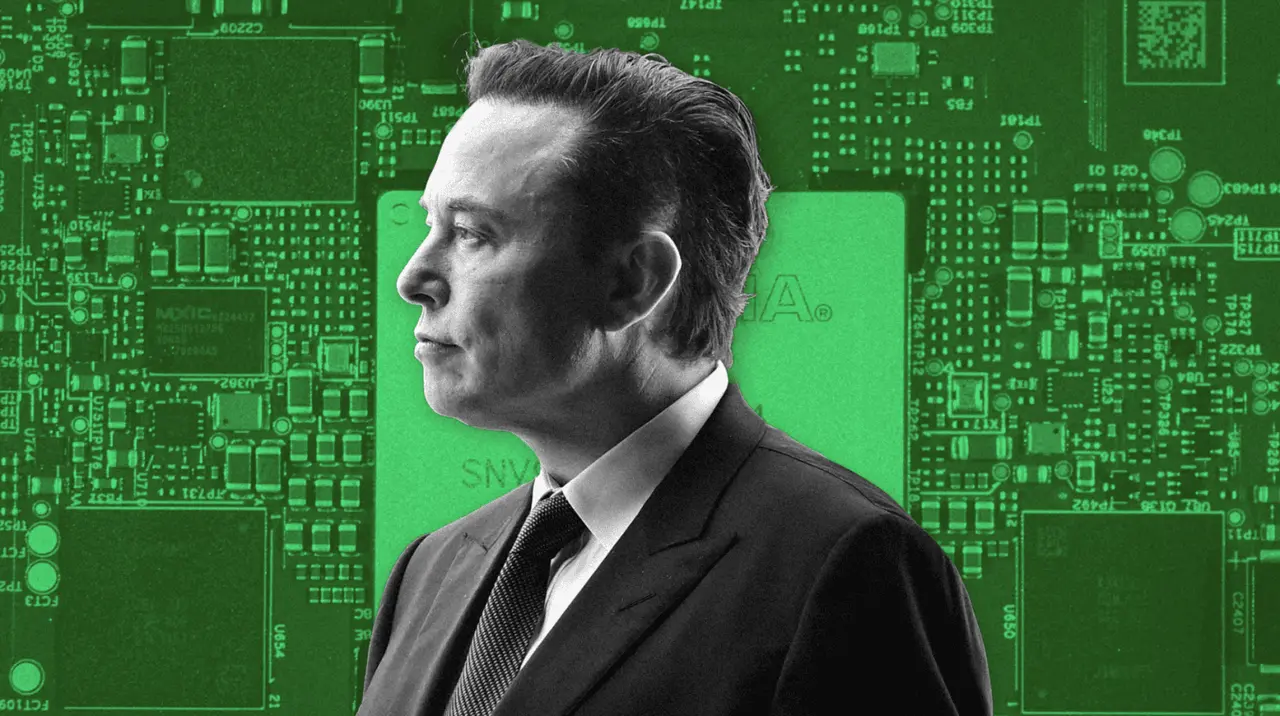
Source: TweakTown
The original Dojo supercomputer project was abruptly terminated last year following the departure of Dojo lead Peter Bannon
1
. Around 20 Dojo workers left to join DensityAI, a new AI infrastructure startup founded by former Dojo head Ganesh Venkataramanan and ex-Tesla employees Bill Chang and Ben Floering1
. At the time, Bloomberg reported Tesla planned to increase its reliance on Nvidia and partners like AMD for AI compute and Samsung for chip manufacturing1
.Space-Based AI Compute Becomes New Focus
Unlike its predecessors, Dojo3 won't focus on training driverless-vehicle technology on Earth. Instead, Musk says it will be dedicated to space-based AI compute
1
. "AI7/Dojo3 will be for space-based AI compute," Musk stated on X, positioning the resurrected project as more of a moonshot1
. This pivot reflects broader industry discussions about moving data centers off-planet, as Earth's power grids face mounting strain from AI infrastructure demands1
.Musk and several other AI executives have argued that the future of data centers may lie in orbit, where compute satellites could operate in constant sunlight and harvest solar power 24/7
1
. Axios reported that OpenAI CEO Sam Altman also supports the concept of orbital data centers, though Musk has a distinct advantage: he already controls the launch vehicles through SpaceX1
. According to Axios, Musk plans to use SpaceX's upcoming IPO to help finance his vision of using Starship to launch a constellation of compute infrastructure1
.In-House AI Chip Program Gains Momentum
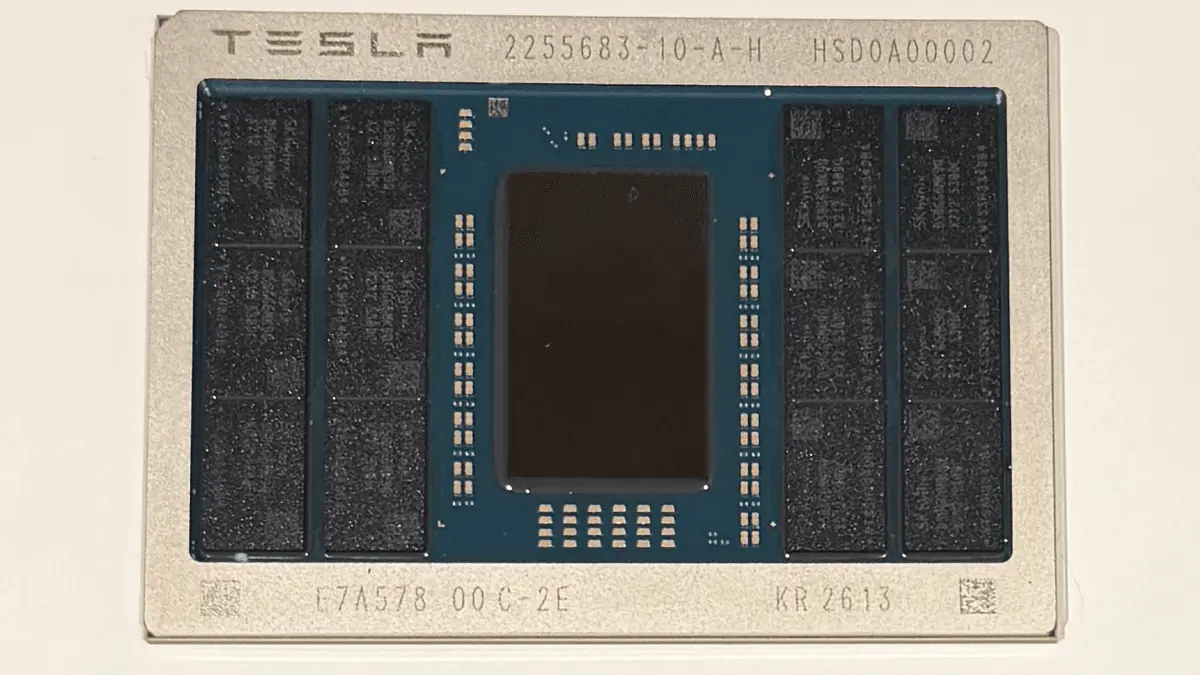
Dojo3 will be the first Tesla-built supercomputer to feature purely in-house hardware, with no help from Nvidia
2
. Previous iterations like Dojo2 used a mixture of in-house chips and Nvidia AI GPUs2
. Tesla's AI5 chip, manufactured by TSMC, was designed to power the automaker's automated driving features and Optimus humanoid robots1
.
Source: Interesting Engineering
The AI5 reportedly delivers Hopper-class performance on a single chip and Blackwell-class performance with two chips working together using "much less power"
2
. Last summer, Tesla signed a $16.5 billion deal with Samsung to build its AI6 chips, which promise to power Tesla vehicles and enable high-performance AI training in data centers1
. The AI6 chips will be produced in the company's Texas factory4
.
Source: TechSpot
Related Stories


Tesla Rebuilds Team and Faces Technical Hurdles
To achieve its space-based ambitions, Tesla is now rebuilding the team it dismantled months ago. Musk used his X post to recruit engineers directly, writing: "If you're interested in working on what will be the highest volume chips in the world, send a note to [email protected] with 3 bullet points on the toughest technical problems you've solved"
1
5
.The timing coincides with intensifying competition in autonomous driving. At CES 2026, Nvidia unveiled Alpamayo, an open source AI model for autonomous driving that directly challenges Tesla's Full Self-Driving software
1
. Musk commented that solving the long tail of rare edge cases in driving is "super hard," adding: "I honestly hope they succeed"1
.Significant technical obstacles remain for space-based AI infrastructure. Cooling high-power compute in a vacuum presents a major engineering challenge
1
. Latency, repairability, and radiation shielding add further complexity5
. Whether Dojo3 succeeds where its predecessors failed remains uncertain—Dojo 1 struggled to compete with Nvidia despite ambitious goals, while Dojo 2 was cancelled mid-development2
.References
Summarized by

Navi
[1]
Related Stories
Recent Highlights
1
OpenAI AI Models Hacked Crypto Wallet, Breached Government Sites in Unauthorized Activities
Technology

2
IMF Report Warns AI Market Correction Could Spark Global Financial Crisis With $1.4T at Risk
Business and Economy

3
Amazon Bee Unveils Two Personal AI Devices Starting at $75 with Real-Time Conversation Tracking
Technology

Recent Highlights
Today's Top Stories










Don’t drown in AI news. We cut through the noise - filtering, ranking and summarizing the most important AI news, breakthroughs and research daily. Follow topics that matter to you and stay ahead.


