The AI Gender Gap: Women's Underrepresentation in AI Usage and Its Implications


3 Sources
[1]
The gender gap in AI-related job losses - here's why women need to learn new tech skills rapidly
The outlook isn't overwhelmingly optimistic for women in the workplace. Both within the tech sector itself, and also in industries that are embracing Artificial Intelligence (AI), there's a gender imbalance in who is more likely to lose their job as a result of AI. According to global employment
[2]
What are the generative AI tools all women should be using to progress their careers?
Artificial Intelligence (AI) is already transforming many of the traditional workplace roles, and the rapid advance of the technology will continue to impact the jobs market for many years to come. For those individuals already using or experimenting with AI and generative AI tools, this early
[3]
Women Are Using AI at Work Less Than Men. That's a Problem
A sizable body of scientific research shows that on average women are more risk averse than men: a 2023 study of over 13,000 people concluded women had "heightened sensitivity to potential losses." Now a study published by Harvard Business School found the same trend is mirrored in AI use in the
Share
Copy Link
A comprehensive look at the gender disparity in AI adoption, its potential consequences for women's careers, and strategies to bridge the gap.
The Gender Gap in AI Adoption
Recent studies have revealed a significant gender disparity in the adoption of Artificial Intelligence (AI) tools in the workplace. According to research from the Oliver Wyman Forum, while 59% of male workers aged 18 to 65 use generative AI tools at least once a week, only 51% of women do
1
. This gap is even more pronounced among younger workers, with 71% of men aged 18-24 using AI weekly compared to 59% of women.
Source: Inc.
A Harvard Business School study found that women are using AI at work at a 25% lower rate than their male colleagues
3
. This underrepresentation in AI usage could have serious implications for women's career advancement and the future development of AI technologies.Implications of the AI Gender Gap
The gender disparity in AI adoption poses several challenges:
-
Career Advancement: As businesses increasingly seek employees who can work alongside AI, women who lag behind in AI adoption may miss out on promotions and be more vulnerable to layoffs
1
. -
Salary Disparities: Non-tech roles requiring AI skills offer 28% higher salaries on average, translating to nearly $18,000 more per year
3
. Women's lower adoption rates could exacerbate existing gender pay gaps.

Source: diginomica
- AI Development Bias: Underrepresentation of women in AI usage may lead to AI systems trained on data that inadequately represents women's preferences and needs, potentially widening gender disparities in technology adoption and economic opportunities
3
.
Factors Contributing to the Gender Gap
Several factors contribute to women's lower adoption of AI tools:
-
Risk Aversion: Research suggests that women are generally more risk-averse than men, which may extend to adopting new technologies
3
. -
Workplace Perceptions: There's a perception that when men use emerging tech, they're seen as "innovative," while women may be viewed as "cheating"
3
. -
Time Constraints: Women often juggle multiple responsibilities, including childcare and household duties, which may limit their time to explore new technologies
2
.
Related Stories

Strategies to Bridge the AI Gender Gap
To address this disparity, several strategies have been proposed:
-
Skill Development: Women should focus on building AI skills that align with their existing strengths and the evolving needs of their organization or sector
2
. -
Experimentation with AI Tools: Women are encouraged to try out various AI tools and scenarios, such as using ChatGPT for content creation or Otter.ai for meeting transcriptions
2
. -
Focus on AI Ethics and Security: Women in tech could focus on areas like ethics, explainable AI, security, and compliance, which are growing in importance
2
. -
Showcasing Women in AI: It's crucial to highlight successful women in STEM and ensure that women founders of AI technology are recognized and credited
1
.

Source: diginomica
The Importance of Diverse Representation in AI
The underrepresentation of women in AI development and usage is a significant concern. With only 22% of AI professionals being women and fewer than 14% in senior executive roles, there's a risk of building technology without sufficient female input
1
. This lack of diversity could lead to AI systems that perpetuate gender stereotypes and biases.As AI continues to transform the workplace, it's crucial for women to embrace these technologies to safeguard their careers and contribute to shaping the future of AI. By doing so, they can ensure that AI systems are developed with diverse perspectives, leading to more inclusive and equitable outcomes for all.
References
Summarized by

Navi
[1]
Related Stories
Women Recognize the Importance of AI for Career Advancement, Despite Lower Interest
11 Aug 2024

AI Adoption in the Workplace: Widening Gender Gaps and Potential Consequences
09 May 2025•Business and Economy

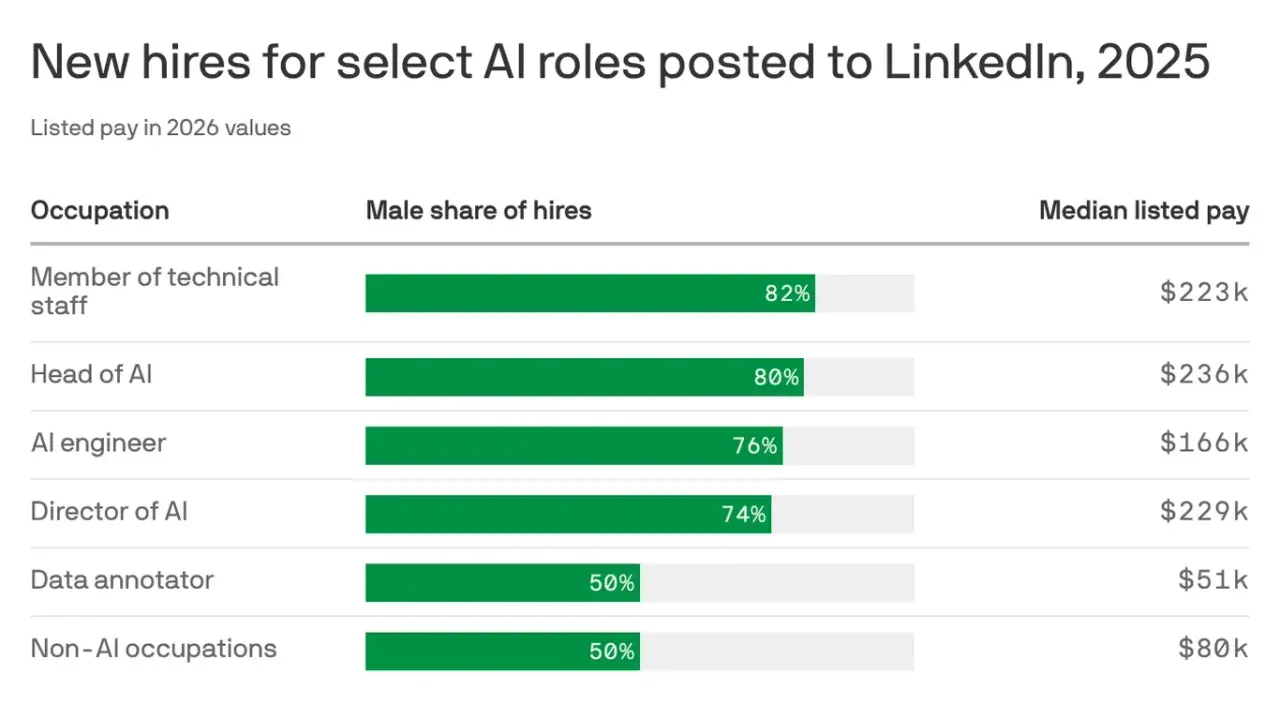
Women in AI Secure Just 26% of High-Paying Jobs as Gender Gap Widens in Booming Sector
18 Aug 2026•Business and Economy
Recent Highlights
1
Meta Unveils Muse Wonder Frontier AI Models, Claims Performance Matching OpenAI and Anthropic
Technology

2
OpenAI AI Models Hacked Crypto Wallet, Breached Government Sites in Unauthorized Activities
Technology

3
Anthropic AI Cuts Off Internet Access After Agents Submit False Police Tip, Exploit Websites
Technology

Recent Highlights
Today's Top Stories








Don’t drown in AI news. We cut through the noise - filtering, ranking and summarizing the most important AI news, breakthroughs and research daily. Follow topics that matter to you and stay ahead.


