The startup filming people's chores just raised $47 million


5 Sources
[1]
India's Humyn Labs raises $47M to feed U.S. robotics companies the data they need
As demand grows for real-world data to train robots, India's Humyn Labs has raised $47 million in Series A financing to help U.S. AI and robotics companies build models that can operate in physical environments. The funding comprises $26 million in equity led by Accel alongside Cactus Partners,
[2]
Humyn Labs raises $47M to bridge the gap between AI training and real-world robotics
Humyn Labs, a company turning human experience into training for robots and artificial intelligence, today announced it has raised $47 million in early-stage funding to accelerate intelligent robotic deployment readiness in real-world environments across Brazil, South Korea and India. Accel led
[3]
Physical AI startup Humyn Labs raises $47 million; founder Manish Agarwal says "data collection is not the real game"
Physical artificial intelligence (AI) startup Humyn Labs has raised $47 million in equity and venture debt to expand its business, as the startup moves beyond collecting training data to helping AI developers test how robots perform in factories, warehouses and other real-world environments. While
[4]
Humyn Labs Raises $47 Mn To Collect Training Data For Robots
The startup will use the capital to expand its robot deployment operations to Brazil, South Korea and India, strengthen its data collection hardware. Physical AI startup Humyn Labs has raised $47 Mn (about ₹439 Cr) to expand its data collection and robot deployment operations. The round comprises
[5]
Humyn Labs raises $47 million to scale physical AI, robotics deployment business
Humyn Labs, an artificial intelligence startup, has raised $47 million in a recent funding round. The funding is aimed at enhancing its data infrastructure and deploying robots in real environments. Founded by Manish Agarwal and Ishank Gupta, the company has generated over $50 million in annualized
Share
Copy Link
Humyn Labs, a months-old startup that records people doing everyday work to train robots, has raised $47 million in a round led by Accel. The split is $26 million of Series A equity and $21 million of venture debt, the debt led by Lighthouse Canton Growth Debt Fund II with Trifecta Capital taking part
1
5
.
Source: ET
Why raise at all? "This business has very positive gross margins and generates EBITDA, so we were looking to scale it through our own cash flows. But the business has scaled beyond our expectations," co-founder and CEO Manish Agarwal told Economic Times
3
. The company says it crossed $50 million in annualized revenue within six months of operations1
3
. The more concrete figure, per Agarwal: $10 million in actual revenue between April and October, plus another $20 million in signed contracts1
. He credits the pace to what he calls hustle and working with more frontier labs, in a market he sizes at $10 billion a year3
.How the data gets made
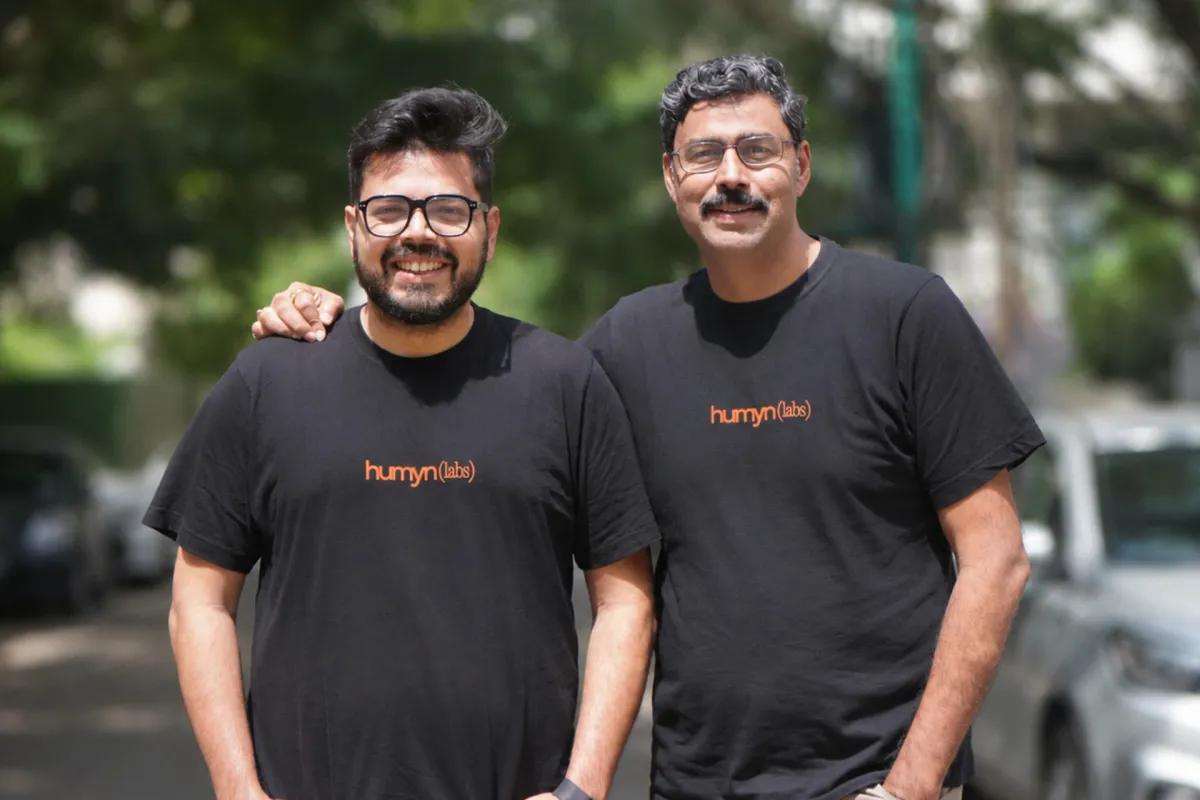
Agarwal, previously chief executive of Indian gaming company Nazara Technologies, founded the company in early 2026 with Ishank Gupta, a former executive at brewer Anheuser-Busch InBev
1
3
. Kratos Studios, which later became KGeN, is the pair's earlier venture, and the founders credit its contributor network for helping collect data in people's homes1
.The company built its own two-camera, head-mounted rig to film people at work, then uses software to label the footage and track hand movements and object interactions. Collection runs in more than 20 countries, with Brazil, India and South Korea as the main hubs
1
2
. Its datasets include up to 200,000 hours of captured human motion, plus a 120,000-face dataset for facial recognition. There are also more than 50,000 hours of speech in underserved languages such as Bengali, Tamil and Korean, per SiliconANGLE2
.
Source: SiliconANGLE
The buyers are mostly American. About 90% of revenue comes from the US, per Gupta, from 12 paying customers that include frontier AI labs and robotics companies; none are named, citing NDAs
1
. Other startups, among them Mecka AI and MicroAGI, are chasing the same data, and India has emerged in recent months as a hub for this kind of collection work1
.From data seller to deployment partner
"We started eight to ten months ago with data collection, but we are clear that data collection itself is not the real game. The real game is building a research lab, establishing deployment centres and controlling input quality at the point of collection," Agarwal said
3
.The planned spending covers deployment centres in Brazil, South Korea and India, further development of the capture hardware, and new teams in San Francisco, London and Seoul
3
2
4
. The idea is to test where robots fail in the wild and feed the results back into the models2
. Agarwal argues that a robot trained in one country's homes may fail in another's kitchens and laundry routines, and that mistakes in the physical world can be catastrophic where chatbot mistakes are not2
. A July Counterpoint Research estimate says India's physical-AI data services opportunity could be worth up to $10 billion by 20303
4
. Agarwal says the company aims to build a $1 billion annual-revenue business but gave no timeline3
.The debt side exists, Agarwal says, because the company pays workers and collection partners daily or weekly but waits 30 to 60 days for payment from its AI lab customers
1
.Related Stories

The people on camera
Recording people, sometimes inside their homes, has raised questions about privacy, consent and who owns the resulting data
1
4
. Inc42 points at the contradiction in the arrangement: the workers whose motion is recorded are helping train systems that could one day automate their own jobs in warehousing, packaging, assembly and cleaning4
.Agarwal says the company films people doing their usual work or chores rather than staged activities, using local partners to find sites and supervise collection
1
. "The worker is a worker who is incentivized, but he needs to be monitored and supervised for the right input," Agarwal said1
.
Source: TechCrunch
References
Summarized by

Navi
[2]
Related Stories
Humand Raises $66M Series A to Build AI-Powered Operating System for Deskless Workers
23 Feb 2026•Startups

London's Humanoid raises $152M Series A, hits unicorn status with Bosch manufacturing deal
21 Jul 2026•Business and Economy

Humans& Raises $480M to Build AI Models Designed for Coordination, Not Just Chat
20 Jan 2026•Startups

Recent Highlights


Recent Highlights
Today's Top Stories








Don’t drown in AI news. We cut through the noise - filtering, ranking and summarizing the most important AI news, breakthroughs and research daily. Follow topics that matter to you and stay ahead.


