The world's public wealth funds are becoming AI's direct owners


2 Sources
[1]
Public funds ploughing cash into AI will 'own' megatrends shaping economy
LONDON, Nov 12 (Reuters) - Sovereign wealth fund assets are set to surge nearly 50% to $22.4 trillion by 2030 as state-backed investors deepen their involvement in artificial intelligence and infrastructure, according to a PwC report released on Thursday. The world's largest sovereign wealth funds
[2]
PwC Report Reveals How Pension Funds Are Investing in AI
I would never have imagined a situation where a teacher checking a pension statement would, in some way, tie into headlines celebrating another multibillion-dollar AI data center. Those two stories seem poles apart. Increasingly, they aren't. The money that's being pumped into building AI's
Share
Copy Link
Sovereign wealth funds are projected to grow nearly 50% by 2030, and they are increasingly buying and running AI infrastructure themselves. Retirement savers are exposed too.
Sovereign wealth funds are set to grow nearly 50% by 2030, and a PwC report out Nov 12 says they increasingly buy and run AI infrastructure directly, a shift from renting it through managers
1
2
.
Source: Reuters
PwC puts sovereign wealth fund assets at $22.4 trillion by 2030, up from about $15.2 trillion, in research covering the world's 350 largest public investors
1
.From renting to owning
Its finding is a change in how that money works. Instead of handing capital to outside managers, these institutions now originate deals themselves and take controlling positions, often with a hands-on operating role, per PwC
1
."These investors no longer depend solely on external managers - instead, they are originating transactions themselves and taking controlling positions with operational roles," said Eric Janson, who runs PwC's private equity and principal investors practice
1
. The report's own phrasing goes further: "They won't merely participate in the megatrends reshaping the global economy. Increasingly, they'll enable, accelerate, and own them."Where the money is going
In 2025, roughly $66 billion of state-investor money went to AI and digitisation. The United States took the largest share of it; China's inflows fell to around $4 billion
1
2
.Gulf funds are tilting hard toward the US, with investment pledges cited from Qatar and Abu Dhabi. Saudi Arabia's Public Investment Fund is the exception, trimming foreign allocations to about 20% from a peak close to 30%. The report attributes that to a nascent shift toward domestic spending and portfolio-wide discipline at the Saudi fund
1
.Pension money is doing the same thing. In July 2026, Canada's CPP Investments committed $1.75 billion to help EdgeConneX build and run AI-ready data centers, alongside a private-equity partner
2
.The power is concentrated, too. Per the PwC report, the top 10 institutions hold about 41% of combined sovereign wealth fund and pension assets, and the top 50 hold 77%
1
.Related Stories

Retirement money in the same boat
Ordinary savers can carry this exposure too. The Equable Institute estimated on Nov 4 that US state and local public pensions held $578.1 billion to $706.6 billion in AI-related businesses at the end of June
2
. That is roughly a tenth of their $6.42 trillion in assets.That exposure is concentrated in a few names. Among the public stockholdings those pensions disclose, 51 AI-related companies made up 35.1%, with the Magnificent 7 about two-thirds of the AI-related total
2
.Oversight is starting to respond. CalPERS, the largest public pension fund in the United States with 2.4 million members, plans to take a responsible-AI investment framework to its board
2
. The fund counted AI in over 100 company engagements in the 2026 proxy season, with worries centred on how AI projects affect energy, water and communities2
.Index funds carry it into 401(k)s as well. Vanguard's 2026 research found 84% of participants in its defined-contribution plans use target-date funds
2
. In late September, the 10 largest stocks in the main US share index made up 37.3% of it, with Nvidia, Apple and Microsoft among them2
.The risk the columnist flags is that the same bet can sit in a portfolio twice. If AI customers scale back their plans, earnings expectations for chipmakers, data-center owners and power providers could change together, the columnist argues
2
. That would leave one investor exposed to the same spending cycle through several holdings. Defined-benefit payouts are set by plan rules, but how those plans perform over time matters to the employers and taxpayers who stand behind them.References
Summarized by

Navi
[2]
Related Stories
Pension Funds Bet $700 Billion on AI Revolution—But Systemic Risks Loom Large
28 Oct 2026•Business and Economy

AI Infrastructure Investment Projected to Reach $31.6 Trillion by 2050, Dwarfing Historical Buildouts
02 Sept 2026•Business and Economy
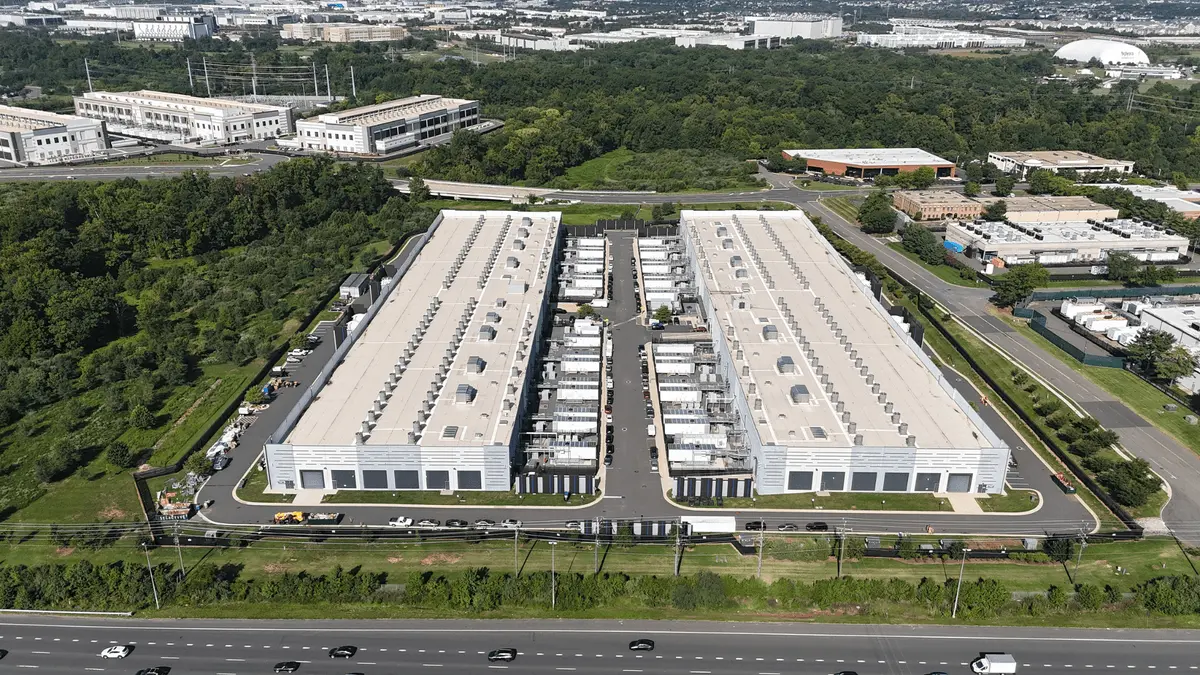
Middle Eastern Sovereign Wealth Funds Emerge as Key Investors in AI Startups
23 Sept 2024

Recent Highlights



Recent Highlights
Today's Top Stories




Don’t drown in AI news. We cut through the noise - filtering, ranking and summarizing the most important AI news, breakthroughs and research daily. Follow topics that matter to you and stay ahead.


