The world wants rules for killer robots. The countries that have them don't.


3 Sources
[1]
UN to debate rules for 'killer robots'
Geneva (Switzerland) (AFP) - Countries will debate whether to start talks on binding rules for autonomous weapons systems -- dubbed "killer robots" by critics -- at the UN from Monday, as concerns grow about their increasing use on the battlefield. Warfare is undergoing a radical transformation as
[2]
killer robots: UN to debate rules for 'killer robots'
Given the opposition from leading international powers, observers say it looks unlikely agreement will be reached this week to start talks on binding rules. apo/ag/lpt/pdw/sbk/abs Countries will debate whether to start talks on binding rules for autonomous weapons systems -- dubbed "killer robots"
[3]
U.N. to debate rules for 'killer robots'
Geneva, Switzerland - Countries will debate whether to start talks on binding rules for autonomous weapons systems -- dubbed "killer robots" by critics -- at the U.N. from Monday, as concerns grow about their increasing use on the battlefield. Warfare is undergoing a radical transformation as
Share
Copy Link
128 countries meet in Geneva this week to decide whether negotiations on binding rules for autonomous weapons begin. The powers holding the technology are expected to resist.
Representatives of 128 countries gather in Geneva from Monday to decide whether the world opens negotiations on legally binding rules for autonomous weapons, the systems critics call killer robots
1
. It is the first formal decision point on whether international regulation of AI weapons ever begins1
.
Source: Japan Times
What is on the table
The meeting is the Review Conference of the Convention on Conventional Weapons, the United Nations framework under which any rules would be negotiated
2
. The concrete fight is over pace and force. Washington has proposed a five-year process that would produce a non-binding instrument. Humanitarian groups including the International Committee of the Red Cross want a one-year timeline aimed at binding rules3
. The committee also wants a ban on two kinds of weapon: those it considers unpredictable, and those built or used to target people directly1
.On paper, the support looks broad. Last month's United Nations General Assembly vote saw 163 states back negotiations on rules for autonomous weapons, with five against and nine abstentions
1
. The no votes came from the US, Russia, Belarus, Israel and North Korea; Iran, Saudi Arabia and China were among those abstaining2
. "The need to regulate autonomous weapons has taken on new urgency," said Laurent Gisel of the committee1
.Why the powers resist
Observers say agreement on starting binding talks looks unlikely this week, because the powers that hold the technology resist being tied down, much as they do with nuclear weapons
1
. China, one of the abstainers, is hard to read. Laure de Roucy-Rochegonde of the French Institute of International Relations said it maintains a "carefully cultivated ambiguity" on the issue1
.The push is not new. In 2023 United Nations chief Antonio Guterres and the Red Cross committee's president, Mirjana Spoljaric Egger, urged governments to outlaw autonomous weapons by 2026, a deadline that has arrived
3
. Warnings against handing life-and-death decisions to machines have also come from Pope Leo XIV and campaigners1
.Related Stories

The war already underway
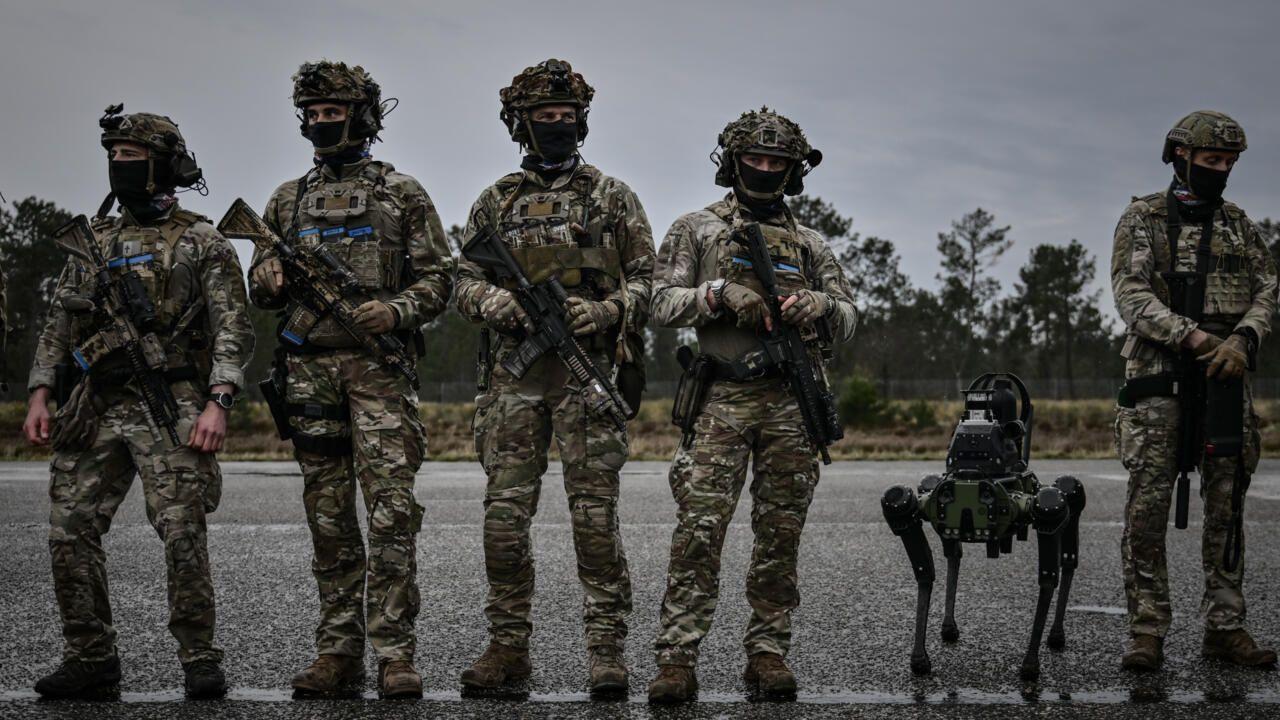
The technology the Geneva talks would cover is already in use. Armies are seeking to use the AI boom to find and hit targets faster and more accurately, a shift the reporting describes as a radical transformation of warfare
1
. Russia has reportedly deployed fully autonomous drones to deadly effect in Ukraine, and Ukraine's defence industry is working to develop autonomous drone swarms2
. North Korea boasted of a new AI-enabled torpedo system just last week, though its capabilities are unverified1
.
Source: France 24
The week may simply end without a launch of binding negotiations, whatever the campaigners hope. Human Rights Watch said a failure to act decisively would leave civilians "dangerously exposed"
1
.References
Summarized by

Navi
[1]
[3]
Related Stories
UN Holds Crucial Talks on Regulating AI-Powered 'Killer Robots' Amid Growing Concerns
13 May 2025•Technology

Talks open on whether to write binding rules for killer robots, with the US and Russia against
Today•Policy and Regulation
UN Takes Center Stage in Global AI Governance Debate
24 Sept 2025•Policy and Regulation

Recent Highlights


Recent Highlights
Today's Top Stories








Don’t drown in AI news. We cut through the noise - filtering, ranking and summarizing the most important AI news, breakthroughs and research daily. Follow topics that matter to you and stay ahead.


